
Dental financing payment plans are structured agreements that spread the cost of dental treatment into monthly installments, making care accessible without requiring full payment upfront. Financing for dental care promotes timely access to necessary treatment, sometimes preventing costlier procedures down the road by enabling immediate care through manageable payments. Roughly 40–45% of dental patients use financing to manage major treatment costs, which tells you this is a mainstream solution, not a last resort. If you are searching for affordable dental plans in Kennebunk, ME, understanding how to use dental financing payment plans is the first step toward getting the care you need without financial strain.
How to use dental financing payment plans: your options explained
Dental payment options fall into four main categories: third-party financing, in-house payment plans, personal loans, and tax-advantaged accounts. Each works differently, and the right choice depends on your credit profile, the size of your treatment bill, and how much flexibility you need.
Third-party financing
Third-party lenders, including healthcare-specific credit cards, are the most common route. These products typically offer 0% APR promotional periods lasting 6–24 months, with standard APRs between 9–29% once the promo window closes. The dental office receives payment upfront, minus a vendor fee of 5–14% charged to the practice. That fee is why some offices limit which procedures qualify. Monthly payments can start as low as $50–$100 depending on the procedure cost and term length, which makes larger treatments like crowns or implants far more approachable.

In-house payment plans
Some dental offices manage financing directly. In-house plans are often structured as low-interest loans with deposits and administrative fees, rather than interest-free arrangements. The upside is flexibility: practices can accept patients with limited credit history when a third-party lender would not. The tradeoff is that the office carries the financial risk, so expect a deposit requirement and possibly automatic payment enrollment as conditions of approval.
Personal loans and HSA/FSA accounts
Personal loans offer fixed rates ranging from 5–36% APR over terms of 12–84 months. They provide a lump sum you use to pay the dentist in full, then repay the lender on a fixed schedule. Health Savings Accounts (HSA) and Flexible Spending Accounts (FSA) let you pay with pre-tax dollars, which effectively reduces your out-of-pocket cost. These accounts work best for planned procedures when you have time to accumulate funds.
| Plan type | Typical APR | Term length | Best for |
|---|---|---|---|
| Healthcare credit card | 0% promo, then 9–29% | 6–24 months promo | Short-term, smaller balances |
| In-house plan | Low interest, varies | 3–18 months | Limited credit history |
| Personal loan | 5–36% fixed | 12–84 months | Large, predictable costs |
| HSA/FSA | 0% (pre-tax savings) | Ongoing | Planned, elective procedures |
Pro Tip: Ask your dental office whether they charge a fee for in-house plans before assuming they are free. A small admin fee or deposit is standard practice.
Who qualifies for dental financing payment plans?
Eligibility depends heavily on which type of plan you pursue. Credit score requirements vary by plan type: third-party healthcare credit cards and personal loans typically require a fair-to-good credit score, while in-house plans may accept patients with limited credit history depending on clinic policy. Knowing your credit profile before you apply saves time and protects your score from unnecessary hard inquiries.
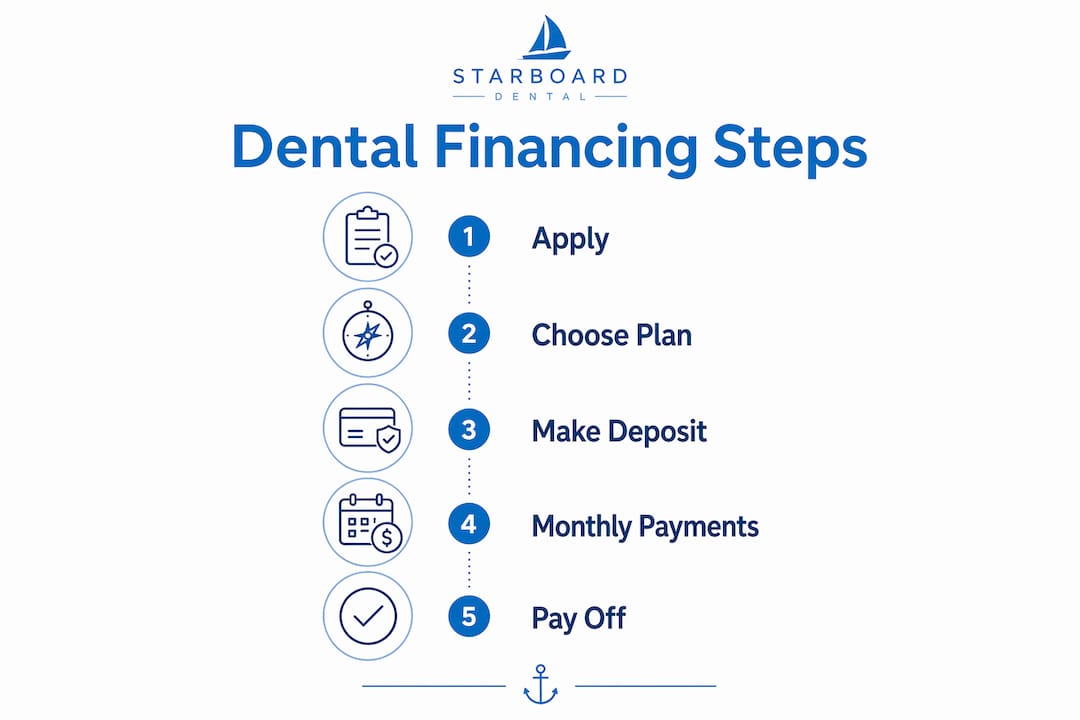
The standard application process for third-party financing follows these steps:
- Request financing information from your dental office before or at your appointment.
- Complete the application online or in the office, providing your Social Security number, income details, and employment status.
- Receive an approval decision, often within minutes for third-party lenders.
- Review and sign the financing agreement, confirming the APR, term, monthly payment, and any deferred interest clauses.
- Set up payment, ideally via autopay to avoid missed payments and potential penalty rates.
If a third-party lender declines your application, layered financing is a practical alternative. This means combining an HSA or FSA balance with a smaller in-house plan to cover the full treatment cost without relying on a single approval.
Pro Tip: Paying down existing credit card balances before applying can lift your credit score enough to qualify for a lower APR tier, sometimes saving hundreds of dollars over the life of a dental loan.
How to choose the best dental payment plan for your situation
The right plan minimizes total cost while keeping monthly payments within your budget. The most common mistake patients make is focusing only on the monthly payment without calculating total interest paid over the full term.
Modeling cost scenarios with different term lengths and interest rates helps you find the balance between monthly affordability and total interest paid. The table below illustrates how financing type affects real costs for common procedures.
| Procedure | Estimated cost | 12-month 0% promo | 24-month at 19% APR | Personal loan at 10% APR, 36 months |
|---|---|---|---|---|
| Dental filling | $200 | $17/month, $0 interest | $10/month, ~$39 interest | $6/month, ~$11 interest |
| Crown | $1,200 | $100/month, $0 interest | $60/month, ~$234 interest | $39/month, ~$204 interest |
| Scaling and root planing | $800 | $67/month, $0 interest | $40/month, ~$156 interest | $26/month, ~$136 interest |
The 0% promotional option wins on total cost, but only if you pay the balance in full before the promo period ends. Deferred interest clauses can trigger retroactive interest of up to 29% APR on the original balance if you carry even one dollar past the deadline. That single clause can turn a "free" plan into the most expensive option on the table.
Prioritize plans that offer payment-date adjustments, penalty-free early payoff, and payment pauses. These features matter most when income is variable, which is a reality for many patients in seasonal economies like Kennebunk's.
Pro Tip: Divide your total balance by the number of months in the promo period and set that exact amount as your autopay. You will pay off the balance before interest kicks in without doing mental math every month.
How to apply and manage your dental payment plan effectively
Applying is straightforward, but managing the plan well is where most patients run into trouble. Follow these steps to stay on track:
- Read the full agreement before signing. Confirm the APR, payment due date, late fee amount, and whether the plan uses deferred interest or true 0% interest.
- Set up autopay immediately. Missing a single payment on some plans triggers a penalty APR that applies to the remaining balance.
- Track your payoff date. Mark the promotional end date in your calendar at least 30 days in advance so you can make a final lump-sum payment if needed.
- Contact your dental office early if your financial situation changes. Many practices will restructure an in-house plan rather than send an account to collections.
Common mistakes to avoid:
- Assuming a "0% interest" offer has no strings attached. Always check for deferred interest language.
- Applying for multiple financing products at once. Each hard inquiry can lower your credit score temporarily.
- Ignoring a missed payment. Call the lender the same day and request a one-time courtesy waiver before the late fee posts.
In-house dental plans carry legal compliance obligations under the Truth in Lending Act, which requires clear disclosure of all finance charges. If a practice cannot provide a written disclosure showing the total cost of credit, that is a red flag worth addressing before you sign.
Key Takeaways
Dental financing payment plans work best when you match the plan type to your credit profile, calculate total cost before signing, and set up autopay to avoid deferred interest penalties.
| Point | Details |
|---|---|
| Match plan to credit profile | Third-party cards suit good credit; in-house plans work for limited credit history. |
| Watch deferred interest clauses | Unpaid balances after the promo period can trigger up to 29% APR retroactively. |
| Model total cost, not just monthly payment | A longer term lowers monthly payments but increases total interest paid significantly. |
| Prioritize flexible plan features | Payment-date adjustments and penalty-free early payoff protect you when income shifts. |
| Communicate with your dental office | Practices often restructure plans rather than escalate missed payments to collections. |
What I have learned about dental financing the hard way
Patients in Kennebunk often come in with the same misconception: that financing is only for people who cannot afford care. The reality is the opposite. Financing is a cash-flow tool, and the patients who use it most effectively are the ones who plan ahead, not the ones who are scrambling.
The detail that catches people off guard most often is deferred interest. A patient sees "0% for 18 months" and mentally files it as a free loan. They make minimum payments, carry a small balance into month 19, and suddenly owe interest on the full original amount at 26% APR. That is not a hypothetical. It is a pattern I have seen repeated enough times to call it the single biggest financial pitfall in dental financing.
My honest advice: treat the promotional period like a deadline, not a comfort zone. If you cannot pay off the full balance within the promo window, a fixed-rate personal loan at 10–12% APR is almost always cheaper than a deferred interest plan you fail to clear in time. The math is not complicated, but you have to run it before you sign, not after.
The other thing worth saying plainly: your dental office wants to help you find a solution. Practices like Starboarddental build payment flexibility into their patient experience because they understand that cost anxiety is one of the main reasons people delay care. Delaying care is almost always more expensive than financing it. A scaling and root planing procedure financed today costs far less than the periodontal surgery it prevents tomorrow.
— Alex
Affordable dental care at Starboarddental in Kennebunk
Starboarddental serves patients across Kennebunk, York, and Saco with general dentistry services designed to fit real budgets. The practice offers flexible payment options so that cost does not stand between you and the care your teeth need.
Whether you need a routine filling, a restorative procedure, or a full treatment plan, the team at Starboarddental will walk you through available financing options at your first visit. Same-day appointments mean you do not have to wait weeks to get answers. Contact Starboarddental to discuss which dental payment options fit your situation and get your oral health back on track.
FAQ
What is a dental financing payment plan?
A dental financing payment plan is an agreement that breaks your total treatment cost into monthly installments. Plans are offered through third-party lenders, healthcare credit cards, or directly by the dental office.
What credit score do I need for dental financing?
Third-party healthcare credit cards and personal loans typically require a fair-to-good credit score. In-house plans at dental offices may accept patients with limited credit history, depending on the practice's policy.
What is deferred interest on a dental payment plan?
Deferred interest means that if you do not pay your full balance before the promotional period ends, interest is charged retroactively on the original amount, sometimes at rates up to 29% APR.
Are in-house dental payment plans better than third-party financing?
In-house plans offer more flexibility for patients with lower credit scores, but they often include deposits and administrative fees. Third-party plans provide instant approval and longer terms, but require a credit check and carry deferred interest risk.
Can I use an HSA or FSA to pay for dental treatment?
Yes. Health Savings Accounts and Flexible Spending Accounts allow you to pay for qualifying dental procedures with pre-tax dollars, effectively reducing your out-of-pocket cost with no interest charges.