
A dental treatment plan is a personalized, written roadmap that outlines every procedure your dentist recommends, the order those procedures should happen, estimated costs, and a realistic timeline for completing your care. Dentists develop this document after a comprehensive clinical evaluation that includes a full exam, X-rays, and a review of your health history. The plan covers diagnosed conditions, recommended treatments, phasing, and cost estimates so you know exactly what to expect before any work begins. Understanding what is a dental treatment plan gives you the power to ask better questions, budget more accurately, and take charge of your oral health.
What is a dental treatment plan made of?
A dental treatment plan is built from six core components, each serving a specific purpose in guiding your care. Knowing what each piece means helps you read your plan with confidence instead of confusion.
- Diagnosis and clinical findings. Your dentist documents every condition found during the exam: cavities, gum disease, missing teeth, bite problems, and worn enamel. These findings are the foundation of everything that follows.
- Recommended procedures. Each finding gets a corresponding treatment. A cavity gets a filling. Gum disease may require scaling and root planing. A missing tooth might call for an implant or bridge.
- Treatment rationale. Good plans explain why each procedure is recommended, not just what it is. This context helps you weigh your options clearly.
- Phasing and sequencing. Treatments are organized into phases so the most urgent problems are addressed first. Phasing also makes complex care manageable over time.
- Estimated timelines. Each phase comes with an approximate schedule, including how many appointments you will need and how long each phase typically takes.
- Cost estimates and insurance breakdown. The plan lists the estimated fee for each procedure, what your insurance is expected to cover, and what you will owe out of pocket.
Pro Tip: Ask your dental office to walk you through the plan line by line before you leave. A five-minute conversation at the front desk can prevent weeks of billing confusion later.
The cost section deserves extra attention. Estimated costs can change if your insurance denies a claim or if a procedure turns out to be more complex than expected. Always confirm your expected payment before scheduling major work.
How do dental treatment plans prioritize care through phases?
Phased treatment planning organizes care into four distinct stages, each building on the last. This structure respects both clinical urgency and your capacity to handle appointments and costs over time.

| Phase | Focus | Common treatments |
|---|---|---|
| Phase 1: Urgent care | Eliminate pain and infection immediately | Emergency extractions, root canals, abscess treatment |
| Phase 2: Disease control | Stop active disease before restoring teeth | Fillings, periodontal treatment, scaling and root planing |
| Phase 3: Restorative care | Rebuild function and appearance | Crowns, bridges, implants, dentures |
| Phase 4: Maintenance | Preserve results long term | Checkups, cleanings, monitoring |
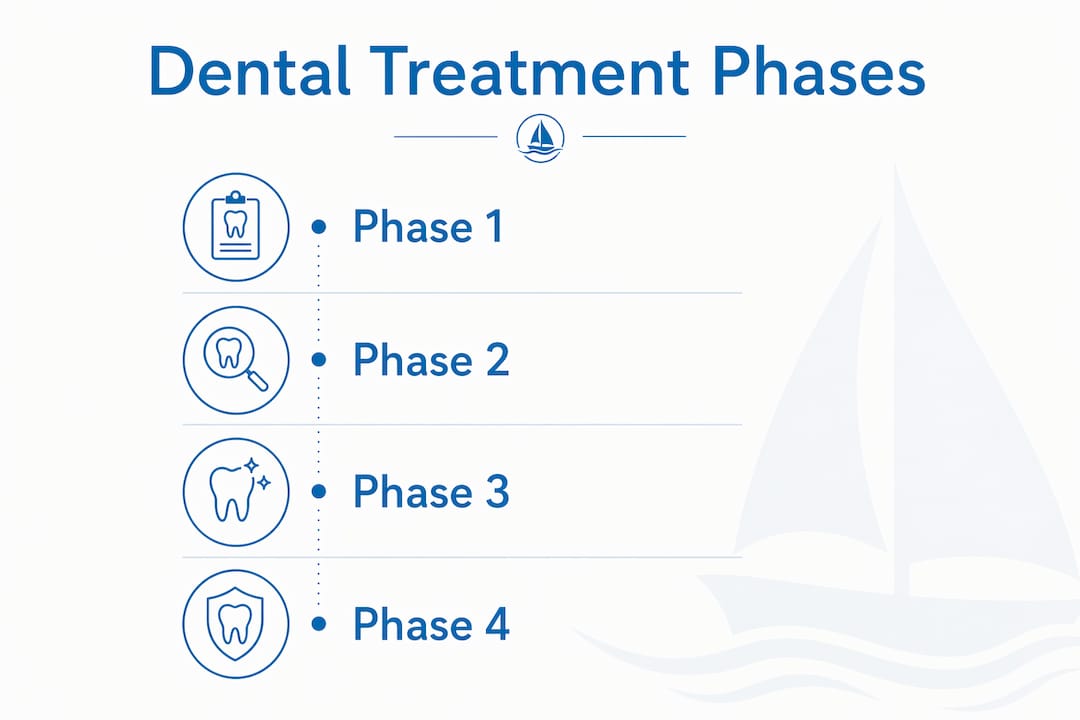
Phase 1 always comes first because pain and infection can worsen quickly and affect your overall health. Treating an abscess before placing a crown is not just logical. It is clinically necessary. Placing a restoration over active infection would cause the restoration to fail.
Phase 2 focuses on stopping disease in its tracks. Dental fillings and gum treatments fall here because they stabilize your oral environment before more expensive restorative work begins. Skipping this phase and jumping straight to crowns or implants is a common and costly mistake.
Phase 3 restores what disease or injury has taken away. This is where the visible, functional work happens. Restorations at this stage last longer because the underlying disease has already been controlled.
Pro Tip: If your plan feels financially overwhelming, ask your dentist which phases are clinically urgent and which can be safely delayed by three to six months. Most dentists will work with you to sequence care around your budget.
What role does insurance play in dental treatment plans?
Dental insurance directly shapes which treatments you pursue and when. Understanding the basics prevents unpleasant surprises when the bill arrives.
Most dental insurance plans follow a cost-sharing model. A common structure covers preventive services at 100%, basic services such as fillings at 70–80%, and major services such as crowns at around 50%. Annual maximums typically fall between $1,000 and $2,000, which means once your plan pays that amount in a calendar year, you cover the rest.
Several factors affect what you actually pay:
- Deductibles. You pay this amount out of pocket before insurance kicks in. Deductibles commonly reset each january.
- Waiting periods. Many plans require you to be enrolled for six to twelve months before covering major services. Starting a crown too soon could mean paying the full cost yourself.
- In-network vs. out-of-network. Seeing an in-network dentist means the office has agreed to contracted rates. Going out of network often means higher costs and more paperwork.
- Pre-authorization. For major procedures, your dentist can submit a pre-authorization request to your insurer before treatment begins. This gives you a clearer picture of your actual out-of-pocket cost.
- Coordination of benefits. If you have two insurance plans, such as through your employer and a spouse's plan, both can contribute. The dental office can help you figure out which plan pays first.
The most practical step you can take is to ask the dental office to verify your benefits before your appointment. Front desk staff do this regularly and can give you a written estimate of your expected costs.
How to read, question, and collaborate on your plan
A dental treatment plan is a clinical recommendation, not a contract you must sign without question. Patients who engage actively with their plans accept recommended care more consistently and report higher satisfaction with their dental experience.
Here is how to get the most out of your plan:
- Read the sequence first. Before focusing on costs, understand the order of treatments. Ask why each procedure comes before the next. The sequence reveals the clinical logic behind your care.
- Ask for plain-language explanations. If a term like "periapical abscess" or "occlusal adjustment" appears, ask your dentist to explain it in plain terms. You have every right to understand what is happening in your own mouth.
- Request alternatives. A well-structured treatment plan outlines risks, benefits, and alternative options so you can make informed decisions. If a crown is recommended, ask whether a large filling could work as a shorter-term solution.
- Seek a second opinion on major procedures. Getting a second opinion is standard practice and promotes patient confidence. For any procedure costing several hundred dollars or more, a second opinion is a reasonable and respected step.
- Treat the plan as a living document. Dental treatment plans should be updated as your clinical situation changes. If a tooth that was being monitored develops a cavity, the plan gets revised. This flexibility reduces stress and keeps your care current.
- Follow through on time. Delaying treatment consistently leads to more invasive and more expensive interventions. A small cavity treated today costs far less than a root canal and crown six months from now.
One often-overlooked step is reviewing your plan before each appointment, not just at the initial consultation. Knowing what is scheduled for your next visit helps you prepare questions and reduces anxiety in the chair. Patients who arrive informed tend to have shorter, smoother appointments.
Key Takeaways
A dental treatment plan is the single most effective tool for organizing your oral health care, controlling costs, and building a productive relationship with your dentist.
| Point | Details |
|---|---|
| Core definition | A treatment plan is a written roadmap covering diagnoses, procedures, sequencing, timelines, and cost estimates. |
| Four-phase structure | Phases move from urgent care through disease control, restorative work, and long-term maintenance. |
| Insurance awareness | Most plans cover preventive at 100%, basic at 70–80%, and major services at around 50%, with annual maximums of $1,000–$2,000. |
| Patient collaboration | Asking questions, requesting alternatives, and seeking second opinions leads to better outcomes and higher satisfaction. |
| Living document | Plans should be updated as clinical findings change, so follow-through and regular communication with your dentist matter. |
Why I think most patients read their treatment plan backwards
When patients receive a treatment plan, they almost always flip straight to the cost column. I understand the instinct. Money is real and immediate. But reading a plan cost-first is the fastest way to make a bad decision.
The sequence column is where the real story lives. It tells you what your dentist considers urgent, what can wait, and how your oral health is expected to progress over time. A patient who sees a $1,200 crown on the list and decides to skip it often ends up needing a $3,500 implant two years later. The cost column does not show you that consequence. The sequence does.
The other thing I have noticed is that patients treat their plan like a verdict. They receive it, feel overwhelmed, and either agree to everything out of anxiety or reject it entirely out of sticker shock. Neither response serves them well. A treatment plan is a starting point for a conversation, not a final ruling. The best outcomes I have seen come from patients who push back, ask questions, and work with their dentist to find a path that fits their life.
If your dentist cannot explain why a procedure is recommended in plain terms, that is a problem worth addressing before you schedule anything.
— Alex
Starboarddental's approach to personalized dental care
Starboarddental, located in Kennebunk, builds every patient relationship around clear, collaborative treatment planning. The practice offers general dentistry services that cover the full range of care from initial evaluation through long-term maintenance, and the team takes time to walk each patient through their plan in plain language before any treatment begins.

Whether you need a routine checkup, restorative dentistry after years of deferred care, or a complete oral health evaluation for the first time, Starboarddental offers same-day appointments and a welcoming environment designed to make the process feel manageable. Ceiling-mounted TVs, personalized comfort options, and digital scanning technology mean your visit is as comfortable as it is thorough. Reach out to Starboarddental to schedule your consultation and get a treatment plan built around your actual needs.
FAQ
What is included in a dental treatment plan?
A dental treatment plan includes your diagnoses, recommended procedures, the sequence of treatments, estimated timelines, and cost estimates broken down by procedure and insurance coverage.
How long does a dental treatment plan take to complete?
Completion time varies widely depending on the complexity of your care. A simple plan may take two to three appointments over a few months, while a complex plan involving multiple phases can span one to two years.
Can I change or refuse parts of my dental treatment plan?
Yes. A treatment plan is a clinical recommendation, not a binding contract. You can request alternatives, delay non-urgent procedures, or seek a second opinion on any recommended treatment.
How does dental insurance affect my treatment plan?
Insurance coverage determines how much you pay out of pocket for each procedure. Most plans cover preventive care fully, basic services at 70–80%, and major services at around 50%, subject to annual maximums and deductibles.
What happens if I delay treatment recommended in my plan?
Delaying recommended treatment typically allows conditions to worsen, which leads to more complex procedures and higher costs. A cavity left untreated can progress to a root canal or extraction.