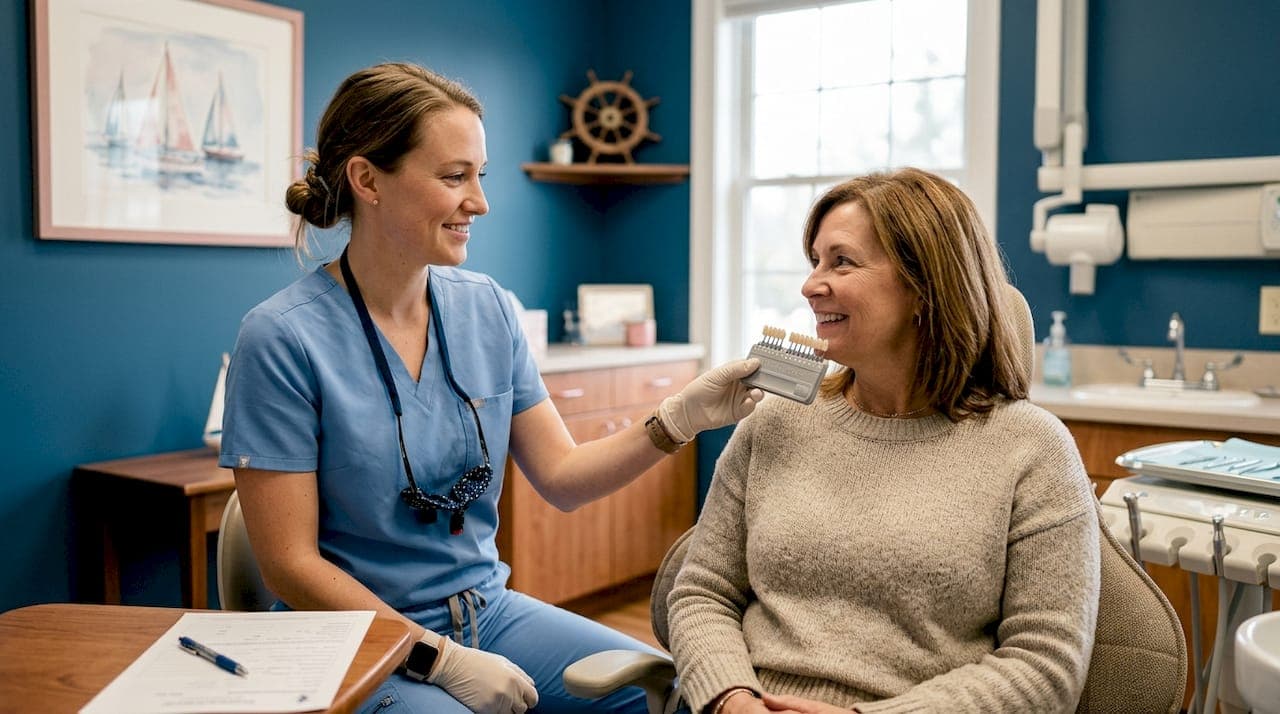
Teeth whitening is defined as the cosmetic lightening of natural tooth color using peroxide-based bleaching agents, primarily hydrogen peroxide or carbamide peroxide. These agents penetrate enamel and dentin to break down chromogens, the pigmented molecules responsible for discoloration. The American Dental Association recognizes teeth whitening as a safe cosmetic procedure when performed correctly. One critical fact most patients overlook: whitening works only on natural tooth enamel, not on crowns, veneers, or fillings. Understanding this distinction before you start shapes every decision that follows.
What is teeth whitening and how does it work chemically?
Whitening works by oxidizing chromophoric molecules within enamel and dentin, converting deeply pigmented stains into lighter, less visible forms without removing tooth surface material. The bleaching agent does not scrub away stains. It chemically alters the stain molecules themselves.
Hydrogen peroxide is the active form in most whitening products. Carbamide peroxide breaks down into hydrogen peroxide and urea once it contacts saliva, releasing the active bleaching agent more slowly. This slower release makes carbamide peroxide well suited for extended at-home wear trays, while faster-acting hydrogen peroxide is the standard for in-office treatments.
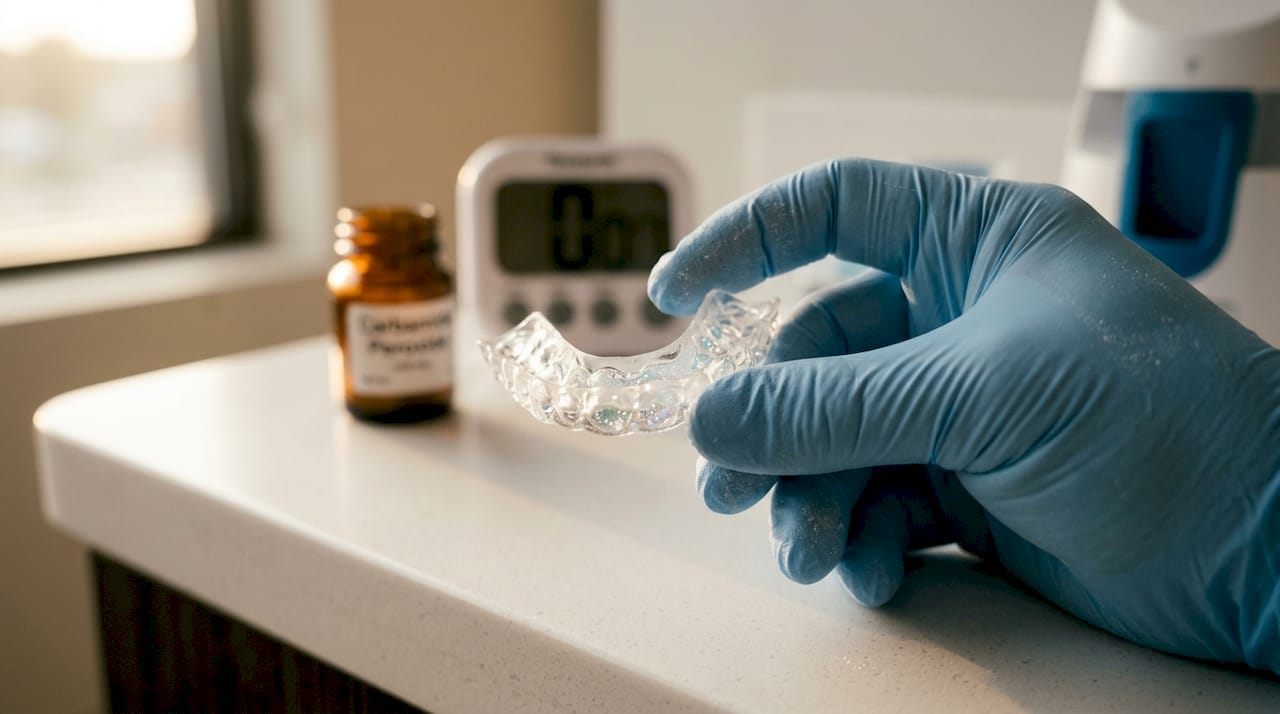
The bleaching agent penetrates through enamel into the dentin layer beneath. This penetration is what makes whitening effective on deep stains, but it also explains tooth sensitivity. Peroxide reaching the pulp causes temporary inflammation and fluid shifts in dentinal tubules, which patients feel as sharp, brief sensitivity. This effect resolves within days for most patients.
Enamel undergoes temporary mineral changes during whitening. The good news: enamel remineralizes naturally after treatment, especially when patients use fluoride toothpaste. Whitening does not remove plaque or tartar. A professional cleaning before whitening is a separate and necessary step.
Pro Tip: If you experience sensitivity during whitening, lower concentration and longer contact time outperforms short, high-intensity sessions. Pushing harder does not produce better results.
What are the main teeth whitening methods?
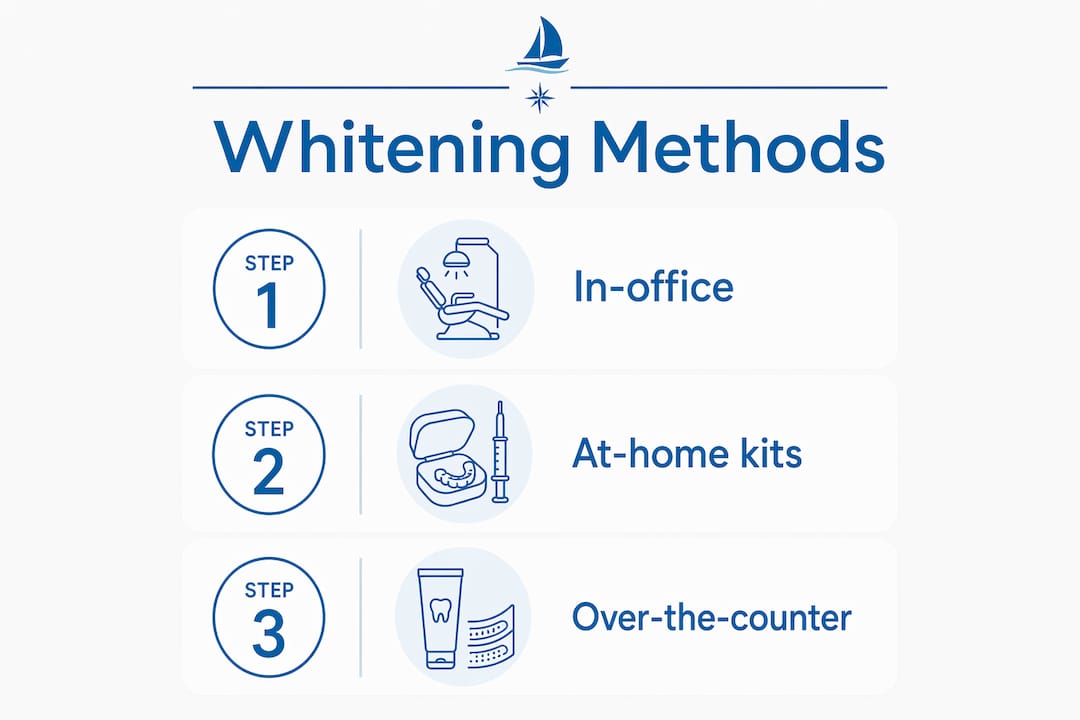
Three distinct delivery systems exist for tooth whitening, and they differ significantly in peroxide concentration, treatment time, and cost.
In-office professional whitening
In-office whitening uses 20–40% hydrogen peroxide applied directly by a licensed dentist, with results visible in 1–2 hours. A dental professional protects gum tissue with a barrier before application, reducing the risk of irritation. This method produces the most dramatic single-session results and suits patients who want fast, supervised treatment. Cost typically runs $500–$1,000 per session.
Professional at-home kits
Dentist-prescribed at-home kits use approximately 10% carbamide peroxide in custom-fitted trays worn for 7–14 days. The custom tray fit matters because it keeps the gel in contact with teeth evenly and prevents it from pooling on gum tissue. Results are comparable to in-office treatment over the full course. Cost typically falls in the $300–$500 range.
Over-the-counter products
Over-the-counter strips, gels, and paint-on products use 2–5% hydrogen peroxide. Results are modest and develop over weeks to months. OTC products are not tailored to individual dental anatomy, which can lead to uneven whitening or gum irritation from poorly fitting strips.
| Method | Peroxide concentration | Treatment time | Typical cost |
|---|---|---|---|
| In-office professional | 20–40% hydrogen peroxide | 1–2 hours | $500–$1,000 |
| Professional at-home kit | ~10% carbamide peroxide | 7–14 days | $300–$500 |
| Over-the-counter products | 2–5% hydrogen peroxide | Weeks to months | $30–$100 |
Key differences to keep in mind when choosing a method:
- Speed: In-office treatment delivers the fastest visible change.
- Customization: Professional kits use trays made from impressions of your specific teeth.
- Supervision: Licensed dentists monitor for sensitivity and adjust protocols as needed.
- Cost: OTC products cost less upfront but may require repeated purchases to approach professional results.
Is teeth whitening safe, and what are the side effects?
Teeth whitening is clinically safe when performed within established guidelines. Regulatory standards in 2026 require whitening to be performed or supervised by licensed dental professionals, with peroxide concentrations legally capped in many regions. These rules exist because misuse carries real risks.
The most common side effects are temporary tooth sensitivity and gum irritation. Tooth sensitivity affects 55–75% of patients undergoing whitening, while gum irritation occurs in 25–40% of cases. Both effects resolve within days after treatment ends. That incidence rate sounds high, but the temporary nature of these effects is well established in clinical literature.
Certain patients should not whiten without specific guidance from a dentist:
- Patients who are pregnant or nursing
- Patients under 18 years of age
- Patients with untreated tooth decay or cracked enamel
- Patients with active gum disease
- Patients with significant dental restorations in visible areas
A comprehensive dental exam before whitening is not optional. Untreated decay or cracks allow peroxide to penetrate deeper than intended, causing pain and potential pulp damage. Dental professionals caution against overuse of OTC products because enamel damage and uneven whitening are documented outcomes of unsupervised misuse.
Pro Tip: Patients with known sensitivity should ask their dentist about desensitizing gel applied before or after whitening sessions. Potassium nitrate-based formulas reduce nerve response and make treatment far more comfortable.
What factors affect whitening results and how do you maintain them?
The type of stain on your teeth determines how well whitening will work. Extrinsic stains sit on the outer enamel surface and come from coffee, tea, red wine, and tobacco. These respond well to peroxide-based whitening. Intrinsic stains originate inside the tooth, often from tetracycline antibiotics, fluorosis, or trauma. Intrinsic stains are significantly harder to treat and may require higher concentrations or alternative cosmetic procedures. Professional assessments diagnosing stain type are vital to choosing the right method and setting realistic expectations.
Dental restorations do not respond to whitening agents at all. Crowns, veneers, and fillings retain their original color regardless of how many whitening sessions you complete. Patients with visible restorations need to plan carefully. Whitening natural teeth first, then replacing restorations to match the new shade, is the standard approach for achieving uniform color.
A professional cleaning before whitening removes surface plaque and tartar that would otherwise block even gel contact. Skipping this step produces patchy results. Think of it as priming a surface before painting.
Whitening results are not permanent. Maintenance whitening every 6–24 months is necessary because chromogenic substances in food, beverages, and habits continuously re-stain teeth. Daily habits that protect your results include:
- Rinsing with water after drinking coffee, tea, or red wine
- Using a straw for pigmented beverages
- Avoiding tobacco products entirely
- Brushing twice daily with fluoride toothpaste
- Scheduling regular checkups and cleanings to remove surface buildup before it sets
Good oral hygiene practices extend whitening results more than any single product purchase. Consistency matters more than intensity.
Key Takeaways
Professional teeth whitening uses peroxide-based agents to oxidize stains in enamel and dentin, with results that require maintenance and professional supervision for safety and lasting effect.
| Point | Details |
|---|---|
| Whitening chemistry | Peroxide oxidizes stain molecules in enamel and dentin; it does not remove plaque or surface debris. |
| Method differences | In-office treatment uses 20–40% peroxide for fast results; OTC products use 2–5% with modest outcomes. |
| Safety requirements | A dental exam before whitening is necessary to rule out decay, cracks, and contraindications. |
| Restorations are unaffected | Crowns, veneers, and fillings do not whiten; plan restoration replacement after whitening for uniform color. |
| Maintenance is required | Whitening results last longer with regular cleanings, good oral hygiene, and periodic touch-up treatments. |
Why professional guidance changes everything about whitening
Most people treat teeth whitening like a product purchase rather than a clinical decision. That framing leads to wasted money and, sometimes, real harm.
I've seen patients arrive after months of OTC strip use, frustrated that their results were uneven or that their sensitivity had become chronic. In nearly every case, the underlying issue was a mismatch between the stain type and the product chosen. Extrinsic stains from coffee respond beautifully to standard peroxide. Intrinsic stains from old tetracycline use do not. No amount of OTC product fixes that mismatch.
The other misconception I encounter constantly is that whitening is a one-time event. Patients invest in a professional treatment, see great results, and then assume the work is done. Teeth re-stain. That's biology, not a product failure. The patients who maintain their results longest are the ones who schedule regular cleanings, stay consistent with their oral hygiene, and do a brief touch-up treatment every year or so.
The most underrated step in the entire process is the pre-whitening exam. A dentist who spots a hairline crack or early decay before treatment prevents a painful and expensive complication. That exam is not a formality. It's the difference between a smooth treatment and a pulp problem.
My honest recommendation: before you buy anything, get a professional assessment of your stain type and dental health. The right method for your specific situation will outperform any generic product, every time.
— Alex
Teeth whitening at Starboarddental
Starboarddental offers professional teeth whitening performed and supervised by licensed dentists in Kennebunk, ME, with customized treatment plans based on your stain type, sensitivity level, and goals.

Every whitening patient at Starboarddental starts with a thorough dental exam to confirm your teeth and gums are ready for treatment. The practice uses advanced techniques and personalized protocols, so you get results matched to your actual dental anatomy, not a generic one-size approach. Same-day appointments are available for new patients. If you're ready to take the next step, explore Starboarddental's full range of cosmetic dentistry services or book a consultation to discuss your options with a dental professional.
FAQ
What is teeth whitening, exactly?
Teeth whitening is a cosmetic procedure that uses hydrogen peroxide or carbamide peroxide to oxidize and lighten stain molecules within enamel and dentin. It does not affect dental restorations such as crowns or fillings.
How long does professional teeth whitening last?
Professional whitening results typically require maintenance every 6–24 months, as chromogenic foods, beverages, and habits gradually re-stain teeth over time.
Is teeth whitening safe for everyone?
Whitening is not recommended for patients who are pregnant, under 18, or have untreated decay, cracks, or active gum disease. A dental exam before treatment identifies any contraindications.
What is the difference between in-office whitening vs at home?
In-office whitening uses 20–40% hydrogen peroxide for results in 1–2 hours under professional supervision. At-home professional kits use approximately 10% carbamide peroxide applied over 7–14 days with custom-fitted trays.
Why do teeth feel sensitive after whitening?
Sensitivity occurs because peroxide penetrates enamel into dentin and reaches the pulp, causing temporary fluid shifts in dentinal tubules. This effect resolves within days and is reduced by using lower concentrations with longer contact time.