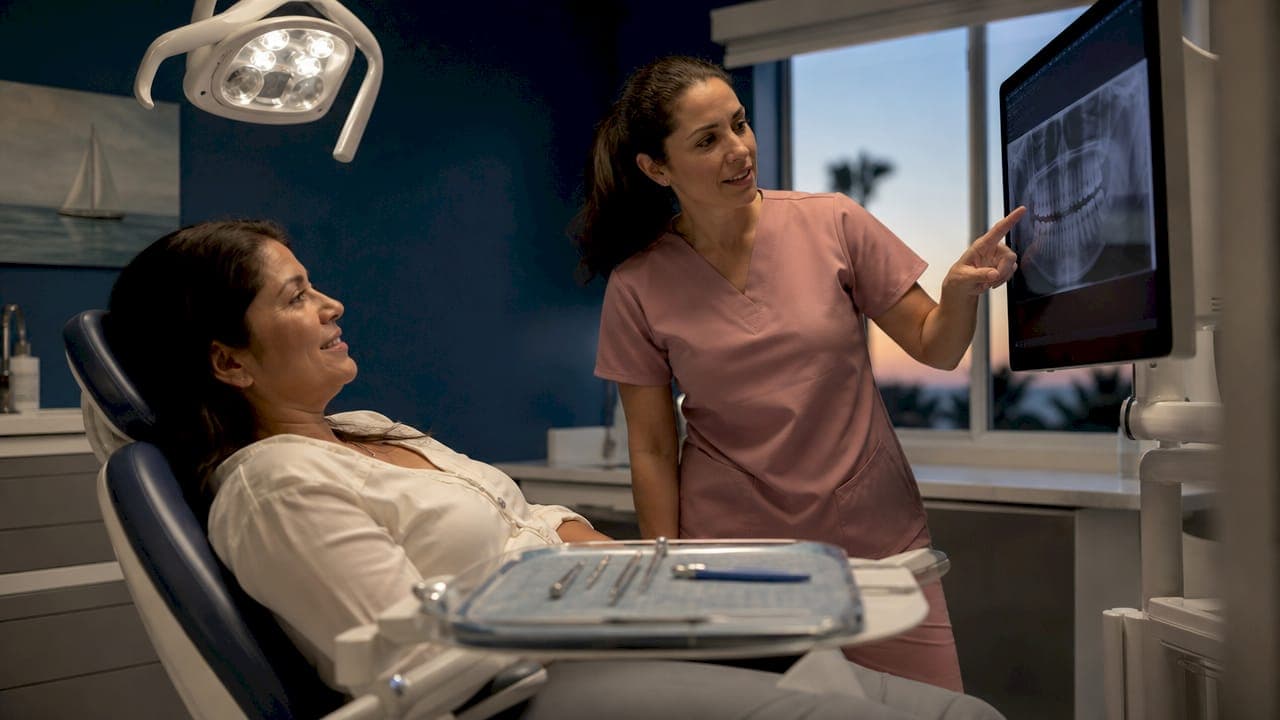
A dental checkup is a routine oral health exam where your dentist assesses your teeth, gums, and soft tissues to catch problems before they become serious. The dental examination process covers far more than a quick look in your mouth. It includes a health history review, clinical exam, professional cleaning, and X-rays when needed. The American Dental Association links accurate health histories directly to better clinical outcomes, since conditions like diabetes and cardiovascular disease raise periodontal risk. Knowing exactly what happens during a dental checkup removes the guesswork and makes the appointment far less stressful.
What happens during a dental checkup?
A standard dental visit follows a predictable sequence. Understanding each step removes the uncertainty that drives most anxiety.
Step 1: Arrival and paperwork
New patients complete a health history form before the exam begins. This form asks about medications, allergies, past surgeries, and chronic conditions. The American Dental Association endorses health history forms as critical clinical tools because systemic diseases directly affect oral health. Skipping details or guessing on this form can lead your dentist to miss important connections between your overall health and what they find in your mouth.
Step 2: X-rays
X-rays are taken at new patient visits and periodically at recall appointments. Modern digital X-rays use about 80% less radiation than older film techniques. That reduction makes them safe for most patients, including those who worry about exposure. X-rays reveal hidden decay between teeth, bone loss around roots, and issues invisible to the naked eye. Your dentist uses them to build a complete picture of your oral health.
Step 3: Clinical exam
The dentist examines your soft tissues, gums, bite, and each tooth surface. Gum probing measures the depth of the pockets between your gums and teeth. Shallow pockets indicate healthy gums; deeper pockets signal early or advanced gum disease. An oral cancer screening takes less than two minutes and checks your tongue, cheeks, throat, and lips for unusual tissue changes. Catching oral cancer early raises the five-year survival rate from around 39% to 85%.
Step 4: Professional cleaning
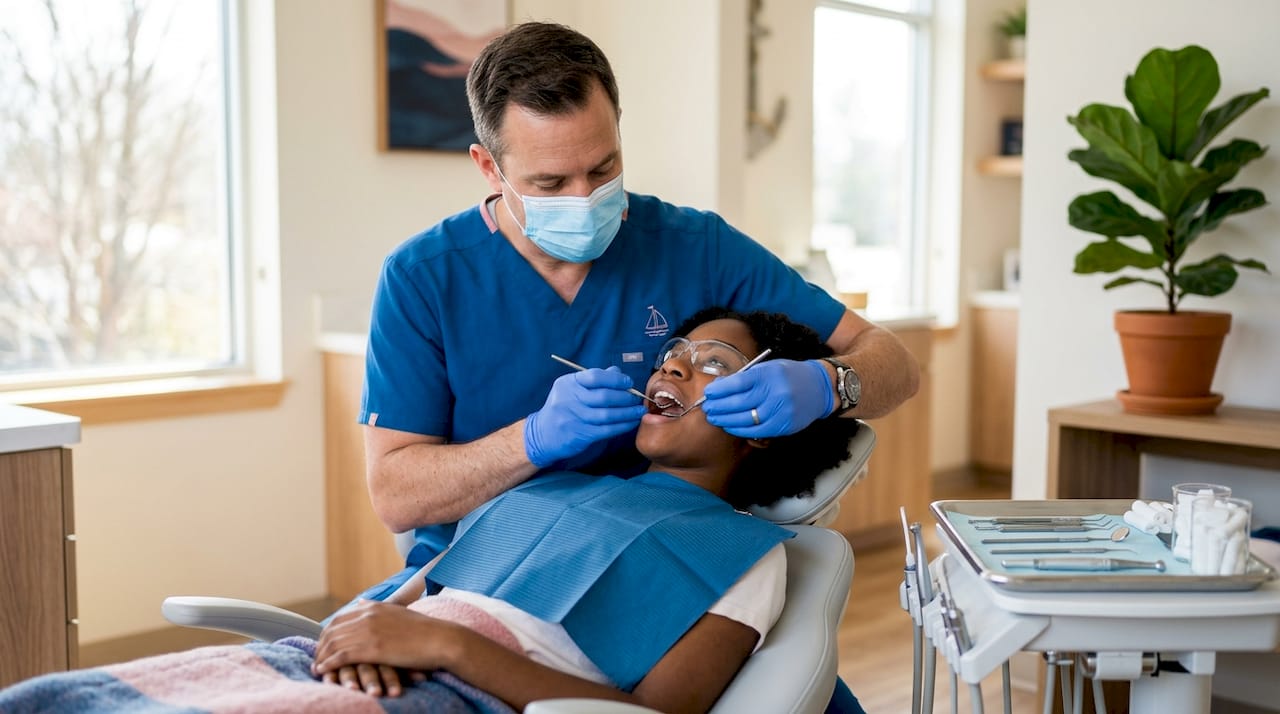
A dental hygienist performs scaling to remove hardened tartar from tooth surfaces and below the gumline. Polishing follows to remove surface stains and smooth enamel. The hygienist then flosses between every tooth. Professional cleaning combined with home care is proven to slow periodontal disease progression significantly. No amount of brushing at home removes calcified tartar, which is why professional cleaning remains a non-negotiable part of the visit.
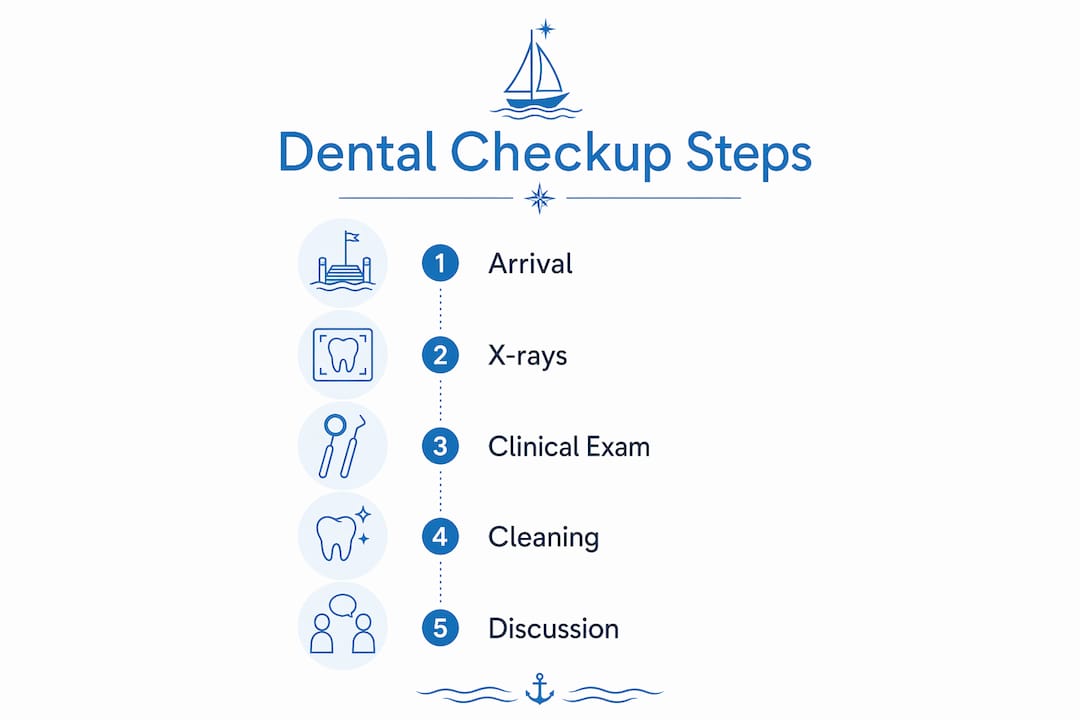
Step 5: Post-exam discussion
Routine dental visits prioritize assessment over treatment, giving you time to ask questions and understand your options without pressure for same-day procedures. Your dentist explains findings, outlines any recommended treatments, and helps you prioritize based on urgency and budget. A new patient exam typically runs 60–90 minutes. A routine recall visit for an established patient usually takes 45–60 minutes.
Pro Tip: Write down two or three questions before your appointment. Patients who arrive with specific questions leave with a much clearer understanding of their oral health.
How to prepare for your dental checkup appointment
Preparation takes less than 15 minutes and makes the entire visit run more smoothly. Bring the following to your appointment:
- Photo ID and insurance card. Your practice needs these for registration and billing.
- A current medication list. Include dosages and any supplements. Some medications cause dry mouth or affect bleeding, which matters during cleaning.
- Previous dental records or X-rays. If you are switching practices, request records from your former dentist. This prevents duplicate X-rays and gives your new dentist a baseline.
- Your health history, completed honestly. Conditions like diabetes, heart disease, and pregnancy all affect your dental care plan.
- A list of concerns or symptoms. Tooth sensitivity, jaw pain, or bleeding gums deserve mention even if they seem minor.
Arriving 10–15 minutes early gives you time to complete paperwork without rushing. Rushing through a health history form leads to omissions that matter clinically. If you have dental anxiety, tell the front desk when you book. Practices like Starboarddental can note your needs before you even sit in the chair, which allows the team to prepare accordingly.
Pro Tip: If you take blood thinners or bisphosphonates, tell your dentist before any cleaning or procedure. These medications change how your mouth responds to treatment.
How do you manage dental anxiety during a checkup?
Approximately 36% of the population experiences dental anxiety significant enough to affect care and attendance. That number means anxiety is not a personal weakness. It is a common, recognized response that dental teams deal with every day.
"Patients should view their first dental appointment as a collaborative conversation rather than a test. That shift in perspective reduces fear and builds the kind of trust that makes every future visit easier."
The most effective strategies for managing anxiety before and during a checkup include:
- Tell your dental team upfront. Saying "I get nervous at the dentist" gives the team permission to slow down, explain each step, and check in with you throughout.
- Use a stop signal. Agree on a hand signal that means "pause." Knowing you can stop at any moment gives you control, which reduces fear significantly.
- Schedule your appointment strategically. Morning appointments work best for anxious patients. Stress tends to build throughout the day, so an early slot means less time to worry.
- Practice slow breathing. Inhale for four counts, hold for four, exhale for four. This activates the parasympathetic nervous system and lowers your heart rate within minutes.
- Ask for explanations. Most dental anxiety comes from the unknown. Asking "what are you doing now?" keeps you oriented and reduces the sense of helplessness.
For parents bringing young children, a calm and positive parental attitude directly reduces the child's anxiety and shapes their long-term relationship with dental care. Children read parental emotional cues closely. A parent who projects calm confidence sets the tone for the entire visit.
What are the differences between visit types?
Not every dental appointment looks the same. The purpose, length, and components vary based on your age and history.
| Visit type | Typical length | Key components | X-rays? |
|---|---|---|---|
| New patient exam | 60–90 minutes | Full health history, comprehensive exam, X-rays, cleaning, treatment plan | Yes, typically full series |
| Routine recall visit | 45–60 minutes | Focused exam, cleaning, updated X-rays as needed | Bitewings every 1–2 years |
| Pediatric first visit | 20–30 minutes | Knee-to-knee exam, parent education, fluoride varnish, cavity risk assessment | Rarely at first visit |
| Pediatric recall visit | 30–45 minutes | Clinical exam, cleaning, fluoride, X-rays based on risk | Depends on cavity risk |
The knee-to-knee exam is the industry standard for infant dental visits. The dentist and parent sit facing each other, and the infant lies across both laps. The exam takes about 10 seconds and allows a thorough, secure look at an infant's mouth without distress.
Pediatric visits also include fluoride varnish application and early education for parents on brushing technique, diet, and pacifier use. Early childhood dental visits by age one reduce dental costs by approximately 40% over the first five years. That figure reflects the power of catching small problems before they require crowns, extractions, or sedation. Establishing a dental home early gives children a consistent care team and a familiar environment, both of which reduce anxiety as they grow.
For adults, how often you need a checkup depends on your individual risk profile. Patients with a history of gum disease, frequent cavities, or dry mouth may need visits every three to four months. Low-risk patients with strong home care typically maintain well with twice-yearly visits.
Key Takeaways
A dental checkup is a structured, non-invasive exam that combines health history review, clinical assessment, professional cleaning, and patient education to prevent costly problems and protect long-term oral health.
| Point | Details |
|---|---|
| Checkups follow a clear sequence | Expect paperwork, X-rays, clinical exam, cleaning, and a post-exam discussion at every visit. |
| New patient visits run longer | Plan for 60–90 minutes at your first appointment versus 45–60 minutes for routine recall visits. |
| Anxiety is common and manageable | Tell your team upfront, use a stop signal, and schedule morning appointments to reduce stress. |
| Pediatric visits start at age one | Early dental visits cut five-year dental costs by approximately 40% and establish lifelong habits. |
| Honest health history improves care | Accurate medication and condition disclosures help your dentist connect oral findings to systemic health. |
Why I think most people misread what a dental checkup actually is
Most patients walk into a checkup bracing for bad news. They treat it like a test they might fail. That framing is the root of most dental anxiety, and it is also factually wrong about what the appointment is designed to do.
A dental checkup is not a judgment. It is a baseline. Your dentist is collecting data, not grading your brushing habits. The clinical exam, the probing, the X-rays. All of it exists to give you and your dentist a shared picture of where things stand. Routine visits educate patients on preventing complex issues, not just treating existing ones. That distinction matters enormously.
The patients I have seen get the most out of their checkups are the ones who ask questions. Not just "is everything okay?" but "what should I watch for?" and "what would change your recommendation?" Those questions turn a passive appointment into a real conversation. They also make the dentist's job easier, because an engaged patient follows through on recommendations.
Skipping checkups to avoid discomfort is the most expensive dental decision most people make. A cavity caught at a checkup costs a fraction of the root canal it becomes if left alone. The math is not subtle. Regular visits are the cheapest dental care you will ever receive.
— Alex
Ready for your next checkup at Starboarddental?
Starboarddental in Kennebunk offers general dentistry services for patients of all ages, including new patient exams and routine checkups and cleanings. The practice uses digital scanners for precision and ceiling-mounted TVs to keep you comfortable during your visit.

New patients receive a thorough welcome that covers health history, a full clinical exam, and a clear treatment plan with no pressure. Same-day appointments are available for patients who need to be seen quickly. The team is experienced with anxious patients and builds every visit around your comfort. Visit the new patients page to learn what to bring, how to prepare, and how to book your first appointment.
FAQ
How long does a dental checkup take?
A routine recall checkup typically takes 45–60 minutes. A new patient exam runs 60–90 minutes because it includes a full health history, comprehensive clinical exam, X-rays, and treatment planning.
Do dental X-rays expose you to a lot of radiation?
Modern digital X-rays use about 80% less radiation than older film techniques. They are considered safe for most patients and are essential for detecting decay and bone loss that a visual exam cannot catch.
What should I bring to my first dental visit?
Bring a photo ID, insurance card, a current list of medications and dosages, any previous dental records or X-rays, and a written list of symptoms or concerns you want to discuss.
Is oral cancer screening part of a routine checkup?
Yes. An oral cancer screening takes less than two minutes and is included in most standard dental exams. Early detection raises the five-year survival rate from around 39% to 85%, making it one of the most valuable parts of the visit.
How often should adults get a dental checkup?
Most low-risk adults benefit from checkups every six months. Patients with a history of gum disease, frequent cavities, or dry mouth may need visits every three to four months based on their dentist's recommendation.