
Diabetes is defined as a chronic metabolic condition that directly raises your risk of periodontal disease, dry mouth, oral infections, and delayed healing. The connection between diabetes and oral health explained through clinical research is bidirectional. Uncontrolled blood sugar accelerates gum disease, and active gum disease worsens glycemic control. The Centers for Disease Control and Prevention recognizes periodontal disease as one of the most common complications of diabetes. Managing both conditions together produces better outcomes than treating either one alone.
How does diabetes affect oral health? Key effects explained
High blood glucose impairs the immune cells that protect your gum tissue. When those defenses weaken, bacteria thrive in the gums, plaque accumulates faster, and infection spreads more easily. The result is accelerated periodontitis, the advanced form of gum disease that destroys the bone and tissue holding your teeth in place.
Reduced saliva flow is another direct consequence. Saliva neutralizes acids, washes away food particles, and delivers minerals that repair enamel. Without enough of it, your mouth becomes a more hospitable environment for harmful bacteria. Dry mouth also increases your risk of oral thrush, a fungal infection caused by Candida albicans that appears as white patches on the tongue and inner cheeks.

Other oral conditions linked to diabetes include burning mouth syndrome, fissured tongue, and slower wound healing after extractions or oral surgery. High blood glucose slows tissue repair and compromises the small blood vessels that supply nutrients to gum tissue. This is why a minor gum irritation in a person with poorly controlled diabetes can escalate into a serious infection faster than it would in someone without the condition.
The good news is that control matters enormously. Well-controlled diabetic patients show oral health comparable to people without diabetes and do not experience the same accelerated gum disease progression. Gingival inflammation visibly improves once blood glucose stabilizes.
- Accelerated periodontitis: Weakened immune response allows bacteria to destroy gum tissue and bone faster.
- Dry mouth (xerostomia): Reduced saliva increases cavity risk, bad breath, and fungal infections.
- Oral thrush: Fungal overgrowth thrives when blood sugar is high and saliva is low.
- Burning mouth syndrome: A nerve-related condition more common in people with diabetes.
- Delayed healing: Poor circulation slows recovery from dental procedures and oral injuries.
Pro Tip: Tell your dentist your current HbA1c level at every appointment. That single number helps them assess your infection risk and plan treatment timing accordingly.
What is the bidirectional relationship between diabetes and gum disease?
The relationship between diabetes and gum disease runs in both directions. Uncontrolled diabetes promotes gum disease, and active gum disease makes diabetes harder to control. This cycle is one of the most underappreciated dynamics in chronic disease management.
Periodontal inflammation raises systemic levels of pro-inflammatory mediators including TNF-alpha, IL-6, and CRP. These markers increase insulin resistance throughout the body. The result is that your pancreas has to work harder to manage blood sugar, and your medications become less effective.
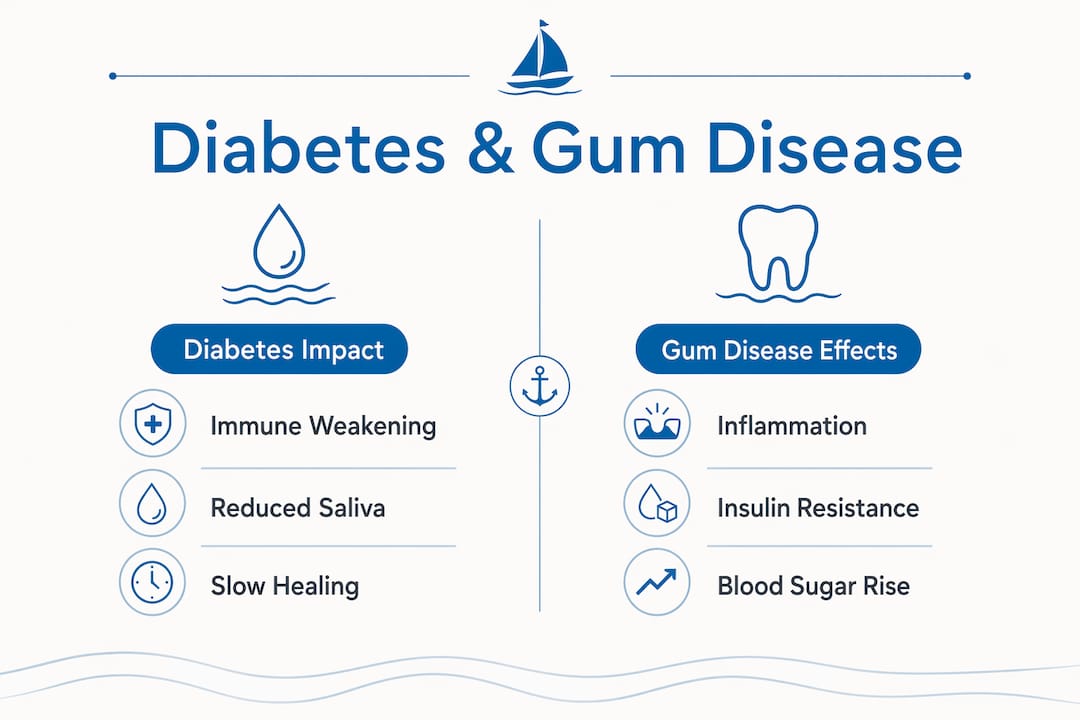
The clinical numbers are striking. Non-surgical periodontal therapy reduces HbA1c by approximately 0.3–0.6% within 3–4 months of treatment. That reduction is clinically comparable to adding a second diabetes medication. Treating your gums is not just a dental matter. It is a metabolic intervention.
| Effect direction | What happens | Clinical consequence |
|---|---|---|
| Diabetes affects gums | High glucose impairs immune response | Faster plaque buildup and tissue destruction |
| Diabetes affects gums | Reduced saliva and circulation | Higher infection risk and slower healing |
| Gum disease affects diabetes | TNF-alpha, IL-6, CRP elevation | Increased insulin resistance |
| Gum disease affects diabetes | Chronic systemic inflammation | Worsened HbA1c levels |
| Both conditions together | Compounding inflammatory cycle | Accelerated complications in both systems |
Oral health management is as critical as diet and exercise in diabetes care. Periodontal disease affects metabolic and cardiovascular health, not just your teeth and gums. Patients who treat gum disease as a cosmetic concern are missing a significant lever for controlling their blood sugar.
Pro Tip: Ask your primary care provider to add periodontal status to your diabetes review checklist. Coordinated care between your dentist and physician produces measurably better outcomes.
How often should people with diabetes visit the dentist?
Dental visit frequency for people with diabetes depends on how well blood sugar is controlled and whether active gum disease is present. The standard schedule of every 6 months applies to patients with well-controlled diabetes and healthy gums. If you have active gum disease or poor glycemic control, visits every 3–4 months are the appropriate standard.
The reason for more frequent visits is that the benefits of professional periodontal treatment fade without ongoing maintenance. Scaling and root planing, the non-surgical procedure that removes calculus and bacteria from below the gumline, produces measurable HbA1c improvements. But those gains diminish after 6 months without follow-up care. Consistent periodontal maintenance sustains both your gum health and your metabolic control.
Here is a practical framework for dental care if you have diabetes:
- Schedule a baseline periodontal assessment. Ask your dentist to probe and chart your gum pockets at your first visit. This gives you a clear picture of where inflammation exists and how severe it is.
- Establish your visit frequency. Work with your dentist to set a schedule based on your HbA1c level and current gum health. Do not default to twice a year if your gums are actively inflamed.
- Prioritize professional cleanings. Scaling and root planing removes the calcified deposits that home brushing cannot reach. This is the most direct way to reduce the bacterial load driving inflammation.
- Use fluoride treatments. Fluoride varnish applied at dental visits strengthens enamel and reduces cavity risk, which is elevated in people with diabetes due to higher glucose levels in saliva.
- Discuss your medications and blood sugar trends. Some diabetes medications cause dry mouth as a side effect. Your dentist can recommend saliva substitutes or adjust treatment timing around your medication schedule.
- Create a personalized dental treatment plan. A written plan that accounts for your diabetic status keeps your care proactive rather than reactive.
Patients with poorly controlled diabetes experience faster oral health deterioration. Waiting until something hurts is a costly strategy. By the time pain appears, significant tissue damage has often already occurred.
What daily oral health practices help manage diabetes-related oral risks?
Daily oral hygiene is the foundation of diabetes-related dental care. Professional cleanings matter, but what you do at home between appointments determines whether inflammation returns within weeks or stays controlled for months.
Regular brushing, flossing, and diet control reduce oral inflammation and plaque accumulation, both of which are critical for blood sugar stability. These habits are not optional extras. They are part of your diabetes management protocol.
- Brush twice daily with fluoride toothpaste. Use a soft-bristled brush and spend at least two minutes covering all surfaces. Electric toothbrushes remove more plaque than manual ones for most people.
- Floss or use interdental brushes daily. Flossing removes the bacteria between teeth that a toothbrush cannot reach. Interdental brushes work well for people with wider gaps or bridgework.
- Manage dry mouth actively. Sip water throughout the day, use alcohol-free mouth rinse, and ask your dentist about saliva substitutes or prescription-strength fluoride if dry mouth is severe.
- Watch what you eat after carbohydrates. Eating cheese after carbohydrate consumption stimulates saliva and forms a protective film on enamel. This is especially useful after treating a hypoglycemic episode with juice or glucose tablets.
- Avoid smoking. Smoking reduces blood flow to gum tissue, compounds the immune suppression caused by high blood sugar, and dramatically increases your risk of severe periodontal disease.
- Control blood sugar tightly. This is the single most powerful thing you can do for your oral health. Stable glucose levels reduce inflammation, improve saliva flow, and support faster healing.
Gum health is not separate from metabolic health. Every habit that stabilizes your blood sugar also protects your gums, and every habit that protects your gums also helps stabilize your blood sugar.
Key Takeaways
Diabetes and oral health share a bidirectional relationship: treating gum disease reduces HbA1c, and controlling blood sugar protects gum tissue from accelerated breakdown.
| Point | Details |
|---|---|
| Bidirectional relationship | Gum disease worsens insulin resistance; uncontrolled diabetes accelerates periodontal breakdown. |
| HbA1c impact of treatment | Non-surgical periodontal therapy reduces HbA1c by 0.3–0.6%, comparable to adding a diabetes medication. |
| Visit frequency matters | Patients with active gum disease or poor glycemic control need dental visits every 3–4 months. |
| Daily habits are non-negotiable | Brushing, flossing, and managing dry mouth reduce the inflammation that destabilizes blood sugar. |
| Diet plays a direct role | Eating cheese after carbohydrates protects enamel and stimulates saliva, reducing cavity risk. |
What I've learned watching patients manage both conditions
Most patients I see who have diabetes arrive at the dental chair focused entirely on their blood sugar numbers. Their endocrinologist has them tracking HbA1c, adjusting medications, and monitoring diet. Oral health is an afterthought. That gap is where serious complications develop quietly.
What I've observed consistently is that patients who treat periodontal care as part of their diabetes management, not separate from it, achieve more stable glycemic control over time. The inflammation reduction is real and measurable. A patient who completes scaling and root planing and maintains a 3-month cleaning schedule often reports that their next HbA1c reading surprised their physician.
The part that frustrates me is how long patients wait. Nearly half of U.S. adults aged 30 and older have periodontal disease. In diabetic populations, that prevalence is higher, and the severity is worse. Yet most patients do not connect their bleeding gums to their blood sugar readings. By the time they do, bone loss has already occurred.
My honest recommendation: treat your next dental appointment as a metabolic health appointment. Bring your most recent HbA1c result. Ask your dentist to assess your periodontal status formally. Then build a care schedule around your actual risk level, not a generic twice-a-year default. Your mouth and your metabolism will both respond.
— Alex
Dental care designed around your diabetes
Managing diabetes means paying attention to your whole body, and your mouth is a direct window into your metabolic health. Starboarddental offers general dentistry services and specialized periodontal care designed to address the specific risks that come with diabetes, including accelerated gum disease, dry mouth, and delayed healing.

Starboarddental's team in Kennebunk builds personalized care schedules based on your current HbA1c level and gum health status, not a one-size-fits-all calendar. Same-day appointments mean you do not have to wait when a problem develops. If you are managing diabetes and have not had a periodontal assessment recently, that is the right place to start.
FAQ
Can gum disease make diabetes harder to control?
Yes. Periodontal inflammation raises TNF-alpha, IL-6, and CRP levels, which increase insulin resistance and worsen glycemic control. Treating gum disease can reduce HbA1c by 0.3–0.6%.
Do diabetics need special dental care?
People with diabetes need more frequent monitoring and often require visits every 3–4 months rather than the standard 6-month schedule, particularly when gum disease is active or blood sugar is poorly controlled.
How does high blood sugar affect teeth and gums?
High glucose impairs immune cell function in gum tissue, reduces saliva flow, and slows healing. These effects increase the risk of periodontitis, cavities, oral thrush, and post-procedure infections.
What is the best toothpaste for people with diabetes?
A fluoride toothpaste is the standard recommendation. Fluoride strengthens enamel and reduces cavity risk, which is elevated in people with diabetes due to higher glucose concentrations in saliva.
Can improving oral health lower blood sugar?
Yes. Non-surgical periodontal therapy produces clinically significant HbA1c reductions within 3–4 months of treatment, making gum care a direct tool in diabetes management.