
Dental implants are titanium posts surgically placed in the jaw to replace missing tooth roots, and caring for them properly is the single most important factor in how long they last. The industry term for implant maintenance covers daily hygiene, implant-safe product selection, and professional monitoring to prevent peri-implantitis, a destructive inflammatory condition that attacks the gum and bone surrounding an implant. Unlike natural teeth, implants lack protective periodontal ligaments, which means plaque builds up faster and disease progresses more aggressively when cleaning is inconsistent. With the right routine, implants can last a lifetime. Without it, failure is a real risk.
How to care for dental implants properly: tools and products
The right tools make or break your implant hygiene routine. A soft-bristled manual toothbrush or an electric toothbrush with a pressure sensor works best. Electric brushes with oscillating heads remove plaque effectively without the force that can irritate peri-implant tissue.
Toothpaste selection matters more than most patients realize. Abrasive toothpastes and whitening products scratch implant and crown surfaces, creating microscopic grooves where bacteria collect. Charcoal toothpastes fall into the same category. Choose a low-abrasive, fluoride-based toothpaste labeled safe for implants or sensitive teeth.
Flossing tools for implants include:
- Implant-safe floss or unwaxed tape: Slides cleanly around the implant post without shredding
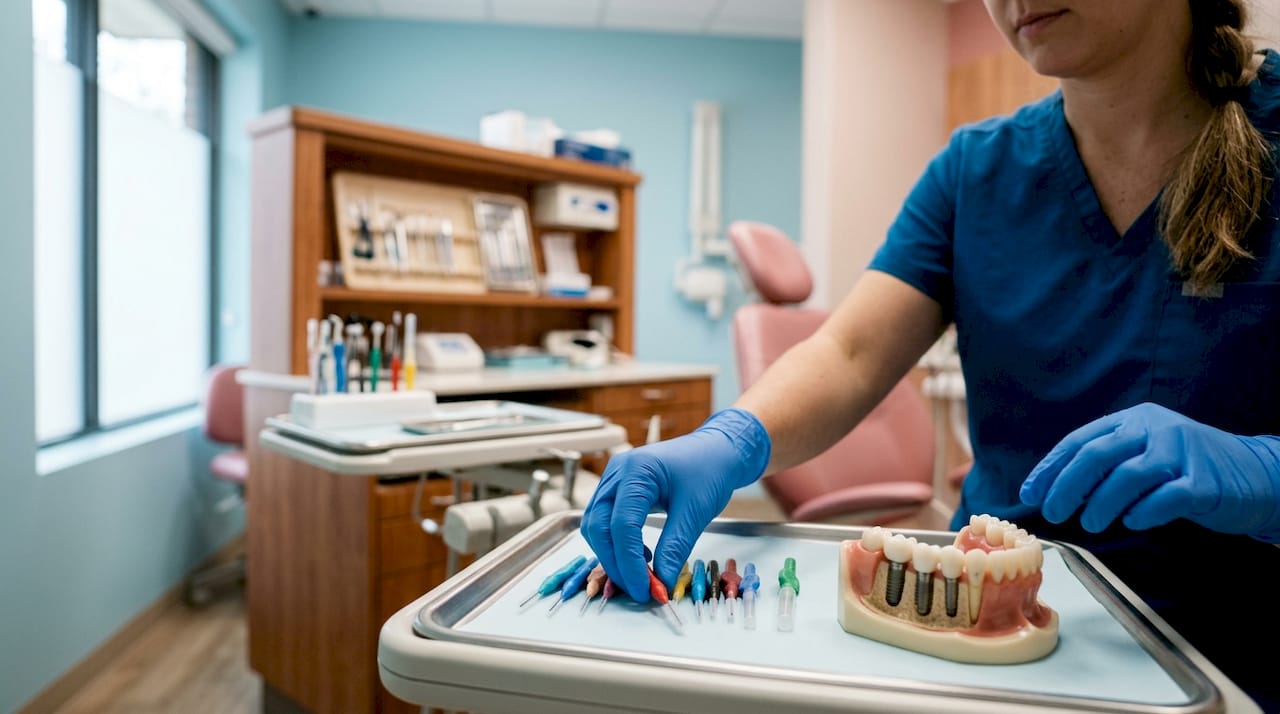
- Interdental brushes: Reach between implants and under bridges where standard floss cannot go
- Water flossers: Flush debris and bacteria from hard-to-reach areas, especially under implant-supported bridges
- Alcohol-free antibacterial mouthwash: Reduces bacterial load without drying or irritating peri-implant tissue
One detail patients frequently overlook is interdental brush sizing. Improper brush size either fails to remove plaque or traumatizes the gum tissue and scratches the implant surface. Both outcomes accelerate disease.
Pro Tip: Ask your dentist or hygienist to size your interdental brushes at your next visit. Professional calibration of brush size is often necessary to balance effective plaque removal with tissue safety.
What does a daily implant cleaning routine look like?
A consistent daily routine is the foundation of long-term implant health. Follow these steps every morning and evening:
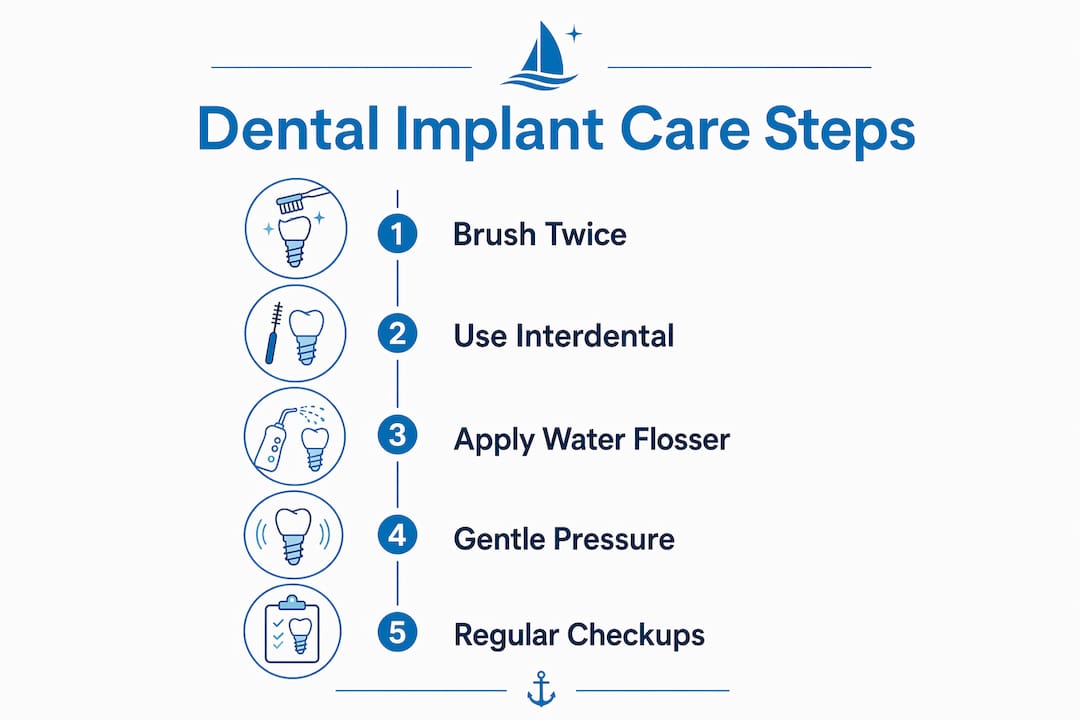
- Brush for two minutes using gentle circular motions. Focus the bristles at a 45-degree angle toward the gumline to clean the junction between the implant crown and the gum. Never scrub back and forth with hard pressure.
- Floss once daily using implant-safe floss or an interdental brush. Wrap the floss in a "C" shape around the implant post and slide it gently below the gumline. For bridges, thread the floss underneath the pontic (the artificial tooth spanning the gap) to clean the underside.
- Use a water flosser after flossing if you have a bridge or multiple implants. Set it to medium pressure and direct the tip at the gumline. Water flossers reach areas that standard flossing misses, particularly under implant-supported restorations.
- Rinse with an alcohol-free antibacterial mouthwash for 30 seconds. Alcohol-based rinses cause tissue dryness and irritation that harms the peri-implant tissue over time.
- Check for early warning signs while rinsing. A bad taste, bleeding, or swelling around an implant is never normal and warrants a call to your dentist.
The most common mistakes patients make are using too much pressure when brushing, skipping the under-crown area entirely, and dropping interdental cleaning from the routine when it feels inconvenient. Stopping daily cleaning leads to faster disease progression around implants than around natural teeth. That is not a reason to panic. It is a reason to be consistent.
Pro Tip: Keep your water flosser on the bathroom counter rather than in a cabinet. Visibility increases the odds you actually use it every day.
What lifestyle habits support or harm implant health?
Daily habits outside of brushing have a direct impact on implant longevity. Some protect your investment. Others quietly undermine it.
- Smoking: Smoking impairs blood flow and inflammation control, which destabilizes tissue around implants even when hygiene is otherwise good. Quitting is the single most impactful lifestyle change a smoker with implants can make.
- Hard and sticky foods: Chewing ice, hard candies, or sticky caramel puts mechanical stress on the implant crown and the underlying post. This can loosen the abutment screw or crack the crown over time.
- Teeth grinding: Bruxism applies repeated lateral force to implants that they are not designed to absorb. A custom night guard distributes that force and protects both the implant and the opposing teeth.
- Hard objects: Chewing on pens, fingernails, or bottle caps transfers unpredictable force to the implant. The habit feels harmless but causes cumulative damage.
- Diet: Calcium-rich foods like dairy, leafy greens, and almonds support bone density around the implant. Vitamin C from citrus and bell peppers supports gum tissue repair.
Patients with systemic conditions like diabetes need more deliberate care plans. Managing systemic health directly improves implant healing and long-term stability. If you have diabetes or another condition that affects healing, tell your dentist so they can adjust your monitoring schedule accordingly.
Alcohol-based mouthwashes belong in this list too. They feel like they are doing something powerful, but they dry out the tissue and irritate the peri-implant area. Swap them for an alcohol-free antibacterial rinse and you remove a daily source of low-grade irritation.
Why do regular dental checkups matter for implant care?
Professional monitoring is not optional for implant patients. It is the safety net that catches problems before they become irreversible. Patients with implants should schedule checkups every 3–6 months per 2026 clinical guidelines. That frequency is higher than the standard annual or biannual schedule for patients without implants.
During each visit, your dental team evaluates:
- Implant stability: The implant post is checked for any movement, which signals bone loss
- Tissue health: Gum color, texture, and pocket depth around the implant are measured
- Bone levels: Periodic X-rays track whether bone is maintaining its height around the post
- Crown and abutment integrity: Screws can loosen and crowns can chip; both are caught and corrected early
Specialized cleaning tools used in professional settings remove calculus and biofilm from implant surfaces that home tools cannot reach. Instruments used on implants are typically plastic or titanium-tipped to avoid scratching the implant surface. This is a meaningful difference from standard cleaning instruments used on natural teeth.
| Checkup element | Why it matters |
|---|---|
| Implant stability test | Detects early bone loss before symptoms appear |
| Pocket depth measurement | Identifies peri-implant disease in its earliest stage |
| Radiographic bone assessment | Confirms bone height is maintained around the post |
| Professional biofilm removal | Clears deposits unreachable by home cleaning |
| Crown and abutment check | Catches loose screws or cracks before they worsen |
Early detection of peri-implant disease is the most effective way to avoid implant failure. Waiting until you feel pain means the disease has already progressed significantly. Inflammation around an implant is never normal, and it should prompt an evaluation, not a wait-and-see approach.
Key Takeaways
Caring for dental implants properly requires consistent daily hygiene, implant-safe products, healthy lifestyle habits, and professional monitoring every 3–6 months to prevent peri-implantitis and protect long-term implant stability.
| Point | Details |
|---|---|
| Use implant-safe tools | Choose low-abrasive toothpaste, soft-bristled brushes, and properly sized interdental brushes. |
| Follow a daily two-step routine | Brush twice and floss once daily, focusing on the gumline and under-crown areas. |
| Avoid damaging habits | Quit smoking, skip hard or sticky foods, and use a night guard if you grind your teeth. |
| Schedule checkups every 3–6 months | Professional monitoring catches peri-implant disease before it causes irreversible bone loss. |
| Act on early symptoms immediately | Bleeding, bad taste, or swelling around an implant requires prompt professional evaluation. |
What I have learned from watching patients succeed and fail with implants
The patients I have seen keep their implants for decades share one trait: they treat their implants like a serious investment, not a set-it-and-forget-it solution. The patients who run into trouble almost always fall into one of two patterns. Either they skip interdental cleaning because it feels tedious, or they wait too long to come in when something feels off.
The most underrated piece of advice I can give is this: pay attention to subtle changes. Early implant problems rarely announce themselves with dramatic pain. They show up as a faint bad taste, a little bleeding when you floss, or a gum that looks slightly puffier than usual. Those are the signals that matter. Catching them at that stage means a simple professional cleaning and an adjusted home routine. Missing them means a much harder conversation later.
The other thing I consistently see is patients using the wrong interdental brush size for months because nobody told them there was a right size. Getting that calibrated by a professional takes two minutes and makes a real difference in what you are actually removing each day.
Implant success is rarely chance. Consistent clinical monitoring and early inflammation detection are what separate patients who keep their implants for life from those who do not. Your daily routine matters more than any single dental visit. Both matter more than luck.
— Alex
Implant care and professional support at Starboarddental
Starboarddental in Kennebunk provides professional cleanings, implant evaluations, and personalized hygiene instruction for patients who want to protect their implants for the long term.

The team uses digital scanning technology and specialized instruments designed for implant surfaces, so each visit gives you an accurate picture of your implant health. Whether you need a routine checkup, a periodontal evaluation, or guidance on building a better home routine, Starboarddental tailors each appointment to your specific situation. Patients with conditions like diabetes or bruxism receive care plans that account for those added risk factors. Schedule your next visit at Starboarddental's general dentistry services and keep your implants in the best possible shape.
FAQ
How often should I brush my dental implants?
Brush your implants twice daily using a soft-bristled or electric toothbrush with gentle circular motions at the gumline. Consistent twice-daily brushing prevents biofilm buildup that leads to peri-implant disease.
Can I use whitening toothpaste on dental implants?
Whitening and charcoal toothpastes are too abrasive for implant surfaces and damage crown surfaces, increasing bacteria retention. Use a low-abrasive, fluoride-based toothpaste instead.
What are the early signs of a problem with a dental implant?
Bleeding, a persistent bad taste, or swelling around an implant are the most common early warning signs. These symptoms require prompt professional evaluation rather than a wait-and-see approach.
Do dental implants need professional cleaning differently than natural teeth?
Dental professionals use plastic or titanium-tipped instruments on implants to avoid scratching the surface, unlike the steel scalers used on natural teeth. Implant patients also need checkups every 3–6 months rather than the standard annual or biannual schedule.
Does smoking affect dental implants?
Smoking significantly impairs tissue stability and healing around implants by reducing blood flow and inflammation control. Patients who smoke face a higher risk of implant failure even when their daily hygiene routine is otherwise solid.