
Speeding up dental treatment recovery is achievable with targeted care protocols, and proactive strategies can reduce recovery time by 40–50% compared to standard passive healing. The typical post-surgical window runs 7–14 days, but patients who follow structured wound care, take medications on schedule, and use advanced therapies like photobiomodulation (PBM) and platelet-rich fibrin (PRF) consistently come out ahead. Recovery is not a waiting game. It is a clinical process you can actively manage. This guide covers the most effective methods, grounded in 2026 clinical evidence, to help you heal faster and with less discomfort.
How to speed up dental treatment recovery with post-op care
The foundation of faster healing is what you do in the first 72 hours after your procedure. Most complications, including infection, excessive swelling, and dry socket, trace back to errors made in this early window. Getting these basics right is not optional. It is the difference between a smooth recovery and a setback.
Ice therapy: timing and technique
Ice applied within the first 48–72 hours reduces swelling by up to 50%. Swelling peaks around 48 hours post-surgery, which means your ice protocol must be consistent during that window to work. Use a 20-minutes-on, 20-minutes-off cycle. Never apply ice directly to skin. Wrap it in a cloth and hold it against your cheek over the surgical site.
Head elevation during sleep
Elevating your head for the first three days cuts swelling by up to 60% compared to lying flat. Blood pools in the head when you lie down, which drives inflammation. Use two or three pillows, or a wedge pillow, to keep your head above your heart level. This simple adjustment also reduces morning throbbing, which many patients mistake for infection.
Medication timing
Starting ibuprofen at 400–600mg every 6 hours immediately after surgery controls inflammation better than waiting for pain to peak. This is called preemptive dosing. The inflammatory cascade begins the moment your procedure ends. Waiting until pain becomes severe means you are already behind. Take your first dose before the local anesthetic wears off, with food to protect your stomach.
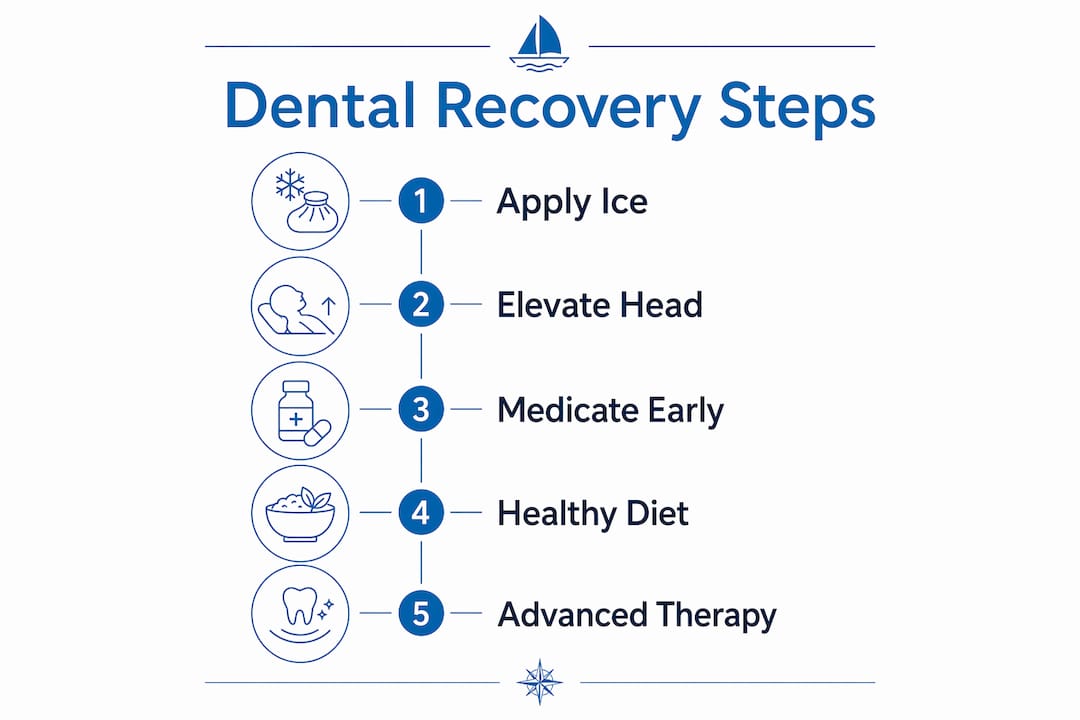
Pro Tip: Set phone alarms for every medication dose. Missing even one window during the first 48 hours can let inflammation surge and set your recovery back by a full day.
The rest of your foundational care checklist:
- Eat soft foods only for the first 3–5 days. Think yogurt, scrambled eggs, mashed potatoes, and smoothies.
- Stay well hydrated with water. Dehydration slows tissue repair at the cellular level.
- Avoid using straws for at least 72 hours. The suction pressure can dislodge the surgical clot.
- Take all prescribed antibiotics for the full course, even if you feel fine after two days.
- Keep the surgical site clean using gentle saltwater rinses starting 24 hours post-op.
How do advanced biological adjuncts and laser therapies boost dental healing?
Standard post-op care gets you most of the way there. Advanced therapies get you the rest. Two treatments in particular, photobiomodulation and platelet-rich fibrin, have strong clinical backing and are worth discussing with your dental provider before or after your procedure.
Photobiomodulation therapy
Photobiomodulation (PBM) uses low-level laser or light energy to stimulate healing at the cellular level. PBM activates mitochondrial chromophores, increasing ATP production and triggering signaling molecules that promote tissue repair. The result is measurably faster healing and significantly less pain.
Clinical trials show PBM reduces post-op pain by up to 50% and improves healing scores at days 3, 7, and 14 after surgery. That is not a marginal benefit. It is a clinically meaningful shift in the recovery curve. PBM also modulates the NF-κB and PI3K/AKT pathways, which are the molecular switches that control inflammation and cell survival. This means PBM does more than mask pain. It changes the biology of your wound.
"Photobiomodulation creates a favorable healing environment by simultaneously reducing inflammatory signaling and boosting the cellular energy needed for tissue repair. The clinical evidence at days 3, 7, and 14 post-surgery confirms this is not a placebo effect."
Platelet-rich fibrin
Platelet-rich fibrin (PRF) is a concentrate made from your own blood. It is spun in a centrifuge to isolate growth factors, which are then applied directly to the surgical site. PRF combined with demineralized tooth matrix produces significantly greater probing depth reduction and crestal bone level gains at 3, 6, and 9 months post-op compared to PRF alone.
Platelet-rich plasma application also reduces pain, swelling, and trismus after impacted molar extraction, with statistically significant improvements across all major healing parameters. PRF works because it delivers a concentrated dose of your body's own repair signals directly where healing needs to happen.
Key benefits of advanced biological adjuncts at a glance:
| Therapy | Primary benefit | Clinical evidence |
|---|---|---|
| Photobiomodulation (PBM) | Pain reduction and tissue repair | Up to 50% pain reduction in clinical trials |
| Platelet-rich fibrin (PRF) | Bone and soft tissue regeneration | Significant gains at 3, 6, 9 months post-op |
| PRF + tooth matrix | Enhanced periodontal regeneration | Superior outcomes vs. PRF alone (p < 0.001) |
Ask your dental provider whether PBM or PRF is appropriate for your specific procedure. Not every practice offers both, but the evidence for requesting them is strong. Starboarddental integrates advanced care options into its treatment protocols for patients who qualify.
What lifestyle adjustments help accelerate dental recovery?
Your body heals from the inside out. What you eat, drink, and do during recovery directly affects how fast your tissue repairs itself. These are not soft suggestions. They are metabolic inputs that either support or undermine your healing.

Recovery is a metabolic process. Fibroblasts, the cells that build connective tissue, depend on specific nutrients to function. Without adequate protein, vitamin C, and zinc, your body simply cannot rebuild tissue at full speed.
Nutrition for faster healing
- Protein: Aim for at least 1.2–1.6 grams per kilogram of body weight daily. Good sources include eggs, Greek yogurt, cottage cheese, fish, and protein shakes.
- Vitamin C: 500–1,000mg daily boosts collagen formation and fibroblast activity. Citrus juice works, but a supplement is more reliable during recovery.
- Zinc: 15–30mg daily accelerates tissue regeneration. Pumpkin seeds, beef, and chickpeas are solid food sources.
- Turmeric and arnica: Both reduce inflammation through different pathways. Turmeric (curcumin) inhibits inflammatory enzymes. Arnica, used topically or as a homeopathic tablet, reduces bruising and swelling.
Behaviors that slow you down
Smoking quadruples infection risk after dental surgery. Alcohol nearly triples it by suppressing immune function. Both also constrict blood vessels, which reduces oxygen delivery to healing tissue. Avoid both for at least 7–14 days post-op. This is not a lifestyle judgment. It is a clinical fact with direct consequences for your recovery timeline.
Pro Tip: If quitting smoking cold turkey during recovery feels difficult, talk to your provider about nicotine patches. They deliver nicotine without the smoke and suction that damage surgical sites.
Adequate sleep is also non-negotiable. Growth hormone, which drives tissue repair, releases primarily during deep sleep. Aim for 7–9 hours per night. Limit screen time before bed to protect sleep quality during your recovery window. For more on supporting gum health during and after treatment, Starboarddental has a dedicated resource worth reviewing.
What recovery mistakes slow down dental healing?
Even patients who follow most instructions make a few common errors that quietly extend their recovery. Knowing what to avoid is just as important as knowing what to do.
- Rinsing too soon. Rinsing or spitting forcefully in the first 24 hours dislodges the blood clot that protects the surgical site. Losing this clot causes dry socket, a painful condition that can add 5–7 days to your recovery.
- Skipping medication doses. Missing a dose of ibuprofen or antibiotics is not a minor lapse. Inflammation and bacterial load both build quickly. One missed dose can undo 12 hours of controlled healing.
- Exercising too early. Elevated heart rate and blood pressure increase bleeding risk and can dislodge clots. Avoid strenuous activity for at least 48–72 hours. Light walking is fine after 24 hours.
- Hot showers and heat exposure. Heat dilates blood vessels and increases swelling. Stick to lukewarm showers for the first 48 hours. Avoid saunas and hot tubs entirely during the first week.
- Ignoring warning signs. Fever above 101°F, increasing pain after day 3, pus, or a foul taste are signs of infection. Contact your dentist immediately. Delayed treatment of infection significantly extends recovery.
"The most common reason patients end up back in the chair is not the procedure itself. It is a preventable post-op mistake made in the first 48 hours. Protecting the clot and staying ahead of inflammation are the two things that matter most."
For patients managing sensitivity alongside recovery, reviewing tips for sensitive teeth can help distinguish normal post-op discomfort from a developing problem.
Key Takeaways
Combining proactive post-op care, anti-inflammatory medication timing, and advanced therapies like PBM and PRF is the most effective way to improve dental recovery time and reduce complications.
| Point | Details |
|---|---|
| Ice therapy timing | Apply ice for 20 minutes on/off within the first 48–72 hours to cut swelling by up to 50%. |
| Preemptive medication | Start ibuprofen immediately after surgery, before pain peaks, to stay ahead of inflammation. |
| Advanced therapies | Ask your provider about PBM and PRF. Both have strong clinical evidence for faster healing. |
| Nutritional support | Take 500–1,000mg vitamin C and 15–30mg zinc daily to fuel tissue repair at the cellular level. |
| Avoid key mistakes | Never rinse forcefully in the first 24 hours, skip doses, or exercise strenuously in the first 48 hours. |
What I've learned watching patients recover faster or slower
I have seen patients follow identical procedures and end up with wildly different recovery timelines. The gap almost always comes down to two things: how seriously they took the first 48 hours, and whether they asked about advanced options before their procedure.
Most patients assume recovery is passive. You have the procedure, you go home, you wait. That mindset is the single biggest obstacle to healing faster. The patients who recover quickest treat the first three days like a protocol, not a suggestion. They set alarms for medication, they sleep elevated, and they eat deliberately.
The other pattern I keep seeing is that patients who ask about PBM or PRF before their procedure consistently report less pain and return to normal function sooner. These are not experimental treatments. The clinical evidence is solid. But most patients never ask, because they do not know to ask. That is a fixable problem. A good dental treatment plan should include a conversation about which adjuncts are appropriate for your specific procedure.
The technology available in 2026 makes faster recovery genuinely achievable. The gap between a 14-day recovery and a 7-day recovery is not luck. It is information, applied consistently.
— Alex
Starboarddental's approach to faster, more comfortable recovery
Starboarddental, located in Kennebunk, builds post-operative support directly into its general dental care protocols. The practice stays current with 2026 clinical standards and offers personalized recovery plans that account for your specific procedure, health history, and lifestyle. Patients can discuss advanced options including regenerative therapies during their consultation, so there are no surprises after the procedure. Same-day appointments mean you can get answers quickly when something does not feel right during recovery. If you are preparing for a procedure or already in recovery and want a clearer plan, Starboarddental is ready to help you move through it faster and with less discomfort.
FAQ
How long does dental treatment recovery typically take?
Most dental procedures involve a 7–14 day healing window. Patients who follow structured post-op protocols, including ice therapy, medication timing, and nutritional support, can reduce that window by 40–50%.
What is photobiomodulation and does it really help?
Photobiomodulation uses low-level laser light to stimulate cellular repair. Clinical trials confirm it reduces post-op pain by up to 50% and improves healing scores at days 3, 7, and 14 after surgery.
When should I contact my dentist during recovery?
Contact your dentist immediately if you develop a fever above 101°F, experience increasing pain after day 3, notice pus, or taste something foul. These are signs of infection that require prompt treatment.
Can diet actually speed up tooth recovery?
Yes. Vitamin C at 500–1,000mg daily and zinc at 15–30mg daily directly boost collagen production and fibroblast activity, the cellular processes that rebuild tissue after dental procedures.
Is it safe to exercise after dental surgery?
Avoid strenuous exercise for at least 48–72 hours post-op. Elevated heart rate and blood pressure increase bleeding risk and can dislodge the surgical clot, leading to dry socket and a longer recovery.