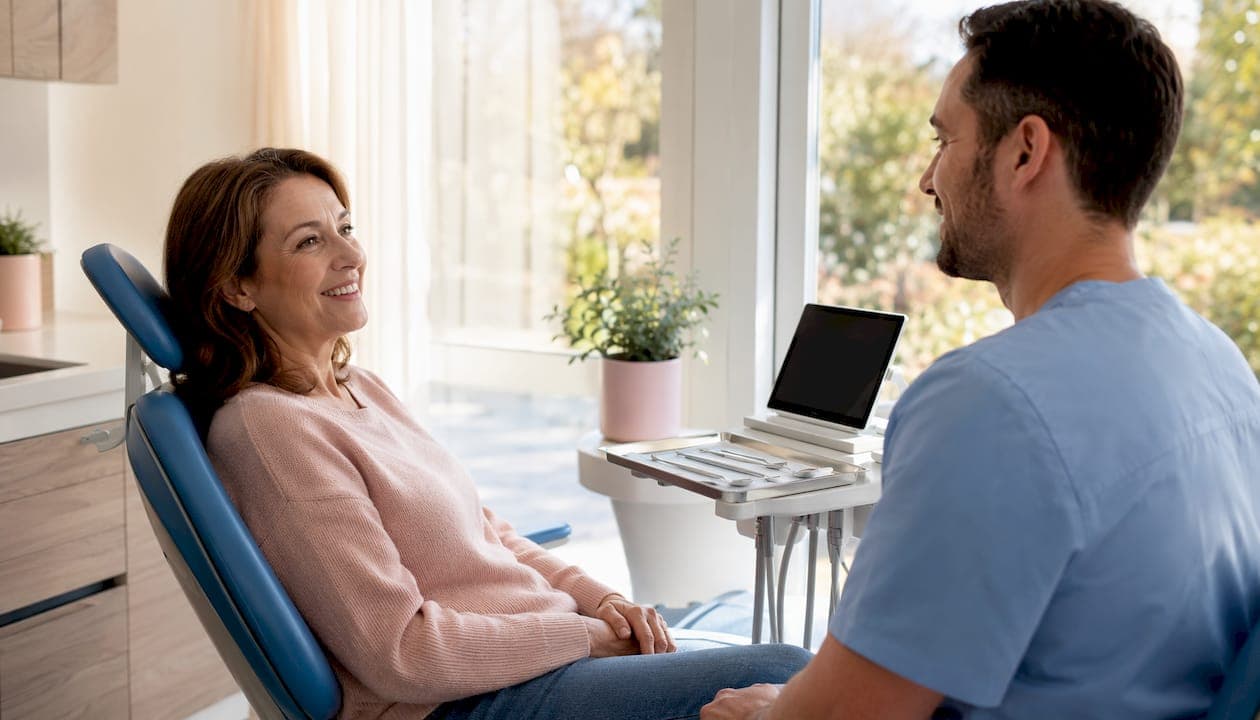
Patient-centered dental care delivers measurably better results across every dimension that matters to patients: less anxiety in the chair, stronger trust in your dentist, higher treatment success rates, and fewer emergency visits over time. Health services research confirms that adopting this model leads to enhanced patient satisfaction, improved clinical outcomes, and reduced reliance on urgent dental services. The shift is not cosmetic. It changes how care is designed, delivered, and measured.
The core benefits, at a glance:
- Emotional: reduced dental anxiety, feeling genuinely heard, stronger dentist-patient trust
- Clinical: better treatment adherence, improved outcomes for conditions like periodontitis and implant placement
- Practical: fewer emergency visits, coordinated care that accounts for your full medical picture
- Financial: fewer repeat procedures and lower urgent-care costs over time
Table of Contents
- What are the real benefits of patient-centered dental care?
- How does patient-centered care actually work in a dental office?
- What does the research actually show about outcomes?
- Who benefits most, and how quickly can you expect results?
- How do you find a patient-centered dentist and what should you ask?
- How Starboard Dental puts patient-centered care into practice
- Key Takeaways
- Why patient-centered care is the standard worth holding dentistry to
- Starboarddental: patient-centered care you can actually book
- Recommended sources and further reading
What are the real benefits of patient-centered dental care?
Patient-centered care organizes itself around four benefit categories, and each one compounds the others.
Emotional benefits are often the first thing patients notice. When a dentist asks about your anxiety triggers before picking up an instrument, the appointment feels different. Psychosocial factors like dental anxiety and socioeconomic barriers are key determinants of oral health, and patient-centered care directly addresses them by weaving behavioral and social context into every care plan.
Clinical benefits show up in the data. Precision dentistry research finds that personalized care reduces psychological stress and medical errors by enabling targeted treatment protocols for conditions like periodontitis and orofacial pain. Practices using targeted diagnostics, including microbiota analysis and genetic screening, can also reduce broad-spectrum antibiotic prescriptions in favor of precisely matched therapies, cutting side effects and improving outcomes.
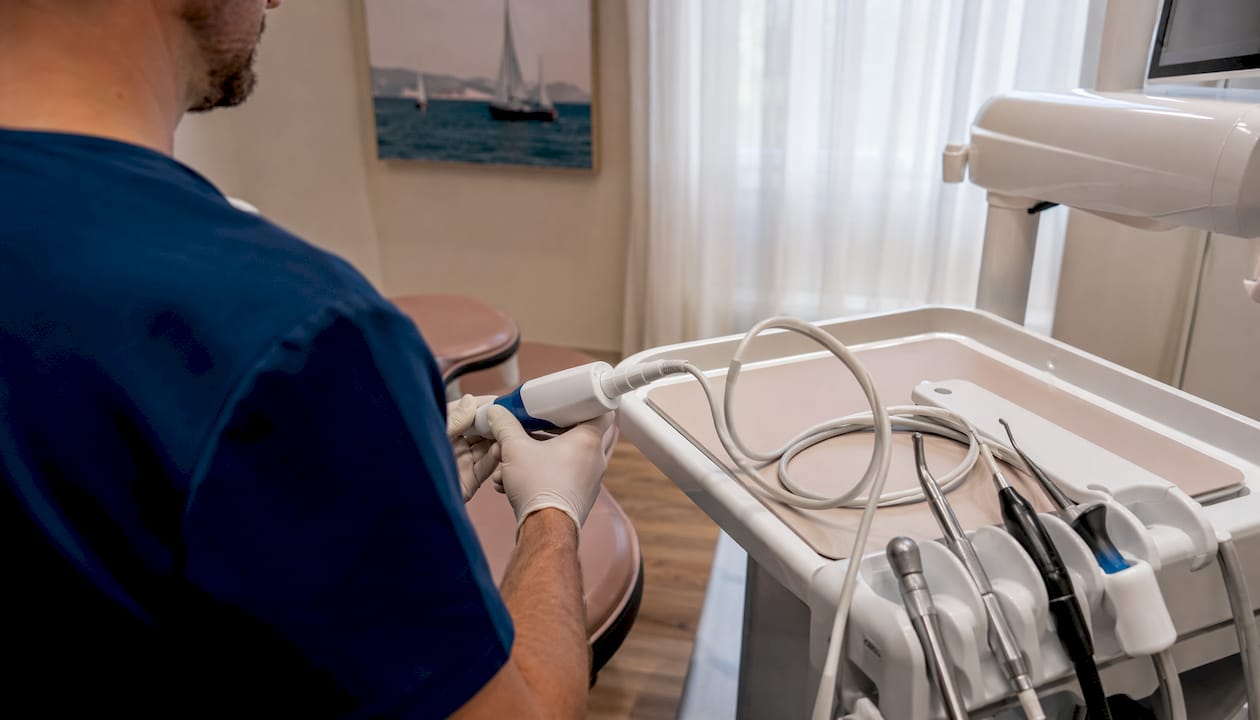
Practical benefits center on coordination. The patient-centered dental home model integrates medical history, genetics, and lifestyle into tailored treatment plans, so your dentist is not working from a blank slate at every visit. That continuity reduces duplicated tests and catches systemic connections, like the link between diabetes and oral health, that a fragmented system misses.
Cost and time benefits follow from the others. Fewer emergency visits and fewer repeat procedures add up. Systematic reviews link patient-centered care to reduced utilization of care and improved health status, benefits that extend to both patients and the professionals treating them.
How does patient-centered care actually work in a dental office?
A dentistry-specific review defines patient-centered care through two distinct sets of components, and both matter.
Relational components are the human side: connection, clinician attitude, clear communication, patient empowerment, and feeling valued. In practice, this means your dentist explains options in plain language, invites your preferences before recommending a path, and treats your stated priorities as clinical data. Research from the British Dental Journal identifies these five relational elements as the foundation of what patients actually value in a dental encounter.
Functional components are the system side: the physical environment, appointment design, access, and continuity of care. A welcoming waiting room, same-day availability for urgent concerns, and a consistent provider across visits are not perks. They are structural features that make the relational side possible.
Shared decision-making (SDM) sits at the center of both. In an SDM appointment, the dentist presents options with their trade-offs, asks what matters most to you, and builds the treatment plan from that conversation. Patient-Reported Experience Measures (PREMs) are then used to track whether that experience actually landed the way it was intended.
Pro Tip: Before your first appointment at any new practice, write down two or three things that make dental visits hard for you, whether that is a specific sound, a past bad experience, or uncertainty about costs. Hand that list to the front desk at intake. A patient-centered practice will use it; one that ignores it is telling you something important.
What does the research actually show about outcomes?
Patient-centered care in general dental practice is not just a philosophy. Systematic reviews link it to measurable improvements in satisfaction, clinical results, and care utilization. The evidence is strongest for satisfaction and anxiety reduction; longer-term clinical outcome data is growing but still developing, particularly for dentistry-specific guidelines.
| Measure | What the research reports |
|---|---|
| Patient satisfaction | Consistently higher in PCC settings vs. standard care |
| Dental anxiety | Reduced through relational components and continuity |
| Treatment adherence | Improved when patients participate in decisions |
| Emergency/urgent visits | Reduced with coordinated dental home model |
| Periodontal outcomes | Better management with personalized protocols |
| Implant success | Improved through tailored planning and diagnostics |
PREMs capture the experience side: did you feel listened to, were options explained clearly, did you leave knowing what to do next? Clinical outcome metrics capture the biological side: pocket depth, bone levels, implant integration rates. The strongest practices track both.
One honest caveat: dentistry-specific PCC guidelines and training remain limited. Evidence reviews note that lack of standardized training slows uptake despite clear potential. That gap means the quality of patient-centered care varies significantly between practices, which is exactly why knowing what to look for matters.
Who benefits most, and how quickly can you expect results?
Some patients see the difference immediately. Others need a few visits before the compounding effects show up.
Patients who gain the most from patient-focused dental services:
- Adults with dental anxiety or dental phobia
- Patients managing chronic conditions like diabetes, heart disease, or autoimmune disorders
- Children, especially those with sensory sensitivities or past traumatic dental experiences
- Older adults with complex medication lists or multiple providers
- Anyone with a history of inconsistent or fragmented dental care
Typical timeline:
- Immediate (first visit): reduced anxiety, feeling heard, clearer understanding of your treatment options
- Short-term (2–4 visits): stronger trust, higher likelihood of following through on recommended care
- Medium-term (6–12 months): measurable improvements in adherence to prevention plans, fewer missed appointments
- Long-term (1+ years): better management of chronic oral conditions, reduced emergency visits, improved clinical markers
Cost considerations shift over time too. The upfront investment in a thorough intake and personalized plan tends to reduce downstream costs from emergency care and retreatment. Continuity of care, a defining feature of the dental home model, is what makes that long-term payoff possible.
How do you find a patient-centered dentist and what should you ask?
The right questions at booking and intake reveal a lot. Here is a checklist to use at your first visit or even during a phone inquiry:
- Do I see the same dentist at each visit, or does it rotate?
- How do you handle patients with dental anxiety?
- Will you explain my treatment options and their trade-offs before recommending one?
- How do you incorporate my medical history and medications into my dental care?
- Can I reach someone quickly if I have an urgent concern between appointments?
- How do you track whether my treatment is working over time?
- Do you use digital tools like scanners or imaging to personalize my plan?
- How do you involve me in decisions about my care?
Red flags to watch for: a dentist who talks over your concerns, a practice that hands you a treatment plan without discussion, no follow-up after a procedure, and no mechanism for you to give feedback on your experience.
Pro Tip: Bring a written list of your top three dental priorities to your first appointment, whether that is avoiding pain, improving your smile, or managing a specific condition. Handing it over signals that you want to be involved, and it gives a patient-centered dentist exactly the kind of information they are trained to use.
How Starboard Dental puts patient-centered care into practice
Starboarddental in Kennebunk, ME, applies both the relational and functional components of patient-centered care in ways patients notice from the first call.
On the functional side: same-day appointments for urgent concerns, digital scanners for precise, comfortable impressions, and ceiling-mounted TVs during procedures that give patients something to focus on besides the drill. These are not decorations. They are deliberate design choices that reduce anxiety and improve the experience of care.
On the relational side: longer intake conversations, personalized comfort items, and a consistent provider relationship that builds the kind of trust research links to better adherence and long-term outcomes. Shared decision-making is built into how treatment options are presented, not added on as an afterthought.
Consider a patient who has avoided the dentist for years because of a bad childhood experience. At Starboarddental, that history is collected at intake, shared with the care team, and used to shape every step of the appointment, from the pace of the exam to the choice of anesthetic technique. That patient leaves with a treatment plan they helped design, which means they are far more likely to follow through.
"Practitioners must learn to partner with patients to make clinical decisions based on elicited values and preferences, or care will not be person-centered." — Journal of Public Health Dentistry
Starboarddental's general dentistry services and cosmetic dentistry are both built around this model, serving patients across Kennebunk, York, and Saco, ME.
Key Takeaways
Patient-centered dental care produces measurably better outcomes by aligning treatment with each patient's values, history, and preferences, not just their clinical chart.
| Point | Details |
|---|---|
| Emotional benefits come first | Reduced anxiety and feeling heard are the most immediate gains patients report. |
| Clinical outcomes follow trust | Better adherence and improved markers for conditions like periodontitis develop over months to years. |
| Coordination cuts costs | Fewer emergency visits and repeat procedures result from continuity and a dental home model. |
| PREMs track what matters | Patient-Reported Experience Measures capture the experience side that clinical metrics alone miss. |
| Starboarddental in Kennebunk | Applies same-day access, digital tools, and shared decision-making to deliver PCC across general and cosmetic dentistry. |
Why patient-centered care is the standard worth holding dentistry to
Most people assume that a technically skilled dentist is all they need. The research says otherwise. A dentist who never asks what you value, never explains trade-offs, and never follows up is leaving real clinical outcomes on the table, not just patient satisfaction scores.
What strikes me most about the evidence is how much of the benefit flows from structural decisions, not individual personality. A practice that builds continuity into its scheduling, uses PREMs to check its own work, and trains its team in shared decision-making will outperform a charismatic dentist working in a fragmented system. The system matters as much as the person.
For patients with dental anxiety especially, the difference between a patient-centered practice and a standard one is not a matter of comfort preference. It is the difference between getting care and avoiding it for years. That avoidance has real clinical consequences, and addressing it is one of the most underappreciated benefits of this model.
If you are evaluating a new practice, hold it to this standard. Ask the questions. Watch how the team responds. A practice that welcomes those questions is already showing you something.
Starboarddental: patient-centered care you can actually book
Starboarddental brings the full patient-centered model to Kennebunk, ME, with same-day appointments, digital precision tools, and a care team that builds your treatment plan around your history, preferences, and goals, not a generic protocol.
Whether you need a comprehensive exam, periodontal care, or a cosmetic consultation, the process starts with a conversation, not a clipboard. Visit Starboarddental's general dentistry page to see what a first appointment looks like, or explore conditions treated to find care matched to your specific situation. Booking is straightforward, and same-day availability means you do not have to wait weeks to get started.
Recommended sources and further reading
For readers who want to go deeper into the research behind patient-centered dental care:
- Person-centered care model in dentistry (PMC) — foundational health services research on satisfaction, clinical outcomes, and urgent-care reduction
- Patient-centered dental home model (PMC) — describes the accessible, comprehensive, continuous, and coordinated care model
- Enhancing patient-centred care in dentistry: a narrative review (PMC) — covers PREMs, relational components, and the shift from paternalistic to egalitarian care
- Patient-centred care in general dental practice: a systematic review (BMC Oral Health) — systematic-review level evidence for satisfaction, health status, and utilization
- Shared decision-making in person-centered oral health care (Wiley) — practical framework for SDM and its role in value-based dental care
- Precision dentistry and personalized protocols (MDPI) — clinical evidence for targeted diagnostics reducing errors and psychological stress
- Personalized dentistry and oral microbiota (PMC) — research on oral microbiota, systemic disease links, and personalized treatment approaches
- Person-centred care in dentistry: the patients' perspective (British Dental Journal) — defines the five relational and functional components from the patient's point of view
- Starboarddental general dentistry services — clinic reference for patient-centered care in Kennebunk, York, and Saco, ME