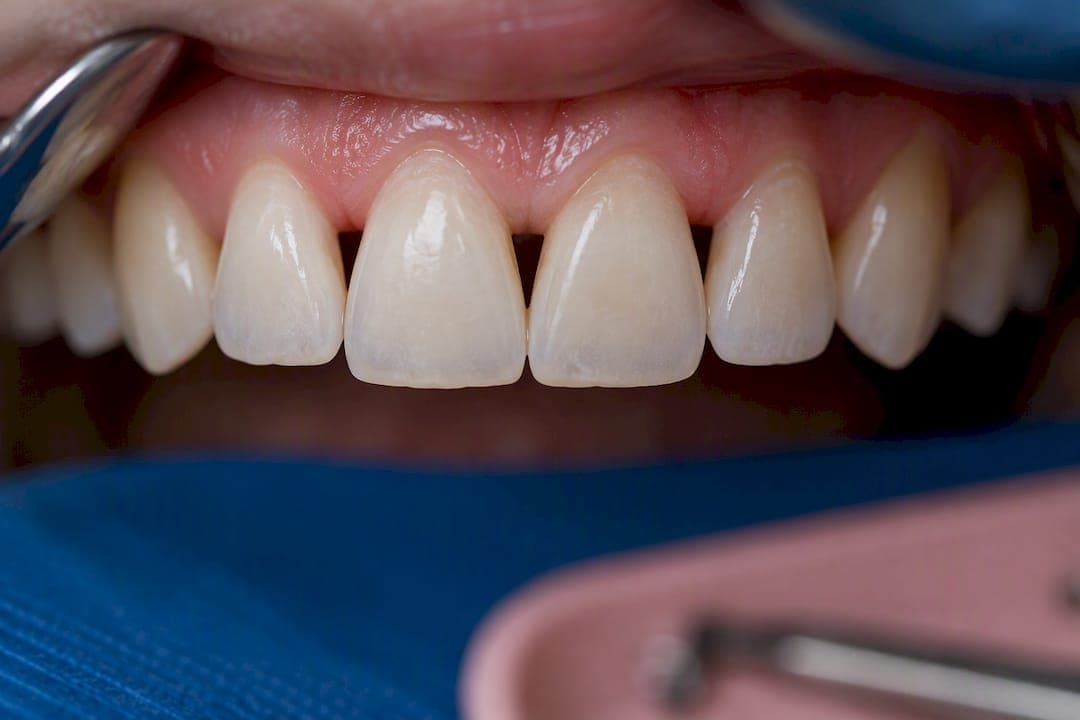
Black triangles are the small triangular gaps that open up between teeth near the gumline when the tissue between them, called the interdental papilla, shrinks or never fully filled the space. Most cases are fixable, but the right fix depends on what caused the gap and whether your gums and bone are stable. Treatment ranges from simple hygiene adjustments and gum injections to bonding, veneers, orthodontics, or grafting surgery.
TL;DR:
- Most black triangles are caused by gum recession, bone loss, or tooth shape, and their development can be exacerbated by aging, orthodontics, or trauma.
- Gaps wider than 5 millimeters from bone crest to contact point are less likely to be closed successfully without surgical or restorative intervention.
- Addressing active periodontal disease is essential before cosmetic procedures, as untreated inflammation can cause gaps to reopen.
- Treatment options range from simple hygiene adjustments and injections to bonding, veneers, or grafting, with costs and timelines increasing with invasiveness.
- Preventive habits like gentle brushing, careful flossing, and regular periodontal maintenance are crucial to stop black triangles from worsening or forming early.
Table of Contents
- What are black triangles and how common are they?
- What causes black triangles between your teeth?
- Are black triangles a health risk or just cosmetic?
- Treatment options: from conservative care to surgery
- How dentists decide which treatment fits your case
- How to prevent black triangles from forming or getting worse
- What does it cost and how long does treatment take?
- How Starboard Dental approaches black triangles
- Getting your black triangles evaluated and treated
- Sources
- FAQ
What are black triangles and how common are they?
The clinical name is an open gingival embrasure: the triangular void below the contact point of two teeth where the interdental papilla should sit. The papilla normally fills this space, but when it recedes or fails to fully form, light passes through and the gap looks dark against the gumline.
This is not rare. One review found that roughly 67% of adults over 20 show some form of open gingival embrasure, and among adults who complete orthodontic treatment, a notable fraction develop black triangles between their front teeth afterward, according to a study on post-orthodontic black triangle risk factors. That prevalence means most people will encounter this issue on at least one tooth at some point, whether from aging, gum treatment, or braces.
Not every gap signals disease. A small triangle between two naturally slender teeth can be a cosmetic quirk, while a new or widening gap paired with bleeding or looseness points toward an active periodontal problem that needs evaluation.
What causes black triangles between your teeth?
Papilla loss usually comes down to a mismatch between the height of the bone underneath and the distance to the contact point above it. Several things create or widen that mismatch.
- Gum recession and periodontitis: bone loss increases the distance from the crest of bone to the contact point, and the papilla often cannot stretch to fill it.
- Orthodontic movement: braces or clear aligners can close crowding but leave triangular gaps at the root level, especially between the lower or upper front teeth.
- Tooth shape: triangular crowns with contact points positioned near the biting edge leave more open space below them than square, flatter-sided teeth.
- Age and thin gum biotype: papillae naturally flatten over the decades, and people with thin, delicate gum tissue lose papilla height more easily.
- Aggressive brushing or oversized interdental brushes: repeated trauma to the gum tip wears the papilla down over time.
- Iatrogenic causes: over-contoured crowns or poorly placed filling margins can push tissue away instead of supporting it.
According to the same orthodontic study, patients who already had thin papillae or wider root angulation before treatment carried a higher risk of developing gaps after their teeth were aligned, which is why orthodontists increasingly screen for this before starting treatment.
Are black triangles a health risk or just cosmetic?
An open gap is not automatically a disease, but it is a plaque trap. Food and bacteria collect in the space more easily than along a normal, tight contact, which raises the risk of cavities on the sides of the teeth and gum inflammation right at the point where you can least reach with a toothbrush, according to Healthline's overview of black triangle causes and care.
A few signs mean the gap deserves a periodontal look rather than a cosmetic one:
- Bleeding or soreness around the triangle when you brush or floss.
- Deep pockets detected on a periodontal exam near the affected tooth.
- Tooth mobility or a gap that seems to be widening month to month.
- Sudden onset after an injury, infection, or rapid orthodontic movement.
If any of those apply, a periodontal evaluation should come before any cosmetic fix, since closing the gap without addressing active disease underneath rarely holds.
Treatment options: from conservative care to surgery
Most dental teams start with the least invasive option that can realistically work and move up only if the gap and its cause justify more. The Colgate overview of black triangle treatments walks through this same range, from hygiene changes to grafting.
- Conservative care: adjusting brushing and flossing technique, plus professional periodontal therapy, can stop progression and occasionally allow a slightly inflamed papilla to reshape itself.
- Hyaluronic acid injections: small clinical series report measurable gains in papilla volume at 6 months when HA gel is injected into the gap, though how long the effect lasts is still not well established, according to research on HA papilla reconstruction.
- Composite bonding: injection-overmolded techniques, often called Bioclear-style bonding, reshape the tooth's contours to close the triangle without crowns, using tooth-colored or pink-tinted resin where the gum line itself has receded.
- Veneers or full-coverage restorations: appropriate when teeth also need shape or color correction, but they remove more enamel and cost more than bonding, so they fit best when black triangles are one of several issues being addressed at once.
- Orthodontic re-treatment: moving roots closer together, sometimes paired with interproximal reduction (light reshaping of the tooth's sides), can re-establish a tighter contact point and shrink the gap.
- Surgical grafting: connective tissue grafts, papilla reconstruction, or the pinhole technique rebuild lost gum tissue directly, usually reserved for larger gaps or when combined with restorative work.
Case reports combining grafting with restorative bonding show substantial papillary fill and stable results at 12 to 24 months of follow-up, according to case studies on combined surgical-restorative repair, which supports the growing preference for pairing surgery with bonding rather than relying on either alone.
Pro Tip: Ask your dentist whether your black triangle is a tissue problem, a tooth-shape problem, or both. That answer determines whether bonding alone will hold or whether the gums need treatment first.
How dentists decide which treatment fits your case
Dental teams generally lean on a diagnostic checklist before recommending anything, because closing a gap the wrong way often means it reopens.
- Measure crest-to-contact distance. Tarnow's rule holds that when the distance from bone crest to contact point is 5 millimeters or less, the papilla is usually present; beyond 7 millimeters, it is often missing. This measurement guides whether tissue-based repair is realistic.
- Assess tissue biotype. Thin, scalloped gum tissue behaves differently under treatment than thick, flat tissue, and biotype affects both graft success and how bonding should be shaped.
- Check tooth shape and contact position. Triangular teeth with high contact points may need reshaping or bonding regardless of gum health.
- Confirm periodontal stability. Active gum disease is treated and monitored, typically for 2 to 4 months, before any restorative closure is attempted, based on guidance on stabilizing periodontal disease first.
- Plan combination therapy when needed. Many cases respond best to two approaches together, such as grafting plus bonding, rather than a single fix.
Success is measured by whether the papilla fills the space and stays filled through follow-up visits, not just by how the tooth looks on the day treatment finishes.
How to prevent black triangles from forming or getting worse
Daily habits matter almost as much as professional treatment, particularly for people whose gum tissue is already thin or receding.
- Use a soft-bristle toothbrush and a gentle, angled technique rather than a hard scrubbing motion.
- Floss carefully, curving the floss around each tooth instead of snapping it through the contact.
- Choose interdental brushes sized to the gap, and stop using an oversized one if it is wearing the papilla down.
- Consider a water flosser for gentle daily cleaning around existing gaps.
- Keep periodontal maintenance visits on schedule, and stop smoking, since both support long-term gum stability.
Cleveland Clinic's guidance on gum recession backs this same approach: soft-bristle brushes and gentle interdental cleaning are the main defenses against further papilla loss.
Pro Tip: If an interdental brush ever feels tight going in, size down. Forcing a brush that is too big is one of the most common causes of papilla trauma.

What does it cost and how long does treatment take?
Cost and timeline scale with invasiveness. Conservative hygiene care and periodontal therapy sit at the lower end and can start improving things within a few visits. Hyaluronic acid injections are low to moderate cost and often done in a single short appointment, though repeat injections may be needed. Composite bonding is a moderate-cost, usually single-visit fix. Veneers and surgical grafting cost more and take longer, since grafting requires healing time before any restorative work is layered on top, and orthodontic correction can take months rather than days.
- Periodontal therapy is often at least partly covered by dental insurance when disease is documented.
- Cosmetic-only procedures, including bonding done purely for appearance, are typically out-of-pocket.
- Combined surgical-restorative plans may have partial coverage for the periodontal portion only.
How Starboard Dental approaches black triangles
Starboard Dental starts with diagnosis and gum stability before any cosmetic step, using digital scanners for precise planning. Exams with prompt availability can provide a clear read on treatment options before commitment.
— Alex
Getting your black triangles evaluated and treated
Closing a black triangle usually means picking the right lane: periodontal care first if your gums need it, then bonding, veneers, or orthodontics once things are stable. Starboard Dental offers periodontal therapy to address the gum-level cause and cosmetic dentistry options like composite bonding and veneers to close the gap once tissue is healthy. If crowding or contact position is the culprit, clear aligners can help re-establish a tighter fit between teeth.

Same-day exams are available if you want a straight answer on which path fits your teeth. Book a visit through Starboard Dental's general dentistry page to get started.
This article is general information, not a substitute for advice from a qualified doctor. Consult a qualified healthcare professional about your own circumstances before acting on anything here.
Sources
- The Occurrence and Risk Factors of Black Triangles Between Central Incisors After Orthodontic Treatment
- What Are Black Triangles Between Your Teeth? — Healthline
- Hyaluronic acid gel injection for interdental papilla reconstruction — PubMed
- Case reports of combined surgical-restorative papilla reconstruction — PubMed
- Gum recession guidance — Cleveland Clinic
FAQ
Can black triangles in teeth go away on their own?
Small ones caused by mild, temporary gum swelling can shrink somewhat as inflammation resolves, but gaps caused by bone loss or tooth shape generally do not close without treatment. A dental evaluation can tell you which category yours falls into.
What causes dental black triangles?
The main causes are gum recession, bone loss from periodontitis, orthodontic tooth movement, triangular tooth shape, thin gum tissue, and aggressive brushing habits. Roughly 67% of adults over 20 show some form of open gingival embrasure.
How much does it cost to fix black triangles between teeth?
Cost depends heavily on the method: conservative hygiene care and injections tend to cost less than composite bonding, and veneers or surgical grafting cost the most. Insurance may help cover the periodontal portion of treatment but usually not purely cosmetic bonding or veneers.
What are the black triangles between my teeth called?
Dentists call them open gingival embrasures, referring to the triangular space left when the interdental papilla does not fill the area below the contact point of two teeth. The term describes the anatomy rather than a specific disease.
Does Starboard Dental treat black triangles?
Starboard Dental offers periodontal therapy to address gum-level causes and cosmetic options like composite bonding and veneers to close the gap once tissue is stable. A same-day exam can determine which approach fits your case.