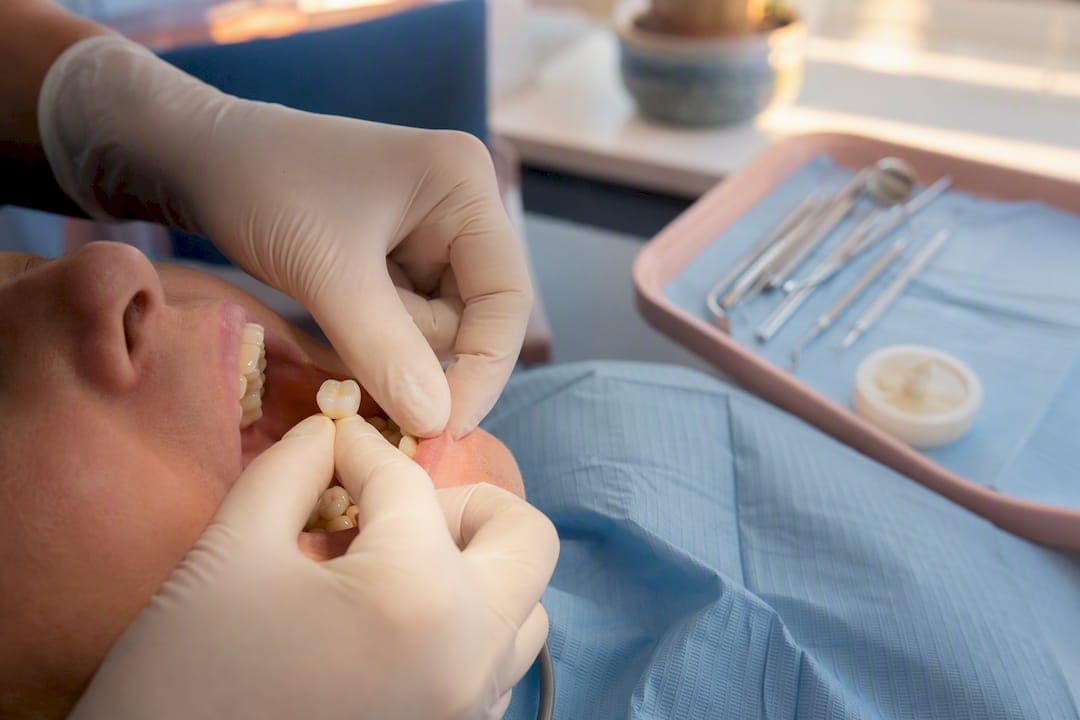
If a dentist has recommended a crown, the odds are your tooth has lost too much structure to survive on a filling alone. That's the short answer: crowns become necessary when a tooth is badly decayed, cracked, worn down, freshly root-canaled, or acting as an anchor for a bridge or implant. Only a clinical exam and X-rays can confirm which of those applies to you, so skip the DIY fixes and dental forums.
A few things to keep in mind while you wait for that appointment:
- A temporary crown is common and normal, not a sign something went wrong.
- Waiting on a recommended crown rarely makes the problem smaller.
- "Needs a crown" almost always means "needs an exam," not "needs surgery tomorrow."
Key Takeaways
A crown is typically necessary when decay, fracture, or a root canal has left a tooth without enough structure to survive on a filling alone, and delaying it usually raises both risk and cost.
| Point | Details |
|---|---|
| Get imaging before deciding | X-rays confirm how much tooth structure remains; don't rely on symptoms alone. |
| Half-tooth heuristic | Once decay or damage affects roughly half the tooth, a crown often outlasts a filling. |
| Temporaries are short-term | Temporary crowns are generally worn for a short period and require gentle care, avoiding sticky or hard foods. |
| Delay carries real cost | Waiting on a recommended crown raises the risk of fracture, infection, and extraction. |
| Crowns last years with care | Most permanent crowns last 5 to 15 years, longer with good hygiene and a night guard if you grind. |
| Starboarddental's approach | Uses digital scans and X-rays to confirm crown need and offers same-day appointments for urgent cases. |
Table of Contents
- When Do You Need a Crown? Clinical Signs Dentists Look For
- Crown vs Filling: Which One Actually Fits Your Tooth?
- What Happens During the Crown Procedure?
- What Happens If You Delay a Recommended Crown?
- Which Crown Material Lasts the Longest?
- What Should You Ask Your Dentist Before Getting a Crown?
- How Starboard Dental Approaches Crown Decisions
- A Straight Answer From Someone Who's Looked at a Lot of X-Rays
- How Starboard Dental Can Help With Your Crown or Restorative Needs
- Sources
When Do You Need a Crown? Clinical Signs Dentists Look For
Dentists don't recommend crowns on a whim. They're responding to specific, visible problems with the tooth's structure. Here's what typically triggers the conversation:
- Large cavities with little tooth left. When decay has destroyed roughly half or more of the visible tooth, a filling doesn't have enough healthy structure to bond to reliably, according to Omni Dental. A crown wraps and supports what's left instead of asking a thin shell of enamel to hold a filling in place.
- Cracks and fractures. A crack that stays above the gumline and hasn't reached the pulp is often manageable. One that extends toward the root or below the gumline threatens the tooth's survival and usually needs a crown fast, sometimes alongside a root canal.
- Root canal aftermath. A tooth that's had a root canal loses its blood supply and becomes more brittle over time. A dental crown covering the whole tooth prevents that brittleness from turning into a fracture.
- Implants and bridges. Crowns don't just fix damage. They also cap implants and anchor bridges, giving you a chewing surface where a tooth is missing entirely.
- Grinding and severe wear. Years of bruxism can flatten teeth to the point where chewing function, and sometimes bite alignment, starts to suffer.
Crown vs Filling: Which One Actually Fits Your Tooth?
A filling works fine when the damage is small and confined. A crown earns its cost when the tooth needs structural backup, not just a patch. That distinction, more than personal preference, drives the decision.
- Small, isolated decay: a filling restores the tooth without removing extra healthy enamel.
- Moderate damage with cusps intact: an onlay or three-quarter crown covers part of the tooth, preserving more natural structure than a full crown while adding more support than a filling.
- Front-tooth cosmetic concerns: a veneer addresses the visible surface, but it isn't built for a tooth that's structurally compromised. A crown vs filling debate is different from a crown vs veneer one. Veneers are cosmetic; crowns are structural.
- Non-restorable teeth: once a tooth is too far gone, extraction followed by an implant or bridge becomes the more predictable route.
- Repeat offenders: a tooth that's already failed one or two large fillings is a candidate for an earlier crown, since another repair on already-weakened structure tends to fail again rather than hold.
What Happens During the Crown Procedure?
Most crowns still follow a two-appointment process, though the details vary by material and lab.
- Visit one: the dentist numbs the area, removes decay or fracture damage, and reshapes the tooth. This step removes a small amount of enamel so the crown fits over the entire visible tooth, per Cleveland Clinic.
- Impression or digital scan: the shape gets sent to a dental lab, which typically takes 2 to 3 weeks to fabricate a custom, permanent crown.
- Temporary crown placement: a resin or acrylic temporary, cemented with weaker adhesive, protects the tooth and keeps neighboring teeth from shifting while you wait, according to WebMD.
- Visit two: the permanent crown gets checked for fit and bite, then cemented in place. Expect some tenderness and minor bite adjustments over the following days.
Same-day crowns, made with in-office CAD/CAM milling, skip the temporary phase entirely when the clinic has the equipment and the case is straightforward.
Pro Tip: Stick to soft foods and skip anything sticky on the side with your temporary crown. If it comes loose, call your dentist rather than trying to re-glue it yourself. A drugstore adhesive is a short-term stopgap at best, according to Healthline.
What Happens If You Delay a Recommended Crown?
Postponing a crown doesn't freeze the problem in place. It usually gives it room to grow.
- A hairline crack can spread deeper into the tooth or below the gumline, turning a straightforward crown case into a root canal or extraction.
- Decay under a large, unsupported filling can reach the nerve, forcing more invasive treatment than would have been needed earlier.
- Delaying a recommended crown raises the risk of fracture, infection, and eventual tooth loss, which typically means higher total treatment cost, not lower.
- Chewing on the opposite side and sticking to a soft diet can buy you a little time, but neither one repairs the tooth. Treat those as stalling tactics, not solutions.
Which Crown Material Lasts the Longest?
Material choice affects both appearance and durability, and dentists usually match the material to the tooth's location and job.
- All-ceramic or porcelain: blends with natural tooth color, making it the go-to for front teeth where looks matter most.
- Porcelain-fused-to-metal (PFM): combines a natural-looking surface with a metal core for added strength, often used on molars that need to look decent but take heavy chewing force.
- Full metal (gold or alloy): the most durable option for back teeth where appearance isn't a factor and bite force is highest.
- Resin: typically reserved for temporary crowns, not permanent ones, since it wears faster.
Most permanent crowns last 5 to 15 years, and some go well beyond that with consistent dental crown care including hygiene and a mouthguard for grinding. Watch for looseness, decay forming at the crown's edge, chips, a bite that suddenly feels off, lingering sensitivity, or a persistent bad taste near the crown. Any of those is a reason to get it checked, not a reason to wait for the next scheduled cleaning.
What Should You Ask Your Dentist Before Getting a Crown?
A little preparation turns a passive appointment into an informed decision. Bring these questions with you:
- "Can I see the X-ray, and can you show me exactly where the damage is?"
- "Why is a crown the better option here compared to a filling or onlay?"
- "Are there more conservative options that would still hold up long-term?"
- "How long should this crown realistically last given my bite and habits?"
- "What's the total cost, and how much does my insurance cover?"
- "Who's placing the crown, and is there a warranty if something goes wrong?"
Watch for red flags along the way: vague answers that dodge the actual clinical reason, reluctance to show you the X-ray, or pressure toward the most expensive material without an explanation tied to your specific tooth.
Pro Tip: If something feels rushed or unclear, it's reasonable to pause and get a second opinion before committing to treatment, especially for a procedure that removes permanent enamel.

How Starboard Dental Approaches Crown Decisions
Starboarddental uses digital scanners alongside X-rays to measure exactly how much healthy tooth structure remains before recommending anything. That precision matters. It's the difference between a dentist guessing and a dentist showing you the evidence.
- Conservative options like onlays get considered first when enough tooth structure remains to support one.
- Same-day appointments are available for cracked or painful teeth that can't wait for a routine opening.
- Ceiling-mounted TVs and comfort items ease the anxiety that keeps a lot of patients from booking dental work in the first place.
- After placement, the team walks patients through hygiene habits and follow-up timing to help the crown reach its full lifespan.
Details on materials and process are covered on Starboarddental's dental crowns page, with broader context on restorative dentistry options.
A Straight Answer From Someone Who's Looked at a Lot of X-Rays
Crowns get a bad reputation as an upsell, but in most cases they prevent something worse: a root canal that could've been avoided, or an extraction that didn't have to happen. The real mistake isn't getting a crown you didn't need. It's skipping one you did.
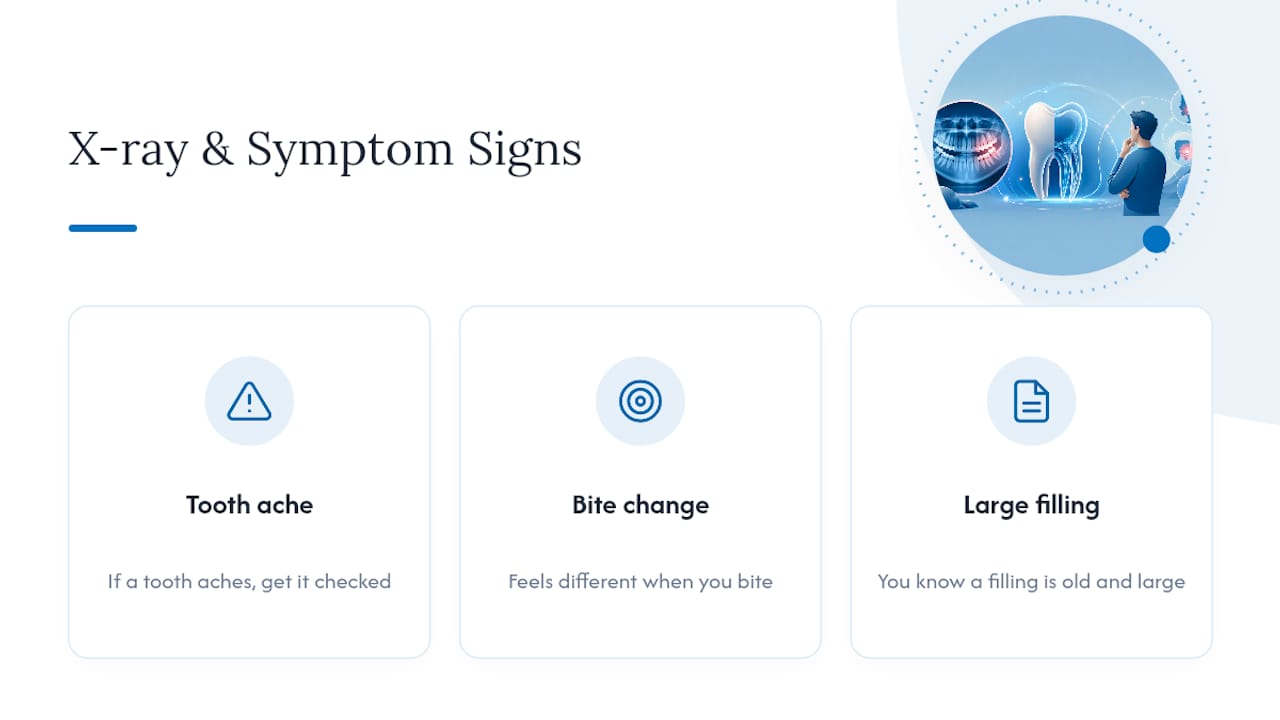
Bring your questions to the appointment, ask to see the X-ray yourself, and don't let embarrassment about a large filling keep you from booking an exam. If a tooth aches, feels different when you bite, or you know a filling in there is old and large, that's reason enough to get it looked at now rather than later.
— Alex
How Starboard Dental Can Help With Your Crown or Restorative Needs
If you're staring at a large old filling, a cracked molar, or a dentist's note that says "crown recommended," Starboarddental's restorative dentistry team handles exactly this kind of decision every week, using digital scans instead of guesswork to confirm what your tooth actually needs.

Same-day appointments are available for urgent cases like a cracked tooth or a temporary crown that's come loose, so you're not stuck waiting weeks in discomfort. If it's your first visit, the new patient page walks through what to bring, including insurance information and any recent X-rays from a previous dentist. The clinic's ceiling-mounted TVs and personalized comfort items are there specifically for patients who put off dental work because of anxiety, not indifference. If a tooth has been bothering you or a dentist has already flagged one for a crown, book a general dentistry exam and get a clear answer instead of living with the question.
Sources
For more detail, see Cleveland Clinic on crown types and lifespan, WebMD on temporary crowns, and Starboarddental's guide on how long crowns last.
This article is general information, not a substitute for advice from a qualified doctor. Consult a qualified healthcare professional about your own circumstances before acting on anything here.
- Dental Crowns: Types, Procedure & Care — Cleveland Clinic
- What to Know About Temporary Dental Crown — WebMD
- How to Care for a Temporary Crown — Healthline