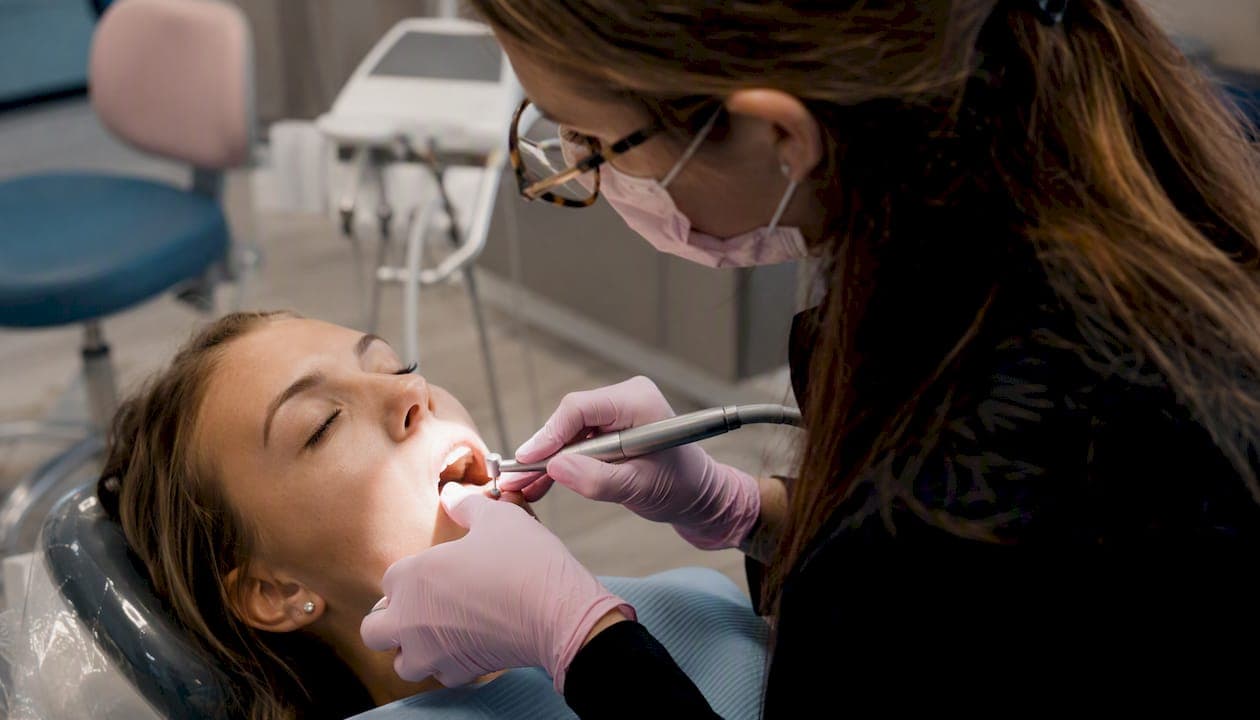
Tooth contouring, also called enameloplasty or odontoplasty, is a minimally invasive cosmetic procedure where a dentist removes tiny amounts of enamel to smooth, reshape, or balance teeth with minor imperfections. If you have a small chip, a pointy canine, slightly uneven edges, or a rough spot that catches floss, this may be the most direct fix available.
A few facts worth knowing before you read further:
- What gets removed: Typically 0.1–0.3 millimeters of enamel per treatment area, according to the Cleveland Clinic.
- Time required: Most cases finish in a single visit, taking a short session per tooth.
- Pain level: Enamel has no nerve supply, so most patients need no anesthesia.
- Permanence: Enamel does not regenerate. Any removal is irreversible.
The right starting point is a clinical exam, including X-rays, to confirm your enamel is thick enough and your teeth are healthy enough to proceed. If you're in the Kennebunk area, Starboarddental offers same-day consults to do exactly that.
Key Takeaways
Tooth contouring is a safe, effective option for minor enamel imperfections, but its permanence and biological limits make a thorough clinical exam the essential first step before any treatment begins.
| Point | Details |
|---|---|
| Contouring is irreversible | Enamel does not regenerate, so removal of even 0.1–0.3 mm is permanent. |
| Candidacy requires a full exam | X-rays to map pulp proximity and enamel thickness determine whether the procedure is safe. |
| Procedure is quick and typically painless | Most cases finish in 20–40 minutes per tooth in a single visit, usually without anesthesia. |
| Cost is low but rarely covered by insurance | Typical cost per tooth is modest and varies widely; most carriers classify it as elective cosmetic care. |
| Starboarddental offers same-day consults | The Kennebunk practice confirms candidacy with imaging before any enamel is touched. |
Table of Contents
- What tooth contouring actually does — and what it can't
- How dentists perform the procedure, step by step
- Who is a good candidate for dental contouring?
- Benefits worth knowing — cosmetic and functional
- Risks and what can go wrong
- How much does tooth contouring cost, and how long does it take?
- How contouring compares to bonding, veneers, and orthodontics
- Aftercare: protecting thinner enamel after the procedure
- How to choose the right dentist for tooth contouring
- What to expect at Starboarddental
- Sources
What tooth contouring actually does — and what it can't
Tooth contouring goes by three names you'll see used interchangeably: enameloplasty, odontoplasty, and tooth reshaping. All three describe the same subtractive process: a dentist selectively removes enamel to change a tooth's shape, length, or surface texture.
The biology matters here. Enamel is a nonliving, mineralized tissue. Unlike bone or skin, it does not repair or regrow after removal. That single fact drives every clinical decision in the procedure, from how much to remove to whether a patient qualifies at all. AZDentist's guide to enameloplasty emphasizes that clinicians adhere to conservative rules of thumb precisely because there is no biological undo button.
What contouring can fix: small chips on front teeth, slightly pointy canines, minor length mismatches between adjacent teeth, rough or jagged edges that collect plaque, and very minor overlaps that make flossing awkward. What it cannot fix: significant crowding, large gaps, teeth that are structurally short, or any alignment issue that involves the jaw or bite position. Those problems need orthodontics, veneers, or restorative work. Contouring is a refinement tool, not a correction tool, and Colgate notes that patients who expect major straightening or size changes are routinely disappointed.
How dentists perform the procedure, step by step
Contouring is completed in a single visit, and the process is more methodical than most patients expect. Here is the standard sequence:
- Examination and X-rays. Before any enamel is touched, the dentist takes X-rays to map the distance between the enamel surface and the pulp chamber beneath it. The Cleveland Clinic explains that this imaging step is specifically about avoiding thermal or structural damage to the nerve, not just checking for decay.
- Marking the treatment areas. The dentist uses a pencil or marking medium to outline exactly where enamel will be reduced. This creates a visual boundary that prevents accidental over-removal.
- Incremental enamel removal. Using fine diamond burs, abrasive sanding discs, or abrasive strips, the dentist removes enamel in small increments, typically 0.1–0.3 mm at a time. Cinik Dental's procedural overview confirms that rotary instruments and polishing tools are the standard instruments for this stage.
- Bite checks throughout. The dentist places articulating paper between your teeth repeatedly during the procedure to check how your upper and lower teeth meet. This step catches any new traumatic contact before it becomes a problem.
- Smoothing and polishing. Once the shape is correct, the surface is polished to a smooth finish. A well-polished enamel surface resists plaque accumulation far better than a rough one, which is part of why the finishing step matters beyond aesthetics.
- Final assessment. The dentist reviews the result visually and with the patient, confirming symmetry and bite comfort before the appointment ends.
The entire process typically takes a short session per tooth. Most patients leave the same day with no recovery period.
Pro Tip: Ask your dentist to check both centric occlusion (teeth together at rest) and excursive contacts (teeth sliding side to side) before and after reshaping. Catching a new lateral interference early prevents jaw soreness later.
Who is a good candidate for dental contouring?
The ideal candidate has healthy teeth and gums, sufficient enamel thickness, and a cosmetic concern that is genuinely minor. That last qualifier is more restrictive than it sounds.
Dentists evaluate candidacy through a visual exam, X-rays, and a review of any existing restorations. The Colgate guide on cosmetic contouring is direct about the limits: if enamel is already thin, or if large fillings occupy the treatment area, contouring risks exposing dentin and causing lasting sensitivity. Those patients are not good candidates.
Common contraindications include:
- Thin enamel from erosion, genetics, or prior dental work
- Large existing restorations in the area to be contoured
- Active decay or gum disease (elective cosmetic work should never precede treating disease; periodontal issues need to be resolved first)
- Severe malocclusion where bite correction is the real need
- Heavy bruxism that would rapidly wear down newly thinned enamel
When contouring isn't appropriate, dentists typically recommend dental bonding, veneers, or orthodontics, or a combined plan that pairs minor contouring with bonding to achieve a conservative result without removing more enamel than is safe.
Benefits worth knowing — cosmetic and functional
The cosmetic case for contouring is obvious: faster results than any alternative, lower cost than veneers or bonding, and no recovery time. But the functional benefits are underappreciated.
- Single-visit results with no temporaries, no lab work, and no waiting period
- No anesthesia required in most cases, which matters for patients with dental anxiety
- Lower cost than bonding or veneers (more on this below)
- Improved plaque control where sharp edges or minor overlaps previously trapped debris, as Colgate's teeth reshaping guide points out
- Finishing refinement after orthodontic treatment, when teeth are aligned but still have minor edge irregularities
- Immediate visual harmony for teeth that are slightly mismatched in length or contour
Contouring works best when the goal is subtle. A tooth that's a fraction of a millimeter too long, a canine with a sharp tip, a front tooth with a tiny chip: these are exactly the problems it solves well. Anything more ambitious belongs in a different treatment category.
Risks and what can go wrong
The risks are real, even if they're uncommon when a skilled clinician uses conservative technique. Knowing them helps you ask better questions at your consult.
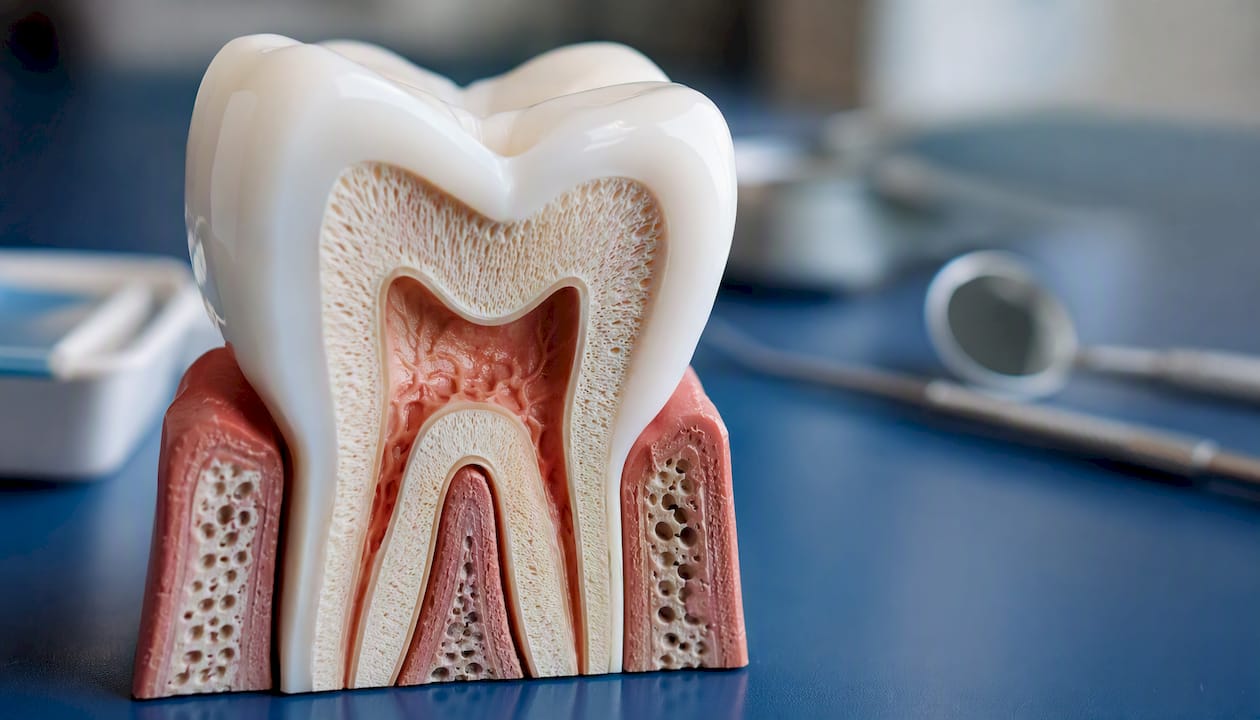
Permanent enamel loss is the foundational risk. Because enamel doesn't grow back, any over-reduction is a permanent problem. If too much is removed, dentin becomes exposed, and dentin is porous and sensitive to temperature changes. The Cleveland Clinic's enameloplasty page notes that clinicians use imaging and incremental removal specifically to avoid this outcome, but it can still occur if technique is aggressive or pre-procedure assessment is skipped.
Thermal sensitivity is the most common side effect after contouring. It usually resolves within a day or two. When it persists, it often signals that dentin was reached.
Increased fracture risk can result from removing too much enamel from a structurally important area. Enamel is the hardest tissue in the body; thinning it in the wrong spot weakens the tooth.
Infection is rare but possible if the procedure is mismanaged or if pre-existing decay was missed during assessment.
One point that cannot be stated firmly enough: never attempt DIY tooth filing. Videos circulating online show people using nail files on their teeth. This is genuinely dangerous. Only a licensed clinician has the imaging, instruments, and training to remove enamel safely without approaching the pulp.
Clinicians mitigate these risks through pre-procedure X-rays, staged incremental removal, frequent bite checks, and thorough polishing to reduce plaque retention on the newly shaped surface.
How much does tooth contouring cost, and how long does it take?
Contouring is among the least-expensive cosmetic dentistry options available. The Healthline teeth reshaping guide cites a typical range of roughly $50–$300 per tooth for simple contouring, with costs rising when bonding is added to the same visit.
| Treatment | Typical cost per tooth | Time per tooth | Anesthesia needed? |
|---|---|---|---|
| Contouring only | Moderate cost per tooth | Brief procedure per tooth | Rarely |
| Contouring + bonding | Higher cost | Longer procedure time | Sometimes |
| Veneers | Significantly higher cost | Multiple visits | Sometimes |
A few practical notes on cost and insurance:
- Most dental insurance carriers classify contouring as elective cosmetic care and do not cover it unless the procedure is clearly restorative, such as smoothing a fractured tooth after an injury.
- If bonding is added, expect the total time to extend by 30–60 minutes and the cost to increase accordingly.
- Cost varies by region, provider experience, and how many teeth are treated.
- Always confirm your out-of-pocket estimate before the appointment, not after.
How contouring compares to bonding, veneers, and orthodontics
Contouring is a subtractive procedure. Every alternative either adds material or repositions teeth. That distinction determines which option fits your situation.
| Option | Invasiveness | Reversible? | Typical cost range | Best for |
|---|---|---|---|---|
| Contouring | Minimal | No | Moderate cost per tooth | Minor chips, edges, slight asymmetry |
| Bonding | Minimal | Partially | Higher cost | Adding volume, larger chips, discoloration |
| Veneers | Moderate | No | Much higher cost | Broad esthetic changes, lasting results |
| Orthodontics | Low to moderate | Yes (aligners) | Considerable cost | Alignment, spacing, bite correction |
Contouring and dental bonding are frequently combined. When a tooth needs both a rough edge smoothed and a small chip filled, contouring first and bonding second gives a conservative result that avoids the more invasive commitment of veneers. Dentists at practices like Starboarddental often plan both in the same visit when indicated.
Orthodontics belongs in a separate conversation entirely. If the issue is tooth position rather than tooth shape, no amount of enamel shaping will produce a satisfying result.
Aftercare: protecting thinner enamel after the procedure
There is typically zero downtime after contouring. Most patients leave the office and eat normally the same day. Any sensitivity that appears usually settles within a day or two, though it can persist longer if enamel removal was close to the dentin layer.
Practical aftercare steps:
- Brush gently with a soft-bristle brush and a nonabrasive toothpaste for at least the first week.
- Use desensitizing toothpaste if sensitivity lingers. Products containing potassium nitrate or stannous fluoride are commonly recommended; the Starboarddental sensitive teeth guide covers specific options.
- Avoid chewing ice, hard candy, or nonfood objects — habits that stress enamel under normal circumstances become riskier when enamel is thinner.
- Limit very hot, cold, or acidic foods and drinks while sensitivity is present.
- Keep regular six-month checkups so your dentist can monitor enamel integrity over time.
- Continue flossing daily. Smoothing plaque-trapping edges improves hygiene, but it does not replace interdental cleaning.
Call your dentist if sensitivity persists beyond a few days, if you feel sharp pain, or if you notice any swelling or unusual changes around the treated tooth.
How to choose the right dentist for tooth contouring
The quality of the outcome depends almost entirely on the clinician's conservatism and pre-procedure assessment. Here is what to look for and what to ask.
- Ask whether they X-ray before contouring. Any dentist who skips imaging is skipping the most important safety check. X-rays map pulp proximity and reveal decay that could disqualify the procedure.
- Ask how much enamel they plan to remove. A good answer is specific: fractions of a millimeter, staged incrementally. A vague answer is a red flag.
- Ask whether they check your bite during the procedure. Occlusion checks with articulating paper should happen multiple times, not just at the end.
- Ask whether bonding is available in the same visit if more correction turns out to be needed than anticipated.
- Ask for a written treatment plan that includes estimated enamel removal, alternatives if contouring proves insufficient, and a follow-up contact for post-procedure sensitivity.
- Ask to see before-and-after photos of similar cases the dentist has treated.
- Ask about the cosmetic vs. general dentist distinction if you're unsure which type of provider is best suited for your case.
Pro Tip: Request intraoral photos before the procedure starts. Having a documented baseline makes it easier to evaluate the result and gives your dentist a reference point if any follow-up is needed.
What to expect at Starboarddental
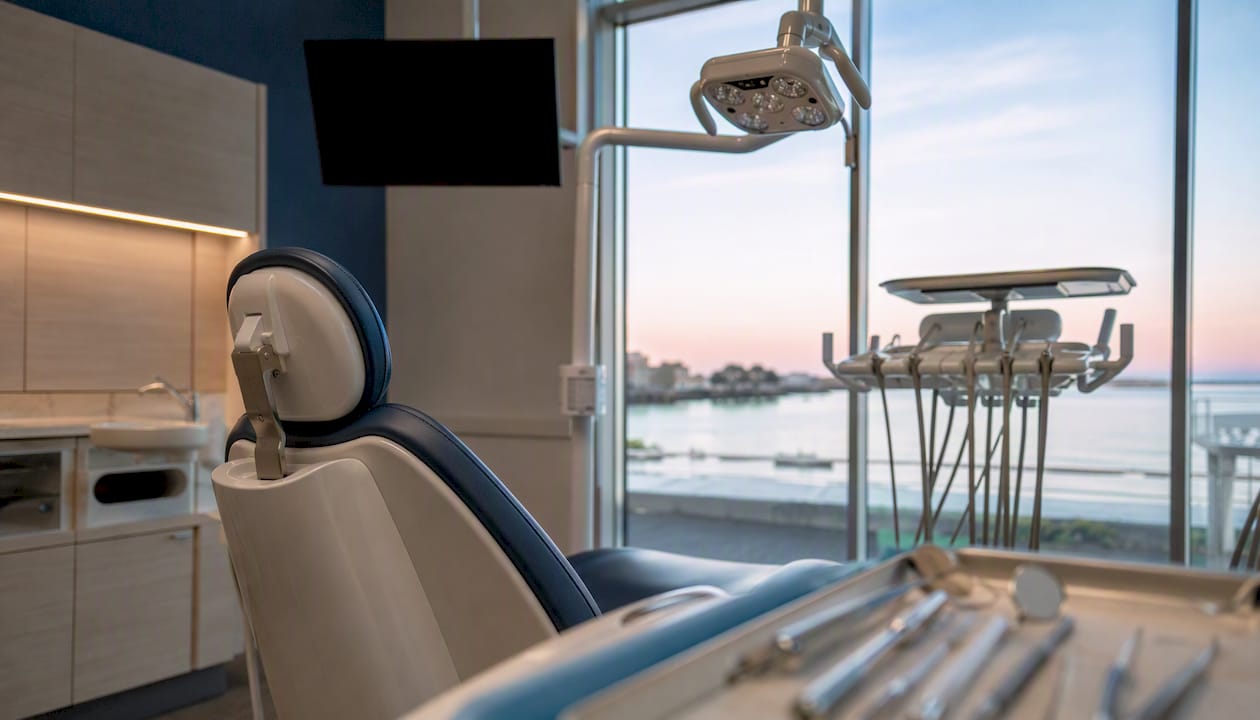
Starboarddental, located in Kennebunk, ME, offers tooth contouring as part of a broader cosmetic and restorative care menu that includes bonding, veneers, and teeth whitening. The clinic uses digital scanners for precision assessment, which supports the pre-procedure enamel mapping that safe contouring requires.
The workflow at Starboarddental follows a conservative, staged protocol: a full exam and X-rays first, then a treatment discussion before any enamel is touched. Contouring is performed incrementally with bite checks throughout, and polishing is completed at the same visit. When bonding is indicated alongside contouring, the clinic can often complete both in a single appointment.
The practice is designed with patient comfort in mind. Ceiling-mounted TVs, a warm atmosphere, and a non-pressured recommendation process make it a reasonable choice for patients who feel anxious about dental visits. Same-day consults are available for patients who want to confirm candidacy before committing to treatment. The patient-centered care approach at Starboarddental means you'll get a clear explanation of what's possible and what isn't before any work begins.
A note from Alex
At Starboarddental, we approach tooth contouring the same way we approach any irreversible procedure: carefully, incrementally, and only after we've confirmed the enamel can support it. The results are subtle by design, and that's exactly the point. If you're considering contouring, bring photos of what bothers you about your smile. That gives us a concrete starting point and helps us show you, honestly, whether contouring alone will get you there or whether a combined approach makes more sense. The consult is the right place to have that conversation.
Ready to find out if you're a candidate?
Starboarddental's tooth contouring service in Kennebunk is built around one principle: no enamel is removed until the exam confirms it's safe to do so. Your first visit includes a clinical exam and X-rays to assess enamel thickness and pulp proximity. If contouring is appropriate, a cost estimate is provided before treatment begins. If it isn't, the team will explain which alternative, whether bonding, veneers, or another option from Starboarddental's cosmetic dentistry services, fits your situation better.

To book your consult, visit the dental contouring page or call the practice directly. Same-day appointments are available for new patients.
Sources
The following sources were used in preparing this article and are worth bookmarking for deeper reading:
- Cleveland Clinic — Enameloplasty: benefits & side effects
- Colgate — Cosmetic Contouring: Four Things You Need To Know
- Healthline — Teeth reshaping
- AZDentist — Enameloplasty: ultimate guide
- Cinik Dental — What Is Tooth Reshaping? Enameloplasty Explained
This article is general information, not a substitute for advice from a qualified doctor. Consult a qualified healthcare professional about your own circumstances before acting on anything here.