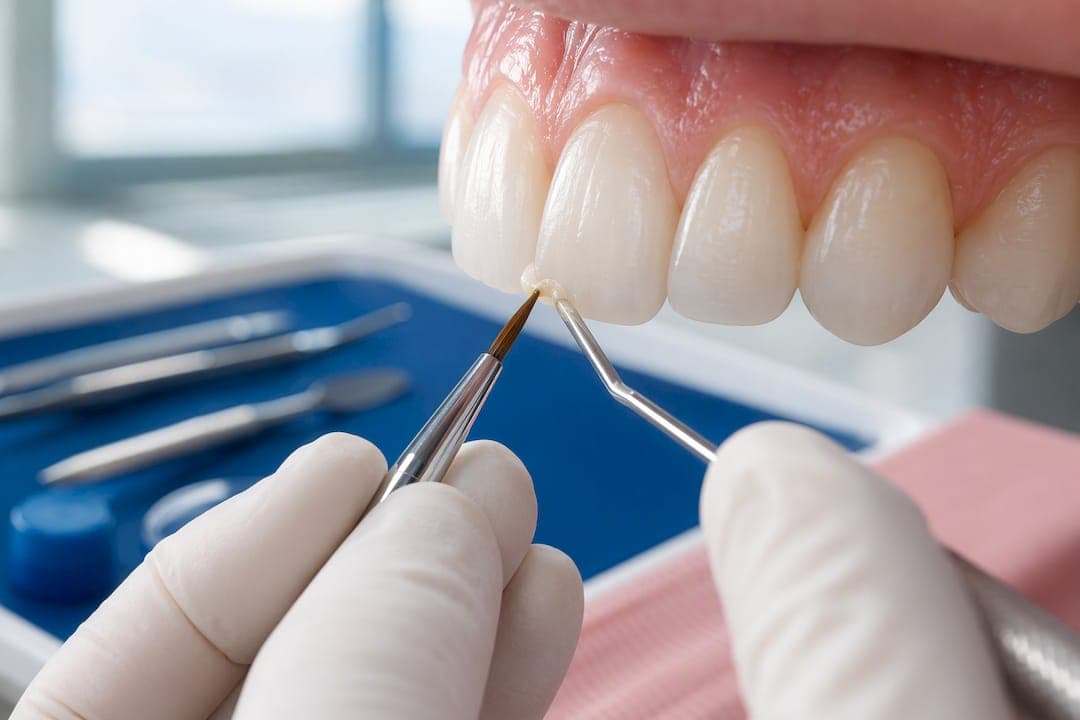
Dental bonding is an effective, quick cosmetic fix for small gaps, typically up to about 2 millimeters, and can usually be completed in a single 30 to 60 minute visit per tooth. It works by adding tooth-colored composite resin to the sides of the teeth to narrow the space. Larger gaps, bite problems, or shifted teeth usually call for orthodontics or veneers instead.
TL;DR:
- Dental bonding is suitable only for small, cosmetic gaps of up to 2 millimeters, with larger or structural gaps better addressed by orthodontics or veneers.
- The procedure typically takes 30 to 60 minutes per tooth and involves layering composite resin, which is then hardened and polished to blend seamlessly.
- Bonding lasts between 3 and 10 years, but its porous nature makes it vulnerable to staining and chipping, requiring regular maintenance and touch-ups.
- Bonding is most effective for patients with healthy gums, well-aligned teeth, and habits that do not heavily stain or damage the resin.
- Alternatives like porcelain veneers or orthodontic treatment may be more suitable for those seeking longer-lasting or more resistant solutions.
Table of Contents
- What happens during a bonding appointment
- How composite resin closes the space between teeth
- Who benefits most from bonding, and who should look elsewhere
- Weighing the upside against the maintenance it demands
- When veneers, aligners, or other treatments make more sense
- What bonding costs, how long it lasts, and how to keep it looking good
- What to expect right after treatment and during recovery
- How Starboard Dental approaches long-term bonding results
- A clinician's view on choosing bonding over other options
- Ready to close your gap? Here's how Starboard Dental helps
- Sources
- FAQ
What happens during a bonding appointment
A bonding visit starts with an exam to confirm the gap is a good candidate for cosmetic treatment rather than a sign of gum disease or a habit like tongue thrusting. Your dentist may take an image of the area first if there is any question about bone or root health.
- The tooth surface is cleaned and lightly roughened, then an etching gel and bonding agent are applied so the resin adheres.
- Composite resin is layered onto the tooth in shades that match your natural enamel, building out the proximal surface to close the space.
- Each layer is hardened with a curing light before the next is added, which controls shrinkage and keeps the shape accurate.
- Once the shape is right, the dentist trims, contours, and polishes the resin so it blends with the surrounding teeth.
Most teeth take 30 to 60 minutes, and anesthesia is rarely needed since no drilling into healthy tooth structure is required.
Pro Tip: Clinicians often place a thin strip of PTFE (Teflon) tape between the bonded tooth and its neighbor to keep the resin from sticking where it shouldn't, a technique noted in restorative dentistry research.

How composite resin closes the space between teeth
Closing a gap is mostly a matter of geometry: resin is added to the sides of the teeth facing the space until the edges meet in a natural-looking curve. The technique matters as much as the material.
- Proximal build-ups add resin directly to the sides of the two teeth bordering the gap, narrowing it from both directions.
- Injection and index techniques use a silicone mold made from a wax-up of the planned shape, letting the dentist inject composite into a precise form rather than freehand sculpting it.
- Bilayering combines a dentin-shade layer underneath with an enamel-shade layer on top, which avoids the flat, opaque look that a single layer of resin can produce.
These methods are described in restorative workflow research, which found that outcomes depend more on the clinician's layering and contouring skill than on any particular brand of composite. For wider or uneven spacing, some dentists recommend a short round of orthodontic movement before bonding to correct the midline first.
Who benefits most from bonding, and who should look elsewhere
Bonding works best on a fairly specific profile of patient and gap. Knowing where you fall on that spectrum helps you ask the right questions at your consult.
- Good candidates have small, purely cosmetic gaps, generally 2 millimeters or less, healthy gums, and teeth that are otherwise well-positioned.
- Poor candidates have large gaps, active gum disease, teeth that are visibly rotated or tipped, or a bite that puts heavy pressure on the front teeth.
- Habits that work against bonding include smoking, heavy coffee or red wine consumption, nail-biting, and teeth grinding, all of which shorten how long the resin looks good.
Cleveland Clinic's overview of diastema notes that bonding is usually the right call for small, cosmetic spacing, while larger or structural gaps respond better to orthodontics or veneers.
Weighing the upside against the maintenance it demands
Bonding's appeal is speed and cost, but that convenience comes with trade-offs worth knowing before you book.
- Pros: conservative (little to no enamel removal), reversible, relatively affordable, finished in one visit, and a strong esthetic result for small spaces.
- Cons: more prone to staining than porcelain, can chip under heavy bite force, and needs more frequent touch-ups than veneers or crowns.
Composite resin typically lasts 3 to 10 years before it needs replacement or repair, a wide range that mostly comes down to diet, grinding habits, and how well the edges were finished. Because it's more porous than porcelain, it also picks up stains from coffee, tea, and red wine faster than a veneer would.
When veneers, aligners, or other treatments make more sense
Bonding is not the only route to closing a gap, and for some patients it's not the best one. Colgate's patient guidance points out that bonding is fast and reversible but more vulnerable to staining and chipping than alternatives built to last longer.
- Porcelain veneers resist stains better and hold up longer, which makes sense for patients who want a broader smile makeover, not just gap closure.
- Clear aligners or braces move the teeth themselves, correcting the bite and position rather than masking the gap with added material, and are usually necessary for larger spaces.
- Frenectomy or periodontal therapy addresses cases where a thick tissue band or gum disease is causing the gap in the first place, since bonding alone won't fix the cause.
- Combined approaches, such as minor orthodontic movement followed by bonding, can improve midline alignment and proportion in patients with multiple diastemas or uneven spacing, according to case reports describing this workflow.
What bonding costs, how long it lasts, and how to keep it looking good
Cost varies by location, tooth position, and how much resin is needed, and detailed pricing breakdowns can help you compare estimates before committing. Because bonding for gaps is usually classified as cosmetic, dental insurance often doesn't cover it, so ask your provider directly about your plan's terms.
- Lifespan generally falls between 3 and 10 years, with heavier wear from grinding, poor hygiene, or frequent staining foods pushing toward the shorter end.
- Maintenance includes avoiding excessive coffee, tea, or red wine right after treatment while the resin fully sets, and brushing with a non-abrasive toothpaste.
- Regular checkups let your dentist catch small chips or margin staining early, when a quick polish or spot repair is enough rather than a full redo.
Staining and chipping are the two most common reasons bonding needs early touch-ups, a risk Cleveland Clinic attributes to the resin's more porous surface compared to natural enamel or porcelain.
What to expect right after treatment and during recovery
The change is visible immediately: you walk out with the gap closed and no downtime to speak of. Some patients notice mild sensitivity to hot or cold for a day or two, which usually fades on its own.
Expect to return for a polish or minor adjustment if the bite feels slightly off or an edge feels rough, both of which are quick fixes. Ongoing pain, a visible gap reopening at the margin, or a piece of resin chipping off are signs to call your dentist rather than wait. If bonding follows orthodontic treatment, wearing a retainer as directed helps keep the teeth from drifting back and reopening the space the bonding just closed.

How Starboard Dental approaches long-term bonding results
Clinician technique drives how long bonding lasts, and our guidance on extending bonding life covers polishing cadence and repair timing in more detail. Starboard Dental also follows established infection-control protocols for dental equipment, part of the routine safety standards behind any bonding appointment. Same-day scheduling means a chipped edge or stained margin can often be addressed without a long wait.
A clinician's view on choosing bonding over other options
Bonding is my first recommendation for small, purely cosmetic gaps in patients with healthy gums and stable bite patterns, since it's fast and leaves enamel intact. I refer patients toward veneers when they want broader, longer-lasting changes across several teeth, and toward orthodontics when the gap reflects tooth position rather than just missing volume. The simplest checklist: if the gap is small and the teeth are healthy, bond it; if either isn't true, look further.
— Alex
Ready to close your gap? Here's how Starboard Dental helps
Starboard Dental offers composite bonding as part of its cosmetic dentistry services, performed chairside with digital scanning for a precise match to your natural teeth. Appointments are often available the same day, enabling assessment and, in many cases, treatment without a long wait.

- Bring photos of the smile you like, even from years ago, so your dentist can plan the shape.
- Ask directly about expected lifespan and what maintenance will look like for your habits.
- Book a consult through Starboard Dental's cosmetic dentistry page to find out if bonding fits your gap.
This article is general information, not a substitute for advice from a qualified doctor. Consult a qualified healthcare professional about your own circumstances before acting on anything here.
Sources
FAQ
How long does dental bonding for gaps last?
Composite bonding typically lasts 3 to 10 years depending on your habits and how well you care for it. Staining foods, grinding, and poor hygiene shorten that range, while regular checkups and gentle care extend it.
Who is not a good candidate for dental bonding?
Bonding isn't ideal for people with large gaps, active gum disease, or teeth that are visibly rotated or shifted out of alignment. Heavy grinding, nail-biting, or tobacco use also make bonding less durable, and Cleveland Clinic notes that larger or structural gaps generally respond better to orthodontics or veneers.
How much does tooth bonding cost to fill a gap?
Cost depends on the size of the gap, the tooth involved, and your location, and pricing is available on request. A detailed cost breakdown can help you understand what typically factors into the price before your consult.
What are the downsides of dental bonding?
Composite resin stains more easily than porcelain and can chip under heavy bite force, especially without careful technique. Colgate's guidance also points out that bonding has a shorter lifespan than veneers, so patients with high staining habits or grinding may need more frequent touch-ups.