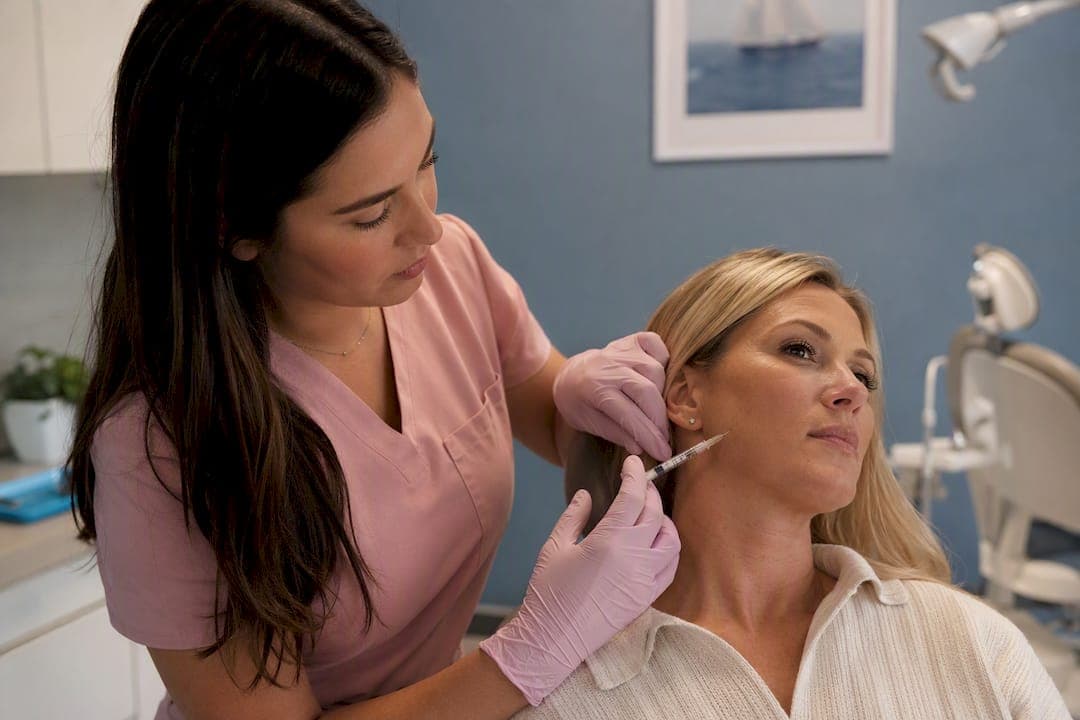
Yes, Botox can reduce jaw clenching and related pain for many adults, but it's a temporary, supplemental therapy, not a cure. Botulinum toxin injections into the masseter muscle typically ease muscle activity and soreness for about 3 to 6 months before symptoms drift back toward baseline. The FDA has not approved Botox specifically for TMD or bruxism, so every injection for jaw clenching is off-label, and dental insurance frequently denies or caps coverage as a result.
That doesn't make it a bad option. It means Botox works best as a second-line treatment, used when a night guard and physical therapy haven't done the job.
Before you book a consult, two signals are worth discussing with a provider:
- Muscle hypertrophy you can see or feel. If your masseter visibly bulges when you clench, or an exam shows unusually high resting tone, you're a stronger candidate.
- Failed conservative care. If a properly fitted night guard, stress management, or physical therapy hasn't resolved your pain or dental wear after a fair trial, Botox moves up the list.
Quick fact: Clinical studies consistently show BoNT-A reduces masseter EMG activity and pain scores for around three months, with muscle activity typically returning toward pretreatment levels by month six.
Key Takeaways
Botox reduces masseter muscle activity and clenching-related pain temporarily, with effects lasting a few months, making it a supplemental therapy best used after conservative treatments like night guards have been given a fair trial.
| Point | Details |
|---|---|
| Effect duration is limited | Expect symptom relief for roughly three to six months before muscle activity returns toward baseline. |
| Off-label means inconsistent coverage | Insurance, including Medicare, frequently excludes Botox for TMD or bruxism since it lacks FDA approval for this use. |
| Dosing varies widely across studies | Trials range from 10 IU per masseter side to 50 IU total when temporalis is included, so ask your provider where your plan falls. |
| Alternatives perform similarly short-term | Dry needling and manual therapy matched Botox's outcomes in a randomized comparison, making them worth trying first for mild cases. |
| Starboarddental screens before treating | The practice evaluates bite, TMJ function, and sleep apnea risk, and prioritizes night guards and physical therapy before recommending Botox. |
Table of Contents
- How Botox for Jaw Clenching Actually Works
- What the Research Says About Effectiveness
- Who Is a Good Candidate for Masseter Botox?
- What to Expect During a Botox Injection Appointment
- Side Effects and Safety Considerations to Know Before Treatment
- Where Botox Fits Among Bruxism Treatment Options
- What Botox for Bruxism Typically Costs Out of Pocket
- How Starboard Dental Approaches Botox for Jaw Clenching
- What Actually Matters When You're Considering This Treatment
- Get a Personalized Bruxism Evaluation at Starboard Dental
- Authoritative Studies and Clinical Resources
- Sources
How Botox for Jaw Clenching Actually Works
Botox is the brand name for onabotulinumtoxinA, a purified form of botulinum toxin type A (BoNT-A). Injected into a muscle, it blocks the release of acetylcholine at the neuromuscular junction. Acetylcholine is the chemical messenger that tells muscle fibers to contract, so blocking it means the masseter simply can't clench as forcefully, even when your brain sends the signal.
The masseter, the thick muscle at the corner of your jaw, is the primary target for jaw clenching and grinding. Some injectors add the temporalis, the fan-shaped muscle at your temple, when patients report headaches or tension that extends beyond the jawline.
There's a secondary benefit that surprises a lot of patients: pain relief that outpaces what you'd expect from weaker muscles alone. Researchers believe BoNT-A also dampens the release of substance P and other inflammatory mediators involved in muscle pain, which is part of why patients often report less soreness within the same window that muscle bulk decreases. Effects don't show up instantly. Most patients notice softening of clench strength within a few days, with full effect settling in over one to two weeks.
Clinicians increasingly back these subjective reports with objective tools:
- Electromyography (EMG) measures electrical activity in the muscle during clenching, and studies show measurable drops after injection.
- Myotonometry measures muscle stiffness and tone directly through the skin, and it's become a useful way to predict who benefits most.
A study using myotonometry tracked patients at baseline, three weeks, and three months post-injection. Muscle tone, stiffness, and elasticity all improved significantly, and the patients who started with the highest baseline muscle values saw the largest and longest-lasting changes. That's a meaningful clue: the people whose masseters are working overtime already tend to get the most out of treatment.
What the Research Says About Effectiveness
The evidence for Botox as a bruxism treatment is real, but it's narrower than marketing pages sometimes suggest. Multiple randomized and clinical studies point to the same pattern: meaningful short-term relief, a fairly predictable timeline, and not much data yet on what happens after years of repeat treatment.
What the trials show:
- Injections into the masseter reliably lower EMG activity and reduce pain scores, with benefits holding at roughly the three-month mark before drifting back toward baseline by six months.
- A prospective randomized study comparing four treatments (BoNT-A, dry needling, pharmacologic therapy, and manual therapy) in 80 patients found no group significantly outperformed the others on pain or mouth-opening measures at three months.
- Dosing across trials is inconsistent, which complicates comparing outcomes directly.
That second finding deserves more attention than it usually gets. If dry needling and manual therapy can match Botox's short-term results in a randomized comparison, then Botox's real advantage isn't superior efficacy. It's convenience: one appointment instead of a series of manual therapy sessions, and no daily pill regimen.
Comparative trials suggest several interventional approaches, from Botox to dry needling to manual therapy, deliver similar short-term relief. That points toward shared decision-making based on what a patient is willing to tolerate, not a single "best" treatment.
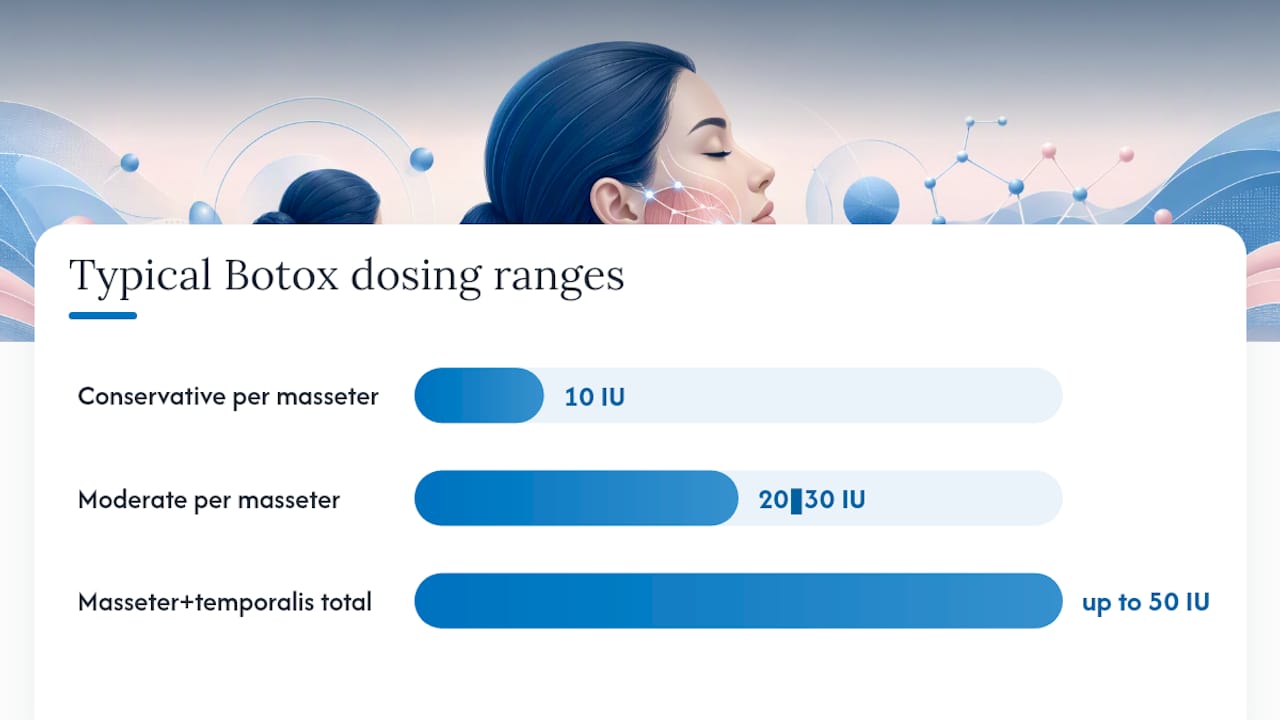
Dosing heterogeneity is the other wrinkle worth understanding before you commit. Some single-arm and randomized trials used 10 IU per masseter side, a relatively conservative dose that still produced roughly three months of relief. Other protocols pushed to 20 to 30 IU total per masseter, and multi-site treatments that include the temporalis have used up to 50 IU distributed across both muscle groups. That range matters because a study using 10 IU per side and one using 30 IU per side aren't measuring the same intervention, even though both get filed under "Botox for bruxism" in a literature review.
Quick fact: Dosing across published studies ranges from 10 IU per masseter side in smaller trials up to 50 IU total when temporalis injections are included, a spread wide enough that "the dose used in studies" isn't a single number.
The honest limitations are worth naming plainly. Most trials involve small sample sizes, often fewer than 100 patients. Outcome measures vary between studies, some tracking pain via visual analog scale, others tracking grinding frequency or EMG amplitude, which makes head-to-head comparison difficult. And almost none of the published research follows patients past six months, so long-term data on repeated dosing cycles over years is still thin. None of this means Botox doesn't work. It means the certainty is "this helps for a few months in many patients," not "this is a permanent fix backed by decade-long data."
Who Is a Good Candidate for Masseter Botox?
Not every clenched jaw needs an injection. The patients who tend to get the most value share a few specific characteristics, and a good provider will screen for these before recommending treatment.
- Visible or measurable muscle hypertrophy. A masseter that's noticeably enlarged on exam, or shows high resting tone on myotonometry, predicts a stronger response.
- High baseline muscle activity. Patients whose EMG or palpation exam shows aggressive clenching force tend to see more dramatic and longer-lasting improvement, consistent with the myotonometry findings on baseline muscle values.
- Persistent symptoms despite conservative care. If pain, headaches, or dental wear continue after a genuine trial of a properly fitted night guard and physical therapy, that's the clearest signal to escalate.
- Quality of life impact. Jaw fatigue that interferes with eating, talking, or sleep tips the risk-benefit calculation toward treatment.
Certain conditions rule Botox out or require extra caution: pregnancy and breastfeeding, active neuromuscular disorders like myasthenia gravis, active infection at the planned injection site, and any known allergy to botulinum toxin products. Anyone on blood thinners should flag that before scheduling, since bruising risk goes up.
Before injecting anyone, a responsible provider also screens for two things people often overlook: sleep apnea, which can drive nighttime clenching independent of stress, and dental causes of tooth wear, like a bad bite or old restorations that need correcting first. Treating the muscle without addressing the underlying trigger just means you're back for another round of injections every few months indefinitely. Our TMJ symptoms overview walks through how to tell whether jaw pain points toward muscle tension, joint dysfunction, or something else entirely.
Pro Tip: Ask your injector directly how many masseter Botox cases they treat per month, what dose they plan to start with, and how they'll measure whether it worked. Vague answers to any of those three questions are a reason to get a second opinion.
What to Expect During a Botox Injection Appointment
The appointment itself is short, but the steps leading up to it matter more than most patients expect.
Before the injection:
- A clinical evaluation covering your bite, jaw range of motion, and muscle exam, sometimes paired with baseline photos or myotonometry if the practice uses objective measurement.
- An informed consent conversation that explicitly covers the off-label status of Botox for bruxism, since this isn't an FDA-approved indication.
- A dosing plan tailored to your muscle size and symptom severity rather than a one-size-fits-all number.
During the injection, the provider identifies the masseter by asking you to clench, then marks one to three injection points per side depending on muscle size. If the temporalis is included, additional points are marked at the temple. A skilled injector stays clear of the parotid gland and facial nerve branches that run near the masseter, since imprecise placement is what causes the smile asymmetry or drooping people sometimes worry about.
Dosing in the literature varies by protocol. Some trials use 10 IU per masseter side as a conservative starting point. Others use 20 to 30 IU total per side for more pronounced hypertrophy, and combination masseter-plus-temporalis protocols have gone as high as 50 IU across both muscle groups. Your provider should explain where your plan falls on that range and why.
Practical logistics:
- The appointment itself usually runs 15 to 30 minutes.
- Topical numbing cream is optional and often skipped since the needles used are fine-gauge.
- Mild soreness or bruising at injection sites is common for a day or two.
- Most providers schedule a follow-up between 4 and 12 weeks to assess response and decide whether adjustment is needed for the next cycle.
You won't feel the full effect immediately. Give it the full one to two weeks before judging whether the dose was right.
Side Effects and Safety Considerations to Know Before Treatment
Botox for jaw clenching is generally well tolerated, but it's not without risk, and patients deserve a clear-eyed rundown before consenting to treatment.
Common, short-term effects:
- Pain, redness, or bruising at the injection site
- Temporary weakness while chewing tougher foods
- Mild changes to bite feel or smile symmetry, usually resolving within weeks
- Headache in the days following treatment
These track with the general safety profile Mayo Clinic outlines for therapeutic botulinum toxin injections across muscle groups, not just the jaw.
Less common but more serious:
- Difficulty swallowing (dysphagia), which can occur if toxin affects nearby muscles involved in swallowing
- Spread of toxin effects beyond the injection site causing distant muscle weakness (rare)
- Allergic reaction to the injection
Quick fact: Studies consistently note that masseter Botox effects, both intended and side effects, peak and fade on roughly the same three-to-six-month curve, which is part of why most side effects resolve on their own without intervention.
People on anticoagulants face higher bruising risk and should discuss timing with both their prescribing physician and their injector. Anyone with a diagnosed neuromuscular disorder needs medical clearance before treatment, since these conditions can amplify Botox's muscle-weakening effect in unpredictable ways.
Call your provider promptly if you notice worsening difficulty swallowing, drooping that extends beyond the injection area, or breathing changes. Those symptoms, while uncommon, warrant same-day medical attention rather than a wait-and-see approach.
Where Botox Fits Among Bruxism Treatment Options
Botox rarely belongs at the front of the treatment line. Most dental and TMJ specialists reserve it for patients who've already tried conservative measures and still have symptoms.
First-line options worth exhausting first:
- A custom-fitted night guard worn during sleep, which protects teeth and can reduce clenching intensity
- Physical therapy targeting jaw and neck muscles
- Cognitive behavioral therapy or biofeedback for stress-driven clenching
- Sleep hygiene improvements, since fragmented sleep often worsens nighttime grinding
- Occlusal adjustment when a bite misalignment is contributing to the problem
Interventional alternatives that sit alongside or before Botox:
- Dry needling of trigger points in the masseter and temporalis
- Manual therapy from a physical therapist trained in TMJ dysfunction
- Short-term muscle relaxants or anti-inflammatory medication for acute flares
The randomized comparison trial mentioned earlier found dry needling and manual therapy performed comparably to Botox at three months, which makes a strong case for trying the less invasive, lower-cost option first when symptoms are mild to moderate.
Pro Tip: If your provider suggests Botox as your very first treatment before trying a night guard, ask why. There are legitimate reasons, like severe muscle hypertrophy already damaging teeth, but "first resort" Botox for run-of-the-mill clenching skips steps most guidelines recommend.
The practical rule: reserve Botox for cases where quality of life is genuinely impaired despite honest effort with conservative care, or where muscle hypertrophy is aggressive enough to threaten dental structures. Maintenance injections, when needed, are typically spaced every 3 to 6 months based on how quickly symptoms return.
What Botox for Bruxism Typically Costs Out of Pocket
Because Botox for jaw clenching is an off-label use, insurance coverage is inconsistent at best. Medical insurance sometimes covers it when documentation supports a diagnosis of TMD with functional impairment, but dental insurance and Medicare frequently exclude off-label uses entirely.
That means most patients should plan to pay out of pocket, at least initially. Per-session cost varies by geographic market, injector specialty, and total dose used, so a flat national number isn't reliable. What does drive the price consistently:
- Total units injected. A 10 IU per side protocol costs less than a 30 IU per side or masseter-plus-temporalis protocol.
- Injector specialty. Oral surgeons, ENTs, and dentists with advanced Botox training often price differently than medical spas.
- Clinic overhead and follow-up structure. Practices that bundle evaluation, injection, and follow-up into one fee price differently than pay-per-visit models.
Quick fact: Because effects fade over roughly a three-to-six-month cycle, the real annual cost is two to four treatments a year, not a single one-time fee.
A few practical steps make the financial side less painful:
- Ask your provider's office for the specific medical billing codes used, since some medical plans reimburse partially even when dental plans won't.
- Document medical necessity thoroughly, including failed conservative treatments, to strengthen any insurance appeal.
- Check whether your HSA or FSA covers the treatment, since many qualify it as a medical expense.
- Ask directly whether the clinic offers payment plans for recurring treatment cycles.
How Starboard Dental Approaches Botox for Jaw Clenching
Starboarddental treats masseter Botox as one option within a full diagnostic workup, not a standalone quick fix. Every patient considering it goes through a structured screening process before injection is even discussed as a plan.
The evaluation typically includes:
- A detailed history covering pain patterns, headache frequency, and sleep quality
- A clinical exam assessing muscle tone, jaw range of motion, and dental wear
- A TMJ-focused evaluation to rule out joint-specific dysfunction versus pure muscle overactivity
- Screening questions for sleep apnea, since untreated apnea often drives nighttime clenching independent of stress
Conservative options come first whenever they're appropriate. That means a conversation about custom night guards and physical therapy referrals before Botox enters the discussion, consistent with how the clinical literature frames appropriate sequencing.
For patients who are good candidates, injections are coordinated with follow-up scheduling so response can be tracked and future cycles adjusted based on how the muscle responds. Details on the practice's Botox service, including how appointments are structured, are outlined on the Botox at Starboard Dental page.
What Actually Matters When You're Considering This Treatment
Botox for jaw clenching works best when providers treat it as one tool among several, not a magic reset button. That's the core judgment the research actually supports, and it's worth saying plainly because a lot of marketing around this treatment implies otherwise.
Here's what conventional advice tends to gloss over: the randomized trial comparing Botox to dry needling, medication, and manual therapy found no clear winner. That should reshape how patients think about the decision. It's not "Botox versus doing nothing." It's "Botox versus other interventions with similar short-term results but different costs, invasiveness, and time commitments."
If I had to prioritize one thing for readers weighing this treatment, it's objective measurement. Providers who track baseline muscle tone and reassess after treatment, rather than relying purely on how you say you feel, tend to catch whether a dose is actually working or just coincidentally overlapping with a good week. Ask about that before you ask about price.
The patients who benefit most aren't the ones with the worst pain. They're the ones with measurably overactive muscles who've already given conservative care a fair shot.
— Alex
Get a Personalized Bruxism Evaluation at Starboard Dental
If clenching has already cost you a cracked filling or worn enamel, Botox is one piece of a bigger puzzle, and the right starting point is a real evaluation, not a guess based on an article. Starboarddental combines a full TMJ and bite assessment with same-day scheduling, so you're not waiting weeks just to find out whether a night guard, physical therapy, or Botox makes sense for your specific jaw.

What sets this apart from booking Botox at a med spa or aesthetic clinic is sequencing. A dental practice can evaluate your bite, check for dental wear patterns that reveal how long you've been clenching, and rule out sleep apnea as an underlying driver, all before recommending an injection you may not even need yet. That kind of full-picture screening is harder to get anywhere that only offers cosmetic injectables.
If you're dealing with jaw pain, morning headaches, or teeth that seem to be wearing down faster than they should, schedule a general dentistry evaluation at Starboarddental to find out where your case actually falls on the treatment pathway.
Authoritative Studies and Clinical Resources
Readers who want to go deeper, or bring specifics to their next dental appointment, can start with these sources:
- Evaluation of the Efficacy of Low-Dose Botulinum Toxin Injection Into the Masseter Muscle — the core randomized trial behind the three-to-six-month effect timeline.
- Comparison of botulinum toxin, dry needling, pharmacological treatment, and manual therapy — the randomized study showing comparable outcomes across treatment types.
- Functional Effects of BoNT-A Application in Masseter Muscle — objective myotonometry data on muscle tone and stiffness changes.
- Effect of Botulinum Toxin Injection into the Masseter Muscle in Patients with Bruxism — a prospective clinical study with concrete dosing examples.
- Botox for TMJ: What To Expect — Cleveland Clinic — patient-facing guidance on off-label status and insurance realities.
- Botox for Bruxism — Colgate — clinical framing on injector qualifications and treatment sequencing.
This article is general information, not a substitute for advice from a qualified doctor. Consult a qualified healthcare professional about your own circumstances before acting on anything here.
Sources
- Botox for TMJ: What To Expect — Cleveland Clinic
- Evaluation of the Efficacy of Low-Dose Botulinum Toxin Injection Into the Masseter Muscle for the Treatment of Nocturnal Bruxism — PMC
- Comparison of the effectiveness of botulinum toxin, dry needling, pharmacological treatment, and manual therapy for bruxism-induced myalgia — PMC
- Functional Effects of BoNT-A Application in Masseter Muscle in Patients with Symptoms of Bruxism — MDPI (Toxins)
- Effect of Botulinum Toxin Injection into the Masseter Muscle in Patients with Bruxism: A single-arm, Institutional-Based Prospective Clinical Study — J Clin Exp Dent (DOI)