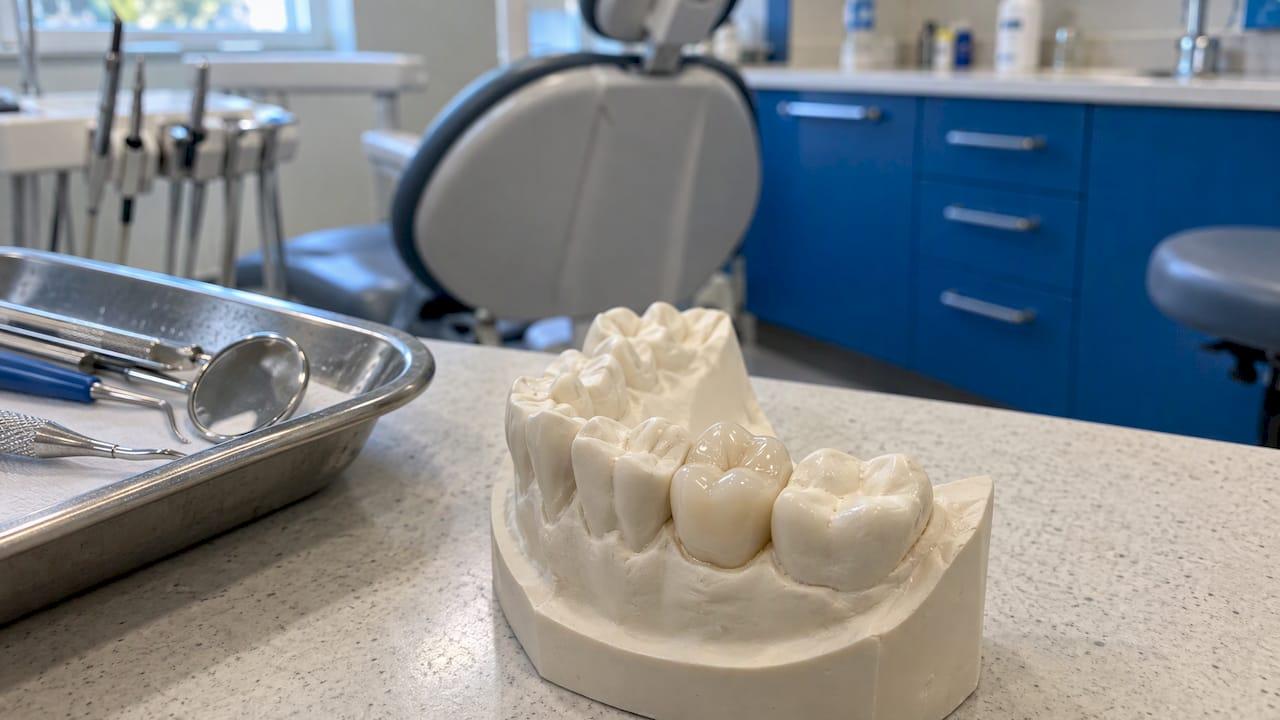
Most Maine practices price a single crown at roughly $750 to $1,100 before insurance, and the exact figure for your tooth depends on the material, the tooth's condition and any work needed underneath. The fastest way to a real number is an exam and a written plan for your tooth. At Starboard Dental in Kennebunk we treat crowns as part of our restorative dentistry care, and you can see our crown page before you call.
Below is what the Maine ranges look like, why some quotes climb toward $2,000, what insurance and MaineCare may pay, and what to look for on an estimate.
TL;DR
- Maine's 2026 negotiated-rate data puts all-ceramic crowns at about $794 to $1,086 and porcelain-fused-to-metal crowns at about $746 to $1,041 per tooth.
- Quotes near $2,000 usually include more than the crown: a core build-up, a root canal, or a post.
- Typical dental plans pay about 50% to 60% of a crown after a deductible, up to a yearly maximum of roughly $1,500 to $2,000.
- Adults over 21 on MaineCare have comprehensive dental coverage that includes crowns.
- Ask for an itemized estimate that lists every step, so the number you see is the number you pay.
Table of Contents
- What a crown costs in Maine
- Why a crown quote can reach $2,000
- What changes the price of your crown
- How insurance changes what you pay
- MaineCare and lower-cost coverage
- What a good crown estimate looks like
- Our perspective
- Get a crown estimate in Kennebunk
- FAQ
- Sources
What a crown costs in Maine
The most useful local benchmark is published pricing drawn from insurer-negotiated rates. Dentalcost.org's 2026 Maine data, built from rates at 60 Maine dental practices under the federal Transparency in Coverage rule, shows:
| Crown type | Range | Median | Estimated self-pay |
|---|---|---|---|
| All-ceramic | $794 to $1,086 | $1,018 | $1,018 to $1,125 |
| Porcelain fused to metal | $746 to $1,041 | $984 | $984 to $1,078 |
| Core build-up under a crown | $177 to $230 | $204 | n/a |
A "negotiated rate" is the price a practice has agreed to accept from an insurer. If you pay out of pocket, expect to land near the self-pay column. These are statewide figures, not a quote from any one office. Dentists set their own fees, and the specifics of your tooth move the total.
Notice that the build-up is listed separately. A build-up (also called a core build-up) rebuilds the missing part of a badly damaged tooth so the crown has something solid to sit on. Many crowns need one, so it is worth budgeting for.

Why a crown quote can reach $2,000
If someone quotes you around $2,000, the crown itself is rarely the whole story. The price usually stacks several steps:
- The exam and X-rays that confirm the tooth needs a crown.
- A core build-up when a large filling or decay has removed much of the tooth.
- A root canal and post if the nerve is infected or the tooth is too weak to hold the crown alone.
- A temporary crown worn while the permanent one is made.
- The permanent crown in the material you and your dentist choose.
Seen that way, a $2,000 total can be a fair price for a tooth that needed a root canal, a build-up and a ceramic crown. A $1,000 total can be a fair price for a tooth that needed only the crown. Comparing quotes only works when both list the same steps.
What changes the price of your crown
Material
Porcelain fused to metal sits at the lower end of Maine's range, and all-ceramic sits a little higher, as the table above shows. Metal alloys, zirconia and layered ceramics each have different strengths and appearances. Our guide to crown types, materials and lifespan explains how each is used, and a back molar usually calls for a different material than a front tooth you show when you smile.
Tooth location and bite
Molars take the heaviest chewing force, so they need a strong material. Front teeth are about appearance, so shade matching matters more. Your dentist picks the material to fit the job, and that choice is part of the price.
The condition of the tooth
This is the biggest swing factor. A tooth with a sound structure needs only shaping and a crown. A tooth with deep decay, a fracture or a failing old filling may need a build-up first, and sometimes gum treatment or a root canal. If you have gum disease, that is treated first so the crown has healthy support. We offer periodontal therapy for that situation.
How the crown is designed
Digital impressions replace the trays of putty many people dread. We use digital scanners for precision, which means the crown is designed from an accurate 3D picture of your tooth. A precise fit supports a crown that lasts, and our piece on how long crowns last covers the care that helps.
How insurance changes what you pay
Most dental plans file crowns under "major services," which are covered at a lower percentage than cleanings. Two plan documents show the typical pattern:
- A Delta Dental benefits overview (effective January 1, 2025) lists crowns as major services paid at 60% in-network after a $50 per-person deductible, with a $2,000 annual maximum. Its worked example has a $1,714 charge, a $790 allowed fee, 40% coinsurance and a $316 out-of-pocket cost.
- A Premera adult dental plan document for 2026 covers crowns once every five calendar years, with a deductible and then 50% cost share, under a $1,500 annual maximum for basic and major services.
These are examples, not your plan. They show the three things to check on your own: the percentage your plan pays, the yearly maximum, and the frequency limit on replacing a crown. Plans word these terms differently, and reading how policies define what they cover helps you see why two plans with similar premiums can pay differently on the same crown.
A worked example using the Maine range: suppose your allowed fee is $1,000, your plan pays 50% after a $50 deductible. You would pay the $50 deductible plus half of the remaining $950, which is $525 in total, and the plan pays $475. If you have already used part of the yearly maximum on other work, the plan pays less. Timing a crown early in the plan year can help use the full maximum.

MaineCare and lower-cost coverage
If you qualify for MaineCare, the picture is different. The Maine Department of Health and Human Services states that as of July 1, 2022, all adults over 21 have comprehensive dental coverage under MaineCare, including restorative services such as fillings and crowns. If you are on MaineCare, confirm with the office that your coverage applies to your specific treatment before you book.
What a good crown estimate looks like
A clear estimate lets you compare, plan and avoid surprises. It should state:
- The tooth number and the crown material.
- Whether a build-up, post or root canal is needed, each priced on its own line.
- The exam and X-ray charges, if they are not already done.
- The temporary crown, if one is used.
- What your insurance is expected to pay and what remains for you.
- How many visits the treatment takes.
If a number seems high, look at which lines were added. The crown itself is the part most people compare, and the lines around it explain most of the gap between quotes.
Our perspective
Patients usually ask us for one number, and we understand why. A crown price is only honest once someone has examined the tooth, so we start there. We would rather you know whether you need the crown alone or a build-up too before you commit.
We built our practice for people who dread the dentist. Ceiling-mounted TVs and personalized comfort items are part of how we make longer restorative visits easier, and digital scanners help us design crowns with precision. We see patients of all ages, and we offer same-day and walk-in appointments, so a cracked or painful tooth does not have to wait.
Crowns sit alongside everything else we do, from general dentistry checkups that catch problems early to fillings, bridges and implants. Catching a tooth early often keeps the treatment simpler, and that is the best way we know to keep your costs predictable.
Alex
Get a crown estimate in Kennebunk
If you have a cracked, worn or heavily filled tooth, we can examine it and explain your options for restoring it. Our team in Kennebunk treats patients from Kennebunk, York, Saco and nearby towns, and works with patients paying directly or through dental insurance. Start on our crowns page or contact us through starboarddental.com to book.

If the tooth is too damaged for a crown, we also place dental implants and bridges, and a smaller repair may only need a filling.
FAQ
How much is a dental crown in Maine?
Maine's 2026 negotiated-rate data shows all-ceramic crowns at about $794 to $1,086 and porcelain-fused-to-metal crowns at about $746 to $1,041. Your total depends on the material and whether the tooth needs a build-up or other work first.
Why would a crown cost $2,000?
Usually because the quote bundles several steps: exam, X-rays, a core build-up, a root canal or post, a temporary crown and the final crown. Ask for an itemized estimate so you can see which steps are included.
Does insurance cover dental crowns?
Most plans cover crowns as a major service, often at 50% to 60% after a deductible, and subject to a yearly maximum and a limit on how often a crown can be replaced. Check your own plan's percentage, maximum and waiting periods.
Does MaineCare cover crowns?
Yes. Maine DHHS states that adults over 21 have had comprehensive dental coverage under MaineCare since July 1, 2022, which includes crowns. Confirm your specific treatment with the office before you schedule.
Sources
- Dental Costs in Maine 2026
- Novartis Benefits Overview, Delta Dental
- Adult Dental Optima 1500 Enhanced+, Premera (2026)
- Covered Services & Benefits, Maine DHHS
- Policies and what they cover