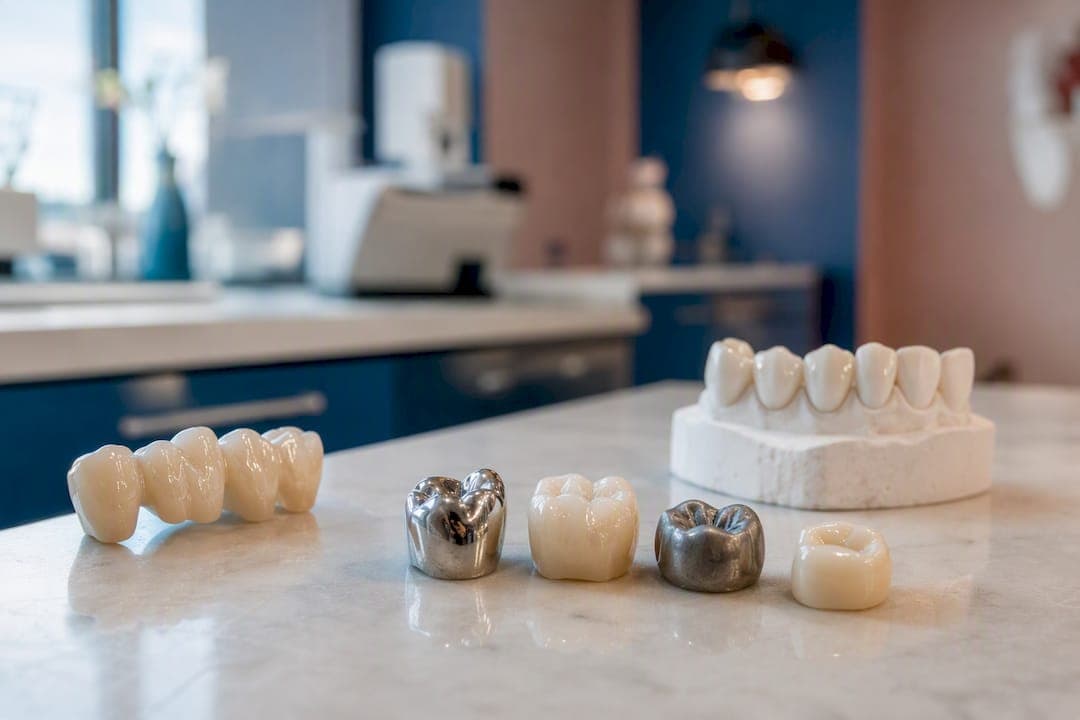
The main crown types are metal, porcelain-fused-to-metal (PFM), all-ceramic or porcelain, zirconia, and resin. As a rule of thumb, molars that take heavy chewing force do best with metal or zirconia, while front teeth usually call for all-ceramic or zirconia for a natural look. Temporary crowns, typically acrylic or resin, hold the space while your permanent restoration is milled or fabricated in a lab. Most permanent crowns last 5 to 15 years, sometimes decades with good care, and same-day digital crowns are now an option for many single-tooth cases.
- Metal: strongest option, best for back molars, least esthetic
- PFM: metal core with a porcelain shell, good strength and appearance
- All-ceramic/porcelain: best color match, ideal for front teeth
- Zirconia: very strong with improving translucency, works almost anywhere
- Resin: budget or short-term option, wears faster
Key Takeaways
The right crown material depends on where the tooth sits, how much force it takes, and how much the patient prioritizes appearance over raw durability.
| Point | Details |
|---|---|
| Match material to location | Metal or zirconia for molars under heavy bite force; ceramic or zirconia for visible front teeth. |
| Expect years, not months | Permanent crowns typically last 5 to 15 years with good daily care and regular checkups. |
| Temporaries are short-term by design | Acrylic or resin temporaries usually last 1 to 3 weeks and protect the tooth until the permanent crown arrives. |
| Same-day isn't for every case | Digital milling works well for many posterior crowns, but complex front-tooth esthetics may still favor lab work. |
| Starboard Dental offers both paths | Digital scanning and a full range of crown materials are available through Starboard Dental's restorative dentistry services. |
Table of Contents
- Crown Types Explained: Metal, Porcelain, Zirconia, and More
- How Dentists Choose the Right Crown Material
- What Happens During a Crown Procedure
- Temporary Crowns vs. Permanent Crowns
- Lifespan, Cost, and How to Make a Crown Last
- Same-Day Digital Crowns: What Patients Should Know
- A Practitioner's Note on Choosing the Right Crown
- Get a Crown Evaluation at Starboard Dental
- Frequently Asked Questions
- Sources
Crown Types Explained: Metal, Porcelain, Zirconia, and More
Every crown material trades off strength against appearance somewhere. Understanding that trade-off is the whole game when you're picking a material with your dentist.
1. Metal crowns. Gold and other metal alloys have been used in restorative dentistry longer than any other crown material, and for good reason: they barely wear down, and they require removing less of your natural tooth to fit. The catch is obvious the moment you smile. A silver or gold molar is fine because nobody sees it, but nobody puts a metal crown on a front tooth on purpose. A small number of patients also report sensitivity to nickel-based alloys, so it's worth flagging any known metal allergy before your dentist orders one.
2. Porcelain-fused-to-metal (PFM). PFM crowns bond a porcelain layer over a metal substructure, giving you the strength of metal with a tooth-colored surface. They've been a workhorse option for decades. The tradeoff shows up years later: as gums recede slightly with age, a thin dark line can appear at the gumline where the metal margin peeks through. Dentists still reach for PFM crowns often for premolars and molars that need a natural look without full metal.
3. All-ceramic or porcelain crowns. For front teeth, this is usually the material of choice. Porcelain mimics the translucency of real enamel in a way metal-backed crowns can't fake, and it contains no metal at all, which matters for patients with metal sensitivities. The downside is fracture resistance. A pure porcelain crown on a molar that grinds through a lot of force isn't the ideal use case.
4. Zirconia. Zirconia has largely changed the calculus here. It's a ceramic that's remarkably strong, strong enough for molars, yet newer high-translucency formulations have closed much of the gap with porcelain's esthetics. Shade-matching still takes a practiced eye. Many dentists now use zirconia across both posterior and anterior cases because it flexes to fit almost any location in the mouth.
5. Resin. Resin crowns cost less and place quickly, which makes them useful as a stopgap, but they wear and chip faster than ceramic or metal. Think of resin as the crown you choose when budget or timeline matters more than a 15-year lifespan.
6. Same-day CAD/CAM crowns. Digital scanning and in-office milling let many single-unit crowns, usually zirconia or a milled ceramic block, go from prep to placement in one visit.
Pro Tip: Ask your dentist which material they'd put in their own mouth for that specific tooth. Clinicians often have a genuine preference that doesn't always match what's cheapest or fastest.
How Dentists Choose the Right Crown Material
Your dentist isn't picking a crown material off a menu. They're running through a short list of clinical questions, and knowing what they are helps you ask better ones back.
- Where the tooth sits and how much bite force it absorbs (a molar takes far more pounding than an incisor)
- How much natural tooth structure remains, and whether a post or core buildup is needed first
- Your esthetic priorities, especially shade-matching against neighboring teeth
- Any history of metal sensitivity or allergy
- What your insurance covers, since coverage often nudges the material decision
- Habits like bruxism or a tendency to chew ice or hard candy, both of which shorten the life of a more fragile material
A patient who clenches at night and needs a back molar crown is a very different case from someone who wants a flawless front-tooth match for a wedding photo, even though both are "just a crown."
What Happens During a Crown Procedure
1. Tooth preparation. Your dentist removes decay or damaged structure and shapes the tooth to receive the crown.
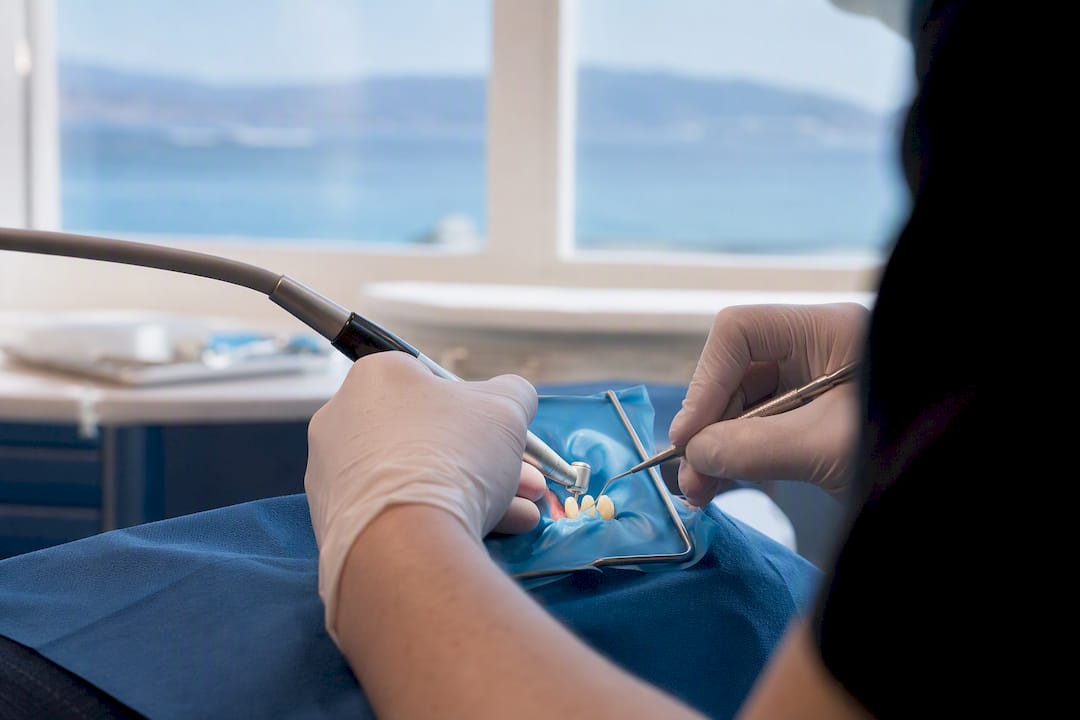
2. Impression or digital scan. Traditional impressions use putty; digital workflows use an intraoral scanner that builds a 3D model in minutes.
3. Temporary crown. You wear a temporary while the lab fabricates your permanent crown, usually over 1 to 3 weeks.
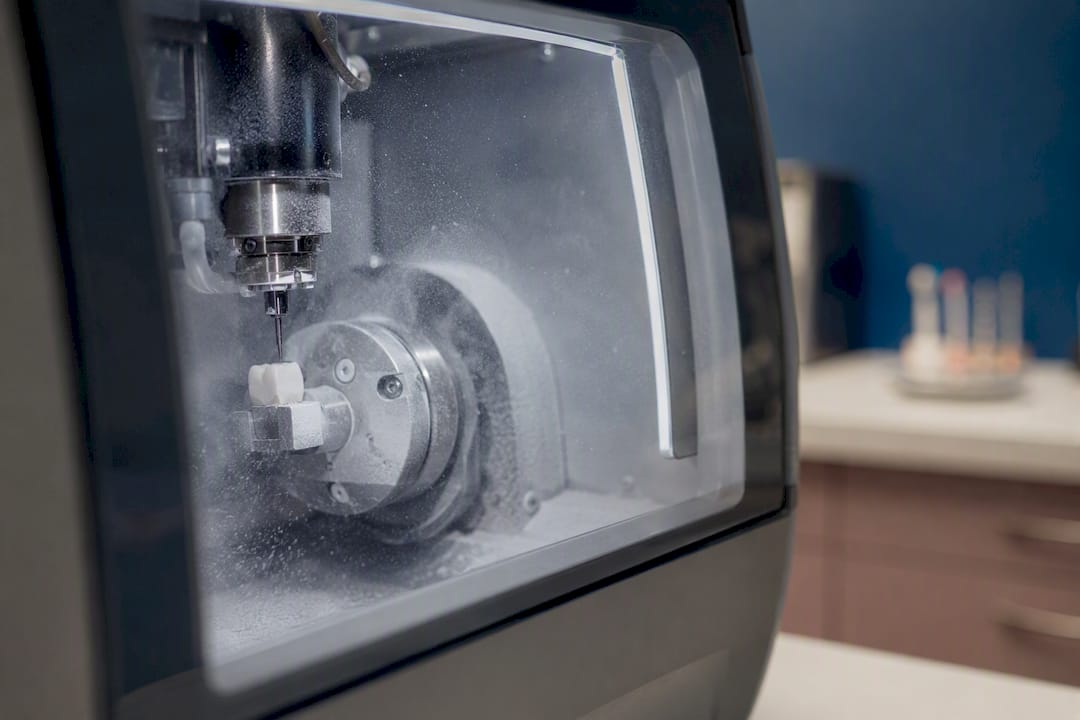
4. Same-day alternative. For eligible cases, the scan goes straight to an in-office mill, and the finished crown is seated that same day.
5. Fit and bite check. Your dentist adjusts the crown's contact points and cements it in place. Mild sensitivity to temperature for a few days afterward is normal.
Temporary Crowns vs. Permanent Crowns
Temporary crowns are made of acrylic or resin and are meant to last only a matter of weeks, not years. They exist to protect the freshly prepared tooth, keep it from shifting out of position, and preserve your bite and appearance while the lab builds the real thing.
- Expect a temporary to stay in place for a few weeks
- Skip sticky candy and hard foods that can pull a temporary loose
- Call your dentist right away if it comes off. Temporaries aren't cemented as securely as permanent crowns by design, so this happens occasionally and is easy to fix
Lifespan, Cost, and How to Make a Crown Last
Permanent crowns typically hold up for 5 to 15 years, and plenty last well beyond that with consistent care and routine dental exams.
Crown lifespan snapshot: Most permanent crowns last 5 to 15 years; strong daily habits and regular checkups push many well past that window.
Cost tends to track material complexity. Full-porcelain and high-end zirconia crowns generally cost more than PFM or resin, and lab fees plus your region both move the final number. On the care side:
- Brush and floss carefully around the crown margin daily
- Wear a night guard if you grind or clench
- Avoid chewing ice, hard candy, or sticky caramel
- See your dentist if you notice chipping, a loose feeling, or ongoing pain around the crown
Same-Day Digital Crowns: What Patients Should Know
Digital scanning has quietly solved one of dentistry's most disliked steps. There's no more biting into a tray of putty for two minutes while you gag and wait. The scanner also feeds directly into a same-day milling machine for many single-unit crowns, which cuts a multi-week process down to one appointment.
Same-day crowns are a real convenience for patients juggling packed schedules, but complex front-tooth cases sometimes still benefit from a lab technician's hand-layered artistry to nail a perfect shade match.
Pro Tip: If a same-day crown is offered for a visible front tooth, ask to see a shade comparison before it's milled. It only takes a minute and can save you a second visit.
Same-day workflows also reduce the odds of a temporary crown complication simply because there's no temporary phase to manage, a detail worth weighing if you've had a temporary come loose before. For a deeper look at how the milling process itself works, this guide to same-day crown technology breaks down what happens chairside.
A Practitioner's Note on Choosing the Right Crown
There's no universal "best" crown. Every recommendation should start with your tooth's location, your bite, and what matters most to you, not a default material.
Get a Crown Evaluation at Starboard Dental
If you're weighing metal against zirconia, or wondering whether a same-day crown fits your situation, the fastest path to an answer isn't another article. It's a chairside look at your tooth. Starboard Dental's restorative dentistry services cover the full range of crown materials discussed here, backed by digital scanning that skips the old-fashioned putty impression entirely.

For most crown consults, bring your insurance card, a list of any medications, and a note on your bite habits (grinding, clenching, ice chewing) so your dentist can match the material to how you actually use your teeth. General checkups, general dentistry visits, and crown consults all happen under one roof in Kennebunk, and the front desk team can walk through insurance or financing options before any work is scheduled. Ready to find out which crown type fits your tooth? Book a visit as a new patient and get a straight answer instead of more guessing.
Frequently Asked Questions
Which crown material is better: crown or veneer for a front tooth? A crown covers the entire tooth and suits teeth with significant decay or a root canal, while a veneer only covers the front surface and works best on a tooth that's structurally sound but cosmetically flawed. For a front tooth with real structural damage, a crown is the stronger long-term fix.
What's the difference between metal and porcelain crowns? Metal crowns resist wear better and remove less tooth structure, making them a common choice for back molars. Porcelain crowns match natural tooth color far more closely, which is why they're preferred for teeth people actually see when they smile.
How long does a temporary crown last compared to a permanent one? A temporary crown is designed to last about 1 to 3 weeks while your permanent crown is fabricated. A permanent crown, by contrast, is built to last 5 to 15 years or longer.
Is zirconia or ceramic better for crown design? Zirconia tends to win on raw strength and holds up well on molars, while traditional ceramic still edges it out for the most demanding front-tooth shade matches. Many dentists now use high-translucency zirconia for both, closing much of that gap.
Can I get a crown done in one day? Often, yes. Digital scanning paired with in-office milling lets many single-tooth crowns get scanned, milled, and seated in one appointment, though your dentist will tell you if your specific case is better suited to a lab-made crown instead.
This article is general information, not a substitute for advice from a qualified doctor. Consult a qualified healthcare professional about your own circumstances before acting on anything here.
Sources
- Dental Crowns: Types, Procedure & Care
- Temporary dental crowns: What to know
- Temporary crown: Uses, procedure, and cost
- Dental crowns - MedlinePlus