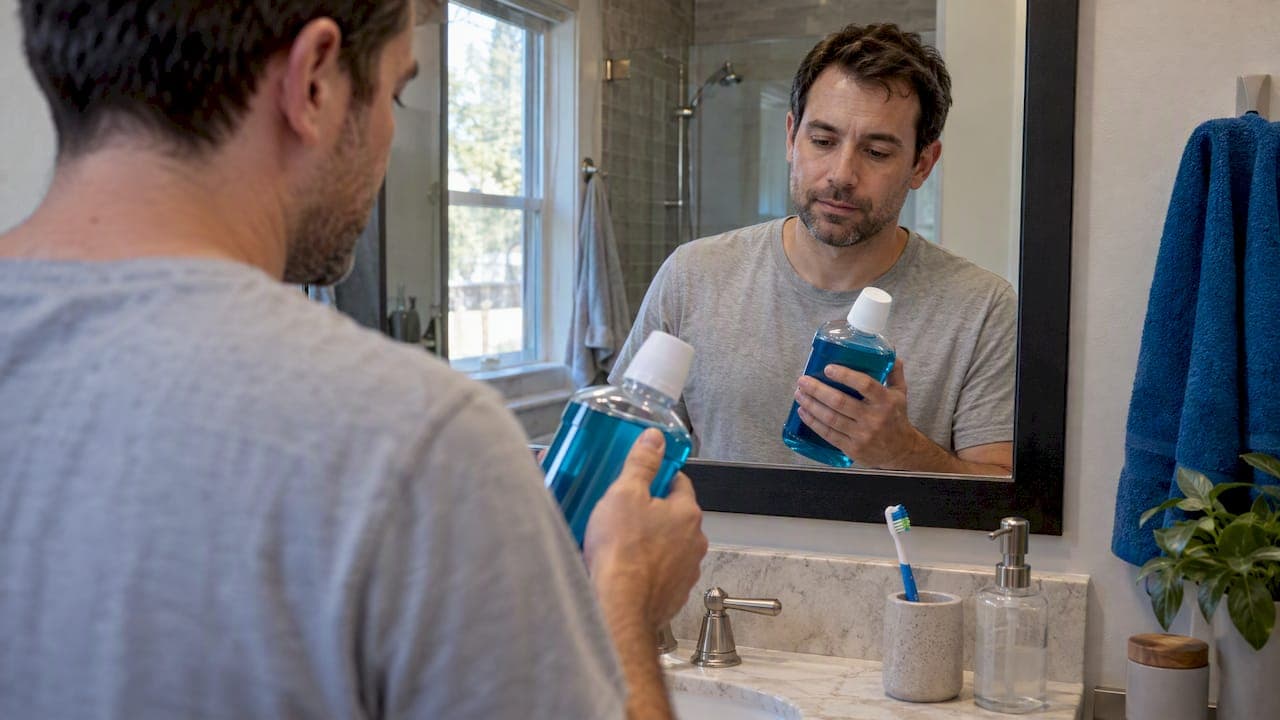
For most people, mouthwash works best after brushing and flossing, but not immediately after if you want to protect the fluoride your toothpaste just left behind. Fluoride rinses are the exception since they can extend that protection. Antiseptic and cosmetic rinses follow different rules, which we break down with exact wait times below.
TL;DR:
- Floss first to clear debris, brush for two minutes with fluoride toothpaste, then spit without a vigorous water rinse to preserve enamel protection.
- A 2009 study tracked salivary fluoride for 120 minutes and found nonfluoride rinsing reduced retention, while fluoride rinsing minimized the loss.
- For chlorhexidine, wait about 30 minutes after brushing when feasible; follow your dentist’s directions, especially during a prescribed course for gum disease.
- Choose fluoride rinses for cavity prevention, antiseptic rinses for gum disease, and cosmetic rinses for breath; cosmetic products do not treat decay or infection.
Table of Contents
- What Mouthwash Actually Does and Why the Type Matters
- What the ADA, Mayo Clinic, and NHS Say About Timing
- How Timing Affects Fluoride: What the Research Shows
- Matching Mouthwash Type to the Right Order
- Morning and Nighttime Routines That Protect Your Smile
- Common Mistakes People Make With Mouthwash Timing
- What We Recommend for Most Patients
- Choosing the Right Mouthwash for Your Actual Goal
- Get Personalized Mouthwash and Fluoride Guidance
- FAQ
- Sources
What Mouthwash Actually Does and Why the Type Matters
Mouthwash falls into two broad categories, and knowing which one you are holding changes everything about when to use it.
Therapeutic rinses contain active ingredients meant to change what happens in your mouth. Fluoride mouthwash strengthens enamel and helps prevent cavities. Antiseptic rinses, including chlorhexidine (CHX), reduce bacteria and are often prescribed for gum disease. Cosmetic rinses do neither. They mask odor temporarily but carry no active ingredient that treats decay or infection.
- Fluoride rinses add a cavity-fighting layer similar to toothpaste.
- Antiseptic rinses like chlorhexidine target the bacteria linked to gingivitis.
- Cosmetic rinses freshen breath but leave no lasting protective effect.
None of these replace brushing or flossing. The American Dental Association describes mouthwash as an optional adjunct, useful for reaching areas a toothbrush misses, but never a substitute for mechanical cleaning. Flossing still needs to happen daily to clear plaque between teeth before any rinse comes into play.
What the ADA, Mayo Clinic, and NHS Say About Timing
Official guidance does not fully agree on one rigid order, but the reasoning behind each recommendation points toward the same priority: protecting fluoride.
- The American Dental Association treats mouthrinse as optional and product-dependent, noting that minimizing rinsing after brushing helps fluoride stay on your teeth longer.
- Mayo Clinic lists mouthwash after brushing and flossing as a practical, straightforward order for most patients.
- Public health summaries of NHS guidance advise against rinsing with mouthwash right after brushing, since it can wash away the concentrated fluoride toothpaste leaves on enamel.
Fluoride left on your teeth after brushing continues protecting enamel for a period after you stop brushing. Rinsing too soon with a non-fluoride product can cut that window short, which is the single biggest reason timing matters.
The practical takeaway: brush and floss first, skip the vigorous water rinse, and save your mouthwash, especially a non-fluoride one, for a separate moment rather than the same thirty seconds.
How Timing Affects Fluoride: What the Research Shows
Two studies get cited constantly on this topic, and both point in the same direction: what you do in the minutes after brushing matters as much as the brushing itself.
A 2009 study in Caries Research measured salivary fluoride over 120 minutes after brushing with fluoridated toothpaste. Rinsing afterward with a non-fluoridated mouthwash significantly reduced fluoride retention compared with brushing alone, while rinsing with a fluoridated mouthwash minimized that loss. In plain terms, rinsing with plain mouthwash right after brushing can undo some of the benefit you just created.
A 2018 in vitro study looked at chlorhexidine and toothpaste surfactants on enamel samples. Applying CHX immediately after brushing reduced remineralization compared with waiting thirty minutes. The delay allowed the toothpaste's fluoride to work before the antiseptic rinse interfered with it.
| Mouthwash type | Recommended timing after brushing |
|---|---|
| Fluoride rinse | Can follow brushing immediately or be used at a separate time |
| Chlorhexidine (antiseptic) | Wait about 30 minutes when feasible |
| Other antiseptic rinses | A short wait time is reasonable for many products |
| Cosmetic rinse | Timing is flexible since no fluoride interaction applies |
Pro Tip: If a 30-minute wait for chlorhexidine is impractical, ask your dentist whether using it at a different time of day, like after lunch, might suit your routine.
Matching Mouthwash Type to the Right Order
Once you know which category your mouthwash falls into, the timing decision gets simple.
Fluoride mouthwash pairs naturally with brushing. You can use it right after brushing and flossing if the label allows, or save it for a different part of the day to extend fluoride exposure beyond your morning and evening brushing. Either approach supports the same goal: more fluoride contact time.
Antiseptic mouthwash, particularly chlorhexidine, works better with some distance from brushing. Following your dentist's specific instructions matters most here, since prescribed CHX courses often come with timing notes tailored to your gum condition.
- Fluoride rinse: use after brushing or at a separate time, per label instructions.
- Chlorhexidine: wait roughly 30 minutes after brushing when your dentist recommends it.
- Cosmetic rinse: use whenever breath freshening is the goal, with no fluoride tradeoff to consider.
Pro Tip: Keep a cosmetic rinse by your desk for midday freshening and save your therapeutic rinse for a planned moment in your morning or evening routine.
Morning and Nighttime Routines That Protect Your Smile
A consistent order removes the guesswork, and small adjustments fit different goals.
- Floss first to loosen plaque and debris between teeth, following the proper flossing technique that reaches the gumline without snapping the floss.
- Brush for two minutes with fluoridated toothpaste, covering every surface.
- Spit, do not rinse vigorously, letting the fluoride layer stay on your teeth.
- Use mouthwash at a separate time, such as after breakfast or lunch, if it is non-fluoride, or shortly after brushing if it contains fluoride and the label permits it.
At night, skip the antiseptic rinse right before bed if you are managing a cavity risk, since fluoride works best left undisturbed while you sleep. People with sensitive gums or active gum disease should follow their dentist's specific antiseptic schedule rather than a generic routine, since conditions like gingivitis often call for a different plan.
Common Mistakes People Make With Mouthwash Timing
A few habits undercut the whole point of using mouthwash in the first place.
- Vigorous water rinsing right after brushing washes away concentrated fluoride. Fix: spit without rinsing, or use a small sip of water at most.
- Using chlorhexidine without knowing the timing guidance reduces its effectiveness and your toothpaste's fluoride benefit. Fix: follow your dentist's instructions and wait as advised, often around 30 minutes.
- Letting young children use mouthwash unsupervised risks swallowing, since kids often cannot rinse and spit reliably. Fix: check with your dentist about age-appropriate products and supervise every use.
What We Recommend for Most Patients
For most patients, our baseline advice is simple: brush with fluoridated toothpaste, skip the vigorous rinse afterward, and use mouthwash at a separate time if preserving fluoride matters to you. This keeps the routine easy while respecting what the research shows about fluoride retention.

Some situations call for a closer look. Children just learning to spit reliably, patients with active gum disease, and anyone dealing with frequent cavities often benefit from a routine tailored to their specific risk factors rather than a generic one. If chlorhexidine or another prescription rinse is part of your care, the exact timing is explained during your visit so it works with, not against, your daily brushing.
Choosing the Right Mouthwash for Your Actual Goal
The mouthwash aisle sells convenience, but the product that matters is the one that matches your actual problem. If cavities are your concern, a fluoride rinse used at the right time adds real protection. If bleeding gums or gum disease are the issue, an antiseptic rinse with proper timing does more work than a cosmetic one ever will. If breath is your only worry, almost any rinse handles that job without much thought needed.
The mistake is treating mouthwash as a single category when it is really three different tools. A dentist can tell you which one your mouth actually needs, especially if bleeding gums during flossing keeps showing up, since that symptom often points to something a cosmetic rinse cannot fix.
— Alex
Get Personalized Mouthwash and Fluoride Guidance
Generic timing rules work for most people, but your gums, your cavity history, and your current habits are not generic. Fluoride and rinse recommendations should be built around what is seen during an exam, not a one-size answer.

Same-day appointments make it easy to get answers fast if bleeding gums, breath concerns, or cavity risk have you wondering what to change. Book a checkup and cleaning with our team, and we will walk through your exact routine, your gum health, and whether a therapeutic rinse makes sense for you. If gum disease is already a concern, our periodontal therapy team can build a plan that includes the right antiseptic timing for your situation.
This article is general information, not a substitute for advice from a qualified doctor. Consult a qualified healthcare professional about your own circumstances before acting on anything here.
FAQ
What is the correct order of oral hygiene?
Floss first to clear debris between teeth, brush next with fluoridated toothpaste, then spit without a vigorous rinse so fluoride stays on your enamel. Save mouthwash, especially a non-fluoride one, for a separate time if preserving that fluoride layer matters to you.
Is it okay to leave toothpaste on my teeth overnight?
Yes, leaving a light residue of fluoridated toothpaste on your teeth after spitting, without rinsing it away with water, is considered beneficial. The American Dental Association notes that minimizing rinsing after brushing helps fluoride continue protecting enamel.
Why should you wait 30 minutes after mouthwash?
The 30-minute guidance applies specifically to chlorhexidine rinses after brushing. A 2018 study found that waiting about 30 minutes before applying chlorhexidine improved enamel remineralization compared with using it immediately after brushing.
Is it normal for gums to bleed when flossing?
Occasional light bleeding when you first resume regular flossing is common and often fades within a week or two as gums heal. Bleeding that persists or worsens can signal gum disease, which is worth discussing with your dentist rather than ignoring; understanding how habits like nicotine pouch use affect gum health can be crucial to management (nicotine pouches and gum recession).
Should you rinse after brushing with water?
A light rinse or none at all is better than a vigorous water rinse, since that fluoride layer from your toothpaste keeps protecting your enamel after you spit. If you prefer to rinse, the ADA suggests using only a small amount of water or waiting about 20 minutes.
Sources
- Mouthrinse (Mouthwash) | American Dental Association
- Effects of Flossing and Rinsing with a Fluoridated Mouthwash after Brushing with a Fluoridated Toothpaste on Salivary Fluoride Clearance. Caries Research. 2009;43(5):387-390.
- Caries lesion remineralization with fluoride toothpastes and chlorhexidine - effects of application timing and toothpaste surfactant - PubMed
- Brushing your teeth — Mayo Clinic expert answers