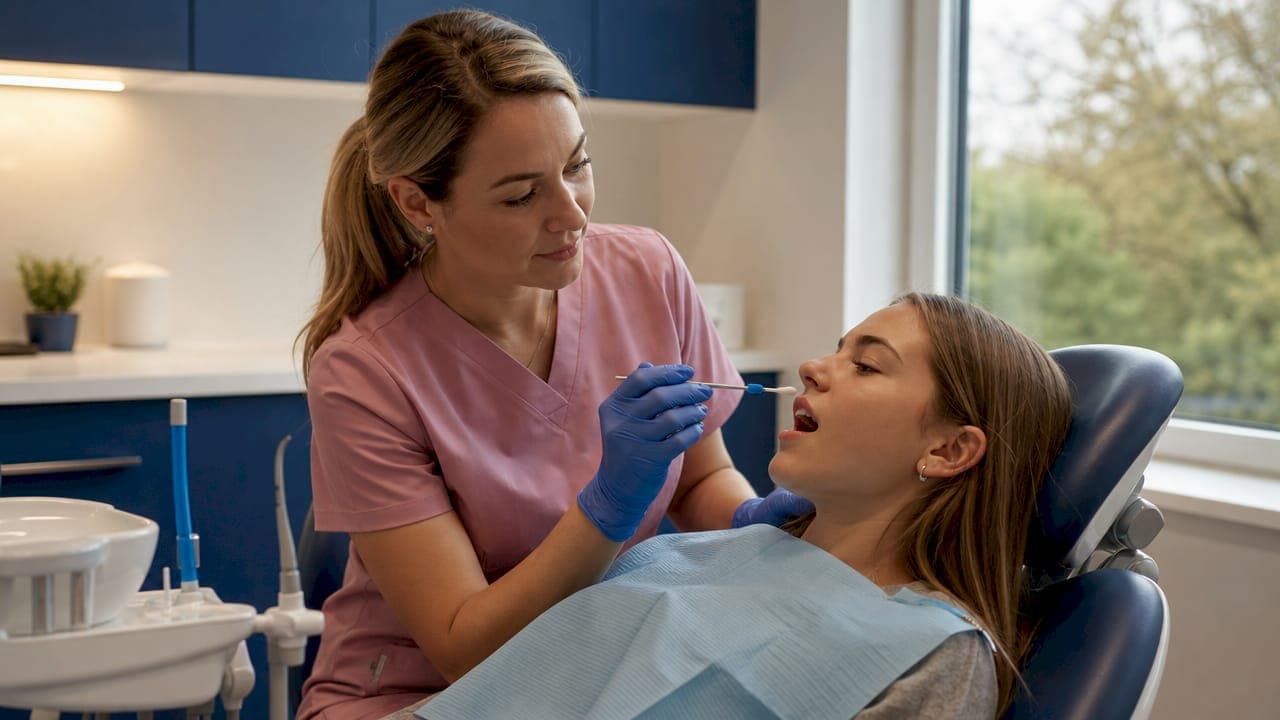
Fluoride is defined as a naturally occurring mineral that protects teeth by making enamel more resistant to acid attack and decay. The role of fluoride in dental health goes beyond simple prevention. Fluoride reduces cavity risk by about 25% and can actually reverse early tooth decay through a process called remineralization. The American Dental Association (ADA) and the Centers for Disease Control and Prevention (CDC) both endorse fluoride as safe and effective at recommended levels. You encounter it in toothpaste, professional varnishes, and community drinking water, each delivering protection through a different route.
What is the role of fluoride in dental health?
Fluoride works primarily at the surface where your tooth meets the bacterial biofilm and saliva. That interface is where acid attacks begin, and fluoride is most active right there. Fluoride inhibits demineralization and accelerates remineralization by forming calcium-fluoride-like reservoirs on the tooth surface. When acid levels rise, those reservoirs release fluoride to neutralize the damage.

This mechanism explains why fluoride does more than just prevent new cavities. It can actually repair early lesions before they become visible holes. Most people think of fluoride as a shield, but it also acts as a repair crew. Early decay reversal through remineralization is one of fluoride's most underappreciated functions, and timing matters. The earlier you apply fluoride to a developing lesion, the better the chance of full repair.
Fluoride also changes the oral microbiome in a meaningful way. It inhibits bacterial enzymes that produce acid, shifting the microbiome toward a healthier state without wiping out bacterial diversity entirely. This is a more targeted effect than most people realize. Fluoride does not sterilize your mouth. It tips the balance away from cavity-causing bacteria.
- Fluoride forms protective reservoirs at the tooth surface that release during acid challenges
- It slows the breakdown of enamel minerals under acid attack
- It speeds up the redeposition of minerals into weakened enamel
- It reduces the acid-producing activity of bacteria like Streptococcus mutans
- Consistent daily exposure outperforms occasional high-dose application
Pro Tip: Brush with fluoride toothpaste last thing at night and avoid rinsing with water immediately after. Leaving a thin film of fluoride on your teeth overnight extends its contact time and maximizes remineralization while you sleep.
Where does fluoride come from, and what forms does it take?
Fluoride occurs naturally in soil, water, and many foods, but natural levels vary widely by region. Community water fluoridation standardizes that exposure. Water fluoridation reduces tooth decay by about 25% across entire populations, making it one of the most cost-effective public health measures ever implemented. That 25% reduction applies to people of all ages, not just children.
For daily home use, fluoride toothpaste is the most practical delivery method. Concentrations typically fall between 1,000 and 1,500 ppm for standard adult formulas. Higher-risk patients, including those with root caries or dry mouth, may be prescribed toothpaste at 5,000 ppm. That prescription-strength formula delivers a significantly higher fluoride dose directly to vulnerable areas.
Professional fluoride varnish and gel treatments go further. A dentist applies varnish directly to tooth surfaces in a concentrated form, allowing fluoride to absorb deeply into enamel. Fluoride varnish and gel are the safest and most effective professional options for preventing and repairing decay. Fluoride mouth rinses add another layer for patients who need extra protection between dental visits.
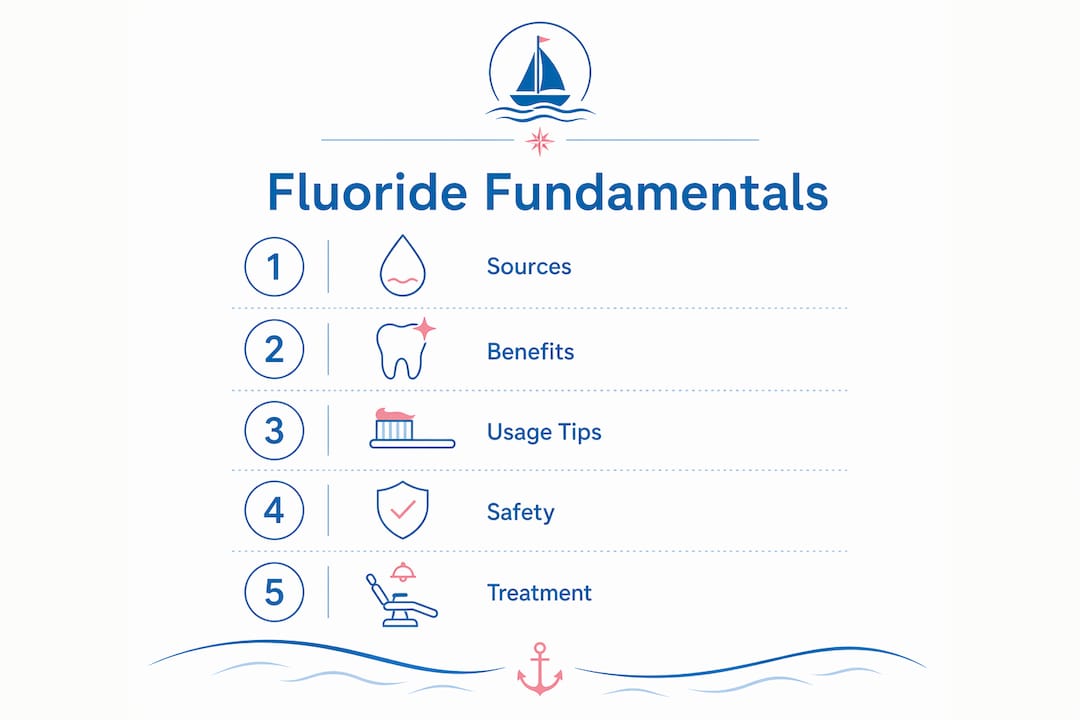
Common fluoride sources at a glance
| Source | Fluoride level | Best for |
|---|---|---|
| Community water | Regulated public standard | General population protection |
| Standard toothpaste | 1,000–1,500 ppm | Daily home use, all ages |
| Prescription toothpaste | ~5,000 ppm | High-risk patients, root caries |
| Professional varnish | High concentration | Targeted clinical application |
| Fluoride mouth rinse | Low concentration | Daily supplemental protection |
The key takeaway from this range is that fluoride is not one-size-fits-all. Your dentist selects the right form and concentration based on your specific risk level, not a generic protocol.
Who benefits most from fluoride treatments?
Children gain the most obvious benefit because fluoride supports enamel formation in developing teeth. Incorporating fluoride early builds a stronger structural foundation before teeth face years of acid exposure. For guidance on age-appropriate fluoride use, children's dental care recommendations have evolved significantly in recent years, with earlier professional application now standard for higher-risk kids.
Adults with specific risk factors also see outsized benefits from professional fluoride treatments. The groups that gain the most include:
- Patients with xerostomia (dry mouth), since saliva normally neutralizes acid and buffers fluoride delivery
- People with a history of frequent cavities or active decay
- Patients undergoing radiation therapy to the head or neck, which damages salivary glands
- Those wearing orthodontic appliances, which create hard-to-clean surfaces where bacteria accumulate
- Patients with exposed root surfaces from gum recession, since root dentin is softer than enamel
The evidence for high-risk groups is strong. Quarterly fluoride varnish application reduced dental caries by 54% in patients with xerostomia. That is a dramatic reduction from a simple, painless in-office treatment applied four times per year. For patients with dry mouth, professional varnish is not optional. It is the standard of care.
Effective fluoride use is risk-based by design. Toothpaste strength and varnish frequency are both tailored to individual cavity risk and lesion location. Root caries require different concentrations than enamel lesions. Your dentist evaluates these factors and builds a fluoride plan around them, which is why a personalized dental treatment plan matters more than following generic brushing advice.
Pro Tip: If you have gum recession or exposed root surfaces, ask your dentist specifically about prescription 5,000 ppm toothpaste. Standard over-the-counter formulas may not deliver enough fluoride to protect softer root dentin.
Is fluoride safe, and how do you use it correctly?
Fluoride is safe at recommended levels. The CDC and the National Academy of Medicine both confirm that fluoride at regulated concentrations poses no harmful health effects. The concern most people have heard about is dental fluorosis, which is worth understanding clearly.
Dental fluorosis occurs when children under age 8 ingest too much fluoride during the period when permanent teeth are forming. The result is white spots or faint streaking on tooth enamel. In the United States, fluorosis is considered primarily cosmetic. It does not weaken teeth or cause pain. The key is managing fluoride intake during early childhood, not avoiding fluoride altogether.
Safe fluoride practices for children and adults include:
- Use only a rice-grain-sized amount of fluoride toothpaste for children under 3 years old
- Use a pea-sized amount for children ages 3 through 6, and supervise brushing to prevent swallowing
- Keep fluoride mouthwash out of reach of children under 6 years old
- If your home uses well water, test fluoride levels annually since natural concentrations vary
- Do not supplement with fluoride tablets without first confirming your water supply's fluoride level
For adults, the risk of harm from fluoride at recommended levels is not supported by credible evidence. Sustained low-level fluoride exposure in dental plaque is the fundamental mechanism that maintains enamel mineral balance. Sporadic high-dose application does not replicate this effect. Daily brushing with fluoride toothpaste, combined with professional treatments when indicated, is the evidence-based approach.
Key Takeaways
Fluoride strengthens enamel, reverses early decay, and reduces cavity risk by about 25%, making it the most evidence-backed mineral in preventive dental care.
| Point | Details |
|---|---|
| Fluoride prevents and repairs | It both blocks new decay and reverses early lesions through remineralization at the tooth surface. |
| Daily exposure beats sporadic use | Consistent low-level fluoride contact is more protective than occasional high-dose application. |
| Risk-based dosing matters | Toothpaste strength and varnish frequency should match your individual cavity risk and tooth condition. |
| Children need careful monitoring | Limit toothpaste amounts for kids under 6 and supervise brushing to prevent fluorosis from excess intake. |
| Professional varnish delivers results | Quarterly fluoride varnish cuts caries by 54% in high-risk patients, making it a clinical priority. |
Why I think most people are using fluoride wrong
Most patients I talk with treat fluoride as a passive ingredient. They buy fluoride toothpaste, brush twice a day, and assume they are covered. That approach works reasonably well for low-risk patients. For everyone else, it leaves significant protection on the table.
The insight that changes how I think about fluoride is the remineralization window. Early decay is not a cavity yet. It is a zone of weakened enamel that fluoride can still rebuild if you catch it in time. The problem is that most people do not know they have early lesions, and their dentist may not flag them unless they are asking the right questions. Knowing how dentists spot early decay gives you the context to have that conversation proactively.
The second thing I have come to believe strongly is that community water fluoridation is one of the most undervalued public health tools we have. It provides a background level of protection that works even when people are not thinking about their teeth. Water fluoridation complements personal oral hygiene and professional care in a way that no single product can replicate on its own.
My honest advice: talk to your dentist about your specific risk level. Ask whether your toothpaste concentration is right for your situation. Ask whether you qualify for professional varnish at your next checkup. Fluoride is not expensive, and it is not complicated. The gap between what most people do and what the evidence supports is mostly a conversation that has not happened yet.
— Alex
Fluoride treatments at Starboarddental
Starboarddental offers professional fluoride varnish and gel treatments as part of its preventive care program in Kennebunk. These in-office applications go well beyond what daily brushing can achieve, especially for patients with higher cavity risk, dry mouth, or exposed root surfaces.

A visit to Starboarddental's general dentistry services includes a full assessment of your cavity risk, followed by a personalized fluoride recommendation. Whether you need a standard preventive varnish or a prescription-strength home regimen, the team builds a plan around your actual risk profile, not a generic checklist. Patients can also book checkups and cleanings that include fluoride application as a standard part of the appointment. Same-day scheduling is available for patients who want to get started without a long wait.
FAQ
What does fluoride actually do to your teeth?
Fluoride strengthens enamel by forming calcium-fluoride-like compounds at the tooth surface that resist acid attack. It also reverses early decay by redepositing minerals into weakened enamel zones before a cavity forms.
How often should adults get professional fluoride treatments?
Adults with higher cavity risk, dry mouth, or gum recession benefit from professional fluoride varnish applied quarterly. Lower-risk adults may need it only once or twice per year, based on their dentist's assessment.
Is fluoride in tap water safe to drink?
Yes. Community water fluoridation is regulated to safe levels by public health authorities, and the CDC confirms no harmful health effects at those concentrations. It reduces tooth decay by about 25% across the population.
Can children use fluoride toothpaste safely?
Children can use fluoride toothpaste safely with proper supervision. Use a rice-grain-sized amount for children under 3 and a pea-sized amount for ages 3 through 6, and teach them to spit rather than swallow.
What is dental fluorosis, and should I be concerned?
Dental fluorosis is a cosmetic condition causing faint white spots on teeth from excess fluoride intake during enamel development, affecting children under age 8. It does not weaken teeth or cause health problems, and it is preventable by using age-appropriate toothpaste amounts.