
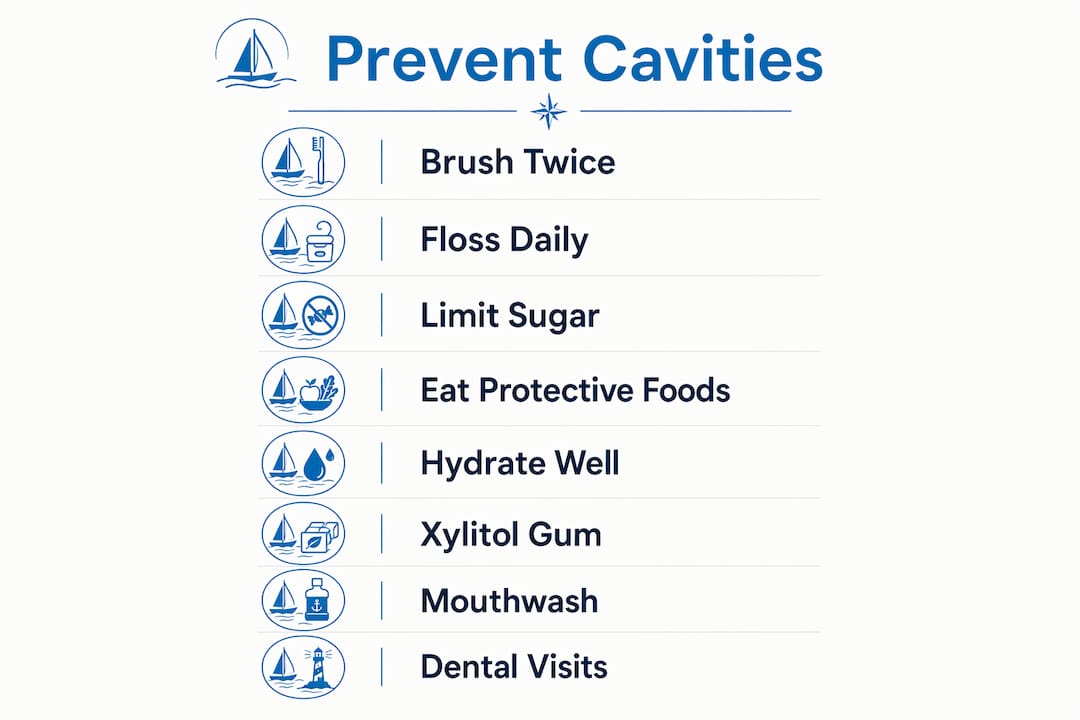
The most effective way to prevent cavities between checkups is a combination of twice-daily fluoride toothpaste brushing, daily flossing, and deliberate control over when and how often you eat sugar. Those three habits alone eliminate the majority of cavity risk for most people. Professional treatments like fluoride varnish, which reduces cavities in baby teeth by about one-third, and dental sealants, which prevent approximately 80% of cavities on back teeth, add a meaningful layer of protection on top.
Here is what that looks like in practice:
- Brush with fluoride toothpaste twice daily, morning and night
- Floss once a day, reaching all the way between each tooth and under the gumline
- Limit sugary foods and drinks to mealtimes rather than frequent snacking throughout the day.
- Use a fluoride rinse if your dentist recommends one, especially at higher risk
- Eat or drink nothing after your last brush before bed
- Stay well hydrated to keep saliva flowing and acids neutralized
- Keep your scheduled dental visits, and go more often if your dentist flags elevated risk
Table of Contents
- How cavities actually form, and why some people are more vulnerable
- 12 ways to prevent cavities between checkups
- 1. Brush with fluoride toothpaste twice a day
- 2. Floss every single day
- 3. Cut sugar frequency, not just quantity
- 4. Eat foods that protect your teeth
- 5. Stop eating and drinking after your last brush at night
- 6. Use xylitol gum between meals
- 7. Rinse with an antibacterial mouthwash when appropriate
- 8. Stay hydrated throughout the day
- 9. Build a consistent oral hygiene routine
- 10. Ask your dentist about fluoride varnish
- 11. Consider dental sealants for back teeth
- 12. Adjust your visit frequency to your actual risk level
- What fluoride varnish and dental sealants actually do for your teeth
- When you should not wait for your next scheduled visit
- What patients with dry mouth need to know about cavity risk
- Key Takeaways
- The part most cavity prevention guides get wrong
- Starboarddental makes preventive care straightforward in Kennebunk
How cavities actually form, and why some people are more vulnerable
A cavity starts not with pain but with a process most people never feel. Bacteria in your mouth, particularly Streptococcus mutans, feed on sugars and produce acids that erode tooth enamel. When acid production outpaces the enamel's ability to repair itself, demineralization wins and a cavity forms.
Early cavities rarely announce themselves. Sensitivity to cold or sweet foods is often the first signal, and by the time you feel actual pain, the decay has usually reached deeper layers of the tooth. That is why professional exams catch what you cannot feel at home.
Several factors push cavity risk higher than average. A diet heavy in frequent sugar exposures is the biggest driver. Dry mouth, whether from medications, medical conditions, or simply not drinking enough water, removes one of the body's main defenses: saliva. Plaque, the sticky bacterial film that coats teeth, is the direct vehicle for acid delivery to enamel. Without consistent mechanical removal through brushing and flossing, plaque accumulates and the acid cycle runs continuously. Genetics, the shape of your teeth, and the depth of molar grooves also play a role, though they are harder to control than diet and hygiene.
12 ways to prevent cavities between checkups
1. Brush with fluoride toothpaste twice a day
Fluoride is the single most important ingredient in your toothpaste. It strengthens enamel and can reverse early tooth decay before it becomes a cavity. Brush in the morning after eating and at night before bed, spending at least two minutes each session. Angle the bristles toward the gumline and use small circular motions rather than scrubbing back and forth, which wears enamel over time.
2. Floss every single day
Brushing cleans the surfaces of teeth but misses the tight spaces between them. Plaque removal between teeth is one of the most critical factors in cavity prevention, and it is also the step most people skip. Slide the floss in a C-shape around each tooth, going just below the gumline, and use a clean section for each gap. Water flossers and interdental brushes are solid alternatives if traditional floss is difficult to manage.
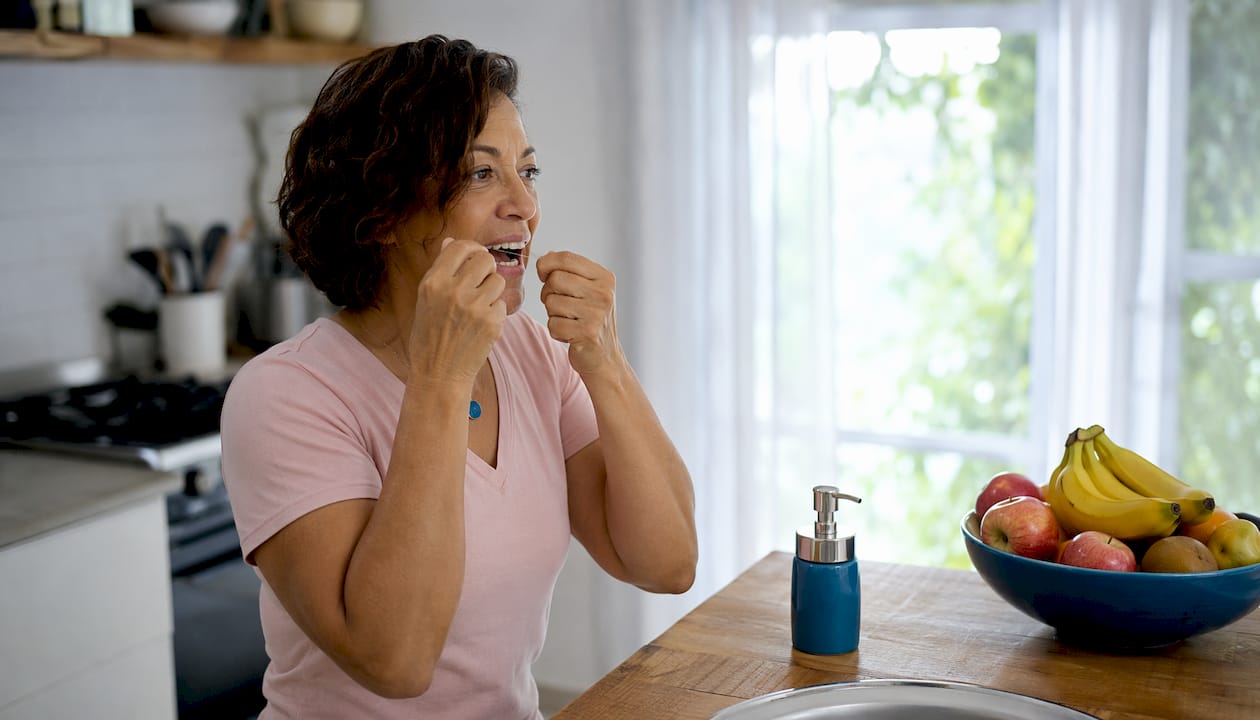
Pro Tip: Set your floss on your pillow before bed. The visual cue alone is enough to break the habit of skipping it.
3. Cut sugar frequency, not just quantity
The frequency of sugar exposure matters as much as the total amount. Every time you eat or drink something sugary, your mouth enters an acid attack that lasts roughly 20 minutes. Sipping a soda over two hours is far more damaging than drinking it in five minutes with a meal. Limiting sugar intake exposures throughout the day keeps acid attacks manageable and gives enamel time to recover between them.
4. Eat foods that protect your teeth
Certain foods actively help. Hard cheeses, plain yogurt, and fresh vegetables stimulate saliva flow, which neutralizes acids and delivers minerals back to enamel. Cheese in particular raises oral pH quickly after a meal. Crunchy raw vegetables like carrots and celery also scrub tooth surfaces lightly while you chew. Swapping a sugary afternoon snack for cheese or vegetables is a small change with a real protective effect.
5. Stop eating and drinking after your last brush at night
Saliva production drops significantly during sleep, which means your mouth has almost no natural defense against acids overnight. Eating or drinking anything sugary after your final brush leaves acid on your teeth for hours with nothing to counteract it. Water is the only exception. Make nighttime brushing the last thing you do before sleep, and treat that as a firm rule rather than a guideline.
6. Use xylitol gum between meals
Sugar-free gum sweetened with xylitol does two useful things: it stimulates saliva flow and xylitol itself inhibits the growth of cavity-causing bacteria. Chewing xylitol gum after meals when brushing is not possible is a practical way to reduce acid exposure. Keep intake moderate, as excessive xylitol can cause digestive discomfort in some people.
7. Rinse with an antibacterial mouthwash when appropriate
Antibacterial mouthwashes containing chlorhexidine or cetylpyridinium chloride reduce the bacterial load in your mouth and complement brushing and flossing. They are not a substitute for mechanical cleaning, but for people with elevated cavity risk, they add a meaningful layer of protection. High-risk patients should discuss with their dentist whether a prescription fluoride rinse or an antiseptic rinse fits their specific situation.
8. Stay hydrated throughout the day
Saliva is your mouth's built-in defense system. It neutralizes acids, washes away food particles, and delivers calcium and phosphate back to enamel. Dehydration reduces saliva output and leaves teeth more vulnerable. Drinking water regularly, especially fluoridated tap water, keeps saliva flowing and provides a low-level fluoride benefit throughout the day. If you drink bottled water exclusively, you may be missing that fluoride exposure.

9. Build a consistent oral hygiene routine
Consistency matters more than perfection on any single day. Brushing and flossing at the same times each day, tied to existing habits like waking up or getting ready for bed, makes the routine automatic rather than a decision you have to make. Oral hygiene succeeds through sustained daily commitment. Missing one night occasionally is not a crisis, but skipping flossing for weeks at a time lets plaque calcify into tartar, which only a dental professional can remove.
10. Ask your dentist about fluoride varnish
Fluoride varnish applied in-office delivers a concentrated dose of fluoride directly to tooth surfaces, remineralizing early decay and strengthening enamel against future acid attacks. Fluoride varnish reduces cavities in baby teeth by about one-third, and the National Institute of Dental and Craniofacial Research notes that dentists can also apply fluoride gel or foam for patients at elevated risk. Adults with dry mouth, a history of frequent cavities, or active orthodontic treatment benefit most from in-office fluoride applications between regular cleanings.
11. Consider dental sealants for back teeth
Dental sealants are thin plastic coatings painted onto the chewing surfaces of molars, where the deep pits and grooves trap food and bacteria that a toothbrush cannot reach. Sealants prevent 80% of cavities on the back teeth where most decay occurs. They are most commonly applied to children's permanent molars as soon as they come in, but adults with deep grooves and no existing fillings can benefit too. A sealant takes minutes to apply and can last several years with normal wear.
12. Adjust your visit frequency to your actual risk level
The standard twice-a-year dental visit works well for people with low cavity risk and good home care. But high-risk patients may need checkups every 3–4 months to catch decay early and reapply preventive treatments before damage progresses. Your dentist can assess your personal risk based on cavity history, diet, saliva quality, and gum health, then recommend the right interval. Sticking to that schedule is one of the most practical things you can do to stay ahead of early decay.
What fluoride varnish and dental sealants actually do for your teeth
Both treatments work by addressing vulnerabilities that daily brushing cannot fully cover. Fluoride varnish remineralizes enamel that has already begun to weaken, essentially reversing the earliest stage of decay before it becomes a true cavity. Dental sealants physically block the grooves where bacteria accumulate on molar surfaces.
| Treatment | How it works | Who benefits most | Cavity reduction |
|---|---|---|---|
| Fluoride varnish | Remineralizes softened enamel, strengthens tooth surface | Children, high-risk adults, dry mouth patients | Reduces cavities in primary teeth by about one-third |
| Dental sealants | Seals pits and grooves on molar chewing surfaces | Children with new permanent molars, adults with deep grooves | Prevents approximately 80% of cavities on back teeth |
| Prescription fluoride rinse | Daily high-concentration fluoride for home use | High-risk patients, orthodontic patients | Adjunct to varnish; reduces new cavity formation |
The evidence behind sealants is particularly strong. An 80% reduction in back-tooth cavities is not a marginal benefit. For children especially, getting sealants placed as soon as permanent molars erupt is one of the highest-value preventive steps a parent can take. Adults who have never had sealants and have deep molar grooves should ask whether they are still a candidate.
Regular dental visits are the delivery mechanism for both treatments. You cannot apply fluoride varnish at home at clinical concentrations, and sealants require professional placement and periodic monitoring to check for chips or wear. Hygiene appointments are where these treatments happen, which is one more reason not to skip them.
When you should not wait for your next scheduled visit
Pain is the clearest signal that something has progressed beyond early decay. A cavity that reaches the pulp, the inner nerve-containing layer of the tooth, causes persistent aching or sharp pain that does not resolve on its own. At that stage, a filling is no longer sufficient. Root canal treatment or extraction becomes the likely outcome.
Watch for these signs and call your dentist promptly if any appear:
- Persistent sensitivity to cold, heat, or sweet foods that lingers after the stimulus is gone
- A visible dark spot, hole, or rough edge on a tooth surface
- Pain when biting or chewing
- Swelling or tenderness in the gum near a tooth
- A toothache that wakes you up at night
Delaying treatment after symptoms appear consistently leads to more invasive and more expensive procedures. A small cavity caught at a routine exam takes minutes to fill. The same cavity ignored for six months may require a crown, a root canal, or both. The myth that a tooth stops hurting because it healed is exactly that: a myth. When pain subsides without treatment, it usually means the nerve has died, not that the decay stopped.
For patients with sensitive teeth, distinguishing normal sensitivity from decay-related pain can be tricky. When in doubt, get it checked. Early intervention is always the better path.
What patients with dry mouth need to know about cavity risk
Dry mouth, clinically called xerostomia, is one of the most underappreciated cavity risk factors in adults. Hundreds of common medications list dry mouth as a side effect, including antihistamines, antidepressants, blood pressure drugs, and diuretics. Without adequate saliva, acids from food and bacteria sit on tooth surfaces far longer than they should.
Dry mouth caused by medications raises cavity risk substantially, and the fix requires two things: more fluoride and more water. Sipping water throughout the day replaces some of what saliva normally does. Prescription-strength fluoride toothpaste or a fluoride gel used nightly provides the enamel reinforcement that saliva would otherwise supply. Over-the-counter saliva substitutes can also help during the day.
Pro Tip: Tell your dentist every medication you take, including over-the-counter drugs and supplements. Many patients do not realize their allergy medication or sleep aid is quietly increasing their cavity risk.
Patients managing diabetes and oral health challenges face compounded risk, since elevated blood sugar feeds the bacteria that cause decay. The same principle applies: more vigilant home care, more frequent professional visits, and open communication with your dental provider about your full health picture.
Key Takeaways
Consistent daily brushing with fluoride toothpaste and flossing, combined with limiting sugar frequency and using professional preventive treatments like sealants and fluoride varnish, gives you the strongest possible defense against cavities between dental visits.
| Point | Details |
|---|---|
| Brush and floss daily | Twice-daily fluoride brushing and once-daily flossing remove plaque before it causes decay. |
| Limit sugar to mealtimes | Keeping sugar exposures to four or fewer per day reduces acid attacks and lets enamel recover. |
| Sealants block 80% of back-tooth cavities | Dental sealants on back teeth prevent approximately 80% of cavities where most decay occurs. |
| Fluoride varnish remineralizes early decay | Applied in-office, fluoride varnish reduces cavities in primary teeth by about one-third. |
| Starboarddental offers preventive and restorative care | Starboarddental in Kennebunk provides fluoride treatments, sealants, fillings, and personalized risk-based visit scheduling. |
The part most cavity prevention guides get wrong
Cavity prevention advice tends to focus almost entirely on technique: the right brush angle, the correct flossing motion, the two-minute timer. That is useful, but it misses the bigger picture. The real driver of cavity risk for most adults is not poor technique. It is inconsistency, and the habits that undermine it.
Most people brush reasonably well when they do it. The problem is the nights they skip flossing because they are tired, the afternoons they sip a sweetened coffee for two hours, the dry mouth from a new medication they never mentioned to their dentist. Technique matters, but frequency and follow-through matter more. A person who flosses imperfectly every day will have healthier teeth than someone who flosses perfectly twice a week.
The other thing guides underplay is the role of professional preventive treatments. Fluoride varnish and dental sealants are not just for children, and they are not optional extras for high-risk patients. They are evidence-based tools that meaningfully reduce decay, and they require a dental visit to access. Skipping checkups to save time or money is the exact trade-off that turns a $200 filling into a $2,000 root canal. The math is not subtle.
Oral health is also not separate from general health. Dry mouth from medications, blood sugar fluctuations, and even stress-related changes in saliva composition all affect cavity risk. Treating your mouth as an isolated system, rather than part of your overall health, is where most prevention strategies fall short. The patients who maintain the best long-term dental health are the ones who bring their full health picture to every dental conversation.
Starboarddental makes preventive care straightforward in Kennebunk
If you have read this far, you already know what good cavity prevention looks like at home. The part that requires a professional is where Starboarddental comes in.

Starboarddental, located in Kennebunk and serving York and Saco, offers general dentistry services built around exactly the kind of preventive care this article covers: professional fluoride treatments, dental sealants, personalized risk assessments, and routine cleanings that catch early decay before it becomes a filling. The practice uses digital scanners for precision, and same-day appointments mean you do not have to wait weeks when something feels off. For patients who have been putting off a visit, or who want to know their actual cavity risk level, a checkup and cleaning at Starboarddental is the logical next step. Book your appointment online or call the Kennebunk office directly to get started.