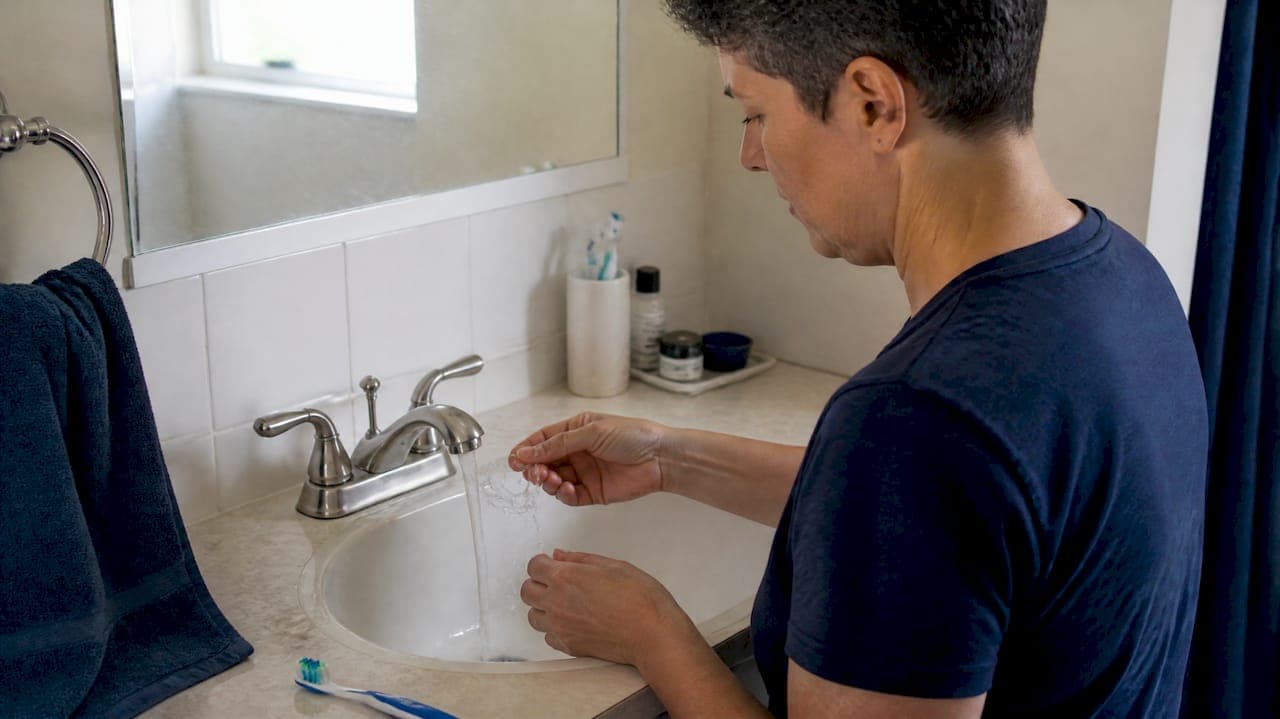
Rinse your night guard every time you take it out, brush it gently with mild soap, and store it in a ventilated case. Skip hot water and regular toothpaste, both of which wear down the material faster than normal use ever would.
TL;DR:
- Using alkaline peroxide tablets for overnight soaking significantly reduces bacterial counts more effectively than dry storage or plain water, especially when combined with ultrasonic cleaning.
- Daily rinsing with lukewarm water and gentle brushing with mild soap are essential to prevent odor and stains, as regular toothpaste can create scratches that trap bacteria.
- Hot water, bleach, and abrasive brushes can damage the guard's material, so safer alternatives like mild soap and soft brushes should always be used.
- Storing the guard in an alkaline peroxide solution with ultrasonic cleaning yields the largest bacterial reduction, but ventilated cases are preferable over sealed ones if storing dry.
- If the guard shows cracks, persistent odor, or tough stains that don't lift after proper cleaning, a professional exam is recommended to prevent further damage or health risks.
Table of Contents
- Night guard daily cleaning routine
- Weekly deep cleaning: tablets, peroxide, and ultrasonic devices
- What damages night guards and safer alternatives
- Overnight storage: water, dry, or tablet, what the evidence shows
- Safe stain and odor removal steps
- When to get a professional cleaning, repair, or replacement
- Clinic-backed tips from Starboard Dental
- A realistic approach to night-guard care
- Keep your night guard in good shape with professional support
- FAQ
- Sources
Night guard daily cleaning routine
A night guard collects saliva, plaque, and bacteria the same way your teeth do, just without the benefit of fluoride toothpaste scrubbing it away each morning. A short daily routine keeps that buildup from turning into odor or stains.
- Rinse the guard under cool or lukewarm water right after you take it out, before saliva and debris dry onto the surface.
- Brush every surface, inside and out, with a soft-bristled toothbrush and a small amount of mild dish soap or nonabrasive hand soap. The American Dental Association specifically advises against regular toothpaste for removable appliances because its abrasives are made for enamel, not acrylic or thermoplastic material.
- Rinse again, shake off the excess water, and set the guard in a ventilated case to air-dry rather than sealing it in an airtight container while still wet.
If you tend to forget steps like this, build the routine around cues rather than memory. Keep the cleaning kit (brush, soap, case) sitting out next to your bathroom sink instead of tucked in a drawer. A two-minute mental checklist, rinse, brush, rinse, dry, turns the task into a habit loop rather than a decision you have to make every night. A recurring phone reminder set for your usual bedtime works well if you're prone to skipping steps when tired.
Pro Tip: Keep a small travel-size bottle of mild soap next to your toothbrush so cleaning the guard becomes part of the same motion as brushing your teeth, not a separate chore.

Weekly deep cleaning: tablets, peroxide, and ultrasonic devices
Daily brushing handles the surface film, but biofilm builds up in ways a toothbrush alone won't fully remove. A weekly deep cleaning addresses what daily rinsing leaves behind.
- Effervescent alkaline peroxide tablets, the same type sold for dentures, dissolve in water and release oxygen bubbles that lift debris from the surface and crevices of the guard; most manufacturers recommend a soak of about 15 minutes, though you should check your product's label since times vary.
- A cross-over randomized clinical trial found that storing an appliance overnight in a solution with an alkaline peroxide tablet reduced total bacterial counts significantly more than storing it dry or in plain water, and combining tablet soaking with ultrasonic cleaning produced the largest reduction of all the methods tested.
- For visible yellow or brown staining, a short soak in 3% hydrogen peroxide (the standard drugstore concentration) for no more than 10 to 15 minutes, followed by a thorough rinse, can lift surface discoloration without damaging most guard materials.
- Avoid soaking in chlorhexidine-based rinses. A review of denture-cleaning interventions found that while some chemical agents remove stains effectively, chlorhexidine can actually increase staining over repeated use rather than reduce it.
A randomized trial found that combining mechanical brushing with an alkaline peroxide tablet soak reduced bacterial counts more than brushing alone, and that pairing the tablet with ultrasonic cleaning produced the lowest bacterial counts observed in the study.
Ultrasonic cleaners use sound-wave vibrations to shake loose debris from small grooves and pits that a brush can't reach. The same trial found ultrasonic cleaning alone performed about as well as brushing, so it's best treated as a supplement to tablets rather than a replacement for your nightly brush.

What damages night guards and safer alternatives
Some habits that seem harmless actually shorten a guard's lifespan or make it harder to keep clean over time.
- Regular toothpaste contains abrasive particles designed for hard enamel; on acrylic or thermoplastic guards, it creates microscopic scratches that trap bacteria and food particles.
- Hot water or boiling can warp the shape of a guard, especially thermoplastic ones, ruining the custom fit your dentist designed.
- Household bleach or harsh chemical cleaners can break down the material and leave behind residue that isn't safe to put in your mouth.
- Stiff or hard-bristled brushes scratch the surface the same way abrasive toothpaste does, and scratched surfaces collect plaque faster than smooth ones.
Stick with mild dish soap, a soft-bristled brush, and cleaning products that carry the ADA Seal of Acceptance when you want something formulated specifically for oral appliances. Surface roughness isn't just a cosmetic issue: a scratched guard gives bacteria more places to cling, which means more odor and faster staining even if you're cleaning it just as often.
Overnight storage: water, dry, or tablet, what the evidence shows
How you store your guard between wears matters almost as much as how you clean it. Leaving a guard dry in a closed case all day can let bacteria multiply in the residual moisture, while the wrong soaking solution can do more harm than good.
- Trial evidence shows that storing an appliance overnight in an alkaline peroxide tablet solution reduces total bacterial load more than either dry storage or plain water, with the strongest reduction appearing when tablet soaking is combined with ultrasonic cleaning.
- If your guard's manufacturer recommends overnight soaking, follow their instructions and use the tablet solution as directed rather than improvising with other chemicals.
- If dry storage is what you use, a ventilated case that lets air circulate is better than a sealed one, which traps moisture against the guard.
- Clean the case itself weekly with soap and water, since a case can build up its own film and bacteria over time; replace it if you notice cracks, cloudiness, or a persistent moldy smell.
Safe stain and odor removal steps
Brown or yellow staining usually comes from a combination of saliva minerals, food residue, and bacterial buildup accumulating faster than your daily routine removes it. A stepwise approach handles most cases without damaging the guard.
- Start with a plain rinse under cool water to clear loose debris before applying anything stronger.
- Soak in an effervescent denture or night-guard tablet according to the package directions, typically around 15 minutes.
- For stains that persist, follow with a short 3% hydrogen peroxide soak, no longer than the time recommended on the bottle, then rinse thoroughly before wearing the guard again.
- If staining remains after these steps, an ultrasonic cleaning session, either at home with a dedicated device or during a dental visit, often clears what soaking alone can't.
Avoid reaching for chlorhexidine mouth rinse as a soaking solution. The same review that found it can worsen staining over time also noted that once acrylic discolors from certain chemical exposures, the change can be permanent rather than something a later cleaning will fix. Persistent odor despite a consistent routine usually signals that bacteria have worked into small cracks or porous areas of the material rather than sitting on the surface, which is a sign the guard itself may need professional attention rather than more scrubbing.
When to get a professional cleaning, repair, or replacement
Home care handles routine maintenance, but certain signs mean it's time to involve your dentist rather than trying another cleaning method.
- Visible cracks or warping, especially if the guard was ever exposed to heat, mean the fit and protection it provides are compromised.
- Staining that doesn't lift after a proper tablet soak and peroxide treatment often means the discoloration has set into the material itself.
- A guard that feels looser, tighter, or different in your mouth than it used to may no longer be protecting your teeth the way it should.
- Odor that persists after consistent daily and weekly cleaning can point to bacteria embedded in the material rather than surface residue.
Don't try to scrape off hardened, tartar-like deposits yourself. Calcified buildup requires the kind of professional removal tools a dental office uses, and scraping at home risks gouging the surface and making future buildup worse. A good rule of thumb is to have your guard checked at your annual dental visit, or sooner if fit, comfort, or odor changes.
Clinic-backed tips from Starboard Dental
For patients using night guards, a simple two-tier routine is recommended: rinse and brush every night, and add a tablet or peroxide soak once a week. That combination covers both the daily biofilm and the deeper buildup that brushing alone misses.
When deposits do harden past what a tablet soak can handle, professional cleaning with ultrasonic equipment and a fit check are advisable, since wear and tear can change how a guard fits over months of use. Simple habit design goes a long way here: label your case so it doesn't get mixed up with a partner's, store your cleaning kit next to the sink instead of in a cabinet, and set a recurring weekly reminder for the deeper soak.
Pro Tip: Pair your weekly deep clean with another fixed weekly habit, like laundry day or meal prep, so you don't have to rely on remembering it on its own.
A realistic approach to night-guard care
The routine that works best is the one you'll actually keep up: rinse every night, brush gently with mild soap, and soak in an effervescent tablet once a week. That combination addresses both the daily film and the deeper bacterial load that builds up over time, without requiring special equipment or much extra time.
I'll admit the weekly soak is the step most people skip first when life gets busy. If that's you, anchor it to something you already do weekly rather than trying to remember it cold. And if you're ever unsure whether a stain, crack, or smell is something you can clean away or something that needs a dentist's attention, ask. It's a quick question that saves you from damaging a guard you'll need to replace sooner than expected.
— Alex
Keep your night guard in good shape with professional support
A consistent home routine handles most of what a night guard needs, but a properly fitted guard and periodic professional care make that routine easier to maintain. We fit custom night guards, clean and inspect them for stubborn deposits or fit changes, and repair or replace guards that have cracked or warped beyond what home care can fix.

- If your guard feels different, smells persistent, or shows cracks, a professional check catches problems before they affect your teeth or sleep.
- Scheduling is straightforward if you're due for a checkup or want your current guard evaluated.
You can see our night guard services and book a visit whenever your routine needs a professional assist.
FAQ
Can I use hydrogen peroxide to clean my night guard, and if so, how?
Rinse the guard thoroughly under water afterward before wearing it again, and avoid longer soaks since extended exposure can affect the material over time.
How do I remove brown stains from my night guard?
For stains that persist after both steps, an ultrasonic cleaning session at home or at a dental office often clears what soaking alone cannot.
Do I need to clean my night guard every night?
Yes, a nightly rinse and gentle brush with mild soap removes the saliva and bacterial film that builds up with each use. A small study found that rinsing with cold water alone removed about 91% of salivary proteins from a mouthguard, while a soluble effervescent tablet removed closer to 99%.
What kills bacteria on the mouth guard?
Alkaline peroxide tablets used during overnight soaking significantly reduce bacterial counts compared to dry storage or plain water. A randomized trial also found that combining tablet soaking with ultrasonic cleaning produced the largest bacterial reduction among the methods tested.
Sources
- Denture Care and Maintenance | American Dental Association
- Impact of Denture Cleaning Method and Overnight Storage Condition on Denture Biofilm Mass and Composition: A Cross-Over Randomized Clinical Trial - PMC
- New study identifies proper methods to clean sport mouthguards | American Dental Association
- Interventions for cleaning dentures in adults (study excerpt) | PubMed