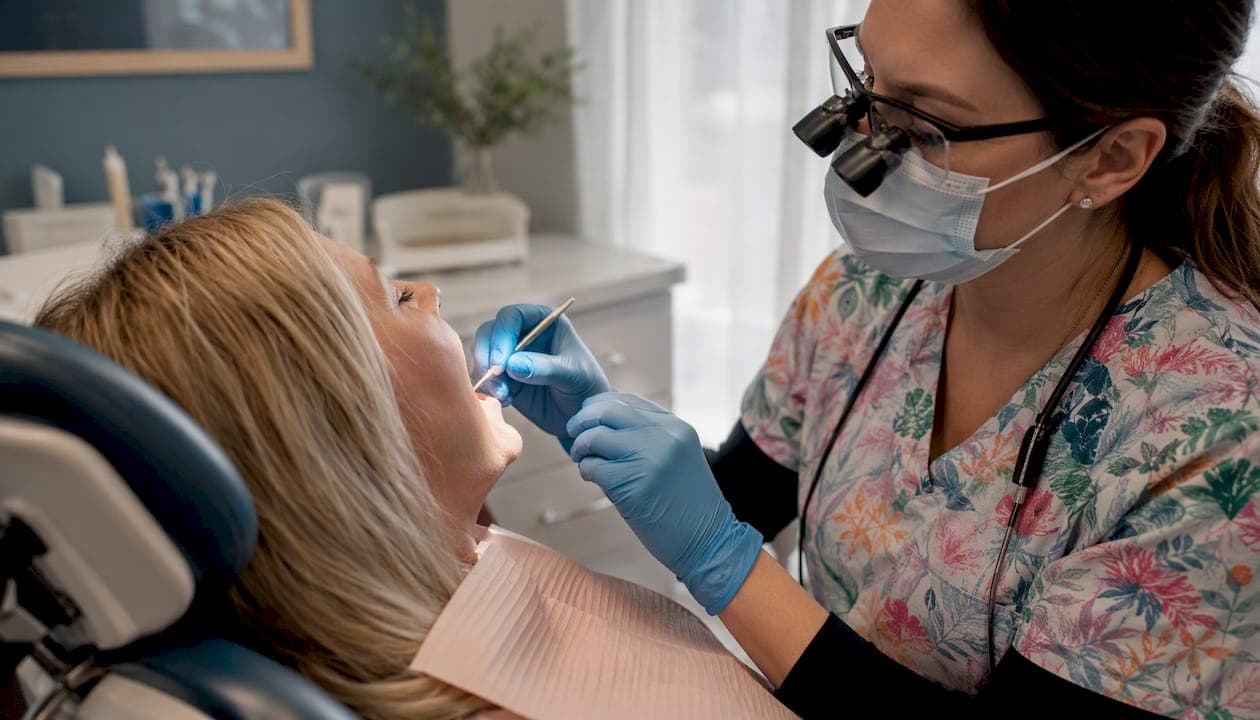
Periodontal maintenance (PM) is a therapeutic, ongoing program of professional care and targeted home care designed to control gum disease and preserve your teeth after active treatment. This is not a routine cleaning. The American Dental Association and the American Academy of Periodontology (AAP) both recognize PM as a distinct clinical service required after active periodontal therapy, and a narrative review published in PubMed confirms that consistent maintenance combined with patient compliance is directly associated with long-term tooth preservation.
Two things matter most if you have been diagnosed with gum disease:
- Who needs PM: Anyone with a history of periodontitis, prior scaling and root planing (SRP), residual pockets deeper than 3–4 mm, visible bone loss, dental implants, or persistent bleeding on probing.
- The single most important action: Keep every scheduled maintenance visit and maintain a consistent daily home-care routine between appointments. Missing either one undermines the other.
Key Takeaways
Periodontal maintenance is a lifelong therapeutic program that controls gum disease, preserves teeth, and protects implants. Consistent professional care and daily home care together determine long-term outcomes.
| Point | Details |
|---|---|
| PM is not a routine cleaning | D4910 is a therapeutic code for patients after active periodontal therapy, not a substitute for prophylaxis. |
| Recall intervals are risk-based | The typical starting point is 3 months, but your interval should be adjusted based on pocket depths, bleeding, and systemic risk. |
| Skipping visits has real consequences | Without professional biofilm disruption, disease often progresses silently even with good home care. |
| Red flags need prompt attention | Mobility, pus, swelling, or changes around implants warrant a call before your next scheduled visit. |
| Starboarddental offers individualized PM | The practice provides targeted instrumentation, implant monitoring, and personalized recall planning in Kennebunk, York, and Saco, ME. |
Table of Contents
- What periodontal maintenance actually is and who needs it
- How periodontal maintenance differs from routine cleanings and deep cleaning
- What happens during a periodontal maintenance visit
- How often should you come in? What the evidence actually says
- Why staying on schedule protects your teeth and what skipping costs you
- Daily home care and the patient–clinic partnership
- Insurance coverage and out-of-pocket cost considerations
- When to call your dentist between scheduled visits
- How Starboard Dental approaches periodontal maintenance
- Why Starboard Dental prioritizes maintenance above everything else
- Periodontal care at Starboard Dental: what to expect when you book
- Sources
What periodontal maintenance actually is and who needs it
Periodontal maintenance is a set of procedures performed at selected intervals after active periodontal therapy. A typical visit includes a medical history update, a full periodontal exam with pocket probing and charting, targeted subgingival scaling and root planing at active sites, supragingival cleaning, polishing, and a reassessment of your home-care plan. The AAP and ADA guidance is clear: maintenance after active therapy is mandatory for favorable long-term outcomes, and recall intervals should be individualized based on a multilevel risk assessment covering the patient, individual teeth, and specific sites.
Common indications for PM include:
- A confirmed history of periodontitis (any stage or grade)
- Residual probing depths greater than 3–4 mm after active therapy
- Prior scaling and root planing or periodontal surgery
- Dental implants requiring ongoing peri-implant monitoring
- Radiographic evidence of bone loss
- Persistent bleeding on probing at multiple sites
- Systemic risk factors such as poorly controlled diabetes or active smoking
How periodontal maintenance differs from routine cleanings and deep cleaning
This is where a lot of confusion happens, and it matters because the wrong appointment type means the wrong level of care.
SRP is an active-phase treatment. Think of it as the intervention that gets disease under control. PM is what comes after: the ongoing program that keeps it controlled. Once your clinician determines that active therapy is complete, you transition from SRP to PM. That transition is permanent for most patients with a history of periodontitis.
A few practical examples of how this plays out:
- A patient finishes a full-mouth SRP in four quadrants. Eight to twelve weeks later, the clinician reassesses. If pockets have responded and bleeding is reduced, PM begins at a 3-month interval.
- A patient who was previously on a 6-month prophy schedule is diagnosed with Stage II periodontitis. After SRP, they move to PM and do not return to routine prophylaxis.
- A stable PM patient with no bleeding and consistently shallow pockets may, after discussion with their clinician, extend their interval to 4 or 6 months. But they stay on PM, not prophy.
You can learn more about scaling and root planing as an active-phase treatment and how it sets the stage for long-term maintenance.
What happens during a periodontal maintenance visit
A PM appointment typically runs 45–60 minutes, though straightforward cases with minimal active sites can be completed in 30–40 minutes. Here is the usual sequence:
- Medical history update: Changes in medications, systemic conditions (especially diabetes, cardiovascular disease, or immunosuppression), and smoking status all affect periodontal risk and are reviewed at every visit.
- Periodontal exam and charting: Your clinician probes each tooth at six points, records pocket depths, notes bleeding on probing, checks for recession, mobility, and furcation involvement, and compares findings to your previous chart.
- Targeted instrumentation: Scaling focuses on sites with active bleeding, pockets deeper than 5 mm, or visible calculus. Shallow, stable pockets are not re-instrumented unnecessarily. This targeted approach protects healthy tissue while addressing problem areas.
- Supragingival cleaning and polishing: Removes plaque and stain above the gumline.
- Implant assessment: If you have implants, the clinician checks peri-implant tissue health, probing depths, and bone levels.
- Local antimicrobials or irrigation: Used selectively at persistent deep pockets when indicated by clinical findings.
- Homecare review and next-interval planning: Your clinician reviews your plaque control, identifies areas needing attention, and sets your next recall date based on current disease stability.
Pro Tip: Ask your hygienist to show you your pocket chart at each visit. Watching your own numbers improve over time is one of the most effective motivators for sticking with your home-care routine.
The clinical rationale for targeting only active sites, rather than re-instrumenting every tooth at every visit, is well-supported. PerioBasics clinical protocols note that indiscriminate re-instrumentation of shallow pockets can be counterproductive and that instrumentation should be guided by bleeding on probing and probing depths above 5 mm.
How often should you come in? What the evidence actually says
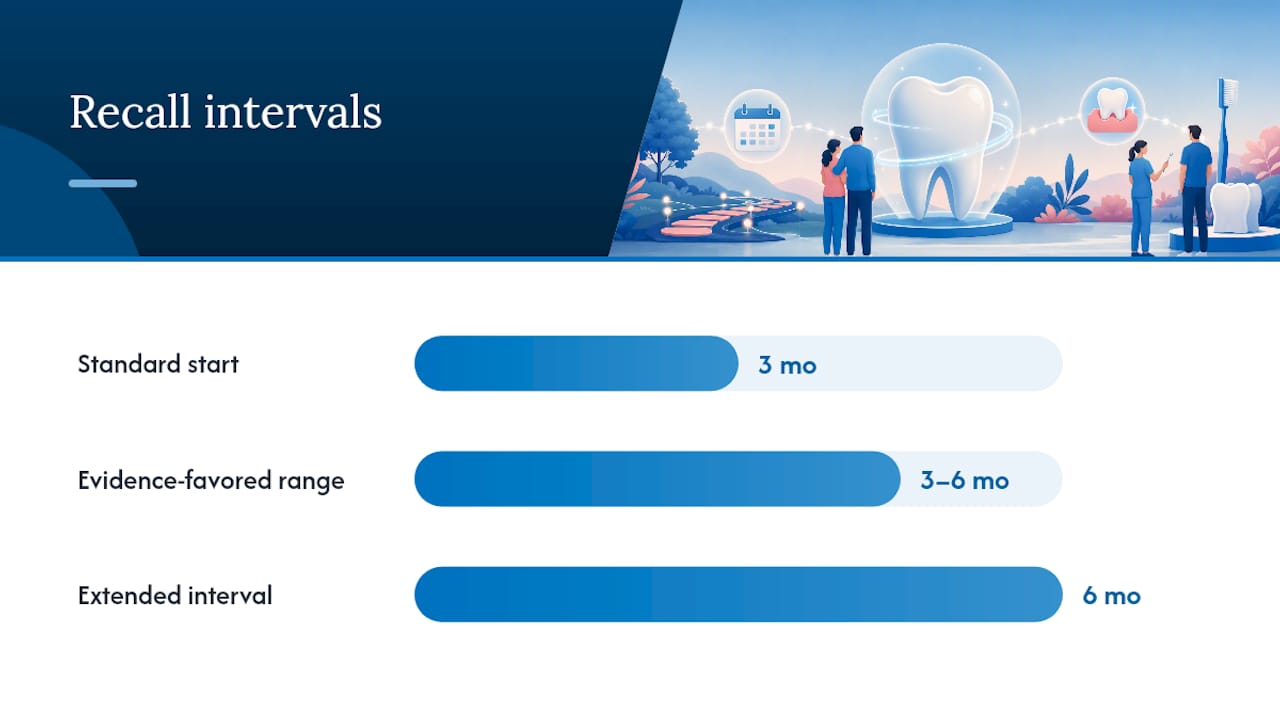
The "every 3 months" rule you may have heard is a starting point, not a fixed prescription. A systematic review published in PMC found that evidence supporting a single fixed recall interval for all patients is weak. Eight cohort studies met inclusion criteria, results were significantly heterogeneous, and no randomized controlled trials have directly compared recall intervals. What the observational data does suggest: shorter intervals in the 3–6 month range generally favor tooth retention, but the right interval for you depends on your specific risk profile.
A practical, risk-based approach looks like this:
Start at 3 months after completing active therapy. This is the standard starting point recommended by clinical education resources and supported by University of Adelaide guidance for the first year of monitoring.
Signals that suggest staying at 3 months or shortening the interval:
- Residual pockets of 5 mm or deeper
- Persistent bleeding on probing at multiple sites
- Active smoking
- Poorly controlled diabetes or other systemic risk factors
- Rapid disease progression before active therapy
- History of tooth loss due to periodontitis
Signals that may support extending the interval:
- Consistently stable probing depths over 2–3 consecutive visits
- No bleeding on probing
- Excellent plaque control documented at appointments
- No systemic risk factors
The algorithm is straightforward: start at your clinician's recommended interval, reassess at 2–3 visits, then adjust based on stability. The key word is lifelong. Even patients who extend to 6-month intervals remain on PM, not on routine prophylaxis, for the rest of their lives.
Residual deep pockets of 6 mm or more and persistent bleeding are stronger predictors of progression and tooth loss than bleeding alone, per the Wiley position review. Sites like these often require re-treatment rather than simple maintenance instrumentation.
Why staying on schedule protects your teeth and what skipping costs you
The evidence on this is consistent. The PubMed narrative review and case series found that periodontal maintenance combined with patient compliance is associated with long-term tooth preservation and reduced tooth loss in treated patients.
Benefits of staying on schedule:
- Lower rates of attachment loss and tooth loss over time
- Earlier detection of disease recurrence before it requires retreatment
- Protection of dental implants through peri-implant monitoring
- Reduced likelihood of needing complex, costly retreatment
- Documented baseline data that makes changes easier to catch
What happens when you skip:
- Bacterial biofilm recolonizes subgingival sites within weeks. Without professional disruption, disease often progresses even when patients feel fine and report good hygiene at home.
- Attachment loss and bone loss can advance silently between appointments.
- Peri-implantitis, if not caught early, can lead to implant failure.
- You may need to restart active therapy (SRP or surgery) rather than continuing maintenance.
Pro Tip: Coordinate your PM appointments with something you already schedule regularly, like a quarterly medication refill or a seasonal check-in. Patients who attach maintenance visits to an existing habit are more likely to keep them.
One point worth understanding: successful long-term tooth preservation depends on a partnership between professional care and consistent home care. Professional visits disrupt the biofilm that home care cannot fully reach, especially in deeper pockets. Neither alone is sufficient.
Daily home care and the patient–clinic partnership
What you do between appointments matters as much as what happens during them. The clinic controls the professional side; you control everything in between.
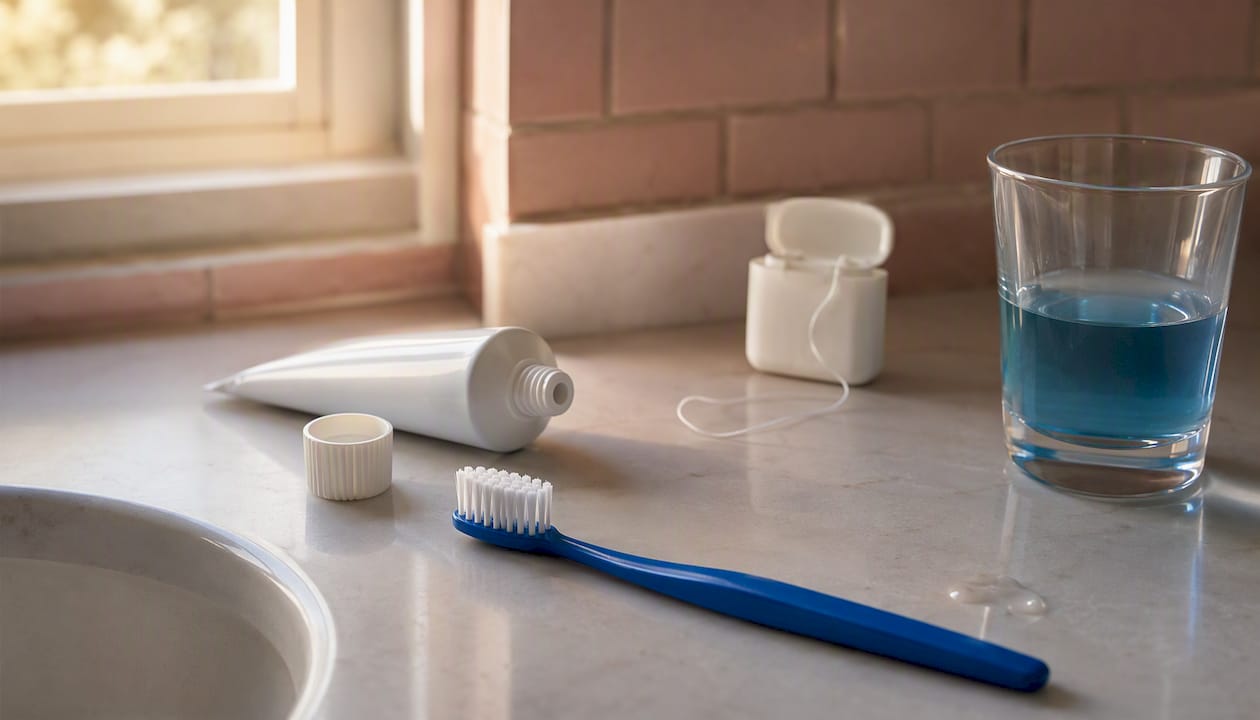
Your daily routine should include:
- Brush twice daily with a soft-bristled toothbrush, spending at least two minutes and angling the bristles toward the gumline at a 45-degree angle.
- Clean between teeth once daily. The right tool depends on your anatomy: floss works well for tight contacts, interdental brushes are more effective for wider spaces and furcation areas, and end-tufted brushes reach isolated deep pockets or crowded areas.
- Use an antimicrobial rinse if your clinician has recommended one. Chlorhexidine is sometimes prescribed for short-term use at active sites; over-the-counter options like cetylpyridinium chloride rinses can support daily plaque control.
- If you have implants, use implant-specific floss or a water irrigator around the implant collar.
Matching the tool to the situation:
- Tight contacts with no recession: waxed floss or floss picks
- Spaces with visible recession or furcation involvement: interdental brushes (sized to fit the space without forcing)
- Hard-to-reach posterior sites or areas around crowns and bridges: end-tufted brushes or a water irrigator
- Sensitive root surfaces: use a soft brush and a fluoride toothpaste formulated for sensitivity
For a detailed walkthrough of cleaning techniques for gum disease, Starboarddental has a step-by-step guide built specifically for patients in your situation.
What the clinic monitors and documents:
- Plaque index or plaque score at each visit to track your home-care effectiveness
- Bleeding on probing as a direct indicator of gum inflammation
- Pocket depth changes compared to your baseline chart
- Recession progression and furcation involvement
- Implant tissue health and probing depths
Your hygienist uses these measurements to adjust your care plan. If your plaque score improves, that shows up in your chart. If a pocket deepens by 2 mm, that triggers a clinical decision about whether to re-treat. The numbers tell the story, and you can ask to see them at every visit. Starboarddental's team also provides personalized homecare plans and tool recommendations tailored to your specific anatomy and disease history, so you leave each visit knowing exactly what to focus on. More guidance on supporting gum health is available on the practice website.
Insurance coverage and out-of-pocket cost considerations
Periodontal maintenance is billed under the ADA code D4910, which is a therapeutic procedure code, not a preventive one. That distinction matters for your coverage. ADA guidance on D4910 coding confirms that insurers often apply eligibility and timing requirements that differ from those for routine prophylaxis (D1110).
Practical steps before your first PM appointment:
- Call your insurer and ask specifically whether D4910 is covered under your plan, how many visits per year are covered, and whether documentation of prior active therapy is required.
- Ask whether preauthorization is needed, especially if you are transitioning from SRP to PM for the first time.
- Request an itemized estimate from the practice before your appointment so you know what to expect out of pocket.
- Keep records of your SRP treatment, including dates and the codes billed. Some insurers require PM to occur within a set timeframe after active therapy to cover it.
- Ask the practice whether hygienist-only visits are available for maintenance, as these may carry a lower fee than dentist-supervised visits in some settings.
A common frustration: some plans cover only two cleanings per year under D1110 and apply that limit to D4910 as well, even though PM is a different service. When this happens, ask the practice to submit a narrative with clinical documentation explaining the therapeutic necessity. Many claims are approved on appeal with adequate documentation.
When to call your dentist between scheduled visits
Most disease progression is gradual, but certain signs warrant a call before your next scheduled appointment. Do not wait if you notice:
- Increased tooth mobility: A tooth that feels looser than before is a sign of active bone loss or ligament involvement.
- Pus or drainage: Any discharge around a tooth or implant indicates active infection.
- Sudden or severe pain: Especially if localized to one tooth or area and not explained by a recent procedure.
- Persistent swelling: Swelling that does not resolve within a few days after a PM visit, or swelling that appears between visits.
- New or worsening bleeding: Bleeding that does not improve with consistent home care over 1–2 weeks.
- Changes around implants: Swelling, bleeding, or a feeling of looseness around an implant site.
- New localized pockets: If you notice a new area of tenderness or food trapping that was not there before.
Each of these signs can indicate that disease is progressing faster than your current recall interval can catch. Call the clinic and describe the symptom specifically. Avoid home remedies like rinsing with undiluted hydrogen peroxide or applying topical pain relievers directly to gum tissue, as these can mask symptoms or irritate tissue further.
How Starboard Dental approaches periodontal maintenance
Starboarddental's approach to periodontal care starts with a comprehensive evaluation: full periodontal charting, probing depths at six points per tooth, bleeding on probing assessment, and a review of your medical history and systemic risk factors. From there, the team builds an individualized recall interval based on your disease history, current stability, and risk profile, not a one-size-fits-all schedule.
At each maintenance visit, you can expect:
- Targeted instrumentation focused on active sites, not unnecessary re-treatment of stable areas
- Implant monitoring if you have implants, including peri-implant probing and tissue assessment
- Digital scanning technology for precision documentation and tracking changes over time
- A documented homecare plan reviewed and updated at every visit
- Ceiling-mounted TVs and personalized comfort measures to make longer appointments more manageable
- Same-day appointments available for patients who develop urgent symptoms between scheduled visits
The practice serves patients in Kennebunk, York, and Saco, ME. If you have not had a full periodontal evaluation or are unsure whether you are on the right recall schedule, the periodontics page at Starboarddental explains the services available and how to request an evaluation.
Why Starboard Dental prioritizes maintenance above everything else
The patients who keep their teeth for decades are almost never the ones who had the most aggressive treatment. They are the ones who showed up consistently after treatment ended. That observation shapes everything about how we approach maintenance at Starboarddental.
Periodontal disease does not resolve. It is managed. And the management requires two things working together: professional disruption of subgingival biofilm at intervals the patient's risk profile demands, and a patient who understands what they are doing at home and why. When those two things align, the outcomes in the literature are genuinely encouraging. When either breaks down, disease recurs, often silently, until a tooth is lost.
The evidence on recall intervals is humbling in its honesty: we do not have a single perfect answer that applies to every patient. What we do have is a framework, a starting point, and the clinical tools to adjust based on what we actually see at each visit. That is the conversation worth having with your clinician, not "how often do I have to come in?" but "what does my chart tell us about where I should be?"
Periodontal care at Starboard Dental: what to expect when you book
Starboarddental offers periodontal services including comprehensive periodontal evaluations, scaling and root planing, ongoing maintenance visits, and implant monitoring for patients in Kennebunk, York, and Saco, ME.

If you have been diagnosed with gum disease or completed active therapy elsewhere and need to establish a maintenance schedule, the practice makes it straightforward. Same-day appointments are available for urgent concerns, and the team can review your prior treatment records to determine the right recall interval for your current disease status. The general dentistry page covers the full range of services and includes appointment booking options. Bring your most recent periodontal chart if you have one. If you do not, the evaluation will establish your baseline.
Sources
These sources support the clinical claims in this article and are worth bookmarking if you want to go deeper. None of them replace a conversation with your own clinician about your specific case.
- Systematic review on periodontal maintenance recall intervals (PMC4848042)
- Periodontal maintenance therapy for long-term tooth preservation and adequate oral health: a narrative review and case series - PubMed
- Periodontal Maintenance: Stay on Top of Gum Disease - American Dental Association
- Periodontal maintenance - Wiley Online Library (2009 position/review)
- D4910 coding for periodontal maintenance - American Dental Association