Most tooth sensitivity responds to desensitizing toothpaste and a few habit changes within a few weeks. If pain is sharp, constant, or comes with swelling, fever, or drainage, that is not routine sensitivity and needs a dentist right away. Depending on the cause, treatment can range from fluoride varnish and bonding to gum grafts or, rarely, a root canal.
TL;DR:
- Desensitizing toothpaste can reduce sensitivity within two to four weeks when used correctly, especially if applied directly overnight on affected teeth.
- Persistent or severe symptoms, especially with swelling or fever, require immediate dental exams to rule out infections, cracks, or cavities needing advanced treatment.
- Preventative measures like gentle brushing with a soft brush, limiting acid contact, and addressing grinding significantly lower the risk of sensitivity returning.
- Professional treatments such as fluoride varnish, root coverage, or bonding are effective if at-home measures do not provide relief after about a month.
- Whitening procedures can cause temporary sensitivity, which can be managed by pre-treatment desensitizing routines and spacing out sessions, especially for patients with a history of sensitivity.
Table of Contents
- What Causes Sensitive Teeth Treatment to Be Necessary in the First Place
- At-Home and Over-the-Counter Sensitive Teeth Treatment That Works First
- Home-Care Habits That Keep Sensitivity From Coming Back
- Professional Sensitive Teeth Treatment Options When Home Care Isn't Enough
- When to See a Dentist for Tooth Sensitivity
- Keeping Sensitivity From Becoming a Recurring Problem
- Why Trust This Sensitive Teeth Treatment Guide
- Do At-Home Gels and Rinses Actually Work?
- Diet Changes That Help Beyond Cutting Acidic Drinks
- Why Whitening Makes Teeth More Sensitive, and How to Manage It
- An Editorial Take on Sensitive Teeth Treatment
- How Starboard Dental Approaches Sensitive Teeth Treatment
- Sources
What Causes Sensitive Teeth Treatment to Be Necessary in the First Place
Sensitivity happens when the dentin layer under your enamel gets exposed. Dentin is full of microscopic tubules that lead straight to the nerve, so hot, cold, sweet, or even a rush of air can trigger a jolt of pain the moment it reaches that layer.
A few conditions expose dentin more than others:
- Enamel erosion from acidic foods, drinks, or reflux thins the protective outer layer.
- Gum recession exposes the root surface, which has no enamel covering at all.
- Cavities create direct openings into the tooth's inner structure.
- Cracked teeth let stimuli reach the nerve through tiny fracture lines.
- Worn or failing fillings lose their seal and allow leakage underneath.
The first four are usually manageable with the steps below. A cracked tooth or an active cavity is a red flag that needs a dentist's exam, not a change in toothpaste.
At-Home and Over-the-Counter Sensitive Teeth Treatment That Works First
Before anything else, most dentists point patients toward desensitizing toothpaste, and for good reason. These products work through one of two mechanisms. Potassium nitrate calms the nerve fiber inside the tooth so it stops firing in response to stimuli. Arginine and calcium sodium phosphosilicate take a different approach: they physically plug the dentin tubules, blocking the pathway before the signal ever reaches the nerve. A narrative review of non-surgical management options confirms both approaches have a real evidence base, and that conservative treatment should always come before anything invasive.
Using these toothpastes correctly matters more than people expect. Brush with them twice daily as you normally would, but for a faster effect, dab a small amount directly onto the sensitive tooth or gumline and leave it on overnight rather than rinsing right away. That extended contact time gives the active ingredient more opportunity to occlude tubules or coat the nerve.
- Use a low-abrasion (low RDA) toothpaste to avoid further wearing thin enamel.
- Add a fluoride rinse to your routine for extra remineralization support.
- Look for the American Dental Association Seal of Acceptance on the label. That seal means the product's safety and efficacy claims have been independently reviewed.
- Give it time. Real relief from desensitizing toothpaste typically builds over several applications across two to four weeks, not overnight.
Pro Tip: Apply desensitizing toothpaste with a fingertip right before bed instead of rinsing after brushing. Saliva flow slows down while you sleep, so the active ingredient stays on the tooth surface far longer than it would during the day.
If you've been consistent for a month and the pain hasn't budged, or it's getting worse, that's your signal to stop self-treating and book an exam. According to the Mayo Clinic, a dentist can apply prescription-strength fluoride or recommend sealants, bonding, or other targeted fixes when over-the-counter products fall short.
Home-Care Habits That Keep Sensitivity From Coming Back
Toothpaste treats symptoms. Preventing further enamel and gum damage is what keeps sensitivity from returning. A few changes make a measurable difference:
- Switch to a soft-bristled brush and ease up on pressure. Aggressive brushing with a medium or hard brush is one of the most common causes of gum recession and enamel abrasion, according to the Cleveland Clinic. Hold the brush like a pencil, not a fist, and let the bristles do the work.
- Limit direct acid contact. Drink soda, wine, or citrus juice through a straw when possible, and rinse with plain water afterward instead of brushing right away. Brushing immediately after acid exposure can scrub away enamel that's still temporarily softened.
- Address reflux or smoking if either applies to you. Chronic acid reflux bathes the back teeth in stomach acid, and smoking reduces saliva's natural buffering capacity. Both accelerate enamel loss well beyond what diet alone would cause.
- Watch for signs of grinding or clenching. Waking up with a sore jaw, flattened tooth edges, or a partner who mentions grinding sounds at night point toward bruxism, which wears enamel mechanically rather than chemically. A custom night guard protects against this kind of wear far more reliably than toothpaste can.
Professional Sensitive Teeth Treatment Options When Home Care Isn't Enough
When conservative steps stall out, a dentist has several tools that work faster and more directly than anything sold over the counter.
- Professional fluoride varnish delivers a much higher concentration than store-bought rinses and forms a protective layer over exposed dentin, typically lasting weeks to months per application.
- Cervical restorations using glass ionomer are placed directly over exposed root surfaces near the gumline. These materials bond to dentin and continuously release fluoride, so they seal the tubules and support remineralization at the same time, according to research on non-surgical hypersensitivity management. Relief is often immediate.
- Gum grafts or root coverage procedures address the underlying recession itself when gum tissue has pulled back far enough to leave a large area of root exposed. This is a surgical step reserved for cases where recession, not enamel loss, is driving the pain.
- Laser treatment to seal dentin tubules exists as an option too, but it's considered secondary, used after simpler measures haven't worked rather than as a starting point.
- Root canal therapy is the last resort, appropriate only when there's irreversible damage to the tooth's inner pulp, not for garden-variety sensitivity. The Johns Hopkins Medicine overview is clear that this step follows persistent pain plus signs of deeper nerve involvement, not sensitivity alone.
When to See a Dentist for Tooth Sensitivity
Some symptoms mean don't wait for a routine opening. Call your dentist right away if you have continuous severe pain, visible swelling, fever, drainage near a tooth, or recent trauma to the mouth.
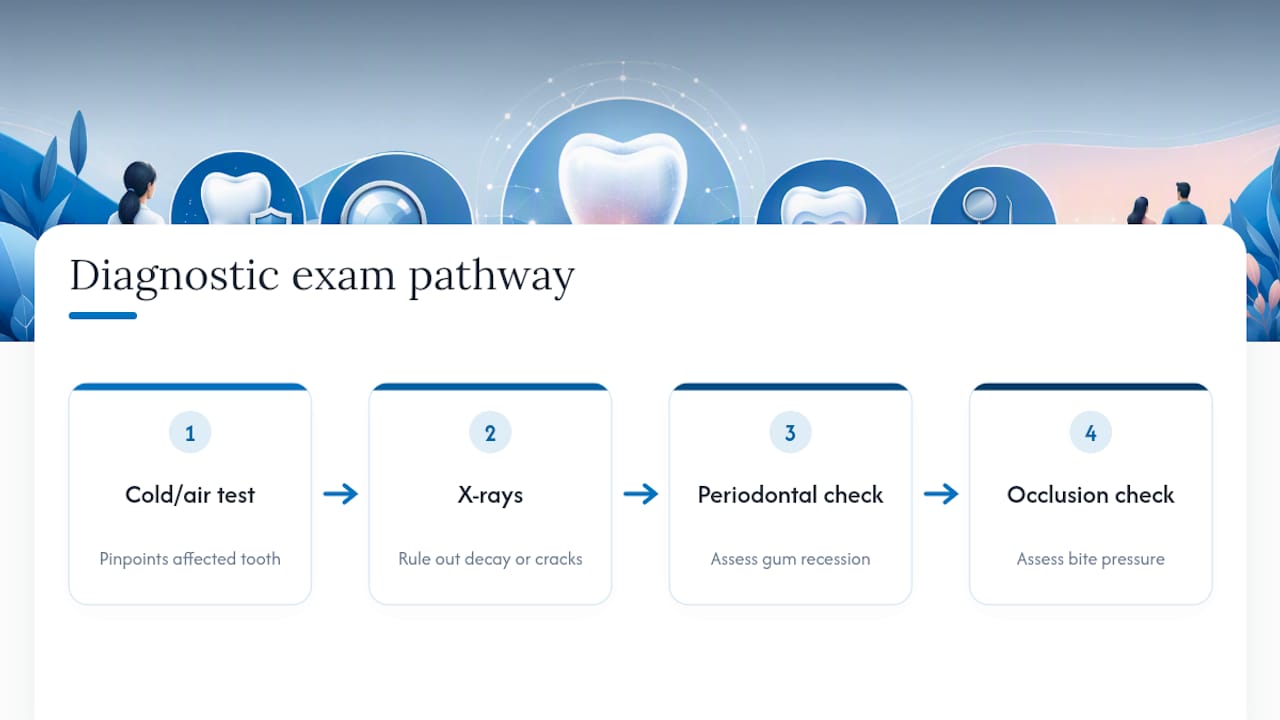
Book a standard appointment if sensitivity has lingered for several weeks despite consistent home care, or if it shows up suddenly after a filling or other dental procedure. At that visit, expect a cold or air test to pinpoint the affected tooth, X-rays to rule out decay or cracks, a periodontal check for gum recession, and an occlusion check for a bite issue that might be adding pressure where it doesn't belong.
Keeping Sensitivity From Becoming a Recurring Problem
Long-term stability comes down to consistency, not any single product. Brush gently twice daily with a fluoride toothpaste, and keep up with regular checkups and cleanings so a dentist can catch enamel wear or recession early. Periodic professional fluoride applications reinforce what your daily routine can't do alone. If reflux or bruxism is part of the picture, treating that underlying issue, not just the tooth, is what actually keeps sensitivity from returning.
Why Trust This Sensitive Teeth Treatment Guide
This guide draws on peer-reviewed clinical literature and guidance from Mayo Clinic, Cleveland Clinic, and Johns Hopkins Medicine, cross-checked against a narrative review of non-surgical hypersensitivity management. Starboard Dental, a Kennebunk practice built around anxiety-conscious, comprehensive care for patients of all ages, uses digital scanners and other precision technology to diagnose exactly what's driving a patient's sensitivity before recommending treatment. That diagnostic step matters, because sensitivity from a cracked tooth needs a different fix than sensitivity from gum recession.
Do At-Home Gels and Rinses Actually Work?
Desensitizing gels and rinses sit somewhere between everyday toothpaste and an in-office procedure. Most contain the same active ingredients found in desensitizing toothpaste, potassium nitrate or fluoride compounds, but in a higher concentration or a formulation designed for longer contact with the tooth surface.
A gel applied with a small tray or a fingertip tends to outperform a rinse for localized sensitivity, simply because it stays put on the affected tooth rather than washing over the whole mouth. Fluoride rinses used daily add a layer of remineralization support on top of whatever toothpaste you're using, which helps if your sensitivity stems from generalized enamel thinning rather than one isolated spot.
Realistic expectations matter here. Gels and rinses are supplementary tools, not a replacement for identifying the underlying cause. If a gel hasn't produced noticeable improvement after three to four weeks of consistent use, that's not a sign to switch products endlessly. It's a sign the cause needs a professional look. Some patients also find gels irritating if left on too long or used more often than the label recommends, so stick to the directions rather than assuming more is better. Pair a gel or rinse with the same low-abrasion toothpaste habits discussed earlier for the best combined effect.
Diet Changes That Help Beyond Cutting Acidic Drinks
Acidic beverages get most of the attention, but sugar plays a quieter role in sensitivity that's just as worth addressing. Frequent sugar exposure feeds the bacteria that cause decay, and early decay along the gumline or between teeth often shows up first as sensitivity to sweets or cold before it's visible on an X-ray.
Cutting back on how often you snack on sugary foods, not just how much, makes a real difference. Bacteria produce acid every time sugar is available, so five small sugary snacks spread across a day cause more cumulative acid attack on enamel than the same amount eaten in one sitting with a meal.
Crunchy, fibrous foods like apples, carrots, and celery help in the opposite direction. They stimulate saliva flow, which naturally buffers acid and helps redeposit minerals onto enamel. Dairy products contribute calcium and phosphate, the same minerals that remineralization-focused toothpastes are trying to deliver artificially.

None of this means eliminating sugar or treating every meal as a dental hazard. It means being deliberate about frequency and pairing riskier foods with water or a meal rather than grazing throughout the day. Combined with the acid-management habits already covered, and reduced sugar frequency does measurable work in slowing the enamel loss that leads to sensitivity in the first place.
Why Whitening Makes Teeth More Sensitive, and How to Manage It
Whitening-related sensitivity is common enough that most dentists warn patients about it before treatment even starts. The peroxide-based bleaching agents in both professional and over-the-counter whitening products temporarily increase the permeability of enamel, which lets stimuli reach the nerve more easily for a short period after treatment.
This kind of sensitivity is usually temporary, often resolving within a few days to about a week after the whitening session ends. That timeline separates it from sensitivity caused by decay or a cracked tooth, which doesn't improve on its own.
Managing it starts before you even begin whitening. Using a desensitizing toothpaste for one to two weeks ahead of treatment helps build up a protective baseline. During and after whitening, spacing out sessions rather than whitening for consecutive days gives enamel time to recover between exposures. Avoiding extremely hot or cold foods and drinks for the first few days after treatment also reduces discomfort while the tooth settles.
If you're prone to sensitivity in general, professional whitening supervised by a dentist tends to be more manageable than high-concentration home kits, because a dentist can adjust gel concentration, application time, and protective barriers around the gumline. Anyone considering teeth whitening with a history of sensitive teeth should mention it beforehand so the approach can be adjusted accordingly.
An Editorial Take on Sensitive Teeth Treatment
The pattern that stands out across the clinical literature is how often people treat sensitivity as a toothpaste problem when it's actually a diagnostic problem. The tube on the shelf works great for enamel thinning and mild recession. It does nothing for a cracked tooth or a failing filling, and weeks spent hoping it will just delay the exam that would have caught the real issue. If sensitivity hasn't improved in a month, that's information, not a failure of willpower.
— Alex
How Starboard Dental Approaches Sensitive Teeth Treatment
If home care hasn't solved it, or you're not sure what's causing your sensitivity in the first place, that's exactly the gap a dental exam is built to close. Starboard Dental in Kennebunk offers same-day appointments, so you're not stuck waiting weeks while discomfort drags on.

A visit typically starts with the basics: checkups and cleanings to catch decay or recession early, followed by targeted treatment like fluoride varnish, restorative bonding for exposed root surfaces, or a custom night guard if grinding is wearing down your enamel at night. The practice's digital scanners give a precise picture of what's happening under the surface, so treatment targets the actual cause rather than masking symptoms. Patients also get ceiling-mounted TVs and personalized comfort items during procedures, which matters if dental visits usually rank low on your list of favorite errands. Schedule a visit through general dentistry and get a straight answer on what's driving your sensitivity and what fixes it.
This article is general information, not a substitute for advice from a qualified doctor. Consult a qualified healthcare professional about your own circumstances before acting on anything here.
Sources
- Non-surgical management of tooth hypersensitivity - PMC
- Sensitive teeth: What treatments are available? - Mayo Clinic
- Teeth sensitivity - Cleveland Clinic
- Sensitive Teeth: Why They Hurt and How to Stop the Pain - Johns Hopkins Medicine