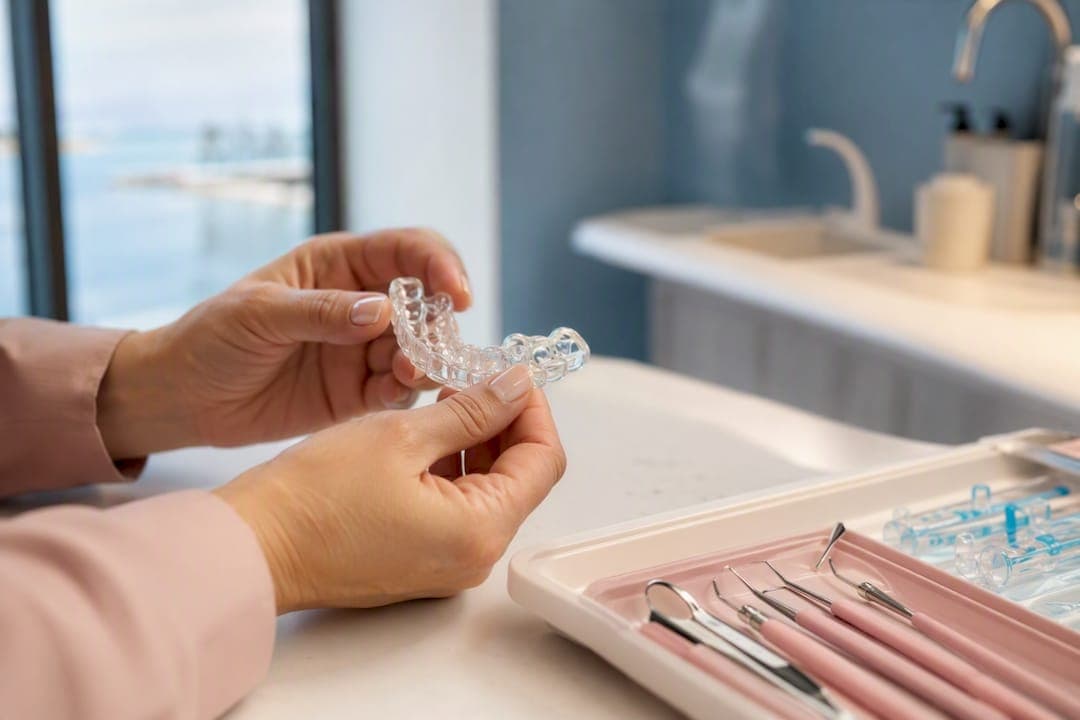
Yes, you can whiten sensitive teeth safely. Most people with sensitivity don't need to give up on a brighter smile. They need a gentler protocol than the one-size-fits-all approach sold at drugstores.
The best general strategy: two weeks of potassium-nitrate toothpaste before you start, followed by dentist-prescribed lower-concentration trays or a sensitivity-formulated daily product. This combination consistently produces the fewest complaints and the most predictable results.
- Pre-treat first: two weeks of a desensitizing toothpaste before any bleaching agent touches your teeth
- Go lower and slower: custom trays at reduced peroxide concentrations are gentler than aggressive in-office sessions for sensitive mouths
- Know your stop signal: sharp, lingering, or worsening pain means pause and call your dentist, not push through
Key Takeaways
Sensitive teeth can whiten safely when treatment starts with a two-week potassium-nitrate pre-treatment and moves to lower-concentration, dentist-guided trays instead of aggressive one-time bleaching.
| Point | Details |
|---|---|
| Pre-treat before you start | Use potassium-nitrate toothpaste for two weeks before any whitening to blunt nerve sensitivity in advance. |
| Choose concentration over speed | Custom trays at 10 to 16% carbamide peroxide reach similar shades with far less discomfort than strong in-office gels. |
| Sensitivity is usually short-lived | Discomfort typically peaks within 6 to 24 hours and fades within days; anything past a week needs a dentist visit. |
| Get checked before you bleach | Decay, cracks, gum recession, and leaking fillings all need treatment first or whitening can make things worse. |
| Starboard Dental builds it around you | Digital scans, custom trays, and built-in desensitizing steps let sensitive patients whiten with a plan matched to their mouth. |
Table of Contents
- Why Tooth Whitening for Sensitive Teeth Causes That Sharp Zing
- Gentle Whitening Options and Their Trade-Offs
- A Step-by-Step Protocol to Keep Sensitivity Under Control
- When a Dental Exam Should Come Before Whitening
- Starboard Dental's Approach to Whitening for Sensitive Smiles
- What the Research Actually Supports, and What It Doesn't
- Sources
Why Tooth Whitening for Sensitive Teeth Causes That Sharp Zing
Whitening gels work by pushing peroxide molecules through enamel to break apart the compounds that cause discoloration. That process can temporarily strip minerals out of the enamel surface and increase its porosity, which lets peroxide reach the dentin underneath. Dentin is riddled with microscopic tubules that connect straight to the nerve, so once peroxide gets that far, you feel it.
Sensitivity isn't random. Certain conditions make it far more likely:
- Enamel already thinned by acid erosion or years of aggressive brushing
- Gum recession that exposes root surfaces with no enamel protection at all
- Cracked teeth or old fillings with tiny gaps where gel can seep in
- Active decay that hasn't been treated yet
The good news: this sensitivity is almost always short-lived. Clinical research on bleaching pegs the peak discomfort window at 6 to 24 hours after treatment, with most people feeling back to normal within a few days. If sharp sensitivity is still hanging around after a week, that's your cue to get checked rather than wait it out.
Gentle Whitening Options and Their Trade-Offs
You've got real choices here, and the right one depends on how reactive your teeth are and how fast you want results. None of these is universally "best." Each trades speed for comfort in a different way.
- Whitening toothpaste with potassium nitrate and fluoride. This is the lowest-risk entry point. Shade change is modest and slow, usually visible after several weeks of consistent brushing, but the desensitizing ingredient works on your nerves directly, calming the signal before it ever fires.
- OTC sensitivity-formulated strips or kits. These move faster than toothpaste alone. Manufacturer guidance on sensitivity-specific strip lines recommends shorter wear times and pausing if discomfort shows up, which is a meaningfully different approach than the standard strips built for average enamel.
- Dentist-prescribed custom trays. Lower-concentration carbamide peroxide gels, typically in the 10 to 16% range, fitted into a tray molded to your exact bite. This is where dentists get real control over gel volume and contact time, which is exactly what sensitive patients need.
- Adapted in-office whitening. A dentist can shorten light-activated cycles and apply desensitizers before and after, but even adjusted, chairside whitening tends to produce more transient zingers than a slower take-home approach.
- Non-bleaching cosmetic alternatives. When enamel is too compromised or whitening simply won't move the shade you want, bonding or veneers can mask discoloration without touching the nerve at all.
Pro Tip: If you're torn between strips and trays, ask yourself how much you value control over speed. Trays let a dentist dial in concentration and time precisely, which matters more than convenience once your teeth start talking back.
A Step-by-Step Protocol to Keep Sensitivity Under Control
This is close to the actual sequence dentists use when a patient walks in nervous about pain. Follow it in order rather than skipping to the whitening step.
- Two weeks before you start: brush twice daily with a potassium-nitrate toothpaste. Pre-treating this way meaningfully cuts down on whitening-related sensitivity, and continuing it during treatment extends the benefit.
- Choose your concentration deliberately. Custom trays at 10 to 16% carbamide peroxide, worn for 30 to 45 minutes, give you nearly the same final shade as stronger gels, just over a longer timeline.
- Start every other night, not every night. Giving your teeth a rest day between sessions lets any irritation settle before the next round.
- After each session, load your tray with fluoride gel or a CPP-ACP remineralizing paste for 15 to 30 minutes. This helps redeposit minerals that the peroxide temporarily pulled out.
- Skip brushing immediately after bleaching. Enamel is at its most porous right after a session, so wait before introducing anything abrasive.
A few extra guardrails matter here. Keep a quick log of what you notice after each session: mild tingling is normal, sharp pain that lingers past bedtime is not. If two consecutive sessions produce real discomfort, drop to a lower concentration or stretch the gap between sessions to two full days. And be realistic about desensitizing gels applied right before bleaching: one randomized trial found an experimental desensitizing gel showed no significant difference from placebo, so don't assume every topical product will rescue a session that's too aggressive for your teeth.
When a Dental Exam Should Come Before Whitening
Whitening over an untreated problem doesn't just risk more pain. It can mask something that needs real treatment. A short exam before you start catches issues that at-home kits and even OTC sensitivity strips can't account for.
Your dentist is checking for specific red flags:
- Active decay, which peroxide can push straight into an already-inflamed nerve
- Cracked teeth, where gel seeps into the crack and irritates deeper structures
- Gum disease or recession, exposing root surfaces that have no enamel buffer at all
- Leaking or failing restorations that let gel underneath a crown or filling
Health guidance on professional whitening care consistently frames this pre-treatment check as standard, not optional, for anyone with a history of sensitivity. Once cleared, a dentist can build a plan around your specific mouth: custom tray fit and concentration, built-in desensitizer steps, and a shorter protocol if your enamel is already thin.
Starboard Dental's Approach to Whitening for Sensitive Smiles
Whitening plans at Starboard Dental start with an actual assessment, not a one-size-fits-all kit handed across the counter. Digital scanners map your enamel and any existing wear before a single tray gets fabricated, and same-day appointments mean a sensitivity check doesn't turn into a weeks-long wait.
From there, treatment gets tailored:
- Custom trays fitted to your bite, with peroxide concentration adjusted carefully for your sensitivity history
- Wear time built around your comfort, often starting shorter and extending as your teeth adjust
- Desensitizing support layered in before and after sessions, following the same fluoride and potassium-nitrate principles outlined for sensitive patients generally
Patients dealing with dental anxiety on top of sensitivity also get the practice's comfort measures: ceiling-mounted TVs during procedures and a genuinely relaxed office atmosphere, which matters more than people expect when they're bracing for a "zinger" that never actually comes.
Pro Tip: Bring up your sensitivity history at the very first visit, even if it's mild. A dentist who knows about it upfront can build the gentler protocol into the plan from day one instead of reacting to a complaint mid-treatment.
What the Research Actually Supports, and What It Doesn't
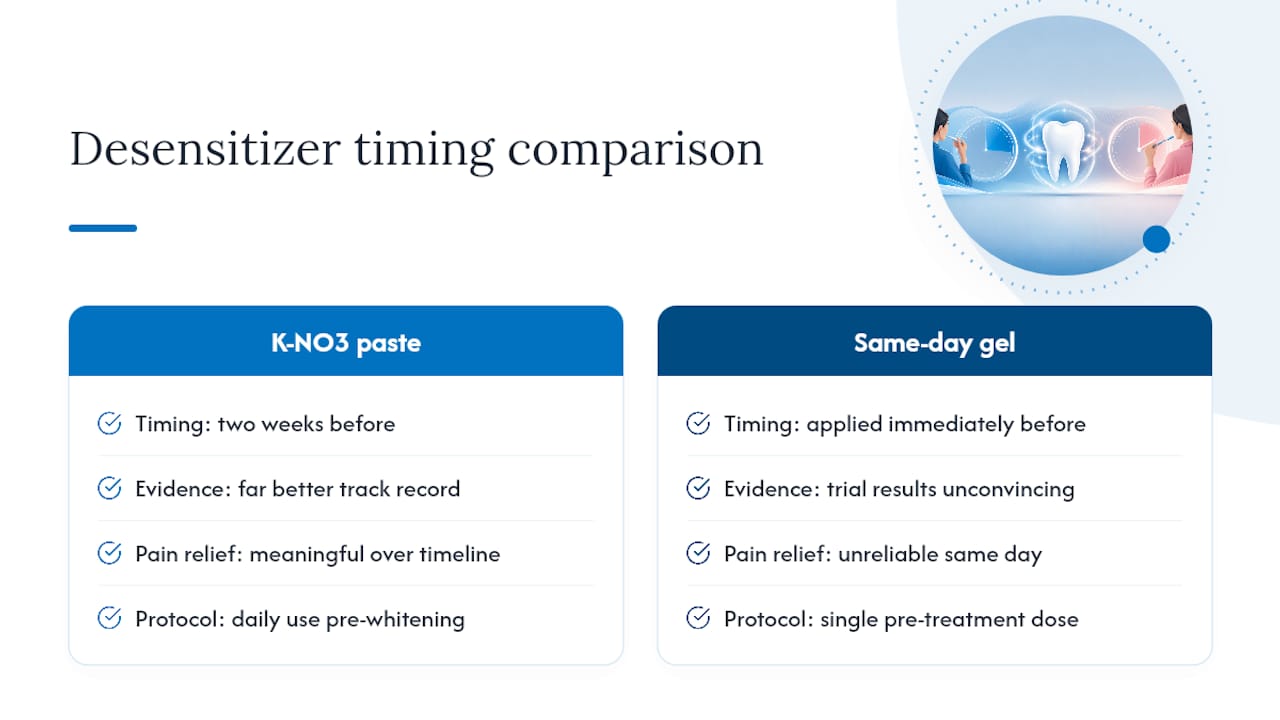
Here's where I'll push back on some of the advice floating around: the idea that a desensitizing gel slapped on right before bleaching automatically neutralizes the pain is oversold. The trial evidence on that specific tactic came back unconvincing. That doesn't mean desensitizers don't work. It means timing and delivery matter more than marketing copy suggests, and potassium-nitrate toothpaste used for two full weeks beforehand has a far better track record than a same-day gel application.
The bigger blind spot in most whitening advice is speed obsession. People want a dramatic shade change in one weekend, and that impulse is exactly what pushes sensitive teeth into pain territory. Slower, tray-based protocols at lower concentrations get you nearly the same result. They just ask for patience most people don't budget for.
If you take one thing from this, take this: a pre-whitening exam isn't a formality. It's the step that decides whether the rest of the protocol even makes sense for your mouth.
— Alex
Get a Sensitivity-Aware Whitening Plan at Starboard Dental
If OTC strips have left you wincing and you're not sure a stronger in-office session is worth the risk, a custom plan solves the guessing. Starboard Dental builds whitening around your actual sensitivity level: digital scans first, then a tray fit and peroxide concentration chosen for your enamel, not a generic average.

The practice's cosmetic dentistry and whitening services include desensitizing support built into every step, so you're not left managing discomfort on your own between sessions. Same-day appointments mean you can get a sensitivity assessment scheduled fast rather than waiting weeks to find out if you're even a good candidate. Book a consultation through the teeth whitening page and get a plan built around your teeth, not a generic kit.
Sources
- Tooth Whitening at Home: Four Ways to Stop Sensitivity | Colgate
- What You Should Know About Whitening Sensitive Teeth | Sensodyne
- PubMed Central clinical overview related to bleaching-related sensitivity (PMC4058574)
- Clinical trial on experimental desensitizing gel before in-office bleaching (2022) | Journal article DOI
This article is general information, not a substitute for advice from a qualified doctor. Consult a qualified healthcare professional about your own circumstances before acting on anything here.