Dental bleaching is defined as a chemical procedure that lightens tooth color by breaking down pigment molecules in enamel and dentine using peroxide-based agents. The process removes both extrinsic stains (surface discoloration from coffee, tea, or tobacco) and intrinsic stains (deeper discoloration within the tooth structure itself). The American Dental Association recognizes two primary active agents: hydrogen peroxide and carbamide peroxide, with professional gels ranging from 10% to 44% carbamide peroxide. When performed under dental supervision, bleaching is one of the most effective and non-invasive cosmetic treatments available.
What is dental bleaching and how does it work chemically?
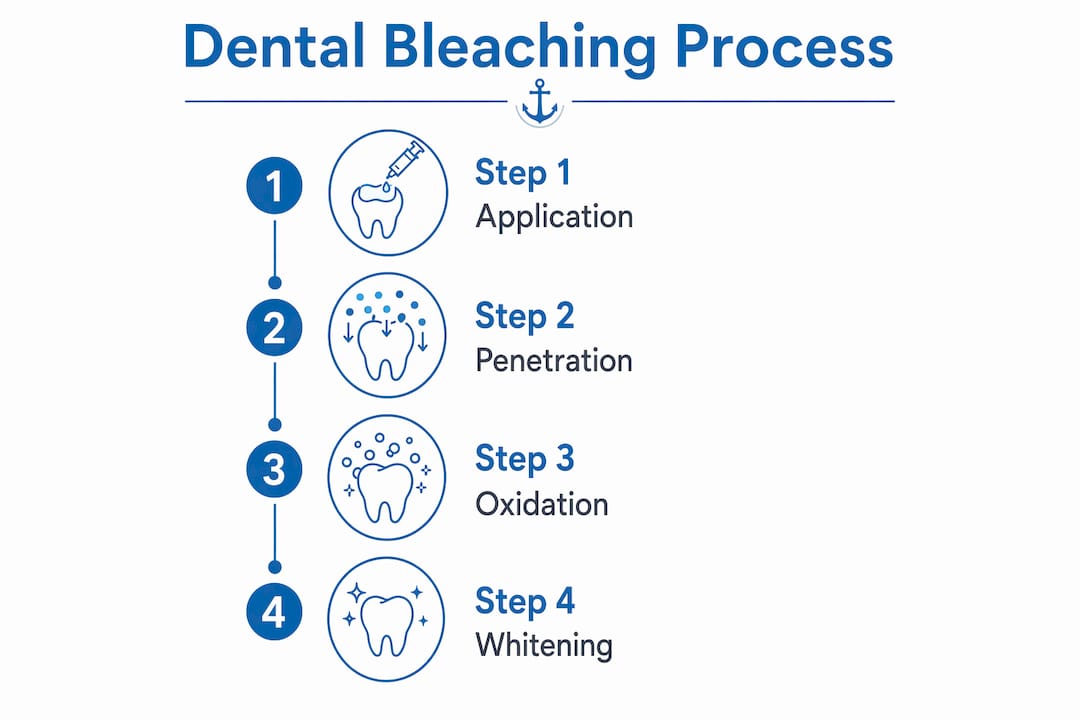
Dental bleaching works through oxidation. Peroxide molecules penetrate the enamel and reach the dentine layer, where they break apart chromogens. Chromogens are the colored organic compounds responsible for tooth discoloration. Once the peroxide oxidizes these molecules, the stains lose their color and the tooth appears lighter.
The two main agents work slightly differently. Hydrogen peroxide acts directly and quickly. Carbamide peroxide breaks down into hydrogen peroxide and urea in the mouth, releasing the active bleaching agent more slowly. Professional gels use concentrations between 10% and 44% carbamide peroxide, which converts to roughly 3% to 16% hydrogen peroxide. At-home trays prescribed by dentists typically use lower concentrations for extended overnight wear.
The typical in-office bleaching procedure
A standard in-office session follows a clear sequence:
- Oral health assessment. The dentist checks for cavities, gum disease, and existing restorations before any bleaching begins. Skipping this step is the most common mistake patients make with over-the-counter kits.
- Gum protection. A custom-fitted barrier or liquid dam is applied to shield soft tissue from the high-concentration gel. Soft tissue protection is the single most critical safety step in professional bleaching.
- Gel application. The dentist applies the bleaching gel directly to the tooth surfaces and leaves it in place for a set time.
- Session completion. The full appointment runs 30 to 60 minutes, and most patients see results in a single visit.
- Post-treatment review. The dentist removes the gel, rinses the teeth, and evaluates the shade change before the patient leaves.
Pro Tip: Ask your dentist about a pre-treatment shade assessment using a standardized shade guide. This gives you a measurable baseline so you can track exactly how many shades lighter your teeth become.
A professional evaluation before treatment is not optional. It identifies whether staining is extrinsic or intrinsic, which directly determines which bleaching method will work. Differentiating stain types guides the entire treatment plan and prevents wasted time on the wrong approach.
What are the benefits and expected results of teeth whitening?
Professional bleaching delivers results that at-home products rarely match. The most consistent benefit is a measurable shade improvement. Professional treatment lightens teeth by 3 to 5 shades in a single session. That kind of change is visible in photographs and noticeable in person.
The benefits patients report most often include:
- Faster results. In-office bleaching produces dramatic changes in one appointment. At-home trays from a dentist take days to weeks for comparable results.
- Improved confidence. A brighter smile directly affects how patients feel in social and professional settings.
- Non-invasive treatment. Bleaching does not remove tooth structure. It changes the color chemically without drilling or reshaping.
- Targeted stain removal. Yellow stains from food and drink respond particularly well. Bleaching is most effective on yellow or surface-level discoloration and less effective on gray or brown staining caused by deeper dental issues.
One fact patients often overlook: dental restorations do not whiten. Crowns, dental bridges, veneers, and composite fillings are made from materials that do not respond to peroxide. After bleaching, these restorations may appear noticeably darker than the surrounding natural teeth. A dentist needs to flag this before treatment begins so patients can plan accordingly.
What are the common side effects of dental bleaching?
Tooth sensitivity and temporary gum irritation are the two most common side effects of bleaching. Both are typically short-lived and manageable under professional supervision. Side effects result from chemical irritation of soft tissues and the dental pulp, but they resolve within days in most cases.
The key factors that influence side effect severity include:
- Peroxide concentration. Higher concentrations increase sensitivity risk without delivering proportionally better whitening. Clinical reviews recommend moderate concentrations of about 25–35% for in-office use to balance results with comfort.
- Application time. Leaving gel on longer than directed increases pulp irritation.
- Existing sensitivity. Patients with sensitive teeth before treatment are more likely to experience discomfort during and after bleaching.
- Gum barrier quality. Poorly fitted barriers allow gel to contact soft tissue, causing chemical burns.
Desensitizing agents reduce discomfort significantly. Potassium nitrate and sodium fluoride used before or during treatment lower sensitivity without affecting the bleaching outcome. Patients who use these agents report noticeably less discomfort throughout the process.
Pro Tip: If you know you have sensitive teeth, ask your dentist to apply a fluoride varnish immediately after bleaching. This closes dentinal tubules quickly and cuts post-treatment sensitivity by a meaningful amount.
Dentist supervision matters here more than most patients realize. Over-the-counter whitening products cannot match professional results and may cause abrasion or uneven whitening when used long-term without guidance. The ADA advises patients to consult a dentist before using any OTC whitening product.
Are there different types of bleaching, and which one is right for you?
Three main categories of teeth whitening treatments exist, and each suits a different patient profile.
| Type | How it works | Peroxide level | Typical duration | Best for |
|---|---|---|---|---|
| In-office professional | High-concentration gel applied by dentist with gum barrier | 25–44% carbamide peroxide | 30–60 minutes per session | Fast results, deep stains, first-time patients |
| Dentist-prescribed at-home trays | Custom trays with lower-concentration gel worn overnight | 10–20% carbamide peroxide | 2–4 weeks of nightly use | Gradual whitening, maintenance, sensitive patients |
| Over-the-counter products | Strips, gels, or toothpastes with minimal peroxide | Under 10% carbamide peroxide | Weeks to months | Mild surface stains, budget-conscious patients |
The right choice depends on three factors: stain type, existing dental work, and tooth sensitivity. Yellow surface stains respond well to all three options, though professional methods work faster. Gray or brown intrinsic staining requires a professional evaluation first because bleaching may not be the right solution at all. Patients with crowns, fillings, or restorative dental work need to understand that those materials will not change color, which affects the final appearance.
Light activation systems, sometimes marketed as "laser whitening," are worth understanding clearly. Clinical evidence does not support the claim that light activation significantly improves whitening compared to chemical bleaching alone. These systems add cost without a proportional benefit. The bleaching gel does the work. The light is largely a marketing feature.
For patients with gum disease or active decay, bleaching should wait. A dental checkup before any whitening treatment catches these issues early and prevents complications during the procedure.
Key Takeaways
Dental bleaching is safest and most effective when peroxide concentration, stain type, and existing dental work are all assessed by a dentist before treatment begins.
| Point | Details |
|---|---|
| Bleaching uses peroxide chemistry | Hydrogen peroxide and carbamide peroxide oxidize chromogens to lighten enamel and dentine. |
| Professional treatment delivers 3–5 shades of improvement | In-office sessions run 30–60 minutes and produce results no OTC product reliably matches. |
| Restorations do not whiten | Crowns, bridges, and fillings stay the same color, so plan cosmetic work in the right order. |
| Sensitivity is manageable | Potassium nitrate and sodium fluoride used pre-treatment reduce discomfort without reducing results. |
| Light activation adds cost, not results | Clinical reviews show bleaching gel alone drives whitening; light systems offer no significant advantage. |
Why professional oversight changes everything
I have seen patients come in frustrated after months of using strip kits with little to show for it. The strips were not the problem. The stain type was. Gray tetracycline staining and fluorosis do not respond to peroxide the way yellow coffee stains do. No amount of over-the-counter product fixes that. A five-minute clinical assessment would have saved those patients months of wasted effort and money.
The part of dental bleaching that gets undersold is the evaluation. Most people focus on the gel concentration or the brand of the kit. The real variable is whether the right treatment was chosen for the right stain. That requires a trained eye, not a brighter box on a pharmacy shelf.
Regulation exists for a reason. Legal limits on peroxide concentration in consumer products protect patients from chemical burns and pulp damage. Those limits also mean consumer products are inherently less powerful than professional treatments. That is not a flaw in the system. It is the system working correctly.
My honest recommendation: get one professional evaluation before you spend anything on whitening. Even if you ultimately choose an at-home approach, knowing your stain type and baseline oral health puts you in a completely different position. You stop guessing and start treating.
— Alex
Teeth whitening at Starboarddental
Starboarddental offers both in-office and at-home teeth whitening options for patients in Kennebunk and the surrounding area. Every whitening consultation starts with a clinical evaluation to identify stain type, check existing restorations, and confirm gum health before any treatment begins.

Patients who want a brighter smile without guesswork get a personalized plan based on their actual dental profile, not a one-size-fits-all kit. Starboarddental's cosmetic dentistry services include professional bleaching alongside complementary treatments for patients who want a complete smile refresh. Same-day appointments are available for new patients ready to get started.
FAQ
What is the difference between dental whitening vs bleaching?
Dental whitening refers to any process that restores teeth to their natural color, including polishing or cleaning. Bleaching specifically means using peroxide agents to lighten teeth beyond their natural shade.
Is dental bleaching safe for most patients?
Dental bleaching is safe for most healthy adults when performed under professional supervision. Patients with active gum disease, untreated cavities, or certain restorations should complete those treatments before bleaching begins.
How long do teeth whitening results last?
Results typically last 6 months to 2 years depending on diet, oral hygiene, and whether the patient uses tobacco. Avoiding staining foods and drinks like coffee and red wine extends results significantly.
Can I use home remedies for teeth bleaching instead of professional treatment?
Home remedies such as baking soda or activated charcoal have minimal clinical evidence supporting their effectiveness. They may also be abrasive with long-term use, making professional or dentist-prescribed options a safer and more reliable choice.
What are the side effects of dental bleaching I should expect?
Temporary tooth sensitivity and mild gum irritation are the most common side effects. Both typically resolve within a few days, and desensitizing agents like potassium nitrate reduce discomfort when used alongside treatment.