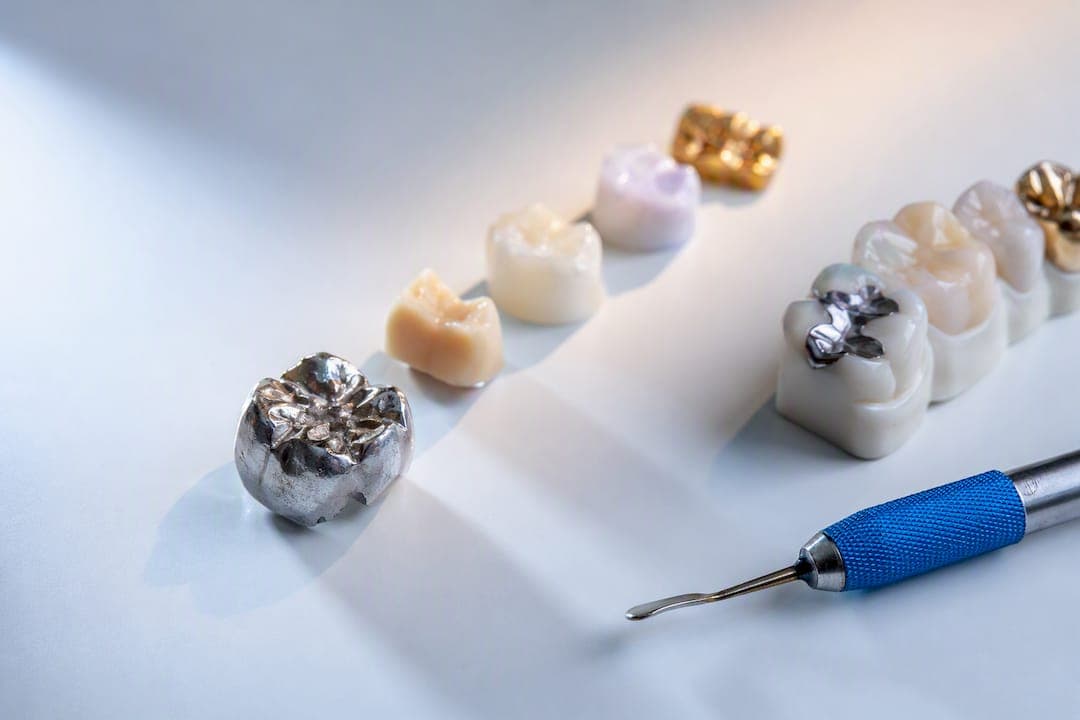
Dental fillings fall into two categories: direct, placed in a single visit, and indirect, made outside the mouth and cemented in later. The materials behind both include amalgam, composite resin, glass ionomer, ceramic or porcelain, and gold, each trading off durability, appearance, and cost differently. Amalgam and gold tend to last longer under heavy chewing pressure; composite and ceramic look better but sometimes wear faster.
TL;DR:
- Amalgam fillings tend to last around 16 years, especially in back teeth, whereas composite fillings typically last about 11 years, with individual factors influencing longevity.
- Inlays and onlays made from ceramic or gold offer superior durability for heavy chewing, but cost and appearance affect their suitability compared to resin or amalgam options.
- The choice of filling material depends on cavity size, location, bite force, aesthetic preferences, and dentist-patient shared decision-making, rather than one universal best.
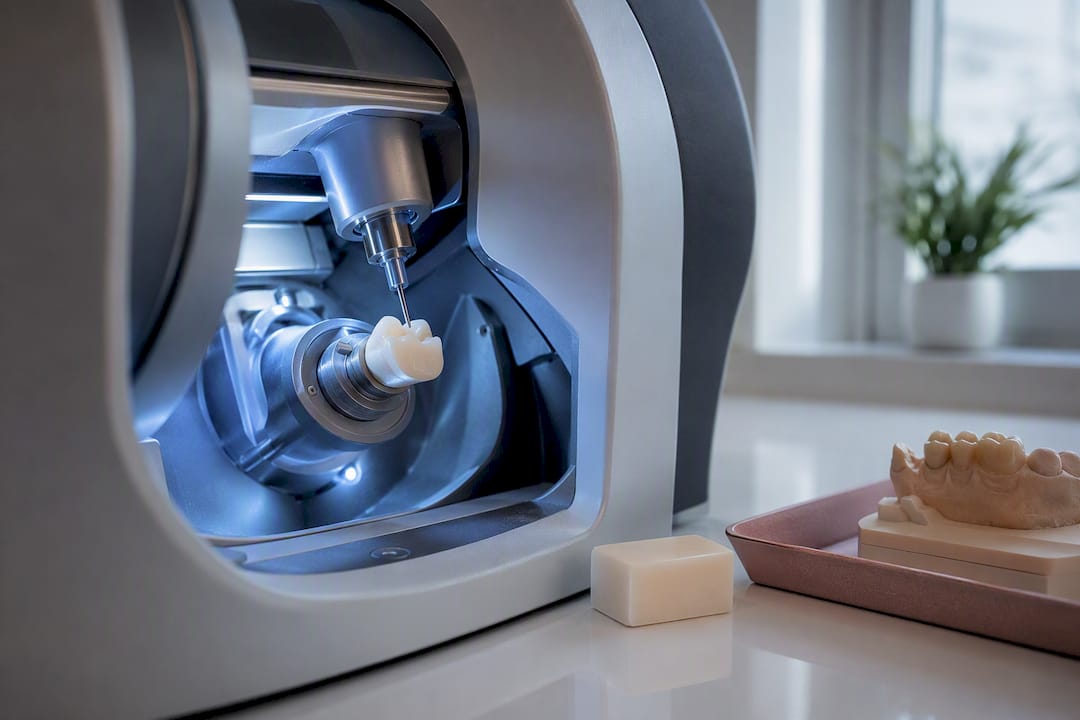
- Same-day CAD/CAM technology can often deliver inlay or onlay restorations in a single appointment, eliminating the need for temporary fillings.
- Regular maintenance and proper oral hygiene extend the lifespan of any filling, and old amalgam fillings are generally safe to leave in place unless they cause specific issues or aesthetic concerns.
Table of Contents
- Types of Dental Fillings and How Each Material Works
- What Happens During a Filling Appointment
- How Long Do Dental Fillings Actually Last?
- How Dentists Choose the Right Filling for You
- What a Modern Filling Visit Looks Like at Starboard Dental
- Editorial Take: There's No Universal Best Filling
- Get Your Cavity Filled at Starboard Dental
- Sources
- FAQ
Types of Dental Fillings and How Each Material Works
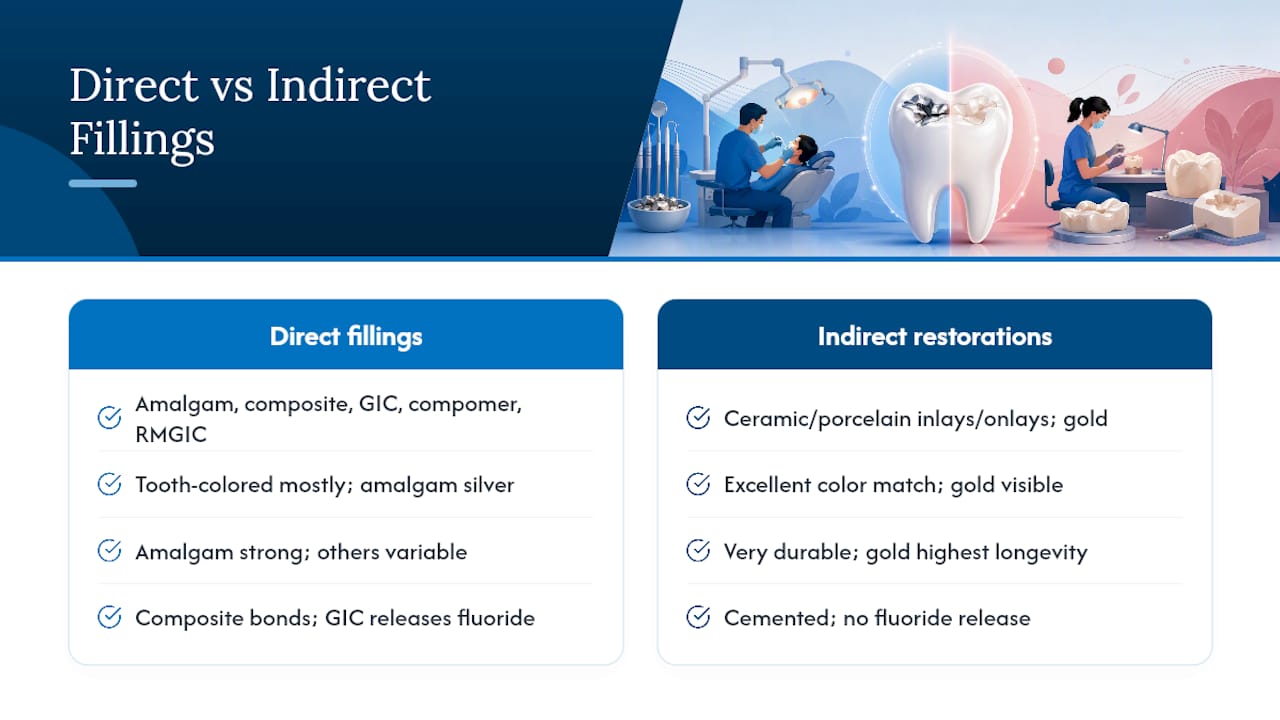
Before comparing materials, the direct-versus-indirect split matters more than most patients realize. A direct filling is placed and shaped inside the tooth in one appointment. An indirect filling, like an inlay or onlay, is fabricated outside the mouth, either in a lab or with same-day CAD/CAM milling, and cemented into place afterward.
Amalgam (silver) fillings are a metal alloy of mercury, silver, tin, and copper. Dentists have used amalgam for over a century because it's strong, cheap, and forgiving to place in wet or hard-to-isolate areas like back molars. The tradeoff is obvious the moment someone opens their mouth: it's silver, not tooth-colored.
Composite resin fillings are the tooth-colored option most adults picture when they think about a modern cavity fix. They're made of plastic resin mixed with fine glass or silica particles, then light-cured in layers. Composite bonds directly to enamel, which lets dentists preserve more of the natural tooth, but placing it correctly requires careful moisture control and technique.
Glass ionomer fillings are built from silicate glass powder and polyacrylic acid. Their standout feature is fluoride release over time, which makes them useful for small cavities, pediatric patients, or restorations that extend below the gumline. Mechanically, they're weaker than composite and not the first choice for chewing surfaces under heavy load.
Ceramic and porcelain inlays or onlays are lab-made or CAD/CAM milled restorations that match tooth color closely and resist staining better than composite. They cost more and typically require a more involved appointment process.
Gold inlays and onlays remain the gold standard, literally, for sheer longevity in molars that take a beating, though few patients choose gold for visible front teeth given the cost and appearance.
A few other materials round out the field: compomers (a composite/glass ionomer hybrid) and resin-modified glass ionomer (RMGIC) show up mostly in pediatric or transitional restorations.
What Happens During a Filling Appointment
A direct filling usually follows a predictable sequence:
- Local anesthetic numbs the area around the tooth.
- The dentist removes decayed tissue with a drill or laser.
- The cavity is cleaned and prepped, sometimes with an etching gel for composite.
- The filling material is placed and shaped, then light-cured (for composite) or allowed to set (for amalgam or glass ionomer).
- The bite is checked and adjusted so the filling doesn't sit too high.
Indirect restorations add a step. After the tooth is prepped, either an impression or digital scan is sent to a lab, and a temporary filling holds the space until the permanent inlay or onlay is cemented at a second visit. Clinics with in-house CAD/CAM milling can sometimes skip that second appointment entirely and deliver a same-day inlay or onlay. Expect mild numbness for a few hours and some sensitivity to temperature for a few days afterward.
How Long Do Dental Fillings Actually Last?
Amalgam often outlasts composite in back teeth, but the gap is narrowing. A systematic review of longevity data found amalgam restorations frequently reach median survival times around 16 years or longer in posterior teeth, compared to roughly 11 years for composite in several of the studies reviewed.
Failure modes differ by material, too:
- Composite most often fails from secondary decay forming at the margin between filling and tooth.
- Amalgam more often fails from bulk fracture or from patients requesting replacement for cosmetic reasons.
- Glass ionomer tends to wear down mechanically faster than composite or amalgam in high-load areas.
- Ceramic and gold rarely fail from decay but can be limited by cost-driven replacement decisions rather than material breakdown.
Cochrane's evidence review notes that certainty around some composite comparisons is still low, partly because materials and techniques keep changing. Typical lifespan estimates vary by material but can differ based on individual circumstances and evidence quality; amalgam tends to last longer than composite in posterior teeth, with other materials showing variable durability. Oral hygiene, grinding habits, and diet all move these numbers up or down for any individual.
How Dentists Choose the Right Filling for You
The ADA recommends that filling choice be a shared decision between patient and dentist, weighing several factors at once:
- Size and depth of the cavity
- Location (front tooth versus molar, above or below the gumline)
- Bite force and grinding habits
- Aesthetic priorities
- Insurance coverage and out-of-pocket cost
Questions worth asking at your appointment: What filling do you recommend for this specific tooth, and why? How long should I expect it to last? Is a same-day option available? What happens if I choose a cheaper material instead? Would an inlay or crown serve me better long-term? Be cautious if a dentist pushes to replace a functioning filling purely for cosmetic reasons, or gives vague answers about expected lifespan. When decay has destroyed too much tooth structure for a filling to hold reliably but not so much that a crown is required, an inlay or onlay often bridges that gap.
Pro Tip: Bring up your grinding or clenching habits before the filling goes in, not after it cracks. Materials that hold up fine for light chewers can fail years early under a nighttime grinding habit.
What a Modern Filling Visit Looks Like at Starboard Dental
Digital scanning has changed how dentists plan restorations. Instead of the old goopy impression trays, a digital scanner captures the tooth in seconds, which speeds up planning for inlays, onlays, and other restorative work. Clinics equipped for same-day CAD/CAM fabrication can sometimes skip the temporary-filling step entirely.
This article draws on published research from the ADA, FDA, and peer-reviewed longevity studies, synthesized by Alex for Starboarddental's editorial team. If you're weighing composite against amalgam or wondering whether your old silver filling needs replacing, that's exactly the kind of question worth bringing to an in-person consult rather than settling with a generic answer online.
Editorial Take: There's No Universal Best Filling
Durability should win for back molars under constant chewing force. Appearance matters more for front teeth people actually see when they smile. Neither instinct is wrong, but treating one material as universally superior ignores how much routine cleanings and cavity prevention extend any filling's life, regardless of what it's made from. The "best" material is the one matched to your specific tooth, habits, and priorities, not a title any single material deserves across the board.
— Alex
Get Your Cavity Filled at Starboard Dental
Choosing between amalgam, composite, glass ionomer, and ceramic gets a lot easier with a dentist who explains the tradeoffs instead of just picking for you. Starboard Dental's restorative dentistry services use digital scanning to plan fillings precisely and offer same-day appointments when a cavity can't wait for next month's calendar.

If you're due for a filling or curious whether shade matching will make a composite blend in seamlessly, the practice's tooth shade guide resource walks through how color matching actually works before you commit. First visits typically include an exam, digital scans, and a straightforward conversation about which material fits your tooth and your insurance. Most dental plans cover a portion of filling costs, and Starboard Dental's team can walk you through your specific benefits before treatment starts. Ready to get a cavity looked at? Book as a new patient and get on the schedule this week.
Sources
- Dental Fillings: Types, Materials & What They're For - Cleveland Clinic
- Longevity of amalgam versus composite resin restorations in permanent posterior teeth: systematic review - PMC
This article is general information, not a substitute for advice from a qualified doctor. Consult a qualified healthcare professional about your own circumstances before acting on anything here.
FAQ
What are the main types of dental fillings?
The main types are amalgam, composite resin, glass ionomer, ceramic or porcelain, and gold, split further into direct fillings placed in one visit and indirect restorations like inlays and onlays made outside the mouth.
What type of tooth filling is best?
There's no single best material. Dentists weigh cavity size, tooth location, bite force, and cosmetic priorities, and the ADA recommends choosing the filling type as a shared decision with your dentist.
Which type of filling lasts longer?
Amalgam generally shows longer median survival compared to composite in several studies, with modern composite techniques narrowing that gap.
Is porcelain or composite better for a filling?
Porcelain and ceramic restorations resist staining and hold their color longer than composite, but they cost more and usually require a lab-made or CAD/CAM process rather than a single quick visit.
Should I replace my old silver fillings?
Amalgam fillings that aren't cracked, leaking, or causing pain generally don't need replacement for health reasons alone; talk with your dentist if you want a tooth-colored option for cosmetic purposes.