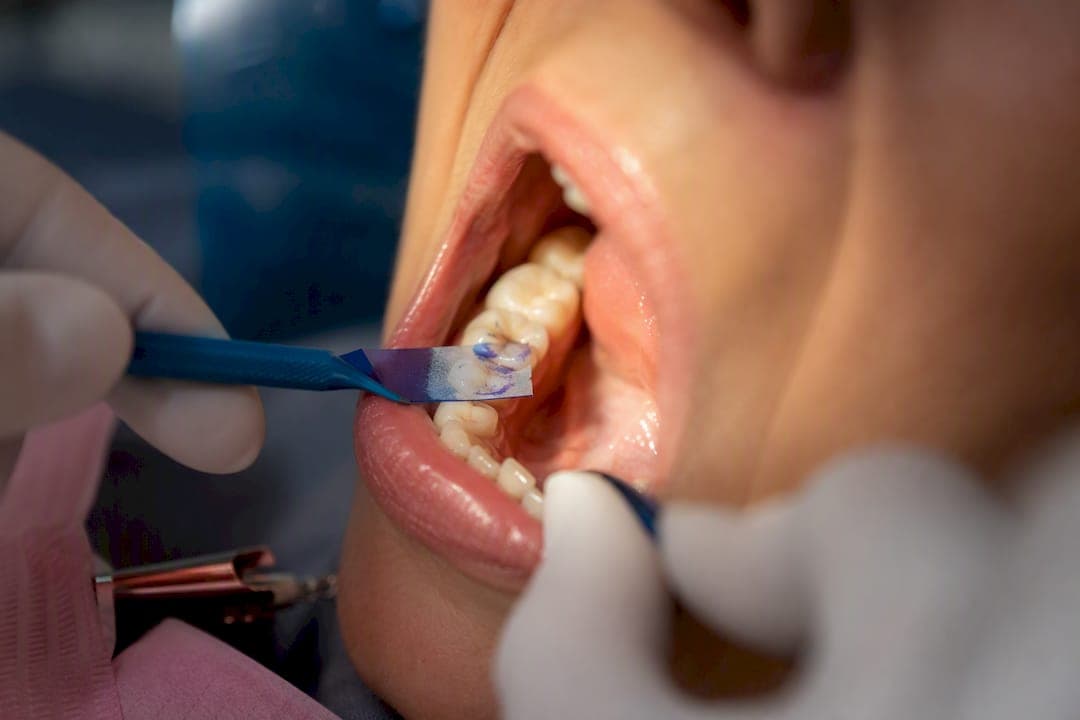
Mild soreness or tooth sensitivity after a filling is normal and usually fades within days to a few weeks. Sharp pain when you bite down, throbbing that won't quit, or any swelling and fever is not normal and needs a dentist's attention soon. In the meantime, chew on the other side, skip hot or cold foods, and try an over-the-counter pain reliever or desensitizing toothpaste.
TL;DR:
- Most mild sensitivity after a filling should improve within a few days to weeks, but persistent or worsening pain indicates the need for dental evaluation.
- A high bite is a common cause of ongoing discomfort and is easily corrected by your dentist, often relieving pain within a day or two.
- Sharp, brief cold sensitivity usually signifies nerve irritation, while lingering or spontaneous pain may indicate irreversible pulpitis or infection requiring urgent care.
- Pain that worsens, is severe, or accompanied by swelling and fever warrants immediate dental attention to prevent infections or complications.
- Tracking pain trends over time and checking the bite are crucial steps before considering invasive procedures like root canals.
Table of Contents
- What Causes Dental Fillings Pain?
- What Do Different Types of Filling Pain Mean?
- How Long Does Filling Pain Usually Last?
- How Can You Relieve Filling Pain at Home?
- When Should You See a Dentist for Filling Pain?
- What Will the Dentist Actually Do About It?
- What Should You Bring to a Starboard Dental Visit?
- Our Take: What Actually Matters After a Filling
- How Starboard Dental Can Help With Filling Pain
- Where This Information Comes From
- Sources
What Causes Dental Fillings Pain?
The nerve inside your tooth gets irritated during drilling, even in a routine cavity. That irritation, called pulpitis, is the most common reason for dental fillings pain, and in its reversible form it settles down on its own as the nerve calms back to normal.
A close second cause is a high bite. If the filling sits even slightly taller than your natural bite, every time you close your mouth that tooth absorbs pressure meant to be spread across several teeth. This is one of the most frequently identified causes of persistent, localized pain after a filling, and it's often an easy fix.
Other causes worth knowing about:
- Cracked tooth or a compromised restoration that flexes under pressure and pinches the nerve on release.
- Residual or recurring decay left behind or forming at the edge of the filling.
- Galvanic shock, a jolt of electric-feeling pain when a new metal filling touches another metal restoration, like an old amalgam meeting a gold crown.
- Referred pain from a neighboring tooth that only feels like it's coming from the filled one.
- Rarely, a material sensitivity, which is part of why the American Dental Association monitors filling material safety closely.
What Do Different Types of Filling Pain Mean?
The character of your pain is actually a decent diagnostic clue, even before you see a dentist.
- A quick zing from cold drinks that fades in seconds is typical nerve irritation settling down. Lingering cold sensitivity that hangs around for a minute or more is a different story and worth mentioning to your dentist.
- Pain only when you bite down, or right as you release the bite, points toward a high spot on the filling or, less often, a crack transferring force into the tooth.
- Pain that shows up out of nowhere, with no trigger, or wakes you up at night suggests the nerve inflammation has become irreversible pulpitis, which usually means the tooth needs more than time.
- Throbbing pain paired with facial swelling is the pattern most associated with infection, and it moves you straight into urgent territory.
How Long Does Filling Pain Usually Last?
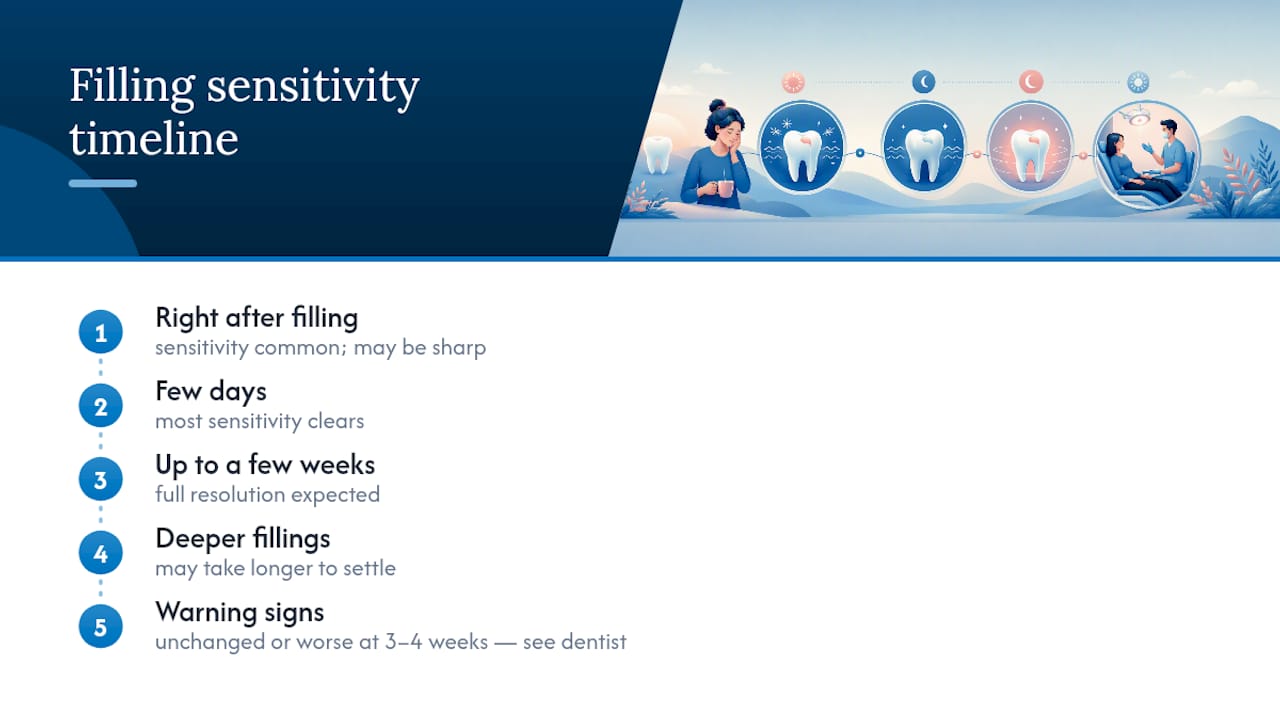
Most sensitivity from a routine filling clears up within a few days, and it's reasonable to expect full resolution within a few weeks. Deeper fillings, the kind placed over a cavity that came close to the nerve, tend to sit on the longer end of that range simply because the nerve took a bigger hit and needs more time to settle.
The trend line matters more than any single bad day. A tooth that's a little less sensitive each week is healing normally, even if it's not perfect on day three. A tooth that feels the same or worse at the three or four week mark, or one that suddenly gets sharper after initially improving, has stopped following the expected healing curve. That shift is the signal to get it looked at rather than waiting it out further.
How Can You Relieve Filling Pain at Home?
While you wait to see whether the discomfort is settling on its own, a few simple habits make the days after a filling far more comfortable.
- Take ibuprofen or acetaminophen according to the package directions, and use a cool compress against your cheek if there's any facial puffiness.
- Chew on the opposite side of your mouth and avoid very hot, cold, or acidic foods that spike the sensitivity.
- Switch to a desensitizing toothpaste and brush with a soft-bristled brush, using gentle pressure right around the treated tooth.
- If a filling feels loose, cracked, or has fallen out, a bit of over-the-counter dental wax or temporary filling material can protect the area until your dentist can see you.
- If pain climbs instead of eases despite these steps, stop waiting it out and call your dentist.
Pro Tip: Keep a one-line note each day, "day 3: sharp on cold, gone in 5 seconds," so you can show your dentist a real timeline instead of trying to remember how bad it was a week ago.
Cold sensitivity in particular tends to respond well to consistent habits over a week or two rather than a single fix, a pattern also described in general oral care guidance on managing sensitive teeth.
When Should You See a Dentist for Filling Pain?
Not every ache needs an emergency visit, but some do, and knowing which category you're in changes how fast you should act.
- Call immediately if you have severe pain that over-the-counter medication doesn't touch, facial or jaw swelling, a fever, or spreading redness. These are signs of a developing infection that shouldn't wait for a routine opening.
- Get in same-day or next-day for throbbing pain, pain that's clearly getting worse instead of better, pain that wakes you at night, or sharp pain every time you bite, which often points to a high filling that takes minutes to fix.
- Book routine follow-up if sensitivity is mild and gradually fading. If it plateaus and hasn't improved by two to four weeks, that's still worth a check, just not an emergency one.
What Will the Dentist Actually Do About It?
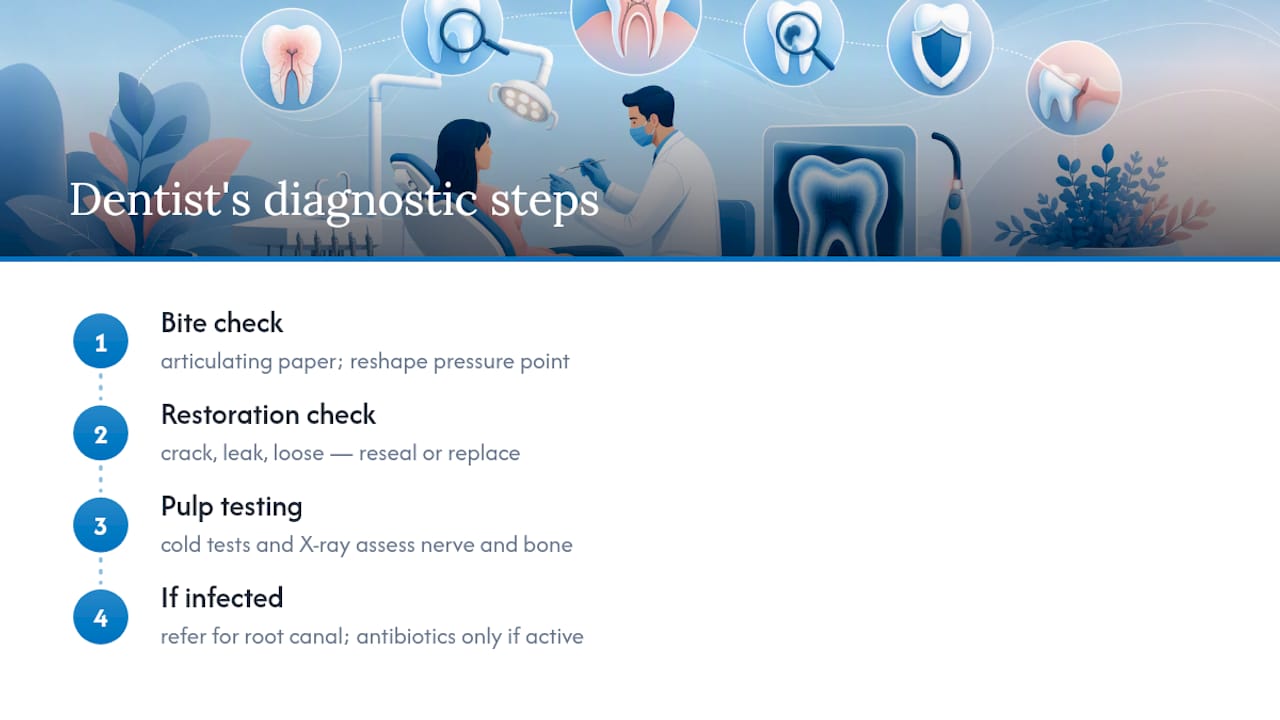
The first thing most dentists check is your bite. Using thin articulating paper, they can spot exactly where your filling is making excess contact, then reshape it in a few minutes. Many patients notice a difference within a day or two of that adjustment, since removing the pressure point lets the irritated nerve stop firing.
If the bite checks out fine, the dentist looks for what's underneath: a hairline crack, a leaking margin where bacteria could sneak in, or a filling that's come loose. Depending on what they find, that might mean resealing the edges or replacing the restoration entirely.
For pain that doesn't trace back to bite or a visible defect, expect pulp testing, cold tests, and an X-ray to check the nerve and the bone around the root. When testing points to a dying or infected nerve, the next step is usually referral for a root canal. Antibiotics come into play only when there's an active infection, not as a default response to pain.
What Should You Bring to a Starboard Dental Visit?
Come prepared with a short symptom timeline: when the pain started, what triggers it, whether it's better or worse than a week ago, and whether your bite feels different than before the filling. A photo of any facial swelling helps too, especially if it comes and goes.
Clinicians start every post-filling pain visit the same way: checking occlusion first, since it's the fastest fix, then looking for visible cracks and reviewing X-rays for anything below the surface. Patients with a straightforward high bite often feel relief within a day of adjustment. For anything that points toward the nerve, our restorative dentistry team walks through next steps clearly before doing anything else.
Our Take: What Actually Matters After a Filling
Most patients over-worry about the wrong thing. They fixate on how strong the pain feels on day one instead of tracking whether it's trending down over the following week, which is the far better predictor of a normal recovery. A ranking system might feel more reassuring: a 7 out of 10 twinge that fades to a 3 within four days is nothing like a 4 out of 10 ache that's still a 4 three weeks later.
The other place conventional advice falls short is treating "high bite" as an afterthought when it should be the first thing checked. It's common, it's usually painless to fix, and it resolves fast, yet plenty of patients suffer through days of avoidable discomfort before anyone reaches for the articulating paper.
If you take one thing from this, track your trend, not your worst moment, and don't hesitate to ask specifically whether your bite has been checked. That single question resolves more post-filling pain than any home remedy.
— Alex
How Starboard Dental Can Help With Filling Pain
If your filling pain isn't settling the way it should, waiting for your next scheduled cleaning isn't your only option. Same-day appointments are available specifically for bite checks and post-filling concerns, so a high spot or a cracked margin doesn't cost you another sleepless night before it gets addressed.

Our team starts with the fastest possible diagnosis, checking your bite and reviewing your restoration before moving to anything more involved, and we'll walk you through exactly what we find. If you're already a patient dealing with lingering sensitivity, our restorative dentistry page covers what to expect from a follow-up visit. New to the practice? Our new patient page has everything you need to get on the schedule quickly. If you're noticing swelling, fever, or pain that medication won't touch, don’t wait for an appointment. Contact your dental care provider promptly for evaluation.
Where This Information Comes From
The clinical guidance above draws on the Cleveland Clinic's overview of filling procedures and warning signs, Medical News Today's breakdown of post-filling pain timelines, research on occlusal adjustment outcomes, and Healthline's explanation of reversible versus irreversible pulpitis. None of this replaces an actual exam. See a dentist for anything that doesn't fit the normal pattern.
This article is general information, not a substitute for advice from a qualified doctor. Consult a qualified healthcare professional about your own circumstances before acting on anything here.
Sources
- Dental fillings: Cleveland Clinic
- Post-restorative sensitivity interpretations (NCBI/PMC)
- Do fillings hurt? — Healthline