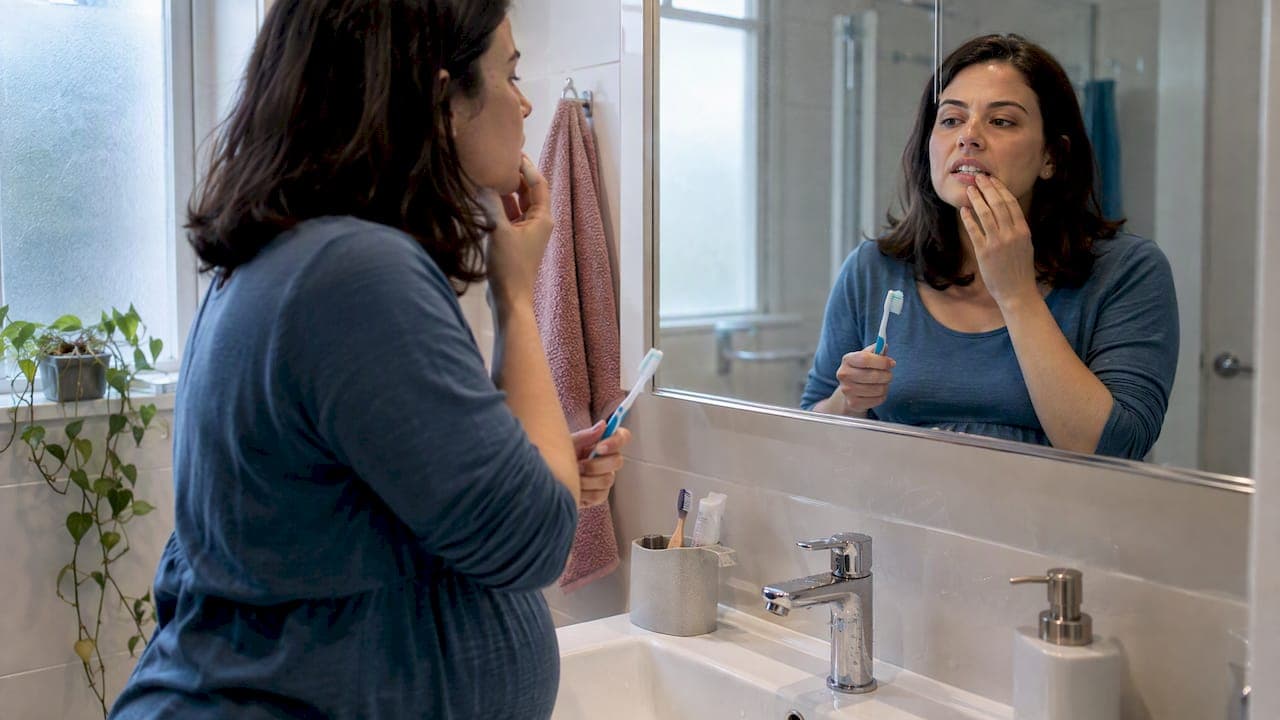
Bleeding gums in pregnancy are common and usually not an emergency. Hormones plus plaque are the typical cause, and the first steps are simple: brush gently with a soft brush, floss once a day, rinse after vomiting, and book a dental cleaning. Routine dental care is safe during pregnancy, according to major health authorities.
TL;DR:
- The CDC reports that pregnancy gingivitis affects approximately 60% to 75% of pregnant people, while periodontitis can damage supporting bone.
- Cleanings, diagnostic care, X-rays with shielding, and local anesthesia are safe at any pregnancy stage; delaying necessary treatment can let problems worsen.
- After vomiting, rinse with one teaspoon of baking soda in one cup of water, then wait at least 30 minutes before brushing.
- Periodontal treatment is safe, but studies do not show reliably that it prevents preterm birth or low birth weight; treat gum disease for your health.
- Call a dentist for persistent bleeding, severe swelling, or a new lump; seek emergency care for breathing difficulty, swallowing difficulty, or rapidly spreading swelling.
Table of Contents
- What causes bleeding gums in pregnancy?
- How common is pregnancy gingivitis?
- Is dental care safe during pregnancy?
- What daily care reduces bleeding and inflammation?
- When should you see a dentist, and what will treatment look like?
- What is a pregnancy tumor?
- What signs mean you need urgent care?
- A note from Alex: oral health belongs in prenatal care
- How we can help you at Starboard Dental
- FAQ
- Sources
What causes bleeding gums in pregnancy?
Your gums react more strongly to plaque while you are pregnant. Rising estrogen and progesterone trigger an exaggerated inflammatory response to the bacterial film that builds up along the gumline. The bacteria irritate gum tissue that is already primed to swell, so the gums turn red, puffy, and tender, and they bleed when you brush or floss.
Several everyday factors can make it worse:
- Morning sickness, because stomach acid and skipped brushing leave plaque in place longer.
- Gentler brushing out of worry about sore gums, which lets plaque stay put.
- Snacking more often, especially on starchy or sugary foods that feed plaque bacteria.
- A strong gag reflex that makes brushing the back teeth difficult.
Bleeding can develop during pregnancy and may worsen over time. Plaque is the trigger and hormones are the amplifier, which is why removing plaque is the most direct way to calm things down. Cutting back on brushing because your gums bleed usually backfires.
How common is pregnancy gingivitis?
Very common. The CDC reports that pregnancy gingivitis, meaning swollen, tender, or bleeding gums, affects approximately 60% to 75% of pregnant people. So if your gums bleed, you are in very large company.
It helps to know the difference between two conditions. Gingivitis is inflammation of the gum tissue. It is reversible with good plaque control and professional cleaning. Periodontitis is the more advanced form, where the infection reaches the supporting bone and can cause bone loss and loose teeth. It is less common, but it does not heal on its own.

That difference is why we want bleeding checked rather than ignored. Catching gingivitis early keeps it from progressing and protects your own oral health, with no need to worry about overstated claims.
Is dental care safe during pregnancy?
Yes. As the CDC puts it, preventive, diagnostic, and necessary restorative dental treatment is safe at any stage of pregnancy, and the American Dental Association and ACOG agree. That includes cleanings, X-rays with shielding, and local anesthesia. Putting off needed treatment can let small problems become bigger ones.
Dental care is safe and important during pregnancy, and delaying needed treatment may lead to more complex problems.
Dental teams make a few easy adjustments for pregnant patients:
- Covering your abdomen with a shield during X-rays. Our guide to dental X-ray safety explains the tiny doses involved.
- Keeping appointments shorter when sitting still is uncomfortable.
- Positioning you so you are comfortable, often slightly reclined or tilted to one side.
- Noting your due date so the visit can be timed well.
What about outcomes for the baby? A Cochrane review found that treating periodontal disease in pregnancy does not reliably reduce preterm birth, and a systematic review and meta-analysis found the higher-quality trials showed no clear effect on preterm birth or low birth weight, while confirming treatment is safe. Treat your gums for your own health, and for safety's sake the evidence is reassuring.
If you want another practice's take, this evidence-first pregnancy dental guide covers what to ask your dentist.
What daily care reduces bleeding and inflammation?
Consistent plaque removal is what turns bleeding gums around, often within a couple of weeks. Public-health guidance recommends brushing twice daily with fluoride toothpaste, flossing daily, and seeking dental care early. Here is a pregnancy-friendly routine:
- Brush twice a day with fluoride toothpaste and a soft-bristled brush, using gentle circular strokes rather than hard scrubbing.
- Floss once a day. If flossing triggers your gag reflex or is hard to manage, try interdental brushes or a floss holder.
- Ask your dentist whether an antiseptic mouthrinse or xylitol gum makes sense for you.
- After vomiting, rinse with one teaspoon of baking soda in one cup of water. Wait at least 30 minutes before brushing so you do not scrub softened enamel.
- Use a smaller-headed toothbrush, or split cleaning into shorter, more frequent sessions, when nausea or gagging gets in the way.
- Limit frequent sugary snacks, drink water through the day, and keep your regular dental visits.
Pro Tip: Keep a travel toothbrush and a small bottle of baking-soda rinse in your bag, so you can rinse right away on days when nausea strikes away from home.
Bleeding that keeps up despite good care does not mean you are doing it wrong. It means a professional cleaning could help. Our guides to preventing cavities and gum disease and supporting optimal gum health go deeper on daily habits.
When should you see a dentist, and what will treatment look like?
Contact your dentist if bleeding persists despite better home care, your gums are very swollen, or a new lump appears. You do not need to wait for postpartum to be seen.
What we might do depends on what we find:
- A routine cleaning to remove plaque and tartar that brushing cannot reach, often the single most effective step for pregnancy gingivitis.
- Scaling and root planing, a deeper cleaning below the gumline, when gum disease goes beyond gingivitis. Our gingivitis treatment guide explains how bleeding gums are reversed.
- Periodontal therapy when it is indicated, which is considered safe during pregnancy.
The research is worth restating honestly: periodontal treatment is safe, but trials do not reliably show it lowers preterm birth or low birth weight. We recommend it because healthy gums matter for you.
Tell the team you are pregnant and share your due date. We can then adjust positioning, appointment length, and timing so you stay comfortable. If you want to understand the options in more detail, our periodontics page describes what we offer.
What is a pregnancy tumor?
A pregnancy tumor, known clinically as a pyogenic granuloma, is a benign overgrowth of tissue that can form on inflamed gums, most often near the upper front teeth. Despite the name, it is not cancer. It can develop during pregnancy and may shrink or disappear after delivery. It can bleed easily when touched.
See your dentist if it gets in the way of eating, rubs your cheek or lip, or bleeds often. Keeping plaque under control around it helps keep it from growing.
What signs mean you need urgent care?
If you have gum bleeding or any concerning symptoms, seek urgent professional care. For difficulty breathing or swallowing, or rapidly spreading swelling, seek emergency care immediately. If you suspect an infection or abscess, do not wait it out. When you are unsure, contact a dental or medical professional promptly.
A note from Alex: oral health belongs in prenatal care
I think gum health gets treated as an afterthought during pregnancy, and that is a mistake. Oral health is part of prenatal care, and dental teams see pregnant patients all the time and know how to treat them safely. The most common thing people tell me is that they delayed a visit because they were worried about harming the baby. The guidance says that worry is misplaced.
Comfort matters too. Easy scheduling, appointments when you need them, and a relaxed room all lower the barrier to showing up. At your next visit, ask anything: what is safe, what to expect, how to handle nausea at the chair. Good questions make for better care.
— Alex
How we can help you at Starboard Dental
Bleeding gums should not be something you manage alone. We offer pregnancy-appropriate checkups, cleanings, and periodontal care in a calm, comfortable setting, with appointments available when you need to be seen quickly.

If your gums keep bleeding or you want a pregnancy-safe cleaning, book a visit through our general dentistry page. For persistent gum problems, our periodontal care is the next step.
This article is general information, not a substitute for advice from a qualified doctor. Consult a qualified healthcare professional about your own circumstances before acting on anything here.
FAQ
Is it normal for gums to bleed during pregnancy?
Yes. Pregnancy hormones make gums react more strongly to plaque, and the CDC reports that about 60% to 75% of pregnant people develop pregnancy gingivitis. Keep brushing and flossing gently, and tell your dentist if it persists.
Can I see a dentist while pregnant?
Yes. Cleanings, checkups, X-rays with shielding, and local anesthesia are safe at any stage of pregnancy. Let the dental team know you are pregnant and share your due date.
What causes toothaches during pregnancy?
Common causes include untreated cavities, gum inflammation, and enamel softened by stomach acid from vomiting. A toothache is a reason to call your dentist rather than wait, since small problems are easier to treat early.
Does treating gum disease prevent preterm birth?
Not reliably. Periodontal treatment is safe during pregnancy, but a Cochrane review found trials do not consistently show it reduces preterm birth. Treatment still protects your own oral health.
Sources
- Cdc
- Treating periodontal disease for preventing adverse birth outcomes in pregnant women
- Obstetric outcomes after treatment of periodontal disease during pregnancy: systematic review and meta-analysis