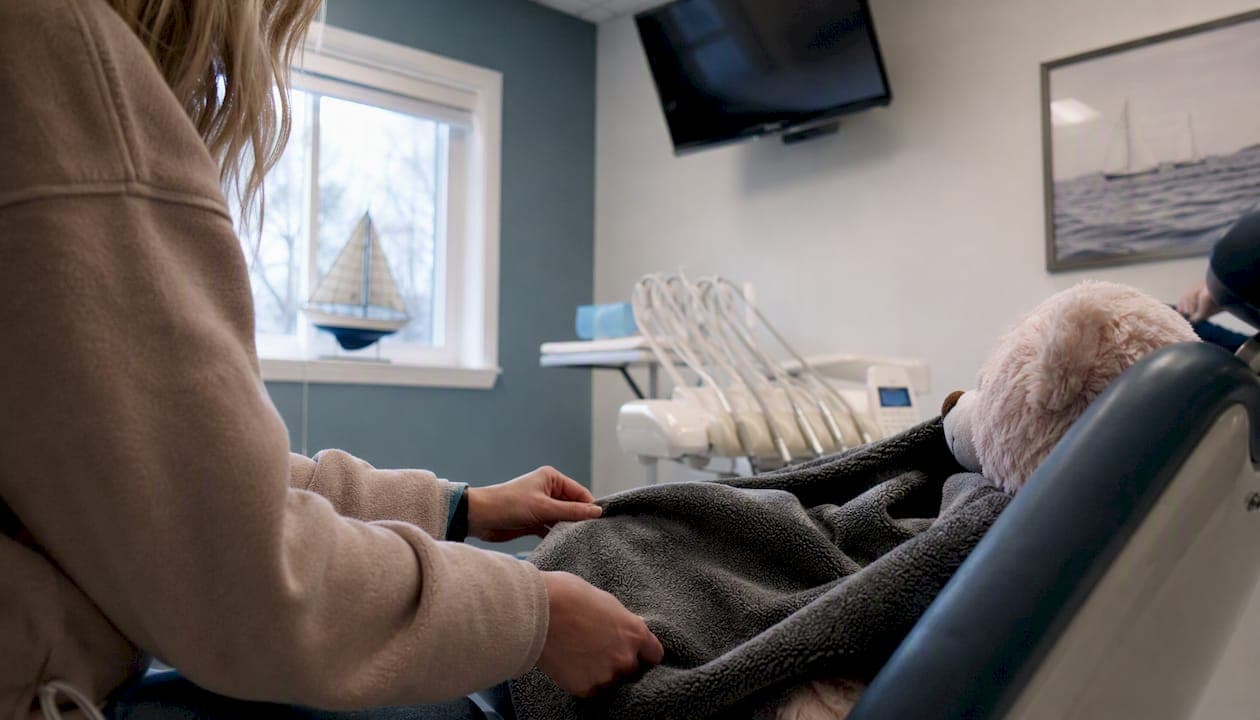
Schedule your child's first dental visit by their first birthday, or within six months of their first tooth coming in, whichever comes first. That's the recommendation from both the American Academy of Pediatric Dentistry (AAPD) and the American Academy of Pediatrics (AAP). Most first visits run about 30–45 minutes and feel more like a meet-and-greet than a clinical procedure. Before you go, two quick things to handle:
- Book the appointment (call or go online — many practices let you schedule same-day)
- Gather your insurance card and any new-patient forms the office sends in advance
Quick fact: The ADA's MouthHealthy guidance confirms the first visit focuses on comfort and a basic exam, not routine X-rays.
Key takeaways
The single most important action: schedule your child's first dental visit by their first birthday, or within six months of the first tooth, whichever comes first.
| Point | Details |
|---|---|
| Recommended timing | Schedule by age 1 or within 6 months of the first tooth, per AAPD and AAP guidelines. |
| What to expect | A 30–45 minute visit covering a gentle exam, oral tissue check, and parent guidance — no routine X-rays. |
| How to prepare | Bring insurance, completed forms, and a comfort item; book during your child's best time of day. |
| Follow-up cadence | Most children return every 6 months; high-risk children may be seen every 3 months. |
| Starboarddental | Offers pediatric-friendly first exams with same-day scheduling and online new-patient forms. |
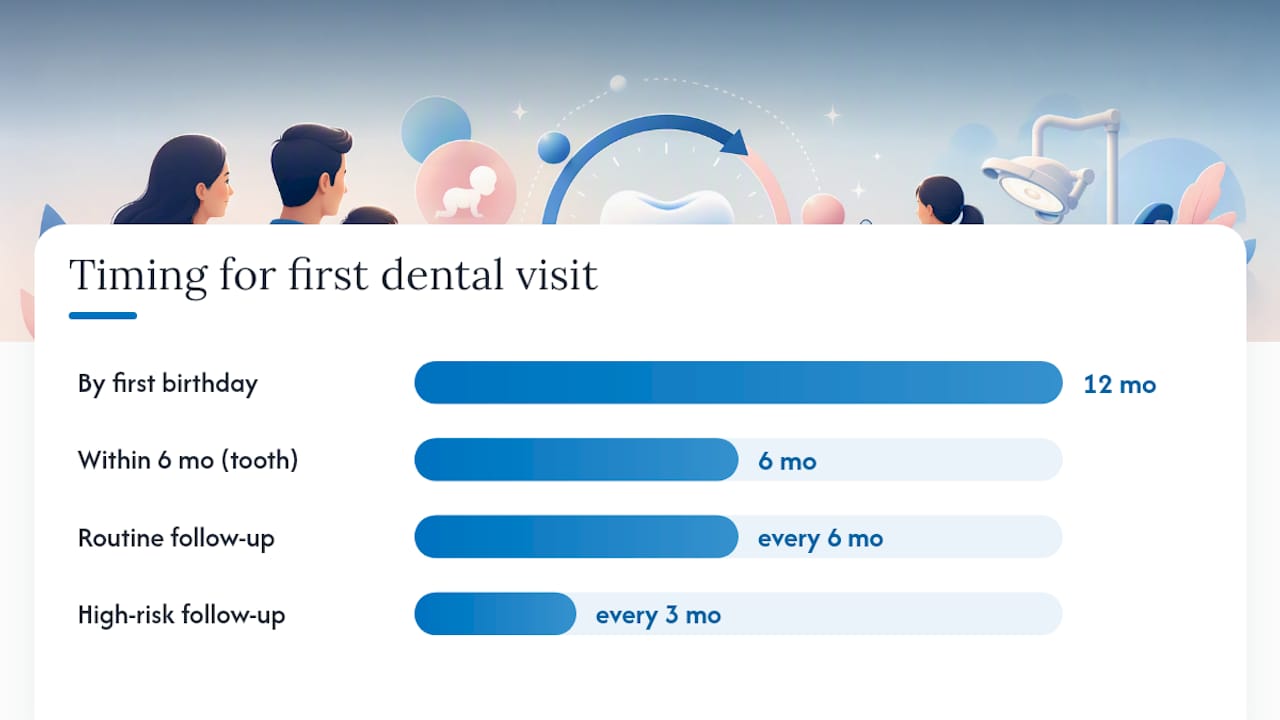
Table of Contents
- Why the first dental visit age matters more than most parents realize
- What actually happens at that first appointment
- How to prepare your child (and yourself) before the appointment
- When to schedule earlier, and what to do if your child is already 2 or 3
- What comes after the first visit: the preventive plan
- How your pediatrician fits into the picture
- How Starboard Dental approaches first visits
- Ready to book your child's first visit at Starboard Dental?
- Frequently asked questions
- Sources
Why the first dental visit age matters more than most parents realize
The timing isn't arbitrary. The AAPD defines a "dental home" as an ongoing relationship between a dentist and a child established by around the child's first birthday. Getting that relationship started early means your child's dentist can give you anticipatory guidance — specific advice about feeding habits, bottle use, pacifiers, and how to clean those first tiny teeth before problems develop.
Early childhood caries (tooth decay in babies and toddlers) is the most common chronic disease in children. It progresses faster in primary teeth than in adult teeth, and untreated decay can affect eating, speech development, and even the alignment of permanent teeth. A first visit at the right age catches early warning signs before they become fillings or extractions.
Pro Tip: Frame the first dental appointment as a milestone, the same way you'd talk about a first haircut. "We're going to meet the tooth doctor!" lands very differently than "We have to go to the dentist." Children pick up on your framing immediately.
Early guidance pays off: AAPD clinical guidance shows that anticipatory guidance delivered during early dental visits significantly reduces the need for advanced treatment later, lowering both cost and complexity for families.
What actually happens at that first appointment
The visit is short and gentle. Most infants are examined while sitting on a parent's lap in what's called a "lap exam" — the child faces the parent, then leans back so the dentist can look inside their mouth, a common practice in pediatric-friendly clinics. It sounds awkward; it works beautifully. The ADA describes this positioning as standard practice in pediatric-friendly clinics because it keeps the child close to you while giving the dentist a clear view.
Here's what the dentist will typically cover:
- Tooth and gum exam: Check existing teeth for early decay, spots, or unusual spacing
- Oral tissue check: Look at the tongue, cheeks, and palate for normal development
- Bite and jaw assessment: Confirm the jaw is developing on track
- Gentle cleaning: If teeth are present and the child tolerates it
- Fluoride varnish: May be applied at this visit as a preventive measure
- Parent Q&A: Diet, bottle habits, pacifier use, and home brushing technique
Routine X-rays are generally not done at this age unless there's a specific clinical reason, such as suspected decay between teeth or an injury. Stanford Children's Health confirms this approach: the first visit prioritizes comfort and exam over imaging.
Visit length: Stanford Children's Health puts the typical first visit at 30–45 minutes — short enough that even a restless toddler can manage it.
How to prepare your child (and yourself) before the appointment
Administrative prep is the easiest part. Request new-patient forms ahead of time and fill them out at home — rushing through paperwork at the front desk with a squirmy baby in your arms is avoidable. Bring your insurance card, a list of any medications your child takes, and a note of any medical history the dentist should know about.
What to bring:
- Insurance card and photo ID
- Completed new-patient forms (download from the practice's website when available)
- Your child's favorite comfort item (a stuffed animal, a small toy)
- A list of current medications or known allergies
Behavioral prep matters just as much. In the week before the appointment, practice opening wide in front of a mirror and make it silly. Read a picture book about going to the dentist, or watch a short, age-appropriate video. The goal is familiarity, not perfection. Schedule the appointment during a time your child is typically well-rested and fed — a tired, hungry toddler and a dental chair are not a good combination.
Pro Tip: Your anxiety is contagious. If you tense up in the waiting room, your child will notice. Dentists who work with young children are trained for this exact situation — trust the process, keep your voice light, and let the clinician lead.
When to schedule earlier, and what to do if your child is already 2 or 3
If your child is already past their first birthday and hasn't seen a dentist yet, schedule now. A 2- or 3-year-old can absolutely have a routine checkup, and the visit looks very similar to the infant version. From that point, Cleveland Clinic guidance recommends follow-ups every six months to build comfort and monitor development.
Some situations call for an earlier visit regardless of age:
- Pain or sensitivity in any tooth or area of the mouth
- Trauma — a fall, a knocked tooth, or a chip
- White or brown spots on teeth (early signs of decay)
- Developmental concerns about jaw growth, bite, or tooth eruption timing
- Family history of early childhood caries or enamel defects
Children with certain medical conditions — including heart conditions, bleeding disorders, or immune-suppressing treatments — may need more frequent dental visits or special coordination before any procedure. For families navigating complex medical needs, resources like this guide for pediatric caregivers with complex medical needs offer useful frameworks for coordinating care across providers.
What comes after the first visit: the preventive plan
The first visit is the start of a schedule, not a one-time event. Most children follow a recall cadence of every six months, though a dentist may adjust that based on cavity risk. A child with a high-sugar diet, limited fluoride exposure, or a history of early decay might be seen every three to four months. A low-risk child with good home habits might go annually after age 3.
Home care by age:
- Under 3: Use a smear of fluoride toothpaste (about the size of a grain of rice), twice daily
- Ages 3–6: Use a pea-sized amount of fluoride toothpaste, twice daily
- All ages: Limit juice and sugary drinks; avoid putting a child to bed with a bottle of milk or juice
Fluoride varnish, applied at the dental office, is one of the most effective preventive tools available for young children. The dentist may apply it at the first visit and at subsequent checkups depending on your child's risk level. Pair that with consistent children's dental care best practices at home and you've covered the two biggest levers in early cavity prevention.
Prevention works: AAPD guidance consistently links early preventive care and anticipatory guidance to lower rates of advanced treatment in later childhood.
How your pediatrician fits into the picture
Your child's pediatrician is not a substitute for a dentist, but they play a real role in early oral health. The AAP recommends that pediatricians begin oral health screening and can apply fluoride varnish starting around 6 months of age, particularly when dental access is limited or delayed.
At well-child visits, your pediatrician will typically:
- Screen for early signs of tooth decay
- Ask about feeding habits and bottle use
- Apply fluoride varnish if your area's water isn't fluoridated and a dentist isn't yet in the picture
- Refer you to a dental home once the child is approaching 12 months
If you're waiting on a dental appointment, ask your pediatrician about fluoride varnish at the next well-child visit. It's a practical stopgap, not a replacement. The dental home is still the goal.
How Starboard Dental approaches first visits
At Starboarddental, first visits for young children are built around one priority: making the experience feel safe. The exam room setup includes ceiling-mounted TVs to keep little ones distracted, and the team keeps comfort items on hand for children who need something familiar nearby. Lap exams are standard for infants and toddlers — the child stays close to you the whole time.
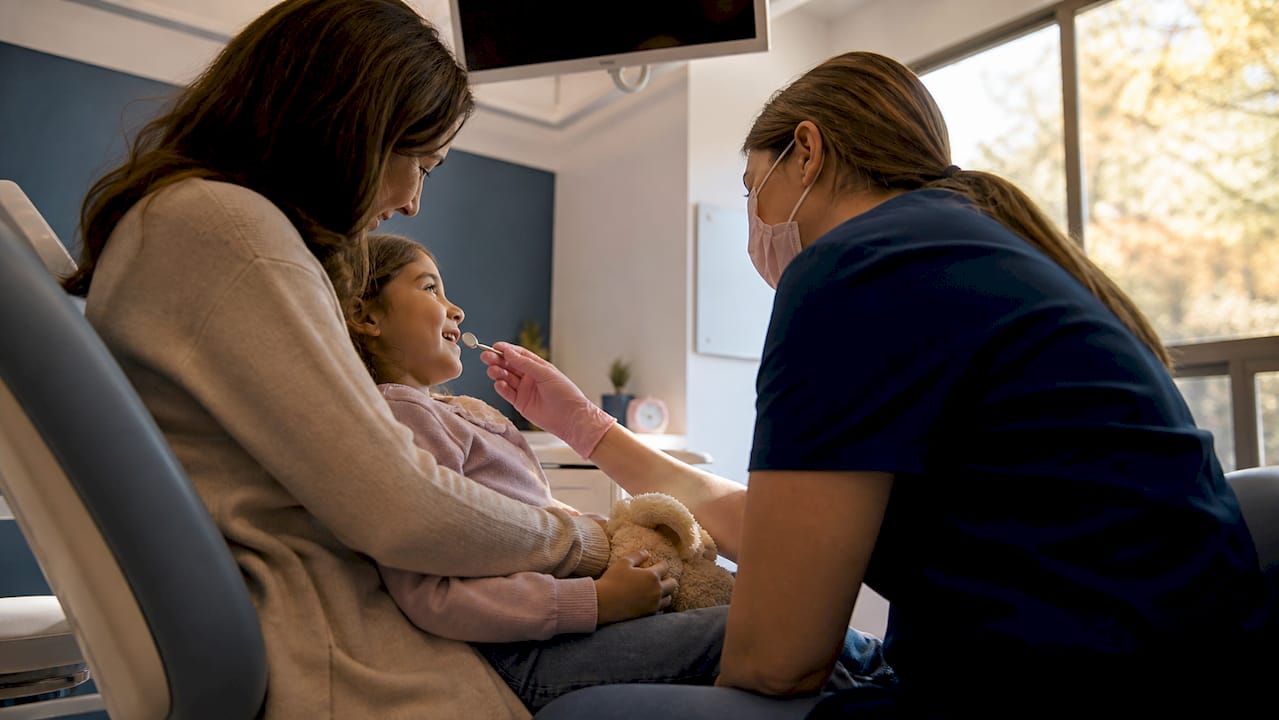
The appointment flow is intentionally short and low-pressure. The clinician leads with conversation, not instruments, giving your child time to look around and settle before anything happens. Staff at Starboarddental are experienced working with young children and understand that a calm first visit is the foundation for every visit that follows. For families with children who have special needs or heightened anxiety, atraumatic care approaches used in pediatric settings translate directly into how the team adjusts the pace and environment.
Same-day scheduling is available for urgent concerns, and pediatric dentistry guidance is something the practice takes seriously at every age.
Ready to book your child's first visit at Starboard Dental?
Starboarddental makes the first visit straightforward for families. New-patient forms are available online so you can complete them before you arrive, and the team accommodates family appointments when parents need to bring siblings along.

The practice offers general dentistry services for patients of all ages, including pediatric-friendly first exams, routine checkups and cleanings, and same-day scheduling for urgent situations. If your child is approaching their first birthday or you've been putting this off, now is the right time. Visit the new patients page to download forms and request an appointment.
Frequently asked questions
What is the right age for a child's first dental visit? By the first birthday, or within six months of the first tooth erupting — whichever comes first. Both the AAPD and AAP align on this timing.
What if my child is already 2 or 3 and hasn't been to the dentist? Schedule now. The visit will look similar to an infant exam, and from that point the dentist will set a recall schedule, typically every six months.
Will the dentist take X-rays at the first visit? Routine X-rays are not standard at a first visit for young children. They're only done if there's a specific clinical concern, such as suspected decay or an injury.
How long does the first dental visit take? About 30–45 minutes for most children, covering check-in, a parent interview, the exam, and any preventive treatment like fluoride varnish.
Can my pediatrician handle my child's dental care? Pediatricians can screen for oral health issues and apply fluoride varnish, but they are not a substitute for a dental home. Establishing care with a dentist by age 1 remains the priority.
Sources
- Clinical Affairs: Guideline on Perinatal and Infant Oral Health Care (AAPD)
- A Child's First Dental Visit Fact Sheet - Stanford Children's Health
- My Child’s First Dental Visit: What To Expect — Cleveland Clinic