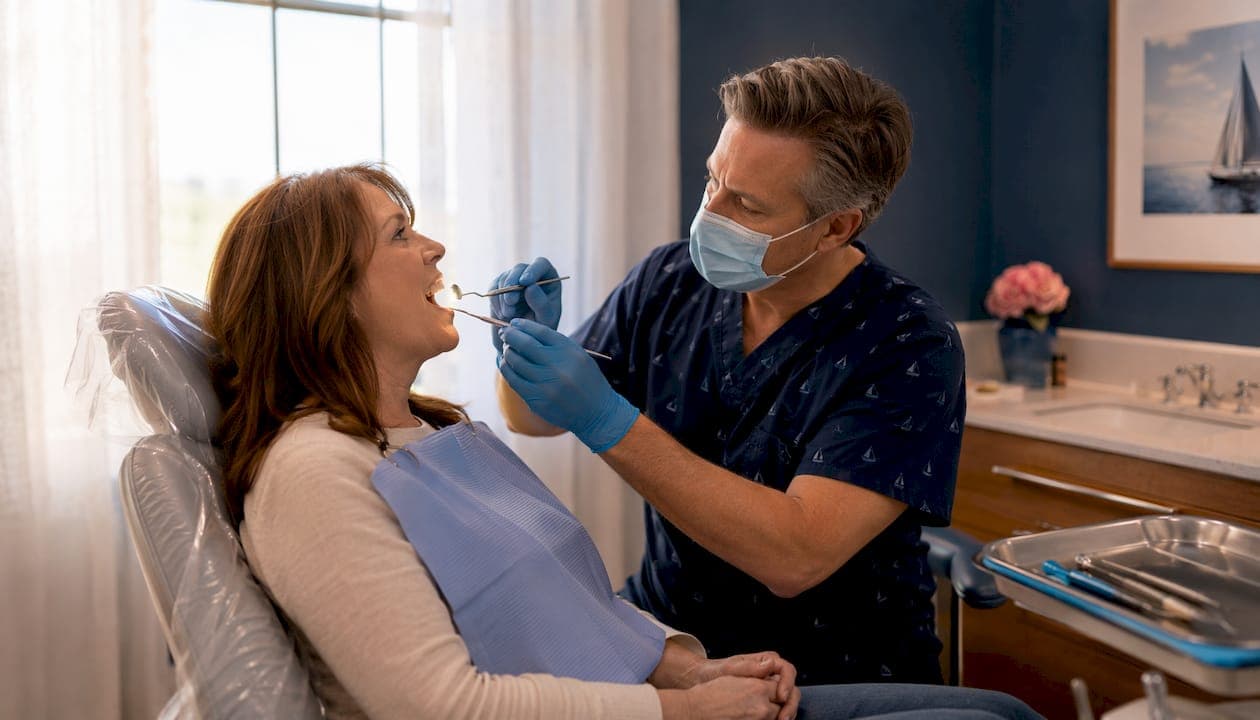
What new patients can expect from routine dental care
Starting with a new dentist means more than just getting your teeth cleaned. Your first visit covers a range of common dental procedures for new patients, from a full oral exam and diagnostic imaging to preventive treatments and, when needed, restorative work. Here is a quick look at what that typically includes:
- Comprehensive oral exam: Visual inspection of teeth, gums, bite, and soft tissue
- Medical and dental history review: Medications, past treatments, allergies, and concerns
- Diagnostic X-rays: Bitewing and panoramic images to detect hidden decay or bone changes
- Oral cancer screening: Painless soft tissue check of tongue, cheeks, lips, and throat
- Professional teeth cleaning: Scaling, polishing, and plaque removal
- Periodontal (gum) screening: Pocket depth measurements around each tooth
- Fillings and crowns: Restorative work for cavities or damaged teeth
- Root canals and extractions: Advanced care for infection or severely compromised teeth
- Cosmetic options: Veneers, bonding, and orthodontic consultations
- Dentures and prosthetics: Replacement solutions for missing teeth
- Fluoride treatments and sealants: Preventive protection, especially for children
- Patient education: Personalized guidance on home care and future treatment planning
These procedures form the foundation of a new patient dental visit and allow your dentist to build a clear picture of your oral health before recommending any treatment.
Table of Contents
- 1. What happens during teeth cleanings and routine exams
- 2. Fillings and crowns restore damaged teeth
- 3. Root canals and extractions: when a tooth needs advanced care
- 4. Cosmetic and orthodontic options: veneers, braces, and bonding
- 5. Dentures and prosthetics for replacing missing teeth
- 6. How to prepare for your first dental appointment in the United States
- 7. Fluoride treatments and sealants protect teeth before problems start
- 8. Periodontal (gum) disease treatment starts with early detection
- 9. Emergency dental procedures: what counts and what to do
- 10. Patient education and preventive advice that actually sticks
- Key Takeaways
- Starboarddental makes your first dental visit straightforward
1. What happens during teeth cleanings and routine exams
A routine dental checkup is the backbone of preventive care, and for new patients, it goes deeper than a standard recall visit. A comprehensive new patient exam typically lasts about 60–90 minutes and covers medical history, a full oral exam, diagnostic imaging, and oral cancer screening.
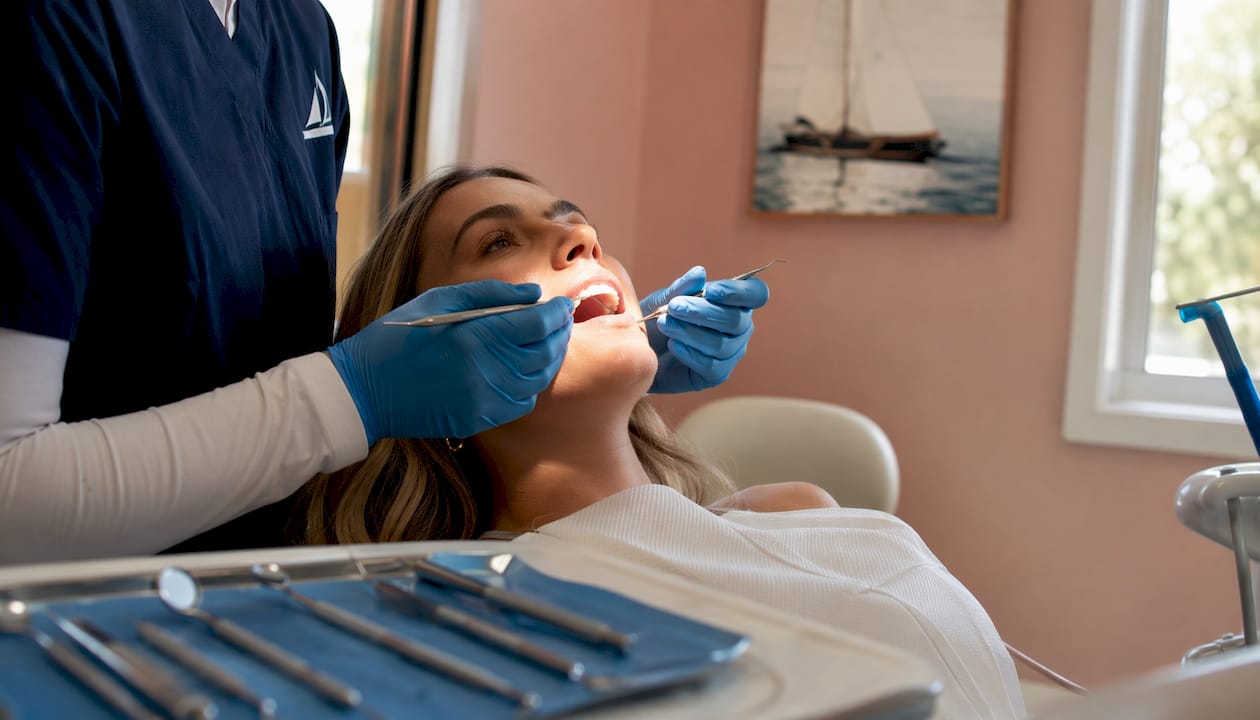
Medical history review comes first. Your dentist or hygienist will ask about current medications, past dental work, allergies, and any conditions like diabetes or heart disease that affect oral health. This step shapes every clinical decision that follows.
The oral exam itself covers teeth, gums, bite alignment, and jaw function. Your dentist checks for cavities, worn fillings, gum recession, and signs of grinding. Gum measurements, where a small probe checks the space between the gum and each tooth, may feel like gentle pressure but are not painful.
Oral cancer screening is a standard part of the exam. The dentist inspects the tongue, cheeks, gums, lips, roof and floor of the mouth, and throat. It takes about two minutes and requires no special preparation.
Teeth cleaning follows the exam. A hygienist removes plaque and tartar buildup, then polishes the teeth. Whether your cleaning happens at the first visit depends on what the exam reveals. If your gums need a different level of periodontal care, the cleaning may be scheduled separately.
- Tell your dentist about any sensitivity, past trauma, or anxiety before the exam begins
- Ask for a brief explanation of each step if unfamiliar sensations make you uncomfortable
- Bring a list of current medications, including supplements
Pro Tip: If you have a strong gag reflex or dental anxiety, say so at the start. Small adjustments like repositioning, shorter breaks, or a slower pace can make the entire visit more manageable.
2. Fillings and crowns restore damaged teeth
Cavities are among the most common findings at a first dental visit, and fillings are the standard fix. The dentist removes decayed material, cleans the cavity, and fills the space with a restorative material. Composite resin, which matches tooth color, is the most widely used option today. The procedure is straightforward and usually completed in a single appointment.
Crowns come into play when a tooth is too damaged for a filling to hold. Think of a crown as a cap that fits over the entire visible portion of the tooth, restoring its shape, strength, and appearance. Common reasons for a crown include a large cavity, a cracked tooth, a tooth that has had a root canal, or an existing filling that has failed.
When a filling is enough vs. when a crown is needed:
- Small to moderate cavities: composite or amalgam filling
- Large cavities that compromise tooth structure: crown
- Cracked or fractured teeth: crown
- Teeth with existing large fillings that are breaking down: crown
- Teeth following root canal treatment: usually a crown
Crown placement involves two main stages. At the first appointment, the dentist prepares the tooth by reshaping it, takes an impression or digital scan, and places a temporary crown. The permanent crown, fabricated from porcelain, ceramic, or metal, is cemented at a follow-up visit. With proper care, a well-placed crown can last 10–15 years.
3. Root canals and extractions: when a tooth needs advanced care
Root canal therapy has a reputation that far outpaces its actual discomfort. The procedure removes infected or inflamed pulp from inside the tooth, cleans and shapes the root canals, and seals the space to prevent reinfection. The goal is to save the tooth rather than remove it.
Symptoms that often lead to a root canal recommendation include persistent toothache, sensitivity to heat or cold that lingers, swelling near the tooth, or a visible abscess. Sometimes there are no symptoms at all, and the issue only shows up on an X-ray. Cleveland Clinic's overview of root canal treatment notes that the procedure itself is performed under local anesthesia and is generally no more uncomfortable than getting a filling.
What to expect during and after a root canal:
- Local anesthesia numbs the area before any work begins
- The dentist accesses the pulp chamber through the top of the tooth
- Infected tissue is removed and canals are cleaned and shaped
- The tooth is sealed, often with a temporary filling first
- A crown is typically placed afterward to protect the tooth
Extractions are the alternative when a tooth cannot be saved. Simple extractions involve a tooth that is visible above the gum line and can be removed with forceps. Surgical extractions, used for impacted teeth or broken roots, require a small incision. Post-extraction care matters: follow your dentist's instructions on gauze, diet, and activity to support healing and avoid dry socket.
4. Cosmetic and orthodontic options: veneers, braces, and bonding
Cosmetic dentistry is not just about appearance. Correcting alignment, repairing chips, and improving the look of teeth often supports better oral hygiene and long-term function. Many new patients ask about these options at their first visit, even if treatment comes later.
Dental veneers are thin shells of porcelain or composite resin bonded to the front surface of teeth. They address discoloration, chips, minor gaps, and uneven shapes. Porcelain veneers are durable and stain-resistant; composite veneers cost less but may need replacement sooner. Candidates need healthy underlying teeth and gums before placement. You can learn more about cosmetic dentistry options to see what fits your goals.
Orthodontic treatment corrects crowding, spacing, and bite issues. Traditional braces use metal brackets and wires adjusted over time. Invisalign uses a series of clear, removable aligners changed every one to two weeks. Both approaches move teeth gradually; the right choice depends on the complexity of the case, lifestyle preferences, and cost.
Dental bonding is one of the most accessible cosmetic treatments. A tooth-colored composite resin is applied directly to the tooth, shaped, and hardened with a curing light. It repairs chips, closes small gaps, and covers staining. Dental bonding is typically completed in one visit and requires no anesthesia for minor work.
- Veneers: best for multiple cosmetic concerns on front teeth
- Braces or Invisalign: needed when alignment or bite correction is the primary goal
- Bonding: ideal for isolated chips or minor imperfections with minimal prep
5. Dentures and prosthetics for replacing missing teeth
Missing teeth affect more than your smile. They change how you chew, how you speak, and over time, how your jawbone maintains its density. Dentures are one of the most established solutions for tooth replacement, and they remain a practical option for many patients.
Full dentures replace an entire arch of teeth and rest on the gum tissue. Partial dentures fill gaps when some natural teeth remain, using clasps to anchor to adjacent teeth. Both types require an adjustment period. Fit, bite, and comfort are refined over several follow-up appointments.
The fitting process starts with impressions of your mouth, followed by a series of try-in appointments where the dentist checks fit and bite before the final prosthetic is fabricated. Expect some soreness and adjustment in the first weeks as your mouth adapts.
For patients who want a more stable solution, dental implants serve as anchors for fixed or removable prosthetics. Implants integrate with the jawbone and prevent the bone loss that often follows tooth removal. A dental bridge is another option, anchoring an artificial tooth to the natural teeth on either side of the gap.
6. How to prepare for your first dental appointment in the United States
Preparation makes a real difference in how smoothly a first visit goes. Arriving organized means your dentist spends less time gathering information and more time actually evaluating your oral health.
Bring these items to your appointment:
- Valid photo ID
- Dental insurance card, if you have coverage
- A complete list of current medications and dosages
- Any recent dental X-rays or records from a previous dentist
- A written list of concerns or symptoms you want to discuss
Sharing prior X-rays can prevent duplicate imaging and give your new dentist a baseline for comparison. If records are not available, digital X-rays taken at the first visit will establish that baseline.
The first visit typically lasts 60–90 minutes and includes history review, a full exam, imaging, and sometimes a cleaning. You should leave with a clear understanding of your current oral health status and any recommended next steps.
Be honest about your dental history. If you have had a bad experience, difficulty getting numb, jaw pain, or significant anxiety, say so at the start. Care can be adapted with sedation options, shorter staged visits, or environmental changes like quieter rooms or dimmer lighting. Knowing what to expect before dental surgery or any procedure helps reduce uncertainty and makes the visit feel less intimidating.
Pro Tip: Write down your questions before the appointment. Patients who arrive with a short list of concerns get more complete answers and leave with a clearer treatment plan.
7. Fluoride treatments and sealants protect teeth before problems start
Fluoride and sealants are two of the most cost-effective tools in preventive dentistry, and both are commonly offered during new patient visits, particularly for children and teenagers.
Fluoride treatment involves applying a concentrated fluoride gel, foam, or varnish directly to the teeth. Fluoride strengthens enamel and makes teeth more resistant to acid attacks from bacteria and sugary foods. The application takes just a few minutes and is painless. Adults at higher risk for cavities, including those with dry mouth, gum recession, or a history of frequent decay, also benefit from professional fluoride applications.
Dental sealants are thin plastic coatings applied to the chewing surfaces of back teeth, where the deep grooves are hardest to clean. The CDC notes that sealants protect against cavities in the grooves of molars and premolars. The application is quick: the tooth is cleaned, a bonding agent is applied, and the sealant is painted on and hardened with a curing light. No drilling is involved.
Both treatments are especially recommended for children, but adults with deep grooves or elevated decay risk are good candidates too. Ask your dentist at your first visit whether either is appropriate for you.
8. Periodontal (gum) disease treatment starts with early detection
Gum disease is more common than most new patients expect, and it ranges from mild inflammation to serious infection that affects the bone supporting the teeth. The good news is that early-stage gum disease, called gingivitis, is reversible with professional cleaning and improved home care.
A full-mouth periodontal screening is a standard part of the new patient exam. The hygienist uses a small probe to measure the pocket depth around each tooth at multiple points to assess gum health and detect signs of disease.
When gum disease is present, a standard cleaning is not enough. Scaling and root planing, sometimes called a deep cleaning, removes tartar and bacteria from below the gum line and smooths the root surfaces to discourage bacterial reattachment. This procedure is typically done in quadrants, with local anesthesia, over one or two appointments. Periodontal care after scaling and root planing usually includes more frequent maintenance visits, often every 3–4 months instead of the standard six.
Untreated gum disease has been linked to systemic conditions including cardiovascular disease and diabetes complications, which is one reason dentists take even mild cases seriously.
9. Emergency dental procedures: what counts and what to do
Dental emergencies do not follow a schedule. Knowing what qualifies as an emergency, and what to do before you reach the dentist, can protect a tooth or prevent a minor problem from becoming a major one.
Common dental emergencies include:
- A knocked-out tooth (avulsed tooth): handle by the crown, rinse gently, and try to reinsert it or store it in milk; get to a dentist within 30–60 minutes
- A cracked or fractured tooth with pain or sharp edges
- Severe toothache that does not respond to over-the-counter pain relief
- A lost filling or crown that leaves the tooth sensitive or exposed
- Dental abscess: swelling, fever, or a visible pimple on the gum near a tooth root
- Soft tissue injuries: cuts or lacerations to the gums, tongue, or cheeks
Not every dental problem is a true emergency. A chipped tooth with no pain, a lost filling with no sensitivity, or mild gum soreness can usually wait for a scheduled appointment. When in doubt, call your dental office. Most practices, including those offering emergency dental care, can triage over the phone and advise whether you need to come in the same day.
10. Patient education and preventive advice that actually sticks
The most underrated part of a new patient visit is the conversation at the end. A good dentist does not just hand you a toothbrush and send you home. They explain what they found, why it matters, and what you can do about it before the next appointment.
Effective home care starts with technique, not just frequency. Brushing twice a day with a fluoride toothpaste and a soft-bristled brush covers the basics. Flossing once daily removes plaque from between teeth where a brush cannot reach. For patients with braces, bridges, or implants, tools like floss threaders, interdental brushes, or a Waterpik water flosser make the job easier.
Diet plays a bigger role than most patients realize. Frequent snacking on sugary or acidic foods keeps the mouth in an acidic state for longer, accelerating enamel erosion. Spacing out meals and rinsing with water after eating gives saliva time to neutralize acids naturally.
Routine dental check-ups every six months keep small problems from becoming expensive ones. High-risk patients, including those with a history of frequent cavities, gum disease, or certain medical conditions, may need visits every 3–4 months. Your dentist will tell you which schedule fits your situation.
Ask questions. If a recommended treatment is unclear, ask for a plain-language explanation. If cost is a concern, ask about phasing treatment over time. A dentist who takes the time to answer is one worth returning to.
Key Takeaways
New patient dental care covers far more than a cleaning: the first visit establishes a complete oral health baseline through exams, imaging, screening, and preventive and restorative treatment planning.
| Point | Details |
|---|---|
| First visit length | A comprehensive new patient exam typically lasts 60–90 minutes, covering history, imaging, and a full oral exam. |
| Exam frequency | Most patients need regular dental check-ups about twice a year; high-risk patients may need more frequent visits based on their individual risk factors. |
| Oral cancer screening | A painless soft tissue check is a standard part of every new patient exam, not an optional add-on. |
| Bring the right documents | Photo ID, insurance card, medication list, and prior X-rays make the first visit faster and more accurate. |
| Starboarddental | Starboarddental in Kennebunk offers same-day appointments, digital imaging, and a full range of general, restorative, and cosmetic services for new patients. |
Starboarddental makes your first dental visit straightforward

Walking into a new dental office for the first time is easier when you know the practice is built around your comfort, not just your chart. Starboarddental in Kennebunk offers new patients a genuinely different experience: ceiling-mounted TVs during procedures, personalized comfort items, and a team trained to work with patients who have dental anxiety or sensory sensitivities. Same-day appointments mean you are not waiting weeks to get care started.
The practice covers the full range of general dentistry services, from routine exams and cleanings to fillings, crowns, and periodontal treatment, alongside restorative dentistry and cosmetic options. Digital scanners replace messy impressions, and the clinical team takes time to explain findings and treatment options in plain language before any work begins.
If you are ready to establish care with a practice that treats the whole patient, not just the problem tooth, book your new patient appointment at starboarddental.com/new-patients.