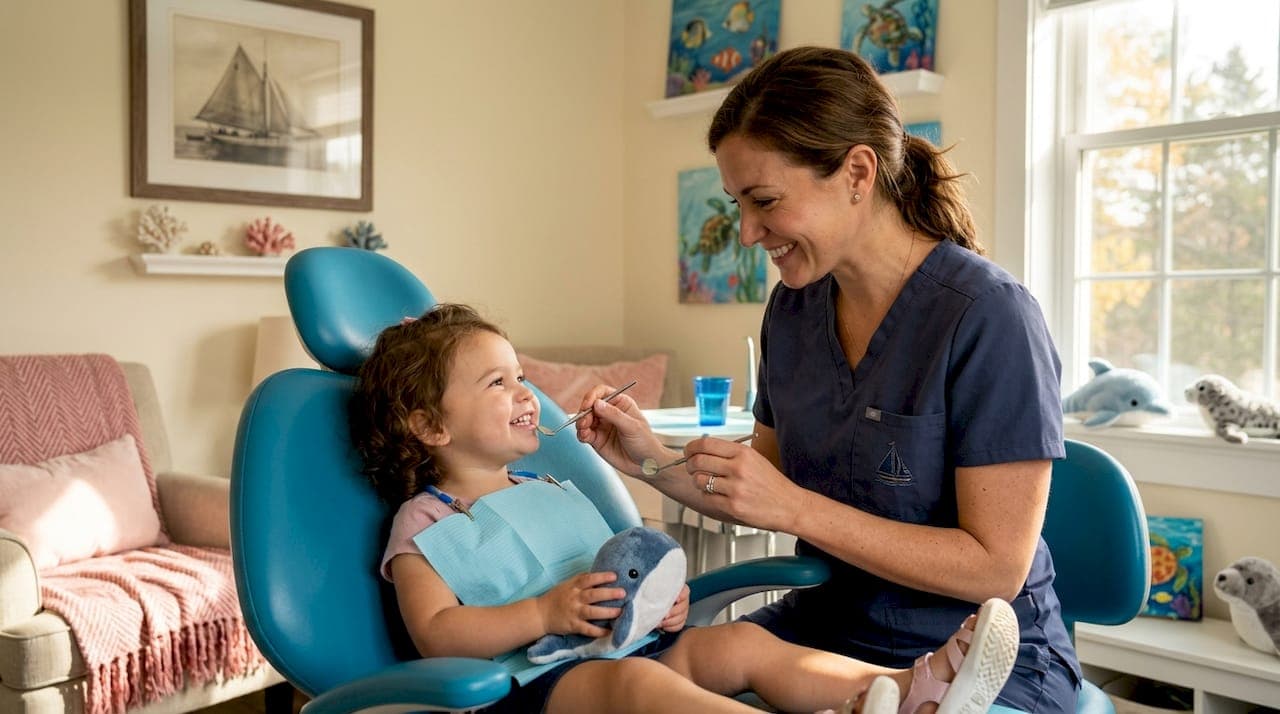
Pediatric dentistry is the dental specialty dedicated to caring for children's oral health from infancy through adolescence. The American Academy of Pediatric Dentistry (AAPD) and the American Academy of Pediatrics (AAP) both set the clinical standards that guide this field, covering everything from a baby's first tooth to a teenager's wisdom teeth. This article covers children's dental care in plain terms: when to schedule that first visit, which treatments actually matter, why baby teeth deserve serious attention, and how pediatric dentists differ from general dentists. Every section is written for parents who want clear answers, not clinical jargon.
What is pediatric dentistry, and why does it matter?
Pediatric dentistry is a recognized dental specialty focused on prevention, development monitoring, and child-friendly treatment. It covers patients from birth through age 18, and in some cases into young adulthood for patients with special healthcare needs. The AAPD defines it as a specialty that addresses the unique physical, psychological, and emotional needs of children at each stage of development.
Prevention is the core of the field. Pediatric dentists catch problems early, before a small cavity becomes a painful infection or a misaligned jaw becomes an orthodontic emergency. The specialty also puts significant weight on parent education, because what happens at home between visits determines most of a child's long-term oral health outcomes.
The importance of pediatric dentistry goes beyond clean teeth. Oral health connects directly to a child's ability to eat, speak clearly, sleep without pain, and concentrate in school. A child with untreated tooth decay faces real barriers to all four.

When should a child have their first dental visit?
The AAPD and AAP both recommend scheduling the first visit by age 1 or within six months of the first tooth erupting. That timeline surprises many parents who assume dental visits can wait until a child has a full set of teeth. The reasoning is straightforward: decay can begin as soon as a tooth appears.
The first visit is less about drilling and more about education. The initial appointment focuses on diet guidance, hygiene instruction, and a basic risk assessment rather than complex procedures. The dentist checks for early signs of decay, evaluates jaw development, and answers parent questions about teething, thumb-sucking, and pacifier use.
This first appointment also establishes what the AAPD calls a "dental home." A dental home is an ongoing relationship between a dentist, a child, and the family. It means the child sees the same practice consistently, which builds familiarity and reduces anxiety over time.
Here is what parents can expect at a first visit:
- A gentle exam of the teeth, gums, jaw, and bite
- A conversation about feeding habits, including bottle use at bedtime
- Guidance on brushing technique appropriate for the child's age
- A fluoride varnish application if the dentist recommends it
- A plan for follow-up visits, typically every six months
Pro Tip: Bring a list of questions to the first appointment. Topics worth asking about include teething pain, fluoride in your local water supply, and whether your child's bite looks normal for their age.
What are common pediatric dental treatments and preventive care?
Preventive care forms the foundation of children's dental health. Most of what a pediatric dentist does at routine visits falls into a small set of well-established procedures.
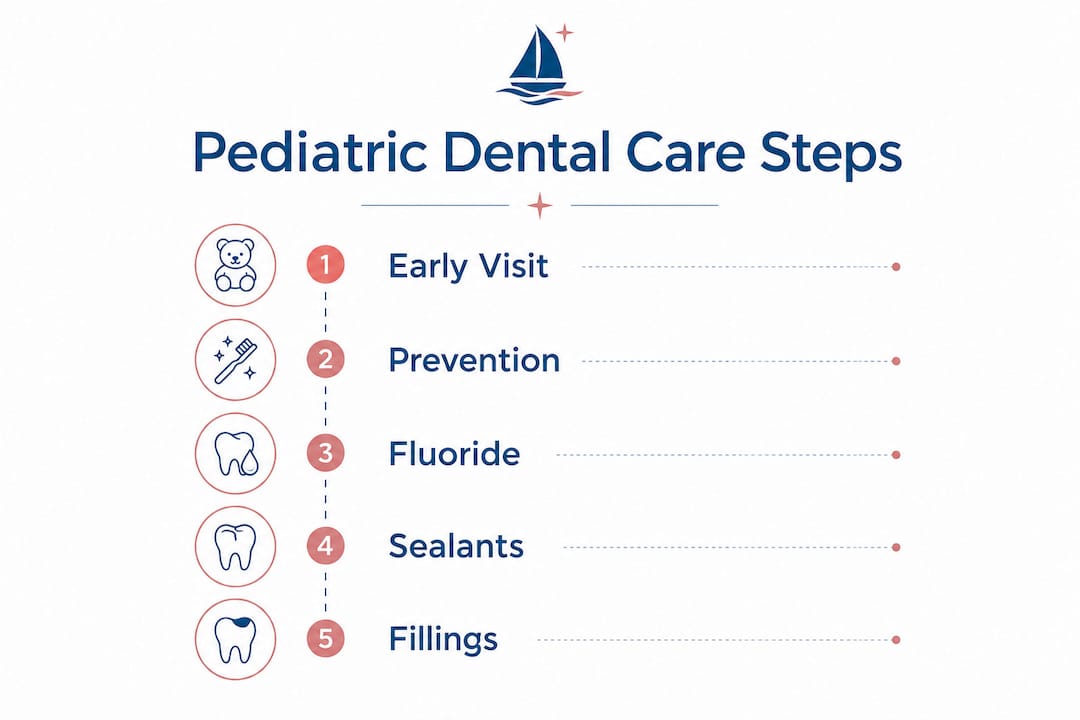
Fluoride varnish and toothpaste dosing
Fluoride varnish is applied every six months until age 5, and high-risk children may need it every three months. The treatment takes about two minutes, causes no discomfort, and is broadly covered by insurance. It works by depositing a concentrated fluoride layer directly onto enamel, which slows the process of decay between visits.
At home, fluoride toothpaste dosing depends on age. Children aged 3 and older should use a pea-sized amount twice daily. Children under 3 need only a rice-grain-sized amount, always with adult supervision. Getting the dose right matters because too little provides no protection, and too much over time can affect how permanent teeth develop.
Sealants, fillings, and crowns
Dental sealants are thin plastic coatings applied to the chewing surfaces of back teeth. They fill in the grooves where food and bacteria collect, reducing the risk of cavities in those hard-to-brush areas. Sealants are most effective when placed shortly after the permanent molars erupt, typically around ages 6 and 12.
When decay does occur, dental fillings restore the tooth and stop the cavity from spreading. For more extensive decay, especially in baby molars, a dental crown may be the better option. Crowns cover the entire tooth and protect it until it naturally falls out, preserving chewing function in the meantime.
Silver diamine fluoride
Silver diamine fluoride (SDF) is a minimally invasive option that arrests cavities without drilling or anesthesia. It is applied as a liquid directly to the decayed area. SDF is especially useful for young children with dental anxiety or limited ability to cooperate during procedures. It does stain the treated area dark, but for many families, avoiding a traumatic drilling experience is worth that tradeoff.
| Treatment | Purpose | Typical age range |
|---|---|---|
| Fluoride varnish | Prevents decay, strengthens enamel | Birth–5 years |
| Sealants | Blocks cavities in molar grooves | 6–12 years |
| Fillings | Restores decayed tooth structure | Any age |
| Crowns | Protects severely decayed baby teeth | 2–10 years |
| Silver diamine fluoride | Arrests decay without drilling | Any age, especially anxious children |
Pro Tip: Ask your child's dentist about SDF if your child has a cavity but struggles to sit still for traditional treatment. It is a legitimate clinical option, not a shortcut.
How does pediatric dentistry differ from general dentistry?
The most important difference is training. Pediatric dentists complete 2–3 years of additional residency training after dental school, focused specifically on child psychology, behavior management, and complex pediatric cases. A general dentist receives no such specialized training as part of their core curriculum.
That extra training shows up in how pediatric dentists handle the chair. They use techniques specifically designed for children, not scaled-down versions of adult approaches. Behavior management methods like tell-show-do, positive reinforcement, and voice control build trust and reduce anxiety in young patients. Tell-show-do means the dentist explains what they will do, demonstrates it on a model or the child's hand, then performs the procedure. It removes the element of surprise, which is the biggest driver of fear in children.
Pediatric dentists also design their offices differently. Child-sized chairs, colorful walls, ceiling-mounted TVs, and distraction tools are standard features in a well-run pediatric practice. These details are not decorative. They are clinical tools that reduce stress and make treatment possible for children who would otherwise be unmanageable.
The "whole child" approach is another defining feature. Pediatric dentists consider a child's emotional state, developmental stage, and medical history alongside the clinical findings. A six-year-old with autism requires a completely different approach than a healthy six-year-old with no anxiety. Pediatric residency training prepares dentists for that full range.
Key differences at a glance:
- Training: 2–3 additional years of residency focused on children
- Behavior management: Structured techniques like tell-show-do and positive reinforcement
- Office environment: Designed to reduce fear and build comfort
- Patient scope: Infants through adolescents, including special-needs patients
- Developmental focus: Monitors jaw growth, bite development, and eruption patterns
Why are baby teeth so important?
Baby teeth are not placeholders. They are critical for speech development, nutrition, and maintaining space for permanent teeth. A child who loses a baby molar too early due to decay can experience shifting of neighboring teeth, which blocks the permanent tooth from erupting in the correct position.
Untreated decay in baby teeth also carries real health risks. Dental infections can spread to surrounding tissue and, in rare cases, to the jaw or neck. Pain from an infected tooth disrupts sleep, eating, and concentration at school. These are not minor inconveniences. They are measurable impacts on a child's daily life.
Space maintainers are the clinical solution when a baby tooth is lost prematurely. A space maintainer is a small appliance, either fixed or removable, that holds the gap open until the permanent tooth is ready to erupt. Without it, the neighboring teeth drift into the space and create crowding that often requires orthodontic treatment later.
The practical takeaway for parents is simple. Treating a cavity in a baby tooth is worth it, even if that tooth will eventually fall out. The cost of a filling now is far lower than the cost of orthodontic correction or an emergency extraction later.
Key Takeaways
Pediatric dentistry protects children's oral health through prevention, early intervention, and child-centered care that starts at the first tooth and continues through adolescence.
| Point | Details |
|---|---|
| First visit timing | Schedule by age 1 or within six months of the first tooth erupting. |
| Fluoride is foundational | Varnish every six months and correct toothpaste dosing prevent the majority of early cavities. |
| Baby teeth matter | Early loss causes shifting, crowding, and future orthodontic problems. |
| Specialized training counts | Pediatric dentists complete 2–3 extra years of training in child behavior and development. |
| SDF is a real option | Silver diamine fluoride arrests cavities without drilling, ideal for anxious or young children. |
What I have learned from watching parents navigate pediatric dental care
Parents consistently underestimate how much the first dental visit sets the tone for everything that follows. A child who has a calm, positive first experience at age one is far more likely to cooperate at age five, and far less likely to avoid the dentist as an adult. That first appointment is not just a checkup. It is the foundation of a lifelong habit.
The behavior management piece surprises most parents when they see it in action. Tell-show-do sounds almost too simple to work. But watching a dentist use it with a three-year-old who walked in terrified and walked out calm is genuinely impressive. The technique works because it respects the child's need to understand what is happening. Fear of the unknown drives most dental anxiety, in children and adults alike.
The other thing I have seen parents get wrong is dismissing baby teeth as temporary. The phrase "they'll fall out anyway" is the most expensive sentence in pediatric dentistry. A child who loses a molar at age four because of untreated decay may need orthodontic treatment for years starting at age ten. The connection is direct, and the cost is real.
My honest advice: find a pediatric dentist before your child's first birthday, go to that appointment, and ask every question you have. The dentist's job at that visit is to educate you, not to perform procedures. Use that time well.
— Alex
Starboarddental's approach to children's dental health

Starboarddental in Kennebunk provides general dentistry services for patients of all ages, including children who need a welcoming, low-stress environment. The practice uses digital scanners for precision, ceiling-mounted TVs to keep young patients comfortable, and same-day appointments for families who need flexibility. The team focuses on prevention first, which aligns directly with what pediatric dental guidelines recommend. If your child needs a first visit, a routine cleaning, or a restorative treatment like a filling or crown, Starboarddental is equipped to handle it with care and expertise.
FAQ
When should my child first see a dentist?
The AAPD and AAP both recommend the first dental visit by age 1 or within six months of the first tooth appearing. Early visits establish a dental home and catch decay before it progresses.
Are baby teeth worth treating if they will fall out?
Baby teeth are worth treating because early loss causes neighboring teeth to shift, blocking permanent teeth and creating crowding that often requires orthodontic correction.
What is silver diamine fluoride?
Silver diamine fluoride is a liquid treatment that arrests cavities without drilling or anesthesia. It is a strong option for young or anxious children who cannot tolerate traditional fillings.
How often should my child get fluoride varnish?
Fluoride varnish is recommended every six months until age 5. Children at higher risk for cavities may need it every three months, as endorsed by AAP guidelines.
What makes a pediatric dentist different from a family dentist?
Pediatric dentists complete 2–3 additional years of residency training in child psychology, behavior management, and developmental dentistry. That training prepares them to treat children across a much wider range of needs than a general dentist typically encounters.