
Gum disease moves through recognized stages: gingivitis first, then periodontitis staged I through IV as bone loss deepens. Gingivitis is reversible with professional cleaning and better brushing habits. Once bone loss starts, treatment shifts to controlling the disease rather than undoing it. If your gums bleed when you brush or your teeth feel loose, see a dentist before the next stage sets in.
TL;DR:
- Gum disease progression beyond gingivitis involves significant bone loss, with stage III and IV causing loose teeth and potential tooth loss.
- Diagnosis relies on pocket depths of 4 millimeters or more and X-ray evidence of bone loss, often before symptoms like loose teeth or bleeding occur.
- Early stages can be reversed with professional cleaning and improved hygiene, but advanced stages require more invasive treatments such as surgery or grafts.
- Regular checkups and early detection through probing and X-rays are essential, especially since symptoms typically appear only after considerable damage.
- Quitting smoking and maintaining consistent oral hygiene significantly improve treatment outcomes and prevent disease progression.
Table of Contents
- The Stages of Gum Disease, Explained Clinically
- Warning Signs to Watch for at Every Stage
- How Dentists Diagnose and Stage Gum Disease
- Treatment Options Matched to Each Stage
- Preventing Gum Disease Before It Progresses
- What Happens if Gum Disease Goes Untreated
- How Starboarddental Approaches Early Detection
- The Gap Between How People Talk About Gum Disease and How It Actually Works
- Sources
- FAQ
The Stages of Gum Disease, Explained Clinically
Gingivitis is the only stage you can fully undo. It's inflammation of the gum tissue caused by plaque buildup along the gumline, and it hasn't touched the bone yet. Gums might look puffy or bleed a little when you floss, but a good cleaning and a stricter home routine can bring the tissue back to normal within a few weeks.
Left alone, gingivitis can progress into periodontitis, where the bacteria have started breaking down the bone that anchors your teeth. Clinicians grade that damage using a four stage system based on how much bone has been lost, defined in detail by the periodontal disease overview on NCBI's StatPearls:
- Stage I: Initial periodontitis, with limited bone loss.
- Stage II: Moderate periodontitis with increased bone involvement.
- Stage III: Severe periodontitis causing noticeable damage and potential tooth shifting.
- Stage IV: Advanced periodontitis with extensive bone loss, loose teeth, and risk of tooth loss.
Pockets form when inflamed gum tissue pulls away from the tooth, creating a gap where bacteria collect. Dentists measure that gap with a probe and confirm bone loss with X-rays, combining both to assign a stage. Someone in Stage I might feel nothing unusual, while someone in Stage III often notices their teeth look longer as gums recede or feels a tooth wiggle slightly when they bite down.
Warning Signs to Watch for at Every Stage
Gum disease has a habit of staying quiet until it isn't. Symptoms often show up gradually, and by the time they're obvious, meaningful bone loss may already have occurred.
Watch for these signs, roughly in the order they tend to appear:
- Gums that bleed when you brush or floss, even lightly
- Gums that look red, swollen, or feel tender to the touch
- Bad breath that doesn't go away with brushing or mouthwash
- Gums that appear to be pulling back, making teeth look longer
- Increased sensitivity to hot, cold, or sweet foods
- Teeth that feel loose or have shifted position
- A denture or partial that suddenly fits differently
According to Mayo Clinic, gum disease symptoms often become clinically noticeable when people reach their 30s or 40s, and men tend to develop it more often than women. Gingivitis in particular can cause almost no discomfort. That's exactly why routine checkups matter more than waiting for pain to show up.
How Dentists Diagnose and Stage Gum Disease
A periodontal exam isn't guesswork. Dentists use a specific sequence of tests to figure out exactly where your gums stand and how aggressive treatment needs to be.
- Periodontal probing. A thin, calibrated probe measures the depth of the pocket between your gum and tooth at several points around each tooth. Mayo Clinic notes that healthy pockets measure 1 to 3 millimeters. Pockets of 4 millimeters or more usually signal disease, and depths past 6 millimeters point toward more advanced periodontitis.
- X-rays. Radiographs reveal how much bone surrounds the roots, letting the dentist calculate the percentage of bone loss that determines the stage.
- Medical and lifestyle history. Diabetes, tobacco use, and certain medications all affect healing and disease progression, so dentists factor these in when building a treatment plan.
- Specialist referral when needed. Stage III or IV cases, or ones that don't respond to standard treatment, often get referred to a periodontist for more advanced care.
Grading, which looks at how fast the disease seems to be progressing, gets layered on top of staging to fine tune the treatment plan.
Treatment Options Matched to Each Stage
Treatment gets more involved as the stage advances, and the goal shifts along with it. Early on, the target is full reversal. Later, it's about stopping the damage and keeping what's left.
- Gingivitis: A professional cleaning (prophylaxis) removes plaque and tartar buildup, paired with sharper brushing and flossing habits at home. This stage is genuinely reversible.
- Stage I to II periodontitis: Scaling and root planing, often called a deep cleaning, removes bacteria from below the gumline and smooths root surfaces so gums can reattach. Dentists sometimes add antimicrobial treatments and schedule closer follow-up visits.
- Stage III to IV periodontitis: Options expand to periodontal surgery, regenerative procedures like bone or tissue grafts, and case-by-case decisions on whether a badly compromised tooth gets restored or extracted. Long-term maintenance cleanings, often every three to four months, become part of the routine.
Starboarddental offers scaling and root planing for patients whose gum disease has moved past the reversible stage, alongside guidance on rebuilding a stronger home-care routine.
Pro Tip: Quitting smoking measurably improves how well gum tissue heals after treatment. The CDC identifies tobacco use as the single biggest modifiable risk factor for both getting gum disease and having treatment fail.
Preventing Gum Disease Before It Progresses
Most gum disease is preventable with a consistent daily routine and regular professional care, according to the CDC. None of it requires special equipment, just consistency.
- Brush twice a day with fluoride toothpaste, holding the brush at a 45-degree angle toward the gumline rather than straight against the tooth.
- Floss once daily, and add interdental brushes if you have larger gaps or bridgework.
- Use a smaller brush head to reach back teeth more thoroughly, and try a disclosing tablet occasionally to see exactly where plaque is hiding, a technique detailed by Harvard Health.
- Keep up with professional cleanings on whatever schedule your dentist sets, since risk factors like diabetes or smoking often mean more frequent visits.
Starboarddental's guide on preventing cavities and gum disease breaks these habits down further for anyone building a routine from scratch.
What Happens if Gum Disease Goes Untreated
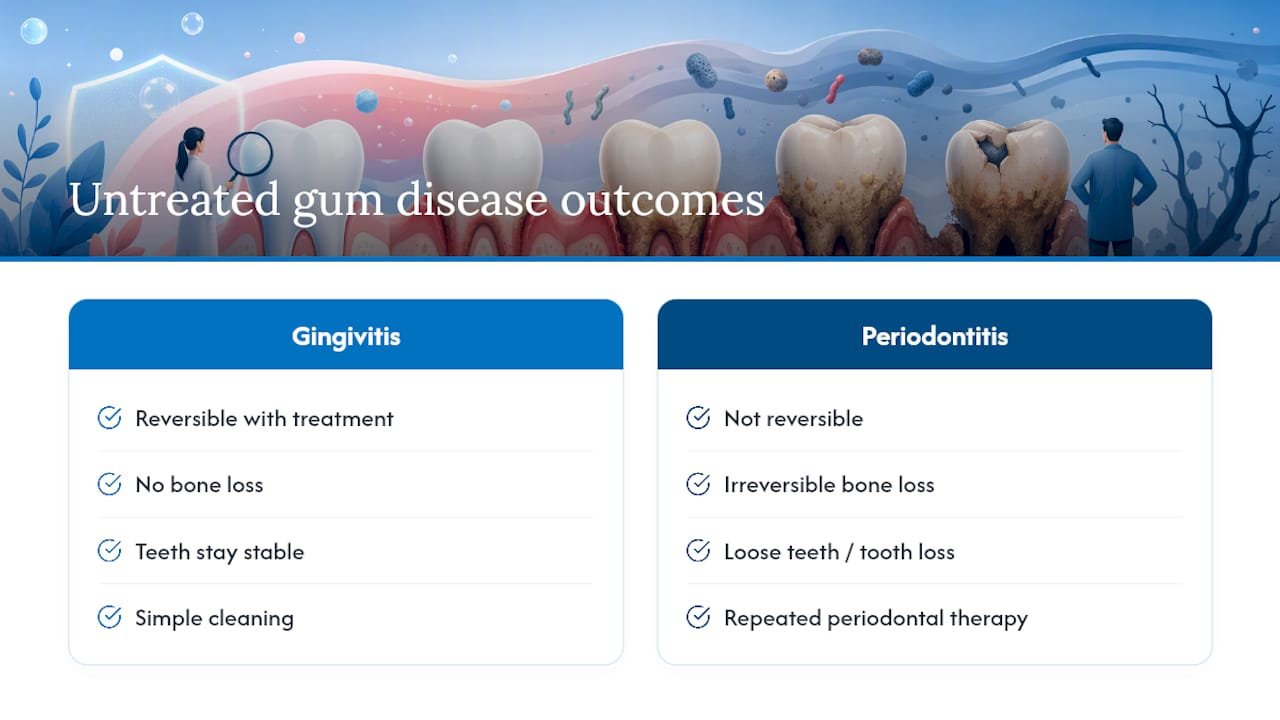
Gingivitis fully reverses with treatment. Bone loss from periodontitis does not, though it can be stabilized so it stops getting worse. That distinction is the entire reason staging exists.
Left unmanaged, periodontitis leads to loosening teeth, the need for bridges or dentures, and repeated rounds of periodontal therapy just to hold the line. The damage isn't confined to your mouth, either. Harvard Health points to documented links between gum inflammation and harder to control diabetes, along with associations with cardiovascular disease. Managing your gums is part of managing your overall health.
How Starboarddental Approaches Early Detection
Starboarddental uses digital scanners to catch changes in gum tissue and bone level early, often before symptoms show up on their own. Patients dealing with early periodontitis have access to scaling and root planing on site, with referrals to periodontics for more advanced cases. Ceiling mounted TVs and same-day appointments make routine checkups less of a hurdle. If you've noticed bleeding gums or any of the warning signs above, explore the conditions Starboarddental treats and get on the schedule.
The Gap Between How People Talk About Gum Disease and How It Actually Works
Most people treat "gum disease" as one condition with one outcome, and that's where the real damage happens. Gingivitis and periodontitis get lumped together in casual conversation, but they're fundamentally different situations. One reverses completely. The other you manage for life once it starts.
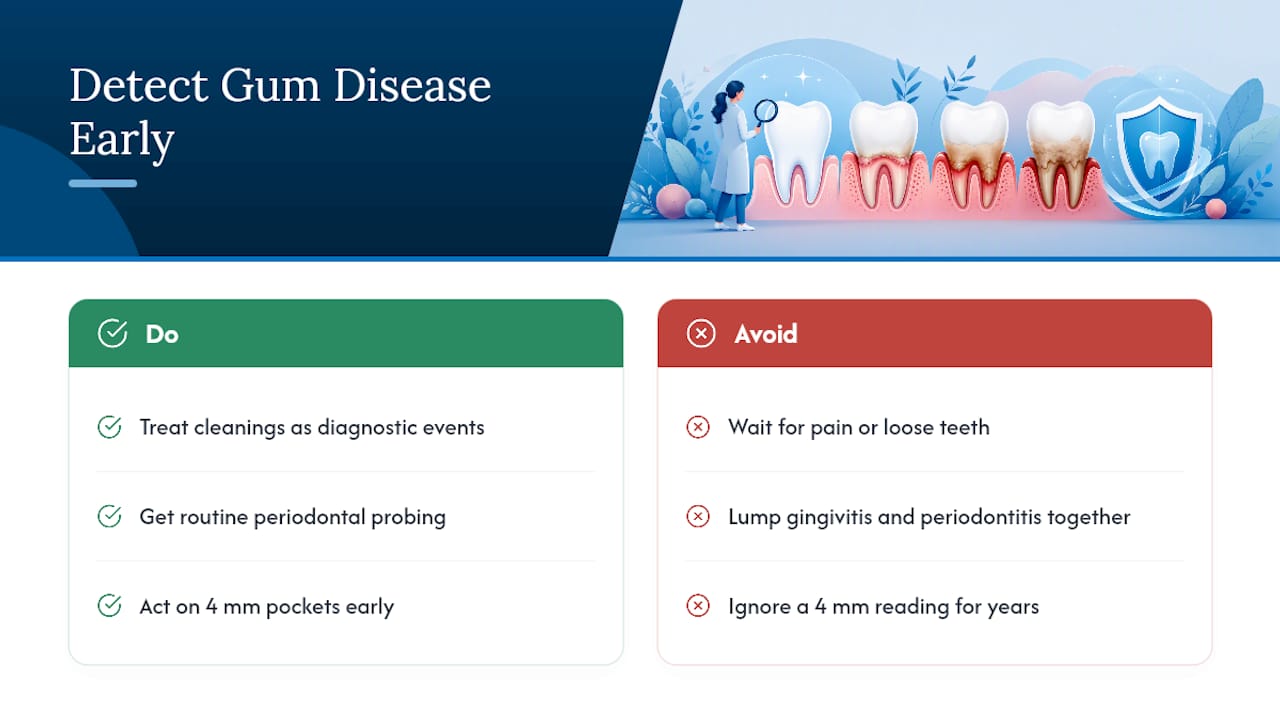
The bigger blind spot is how symptom-driven most people's dental habits are. Nobody calls the dentist over a stage I pocket they can't feel. They call when a tooth feels loose, which usually means Stage III or IV territory. The entire clinical staging system exists because bone loss is invisible to the person losing it. By the time pain or mobility shows up, the easy window has usually closed.
What the data actually argues for is treating routine cleanings as diagnostic events, not maintenance chores. A probe reading of 4 millimeters today, caught early, is a completely different problem than the same reading ignored for three years. The staging system isn't just clinical bookkeeping. It's the only early warning system this disease gives you.
— Alex
This article is general information, not a substitute for advice from a qualified doctor. Consult a qualified healthcare professional about your own circumstances before acting on anything here.
Sources
- Periodontal Disease - StatPearls - NCBI Bookshelf
- About Periodontal (Gum) Disease | CDC
- Periodontitis symptoms — Mayo Clinic
FAQ
Can you live a long life with gum disease?
Yes. Periodontitis is a manageable chronic condition, and with consistent treatment and maintenance cleanings, most people keep their natural teeth and avoid major complications for decades. The bigger concern is its documented links to conditions like diabetes and cardiovascular disease, which is why ongoing care matters beyond just your mouth.
How can I speed up gum healing?
For gingivitis, consistent brushing at a 45 degree angle toward the gumline, daily flossing, and a professional cleaning typically resolve inflammation within a few weeks. For periodontitis, healing depends on completing scaling and root planing and, if you smoke, quitting, since tobacco use significantly slows tissue recovery.
Is gingivitis the same as periodontitis?
No. Gingivitis is inflammation limited to the gum tissue with no bone loss, and it's fully reversible. Periodontitis means the infection has reached the bone supporting your teeth, and that damage is managed rather than undone.
What pocket depth counts as a warning sign?
Healthy gum pockets measure 1 to 3 millimeters. A depth of 4 millimeters or more usually signals gum disease, and dentists use these measurements alongside X-rays to determine the stage.
Does gum disease always cause pain?
Not usually, especially in the early stages. Gingivitis and even early periodontitis can progress with little to no discomfort, which is why routine dental exams, not symptoms alone, are the most reliable way to catch it early.