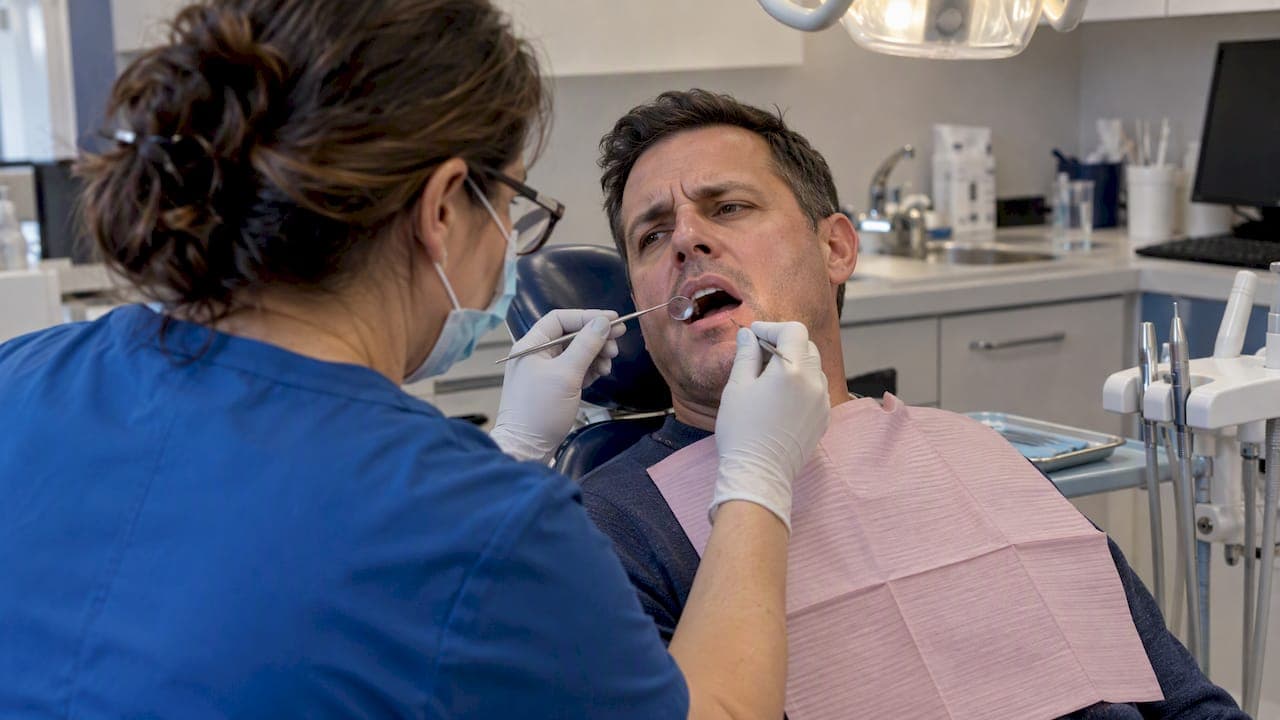
A toothache that flares at night is usually driven by increased blood flow to inflamed tissue when you lie down, plus nighttime teeth grinding and fewer distractions from the pain. Try a cold compress, an OTC pain reliever, and sleeping with your head elevated tonight, and call a dentist promptly if you notice swelling, fever, or pain lasting more than a day or two.
TL;DR:
- Nighttime toothache pain often results from increased blood flow to inflamed tissue and habits like teeth grinding, which worsen soreness.
- Deep decay, abscesses, cracks, or bruxism are common causes, with dental infections requiring urgent treatment and other issues needing diagnosis.
- Home remedies such as saltwater rinses, cold compresses, and head elevation can provide temporary relief but do not address underlying problems.
- OTC NSAIDs like ibuprofen and naproxen are recommended for short-term pain management, with clear dosage limits to prevent health risks.
- Seek emergency care immediately if swelling impairs breathing or swallowing, or if pain persists beyond a few days with other concerning symptoms.
Table of Contents
- Why tooth pain feels worse at night
- Common causes behind your symptoms
- Safe home remedies to ease the pain tonight
- OTC pain relief: dosing you can trust
- When toothache pain becomes an emergency
- What happens at your dental appointment
- How we handle nighttime tooth pain at Starboard Dental
- A clinician's honest reminder about toothache pain
- Get same-day relief for a toothache that will not quit
- FAQ
- Sources
Why tooth pain feels worse at night
When you lie flat, more blood flows to your head, which raises pressure inside an already inflamed tooth or the tissue around its root. That added pressure on swollen nerve endings is a common, though not fully proven, explanation for why dental pain spikes after you climb into bed. During the day, work, conversation, and movement pull your attention away from minor aches. At night, with the lights off and nothing else competing for your focus, your brain has little else to process, so the same level of pain can feel far more intense.
Sleep habits make things worse too. Many people clench or grind their teeth overnight, a habit called bruxism, which adds mechanical stress to teeth that may already be cracked, decayed, or recently filled. Your sleeping position matters as well. Resting on the side where the sore tooth sits can press on sensitive gum tissue and prolong the ache instead of letting it settle.
None of this means the pain is imaginary or exaggerated. It means a tooth that felt manageable at noon can genuinely throb by midnight, and that pattern itself is a clue worth mentioning to a dentist.
Common causes behind your symptoms
Matching your specific symptoms to a likely cause helps you describe the problem clearly if you need to call a dental office. A few patterns show up again and again in nighttime toothache cases.
- Deep decay or pulpitis: Sharp pain from hot or cold that fades quickly often points to reversible pulpitis, while pain that lingers for a while after the trigger, or that starts with no trigger at all, suggests symptomatic irreversible pulpitis, a condition the tooth will not heal from on its own.
- Dental abscess: Throbbing pain combined with a pimple-like bump on the gum, facial swelling, or a bad taste suggests a pocket of infection that needs prompt attention, since an abscess will not resolve without professional drainage or treatment.
- Cracked tooth or lost filling: A sudden jolt of pain when chewing, especially after losing a filling or biting something hard, often means dentin or pulp is newly exposed to air and temperature.
- Bruxism: Grinding or clenching overnight can fracture teeth, wear down enamel, and leave jaw muscles sore in the morning, even when no single tooth is obviously decayed.
- Referred pain from elsewhere: TMJ disorders, sinus infections, and certain ear conditions can mimic a toothache, especially in the upper back teeth, which sit close to the sinus floor.
If lingering sensitivity or spontaneous pain is waking you up repeatedly, that pattern is itself a diagnostic clue, not just an inconvenience.
Safe home remedies to ease the pain tonight
A few simple measures, including advice on rinses and topical care, can take the edge off while you wait for a dental appointment, but some popular home remedies do more harm than good. See more on whether a mouthwash can be used to treat a toothache here.
- Rinse with warm salt water. Dissolve about half a teaspoon of salt in a cup of warm water and swish for 30 seconds, several times a day, to reduce surface bacteria and mild swelling.
- Apply a cold compress. Hold it against your cheek near the painful tooth for 15 to 20 minutes at a time to numb the area and reduce inflammation.
- Elevate your head. Prop yourself up with an extra pillow and, if possible, sleep on the side opposite the sore tooth to reduce blood pressure in the area.
- Use topical benzocaine sparingly. Over-the-counter gels can numb the gum for a short time; follow the label's age and frequency limits exactly, since overuse carries its own risks.
- Never put aspirin directly on the tooth or gum. This old home remedy does not relieve pain and instead causes a chemical burn that can leave a painful ulcer.
Pro Tip: Keep a cold compress and your pain reliever within reach on your nightstand so you are not searching for them at 2 AM.
If swelling spreads, you develop a fever, or redness creeps toward your jaw or neck, stop relying on home care and contact a dentist or urgent care right away.
OTC pain relief: dosing you can trust
For most adults, nonsteroidal anti-inflammatory drugs are the first choice for a toothache. The ADA's 2024 pain-management guidance recommends ibuprofen 400 mg or naproxen sodium 440 mg, and notes that pairing either one with acetaminophen 500 mg can add relief for short-term use.
The same ADA guidance lists clear daily ceilings for adults: no more than 2,400 mg of ibuprofen, 1,100 mg of naproxen sodium, or 4,000 mg of acetaminophen in 24 hours. Staying under these limits matters because exceeding them raises the risk of stomach, kidney, or liver problems without actually improving pain control.

If you have a history of ulcers, kidney disease, liver disease, or you take blood thinners, check with a pharmacist or your dentist before taking any of these medications, since the usual dosing advice may not apply to you.
When toothache pain becomes an emergency
Most nighttime toothaches are uncomfortable but not dangerous. A smaller number of cases need same-day or emergency attention, and knowing the difference matters.
- Call 911 or go to the emergency room if facial or neck swelling makes it hard to breathe or swallow, since this can signal a rapidly spreading infection.
- Book a same-day dental visit for throbbing pain lasting more than a day or two, fever, spreading facial swelling, a gum bump or visible abscess, or pain that OTC medication no longer controls, all signs that professional evaluation is needed.
- Consider a primary care visit when the pain seems tied to a sinus infection or ear issue rather than a tooth, though a dental exam first helps rule out the more common cause.
Getting the diagnosis right the first time saves you from bouncing between providers while the underlying problem keeps progressing.
What happens at your dental appointment
A dentist will start with a visual exam, then test the tooth's response to temperature and light tapping (percussion) to narrow down the cause, often combined with a dental x-ray to check the root and surrounding bone.

From there, treatment depends on what they find. Simple decay usually means a filling. A tooth with irreversible pulpitis typically needs root canal therapy to remove the damaged nerve tissue, a process explained in more detail in our root canal procedure overview. A tooth too damaged to save may require extraction, and antibiotics are reserved for infections that have started spreading beyond the tooth itself. Many dentists can manage acute pain the same day and schedule definitive treatment shortly after, with complex cases sometimes referred to an endodontist.
How we handle nighttime tooth pain at Starboard Dental
Same-day appointments can help ensure a tooth that kept you up all night does not have to wait long for answers. Advanced technology like digital scanners and digital x-rays can help pinpoint whether you are dealing with decay, a crack, or an infection in one visit rather than several.
Understanding that urgent dental visits are stressful, some clinics include ceiling-mounted TVs and personalized comfort items in rooms to help patients relax during explanations of each step. For more background before you call, our guides on matching tooth pain to its likely cause and what happens during an emergency dental visit walk through what to expect.
A clinician's honest reminder about toothache pain
Home remedies and OTC medication can buy you a decent night's sleep, and there is nothing wrong with using them. What they cannot do is fix a cracked tooth, reverse pulpitis, or clear an infection on their own. If you notice swelling, fever, or pain that will not quit after a couple of days, that is your signal to stop managing it at home and get seen. A same-day dental visit for a bad toothache is rarely overreacting.
— Alex
Get same-day relief for a toothache that will not quit
If a toothache kept you up and OTC medication is only taking the edge off, we offer same-day appointments for exactly this situation. We can check for decay, cracks, or infection with digital x-rays, treat it with the appropriate restorative care, and fit you for a night guard if grinding turns out to be part of the problem.

Call our office or book through our general dentistry page to get a same-day exam and a clear plan instead of another sleepless night.
This article is general information, not a substitute for advice from a qualified doctor. Consult a qualified healthcare professional about your own circumstances before acting on anything here.
FAQ
How can I stop a toothache at night?
Rinse with warm salt water, apply a cold compress to your cheek, and take an NSAIDs like ibuprofen at the dose listed on the label, while keeping your head elevated as you sleep. These steps reduce inflammation and pressure temporarily, but a dentist still needs to address the underlying cause.
What is the 3-3-3 rule for toothache?
This phrase is not a recognized clinical guideline from dental or medical authorities, and definitions circulating online vary widely. Rather than relying on an informal rule, use the red-flag signs in this article, such as swelling, fever, or pain lasting more than a day or two, to decide when to seek care.
How long will a tooth hurt before the nerve dies?
There is no fixed timeline, since it depends on the extent of decay or damage and how quickly the pulp becomes inflamed. Lingering sensitivity to hot or cold, or pain that starts without any trigger, suggests irreversible pulpitis is already underway and treatment should not be delayed.
How do I make my tooth nerve stop hurting?
Short-term relief comes from NSAIDs or acetaminophen at recommended doses, a cold compress, and avoiding very hot, cold, or sugary foods that trigger pain. Lasting relief for an inflamed or infected nerve almost always requires a dental procedure such as a filling or root canal rather than home care alone.
Sources
- ADA adult toothache pain-management guidance (2024)
- MedlinePlus: Toothaches
- MedlinePlus: Tooth abscess
- AAE: Endodontic diagnostic guidance