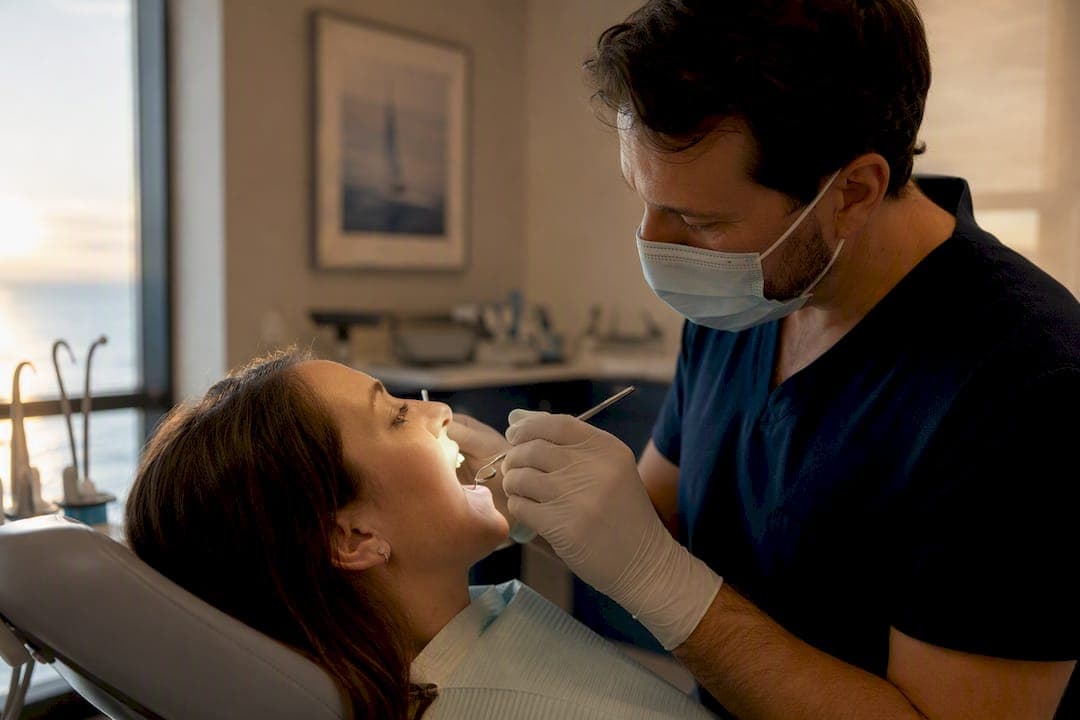
Yes, the natural tooth under a crown can develop a cavity. Crowns cover the tooth but don't seal it in plastic wrap forever; bacteria can sneak in through tiny gaps at the edge. If you're noticing new sensitivity, a crown that feels loose, or a bad taste that won't go away, call your dentist this week. Most early cases are fixable without pulling the tooth, but X-rays and a hands-on exam need to happen first.
TL;DR:
- Cavities under a crown occur when bacteria infiltrate gaps at the crown's edge, often due to cement wear, gum recession, or plaque buildup.
- Symptoms like sensitivity, loose crowns, or bad taste are common early warnings, but decay can exist without pain, making routine exams crucial.
- Diagnosis often requires crown removal and direct inspection, as X-rays alone may not reveal hidden decay in the adhesive margins.
- Treatment can involve re-cementing, filling, root canal, or extraction, depending on decay severity, with early detection preventing complex procedures.
- Daily cleaning at the crown margin, careful flossing, and regular checkups help prevent decay, especially in crowns over eight years old or with signs of wear.
Table of Contents
- What Causes a Cavity Under a Crown in the First Place
- Warning Signs That Decay Might Be Hiding Under Your Crown
- How Dentists Diagnose Decay Under a Crown
- Treatment Options: What Happens Once Decay Is Confirmed
- What Happens If You Wait to Get It Treated
- Protecting Your Crown Margins Every Day
- Urgent Care or Routine Checkup: How to Decide
- How Starboard Dental Approaches Crown-Related Decay
- Why "It's Just a Crown" Is the Wrong Way to Think About This
- Getting a Crown-Related Cavity Checked and Treated
- Sources
What Causes a Cavity Under a Crown in the First Place
A crown doesn't decay. The tooth underneath it does, and that distinction matters more than most patients realize when they see staining or a rough edge and assume the crown itself is "going bad." The crown itself cannot decay, but the living tooth structure it protects absolutely can.
Most trouble starts at the margin, the seam where the crown meets your natural tooth. Cement wears down over time, and microscopic gaps open up, giving bacteria a direct path to the tooth underneath. Once bacteria get past that seal, they behave exactly like they would on any exposed tooth surface, producing acid that eats through enamel and dentin.
Several factors speed this up:
- Gum recession exposes root surfaces near the crown, and root surfaces decay faster than enamel because they're softer.
- Wear and micro-fractures in the crown or cement bond loosen the fit as the restoration ages.
- Plaque buildup at the margin is common because that seam is harder to clean than a smooth tooth surface, and crown margins are a well-documented hot spot for plaque accumulation.
- Dry mouth, bruxism, and frequent sugar or acid exposure all raise the odds of a margin breaking down early.
Warning Signs That Decay Might Be Hiding Under Your Crown
Your mouth usually tells you something is wrong before a dentist ever gets a look. New sensitivity to cold, heat, or sweets, especially if it's isolated to one crowned tooth, is often the first clue. Pain when you bite down, a persistent bad taste or odor near that tooth, or gum swelling around the margin are all worth paying attention to.

A crown that suddenly feels loose, a dark line creeping along the edge, or a bite that feels subtly "off" compared to a few months ago are physical signs something has shifted underneath.
Here's the uncomfortable part: decay under a crown is sometimes completely silent. No pain, no obvious sensitivity, nothing you'd notice brushing your teeth. That's exactly why routine checkups matter even when everything feels fine, and why an X-ray during a normal cleaning can catch a problem you'd otherwise miss for years.
Symptoms worth flagging to your dentist:
- Cold or sweet sensitivity localized to one crowned tooth
- Pain specifically when biting or chewing
- A bad taste or odor that doesn't improve with brushing
- Visible dark staining at the crown's edge
- A crown that wiggles, rocks, or feels loose
How Dentists Diagnose Decay Under a Crown
Diagnosis starts with a straightforward clinical look. Your dentist checks the margin for visible gaps or staining, examines gum health around the crown, and tests whether the crown itself feels stable when pressed or wiggled.
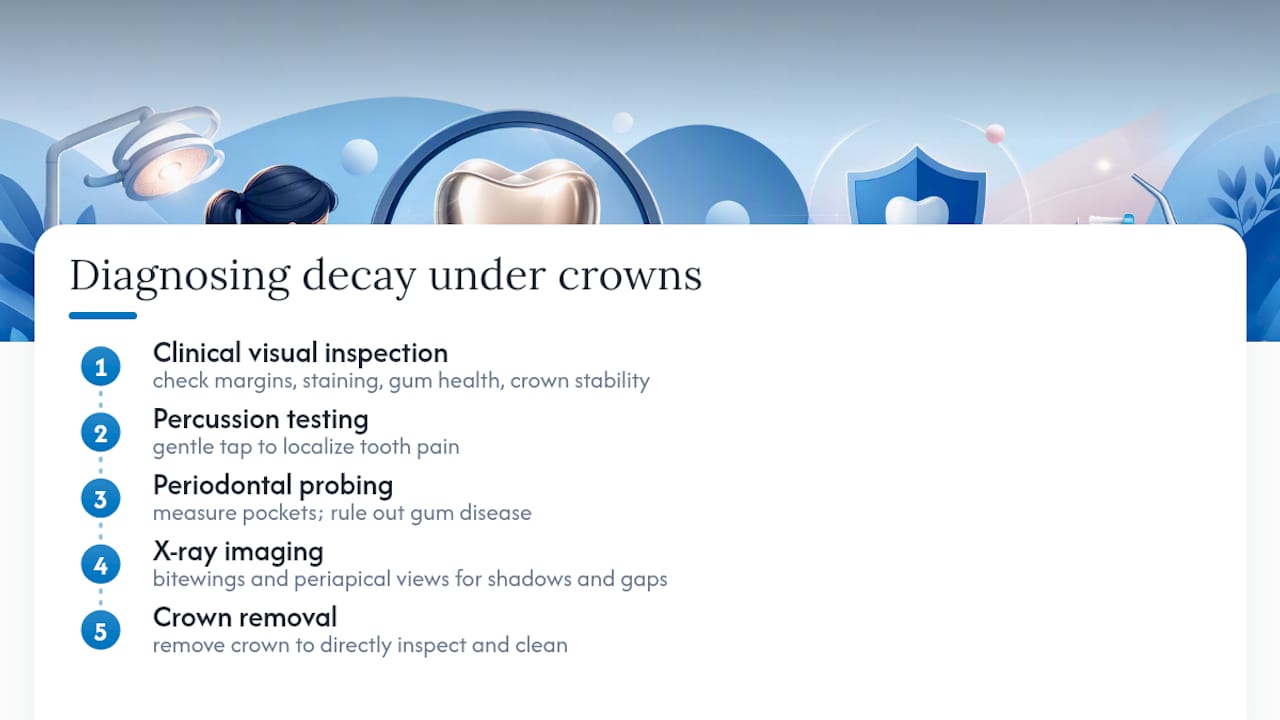
Percussion testing (a gentle tap on the tooth) helps pinpoint whether pain is coming from that specific tooth or somewhere nearby. If your gums look inflamed or you have pockets of infection, periodontal probing rules out gum disease as a separate issue.
X-rays, particularly bitewings and periapical images, show a lot: bone level around the root, shadows suggesting decay, and gaps at the margin. But they have limits. Because a crown sits directly over the tooth, some lesions hide in a blind spot that imaging alone won't reveal.
That's why dentists frequently remove the crown outright to inspect and clean the tooth directly when symptoms point to trouble but X-rays look ambiguous. It's not an escalation for its own sake. It's often the only way to actually see what's happening. Our guide to how dentists spot early decay walks through what that exam typically involves.
Treatment Options: What Happens Once Decay Is Confirmed
Treatment follows the severity of what your dentist finds, and it's rarely as dramatic as patients fear going in.
- Moderate decay. This is the most common scenario. The crown comes off, the decayed tooth structure gets cleaned out, the tooth gets rebuilt with filling material, and a new crown is fabricated. This staged approach, removal, cleaning, rebuild, replacement, is standard for most cases caught at a reasonable stage.
- Severe structural damage. When too much tooth structure is gone to support a rebuild, extraction becomes the last resort, with an implant or bridge planned as replacement.
Timeline varies widely. A simple re-cementing might take one visit. A root canal followed by a new crown often stretches across two or three appointments, with a temporary crown protecting the tooth in between.
Pro Tip: Ask your dentist to show you the X-ray or margin photo before deciding on treatment. Seeing exactly where the decay sits helps you understand why a filling won't cut it, or why it will.
What Happens If You Wait to Get It Treated
Delaying treatment rarely makes the problem smaller. Untreated decay spreads toward the pulp, and once bacteria reach the nerve, a simple filling stops being an option. You're now looking at root canal therapy at minimum, and potentially extraction if the damage has gone too far.
Waiting also raises the odds of the crown itself failing outright, since decay undermines the tooth structure holding it in place. Nearby teeth and gum tissue can get pulled into the problem too, turning what started as a small margin issue into a multi-tooth infection. Every stage you skip past tends to cost more in both money and chair time than catching it early would have.
Protecting Your Crown Margins Every Day
Prevention here isn't complicated, but it does require paying attention to a spot your toothbrush might be skipping. Careful cleaning right at the crown margin, daily flossing, and regular checkups with periodic X-rays for older crowns form the backbone of keeping that seam intact.
A few specifics that make a real difference:
- Angle your toothbrush toward the gumline where the crown meets your natural tooth. That seam is where plaque hides.
- Floss or use a floss threader around the crown margin daily; a water flosser works well if traditional flossing feels awkward near the restoration.
- Use fluoride toothpaste, and ask about professional topical fluoride if you're prone to decay.
- Limit frequent sugar or acid exposure, and rinse with plain water after sodas, coffee, or citrus.
- If you deal with dry mouth or grind your teeth at night, talk to your dentist about saliva-stimulating strategies or a night guard.
Pro Tip: If your crown is more than eight or ten years old, ask specifically about margin condition at your next cleaning, not just cavities. A margin can be quietly wearing down long before you feel anything.
Managing dry mouth, diet, and bruxism cuts recurrence risk even on crowns that are already showing some wear. Our prevention tips for cavities between checkups cover more ground on daily habits that protect restorations specifically.
Urgent Care or Routine Checkup: How to Decide
Not every symptom needs an emergency call, but some do.
- Get seen this week if your crown feels loose, you're in significant pain, or you notice swelling or pus near the gumline. That combination points to an active infection that won't wait.
- Schedule a routine appointment for new sensitivity, an odd taste or odor, or a dark line at the margin without sharp pain. These are worth addressing but rarely require same-day urgency.
- When you call, mention when the crown was placed, what symptoms you're noticing, and whether your bite feels different. Bring insurance details if you want cost estimates discussed upfront.
- Expect a clinical exam, X-rays, and possibly crown removal at the visit itself, sometimes with a temporary crown placed while you wait on lab work for a permanent one.
If your crown has fallen off entirely, immediate steps for a lost crown can help you protect the tooth until you're seen.
How Starboard Dental Approaches Crown-Related Decay
Diagnosing what's happening under a crown takes more than a quick look. Starboard Dental uses digital scanners for precise imaging, which helps pinpoint margin problems that a standard visual exam might miss entirely.
Our approach favors conservative, tooth-preserving treatment whenever the decay allows for it:
- Full clinical evaluation combined with imaging to confirm what's happening before recommending any procedure
- Conservative removal of decay when the tooth structure allows a filling or re-cement instead of a full crown replacement
- Restorative treatment planning, including crown replacement or root canal referral, based on what's actually found rather than a default protocol
- Same-day appointment availability for patients dealing with sudden pain or a loose crown
- A treatment environment built around reducing dental anxiety, including ceiling-mounted TVs and comfort items during procedures
Why "It's Just a Crown" Is the Wrong Way to Think About This
The biggest misconception I keep seeing repeated in patient forums and even some dental marketing is that a crown is a permanent fix, something you get once and forget about. It isn't. A crown is a cap over a living, vulnerable tooth, and the seam where they meet is arguably more fragile than the enamel it replaced.
Conventional advice tends to stop at "brush and floss," which is true but incomplete. The margin needs specific attention, angled brushing, threaders or water flossers, because it's a different cleaning problem than a flat tooth surface. Most people treat crowned teeth exactly like their natural ones and wonder years later why decay showed up in a spot they thought was protected.
If I had to pick one priority for readers, it's this: don't wait for pain. Asymptomatic decay under a crown is common enough that skipping X-rays at routine visits is a real gamble, not a minor convenience. Early detection turns a root canal into a filling. That trade is worth showing up for.
— Alex
Getting a Crown-Related Cavity Checked and Treated
Starboard Dental treats crown margin problems the way this guide describes: exam first, imaging second, and a treatment plan that protects as much of your natural tooth as possible instead of jumping straight to replacement. If you're weighing whether that sensitivity or loose feeling is worth a call, same-day appointments mean you don't have to sit with the uncertainty for weeks.

Our team works through restorative treatment options ranging from simple fillings to full crown replacement, and every plan starts with a real look at what's happening under the surface rather than a guess based on symptoms alone. If you're dealing with a crown that's more than a few years old and haven't had a checkup recently, it's worth getting ahead of a problem before it becomes a bigger one. You can see the full range of conditions we treat and book a visit directly through our site.
This article is general information, not a substitute for advice from a qualified doctor. Consult a qualified healthcare professional about your own circumstances before acting on anything here.