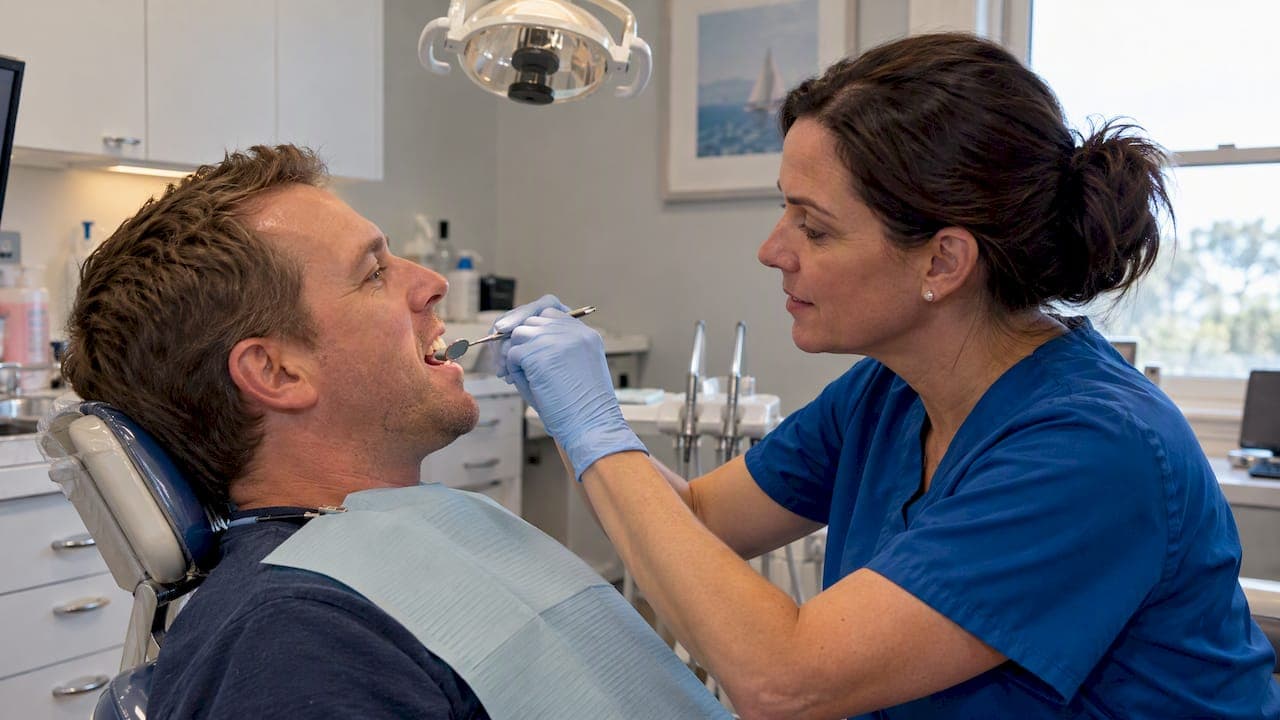
Yes, coffee commonly stains teeth, and the stains are treatable. Light surface discoloration often responds to a whitening toothpaste or a professional hygiene cleaning, while deeper staining usually needs bleaching. The American Dental Association backs professionally supervised whitening as safe, and a dental team can tell you which category your stains fall into during a quick exam. If you see visible staining today, rinse with water, hold off on brushing for half an hour, and start with a whitening toothpaste.
TL;DR:
- Drink coffee in one sitting, rinse afterward, and wait 30 to 60 minutes before brushing; milk or cream can reduce staining compared with black coffee.
- In lab testing, SHMP toothpaste restored up to 80.83% of lightness; daily use may show results in 2 to 6 weeks, but abrasion varies.
- Strips and LED kits take 1 to 2 weeks and often cause sensitivity; professionally supervised in office bleaching can show results in one visit.
- Whitening cannot lighten crowns, fillings, or bonding, and intrinsic stains from aging, medication, or trauma may need bonding or veneers instead.
- If whitening has not helped after a few weeks, ask a dentist to clean and reassess your teeth two weeks later for deeper discoloration.
Table of Contents
- Why does coffee stain teeth?
- How can you prevent coffee from staining your teeth?
- What are your options for removing coffee stains?
- What should you expect for timeline, cost, and side effects?
- How we assess and treat coffee staining in practice
- The part of this conversation most people get wrong
- Ready to deal with your coffee stains for good?
- FAQ
- Sources
Why does coffee stain teeth?
Coffee contains chromogens, the pigmented compounds responsible for its dark color, along with tannins that act like a magnet for those pigments. Tannins bind to the acquired pellicle, the thin protein film that coats your enamel within minutes of eating or drinking, and once chromogens attach to that layer they are tough to rinse away. The longer coffee sits in contact with your teeth, the more pigment accumulates.

Not all coffee stains equally. Research on tooth discoloration from tea and coffee found that different coffee types and chlorogenic acid levels produce measurably different staining intensity, and longer exposure in lab models deepened the discoloration. Chlorogenic acid is one of coffee's dominant polyphenols, and higher concentrations tend to track with darker stains.
There is also a structural piece. Coffee's acidity contributes to enamel erosion, and the American Dental Association's erosion guidance notes that eroded enamel becomes more porous, which gives pigments more surface area to cling to. That is also why dentists recommend waiting before brushing after coffee: brushing softened, acid-exposed enamel can abrade it further rather than clean it.
This distinction matters clinically:
- Extrinsic stains sit on the enamel surface and usually respond to whitening toothpaste, a cleaning, or over-the-counter whitening products.
- Intrinsic stains sit deeper in the tooth structure and typically require professional bleaching or a restorative option like bonding or veneers.
A lab study on whitening toothpastes and coffee-stained enamel found that SHMP-containing formulas restored a very high proportion of specimen lightness after simulated brushing, outperforming conventional toothpaste by a wide margin, according to research published in PMC. That gives surface stains a real shot at improvement without ever sitting in a dental chair.
How can you prevent coffee from staining your teeth?
Prevention comes down to limiting contact time and protecting the pellicle layer before pigment has a chance to bind.
- Drink your coffee in one sitting rather than sipping it over hours, since prolonged exposure increases discoloration according to research on preventing coffee stains.
- Rinse with water right after you finish to clear residual pigment before it settles into the pellicle.
- Wait 30 to 60 minutes before brushing, especially after acidic drinks, so you are not scrubbing softened enamel.
- Use a straw for iced coffee to reduce direct contact with your front teeth.
- Add milk or cream instead of drinking it black. The same research on coffee stain prevention found that cream and milk groups showed less discoloration in lab immersion testing, likely because milk proteins bind some tannins before they reach the tooth surface.
- Floss daily so plaque, which roughens the tooth surface and gives stains more to grip, does not build up between visits.
Sweeteners do not offer the same protection. A study on coffee additives and tooth discoloration found that artificial sweeteners showed no comparable stain-reducing effect, unlike milk or cream.
Choosing the right toothpaste also matters. Baking soda and SHMP-based formulas both have evidence behind them, but they come with trade-offs between whitening power and abrasion, which the next section covers in more depth.
Pro Tip: If you are prone to sensitivity, pair a whitening toothpaste with a soft-bristled brush and gentle pressure rather than scrubbing harder to compensate.
What are your options for removing coffee stains?
The right fix depends on whether you are dealing with surface staining or something deeper, and how fast you want results.
Whitening toothpastes are the lowest-effort starting point. SHMP-containing formulas delivered the strongest results in testing, restoring up to 80.83% of lightness and outperforming peroxide-based toothpaste by about 10 percentage points in the same enamel surface analysis. Baking-soda dentifrices have their own track record: clinical trials summarized in The Journal of the American Dental Association reported better stain reduction at 2 to 6 weeks compared with some silica-based toothpastes, generally with a good safety profile. The trade-off is abrasion. The same PMC analysis found that some whitening formulas increased surface roughness after thousands of brushing cycles, so more aggressive stain removal can mean more wear on enamel over time.
- Expect visible change in 2 to 6 weeks with daily use.
- Best suited to light, recent extrinsic staining rather than long-standing discoloration.
Over-the-counter strips and LED kits use lower-concentration peroxide gels and can lighten surface stains over one to two weeks of consistent use, though results vary more than with professional products and sensitivity is a common complaint. Our guide to whitening methods and safety walks through how these compare to dentist-supervised options in more detail.
Dentist-prescribed trays and in-office bleaching use higher, clinically supervised peroxide concentrations. The American Dental Association notes that hydrogen-peroxide-based whitening is considered safe when professionally supervised, and that professional whitening tends to produce faster, more noticeable results than over-the-counter products because a clinician can tailor concentration and manage sensitivity directly. In-office treatment can show a visible difference in a single visit, while custom trays used at home typically take one to two weeks.

Whitening will not touch everything, though. Intrinsic discoloration from aging, medication, or trauma does not respond to bleaching, and neither do existing crowns, fillings, or bonding, since those materials do not lighten the way natural enamel does. For those cases, cosmetic options like bonding or porcelain veneers address the color more directly than any whitening product can.
What should you expect for timeline, cost, and side effects?
Results and risk both scale with strength. Lower-concentration products take longer but carry less sensitivity risk, while professional treatments move faster under closer supervision.
| Method | Typical time to visible results | Relative cost | Common side effects |
|---|---|---|---|
| Whitening toothpaste | 2 to 6 weeks | Low | Mild abrasion with heavy use |
| OTC strips or kits | 1 to 2 weeks | Low to moderate | Temporary sensitivity |
| Dentist-prescribed trays | 1 to 2 weeks | Moderate | Sensitivity, gingival irritation |
| In-office bleaching | Often one visit | Higher | Sensitivity, managed by the clinician |
The ADA's whitening resources note that temporary sensitivity and gingival irritation are the most common side effects of peroxide-based whitening, and that clinicians manage these by adjusting concentration, spacing out treatments, or recommending desensitizing toothpaste. Our article on whitening sensitive teeth covers specific strategies if sensitivity has stopped you from whitening before, and the team at Complete Dental Care outlines similar dentist protocols for managing whitening discomfort.
Erosion complicates the picture further. Since acidic exposure increases enamel porosity, teeth that are already eroded tend to stain faster and may need a more conservative whitening protocol to avoid aggravating sensitivity.
How we assess and treat coffee staining in practice
We start every staining case with a history and exam rather than jumping straight to a whitening product, because surface stains and intrinsic discoloration need different treatment paths. One tool we rely on is a two-week reassessment: a professional cleaning removes what is removable, and whatever discoloration remains after two weeks tells us whether we are looking at true intrinsic staining. Our piece on telling a cavity from a stain walks through a similar diagnostic logic.
For coffee-stained teeth specifically, we typically draw from:
- A hygienist cleaning to clear surface buildup before any whitening begins.
- Professional in-office whitening for patients who want faster, supervised results.
- Custom take-home trays for gradual whitening with lower sensitivity risk.
- Bonding or veneers when discoloration turns out to be intrinsic.
Same-day appointments mean the assessment can often start the day you notice the stain, and ceiling-mounted TVs and comfort amenities can make the visit easier if you are not a fan of the dentist's chair.
The part of this conversation most people get wrong
The most common mistake is treating whitening as a one-time fix rather than ongoing maintenance. A whitening toothpaste or a single in-office session changes color, not habits, and research on dental erosion makes clear that the same drink that stains your teeth is also softening the enamel underneath. Skip the wait-before-brushing step often enough and you are not just inviting new stains back faster, you are grinding away the surface that whitening just restored.
The conventional advice oversells convenience products and undersells diagnosis. Whitening strips and toothpaste are marketed as universal fixes, but they only work on extrinsic stains, and plenty of people spend months on products that were never going to touch their actual discoloration. If a stain has not budged after a few weeks of consistent at-home care, that is information, not a signal to switch toothpaste brands again.
What should come first is figuring out what kind of stain you actually have. A quick professional look settles that question in minutes and saves the guesswork of trial-and-error products that were mismatched to the problem from the start.
— Alex
Ready to deal with your coffee stains for good?
If your stains have not responded to toothpaste or strips, a short visit tells us whether you need a cleaning, professional whitening, or a different approach entirely. Same-day appointments are available, and whitening plans are built around sensitivity and enamel condition rather than a one-size protocol.

Our teeth whitening page covers both in-office and custom tray options, and booking a visit starts with a simple cleaning and exam appointment so we know exactly what we are treating before we start.
This article is general information, not a substitute for advice from a qualified doctor. Consult a qualified healthcare professional about your own circumstances before acting on anything here.
FAQ
Can stained teeth from coffee be fixed?
Yes, most coffee stains are fixable. Surface stains typically respond to whitening toothpaste, over-the-counter strips, or a professional cleaning, while deeper discoloration usually needs dentist-supervised bleaching or, in some cases, bonding or veneers.
What is the 2 hour coffee rule?
There is no clinically established "2 hour rule" for coffee and teeth. The guidance that is actually backed by research is to limit how long coffee sits in contact with your teeth, rinse with water afterward, and wait 30 to 60 minutes before brushing so you are not scrubbing acid-softened enamel, according to the American Dental Association's erosion guidance.
What is the best teeth whitener for coffee drinkers?
For light, recent staining, an SHMP-containing whitening toothpaste has shown strong results in lab testing, restoring enamel lightness more effectively than many other formulas. For deeper or long-standing discoloration, professional in-office whitening or dentist-prescribed trays, like those available through our teeth whitening service, tend to deliver faster, more reliable results under supervision.
What kind of coffee does not stain my teeth?
No coffee is entirely stain-free, but adding milk or cream measurably reduces discoloration compared to drinking it black, since milk proteins bind some of the tannins before they reach your enamel. Artificial sweeteners do not offer the same protective effect.