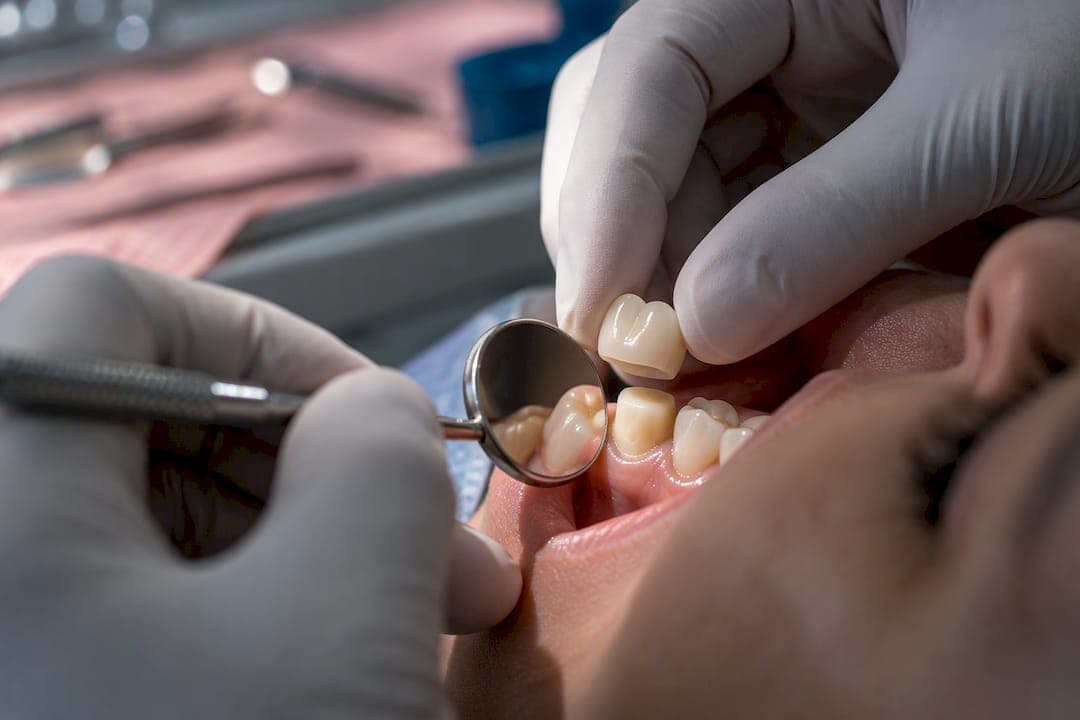
Mild to moderate sensitivity after a crown is common and usually fades within days to a few weeks. Take an over-the-counter pain reliever, switch to sensitive-tooth toothpaste, and skip anything too hot, cold, or crunchy while the tooth settles. If the pain is severe, lingers long after the trigger is gone, or gets worse instead of better, call your dentist.
TL;DR:
- Sensitivity within the first two weeks is common and often caused by dentin exposure from tooth preparation, but persistent pain beyond three weeks needs dental evaluation.
- A lingering, throbbing pain that lasts more than 30 seconds after temperature changes signals possible inflammation or deeper pulp issues requiring prompt attention.
- Factors like a high bite, loose temporary crowns, or bruxism can increase sensitivity and often need simple adjustments or protective measures to prevent prolonged discomfort.
- Over-the-counter NSAIDs, desensitizing toothpaste, and gentle brushing can effectively manage early sensitivity, but severe or worsening pain warrants professional treatment.
- Underlying problems such as decay, cracks, or nerve inflammation are rare but serious, necessitating timely interventions like re-cementation, occlusal adjustment, or root canal therapy.
Table of Contents
- What Crown Sensitivity Feels Like and Why It Matters
- Causes of Sensitivity After Crown Placement
- How Long Crown Sensitivity Usually Lasts
- Home Care and Immediate Remedies You Can Try Now
- When to Contact Your Dentist: Red Flags and What Happens Next
- Treatments Your Dentist May Recommend
- Preventing Sensitivity Around Future Crowns
- The Starboard Dental Perspective on Crown Sensitivity
- How Starboard Dental Handles Crown Sensitivity and Discomfort
- Sources
- FAQ
What Crown Sensitivity Feels Like and Why It Matters
Sensitivity after a crown usually shows up in one of three ways: a quick "zing" from something cold or hot, a dull soreness when you bite down, or in rarer cases, a lingering ache that won't quit. The first two are typically nothing to worry about. Dentists sometimes call the sharp, fleeting kind "hydrodynamic" pain because fluid inside microscopic dentin tubules shifts when it hits a temperature change, tugging on nerve fibers and firing off a brief pain signal.
The clinical red flag is duration, not intensity. According to the American Association of Endodontists, a jolt that disappears within seconds is usually harmless, but pain that lingers more than 30 seconds after the stimulus is gone often points to deeper inflammation in the pulp.
- Sharp, brief: Cold drink or ice cream triggers a quick zing that fades fast.
- Dull, achy: Biting down causes soreness that eases once you stop.
- Lingering, throbbing: Pain sticks around well after the trigger is removed.
Causes of Sensitivity After Crown Placement
Getting a crown means grinding down healthy tooth structure to make room for it, and that process exposes dentin tubules that were previously insulated by enamel. Research on dentin hypersensitivity following tooth preparation confirms this exposure is extremely common right after a crown is placed and typically causes short-lived, temperature-triggered discomfort while the tooth adjusts.
Several other factors can pile on top of that baseline sensitivity:
- Temporary crown issues. A loose-fitting temporary, a gap at the margin, or cement that irritates the gum can all cause soreness before the permanent crown ever goes in.
- High bite. If the crown sits even slightly too tall, your bite hits it before it hits neighboring teeth, concentrating force on that one tooth every time you chew.
- Bruxism. Clenching or grinding, especially at night, puts sustained pressure on a newly restored tooth that hasn't fully settled.
- Recurrent decay or a cracked tooth. Less common, but if decay was already present under old enamel or a crack extends beneath the crown, sensitivity can be a sign of something that needs direct attention.
Pro Tip: If the ache seems to come specifically from biting, not from temperature, mention that detail to your dentist. It's often a fast fix, an occlusal adjustment that takes minutes and can resolve the discomfort the same day.
Understanding what happens during crown preparation makes the whole process feel less mysterious. It's not that anything went wrong. It's that a tooth that had a protective outer shell now has a new one, and that transition needs a little time.
How Long Crown Sensitivity Usually Lasts

The first 72 hours tend to be the most uncomfortable. Sharp responses to cold or pressure are common during this window as the tissue around the tooth settles from the procedure itself.
By the one to two week mark, most patients notice a real difference. The nerve inflammation that caused the initial spike, technically called reversible pulpitis, typically calms down as the tooth adapts to its new crown.
Sensitivity that's still present or getting worse after two to three weeks deserves a phone call, not more patience. A cohort study on large restorations found that a small but notable share of patients who receive large restorations develop pulpal disease, with incidence rates typically under 10%, and somewhat lower incidence in patients with full-coverage crowns. It's a small risk, but a real one, and it's exactly why persistent pain after week two shouldn't be brushed off.
Home Care and Immediate Remedies You Can Try Now
Most crown sensitivity responds well to simple, consistent care in the days after your appointment. The American Dental Association recommends NSAIDs like ibuprofen as the first-line option for managing dental pain, with acetaminophen added if needed and safe for you.
- Take an NSAID on a schedule, not just when pain spikes. Steady dosing (per package directions or your dentist's advice) controls inflammation better than waiting until it hurts.
- Switch to a desensitizing toothpaste containing stannous fluoride or arginine, brands like Sensodyne make several formulas built specifically for this.
- Brush gently around the crown. Aggressive brushing right after a restoration can aggravate the gum line and worsen sensitivity.
- Avoid extremes. Skip ice water, hot coffee, and anything hard or sticky that could stress the crown or the temporary while the tooth is still adjusting.
- Chew on the other side for a few days if the crowned tooth is sore under pressure.
Pro Tip: Rinses and topical numbing gels marketed for sensitive teeth can take the edge off, but they don't address the underlying inflammation. Think of them as a bridge to get through a bad afternoon, not a substitute for the toothpaste-and-time approach.
For more on technique, our guide to caring for sensitive teeth covers brushing habits that specifically protect exposed dentin.

When to Contact Your Dentist: Red Flags and What Happens Next
Certain symptoms mean it's time to stop waiting and pick up the phone:
- Pain that lingers more than 30 seconds after a cold or hot stimulus.
- Sharp, spontaneous pain that shows up without any trigger at all.
- Swelling, fever, or a bad taste near the crowned tooth.
- Pain that's getting worse day over day instead of improving.
At a follow-up visit, your dentist will typically check the bite with articulating paper, tap on the tooth to test for inflammation, run a cold test to gauge nerve response, and take an X-ray if decay or a cracked root is a concern. Catching a problem early, like a high bite or a leaking margin, often means a quick fix instead of a bigger procedure down the road.
Treatments Your Dentist May Recommend
Most sensitivity that doesn't resolve on its own has a straightforward fix:
- Occlusal adjustment. Shaving down a high spot on the crown often solves biting pain in a single visit.
- Recementation. If the crown has loosened, resealing it addresses both discomfort and the risk of decay getting underneath.
- Replacing the temporary crown. A poor-fitting temporary is sometimes the actual culprit, and swapping it out resolves the issue before the permanent crown is even placed.
- Polishing rough margins. Smoothing an edge that's irritating the gum can eliminate localized soreness fast.
If the tooth shows signs of decay or a cracked structure underneath, the crown may need to come off so your dentist can treat the tooth directly and re-restore it. And if testing reveals irreversible pulpitis, meaning the nerve tissue is inflamed beyond recovery, root canal therapy preserves the tooth and the crown investment you've already made. Extraction for a crowned tooth is rare and generally a last resort.
Preventing Sensitivity Around Future Crowns
A few habits make a real difference in how your next crown feels:
- Ask your dentist how much tooth structure needs to be removed and how long you'll be in a temporary. Shorter temporization windows generally mean less irritation.
- If you grind your teeth, a night guard protects a new crown from the kind of pressure that causes lingering soreness.
- Keep up with brushing and flossing around the crown margin. Gum irritation from plaque buildup can mimic or worsen sensitivity.
- Book a short follow-up appointment two to three weeks out to confirm the bite feels right and nothing's lingering.
The Starboard Dental Perspective on Crown Sensitivity
Most of the anxious calls we get aren't about pain, they're about uncertainty. Patients want to know if what they're feeling is normal, and honestly, most of the time it is. We rely on digital scanning to get crown margins and bite alignment precise the first time, which cuts down on the high-bite complaints that send people back in. When something doesn't feel right after a week or two, we'd rather see you the same day than have you guessing.
— Alex
How Starboard Dental Handles Crown Sensitivity and Discomfort
Crown sensitivity that lingers past a couple of weeks doesn't need a wait-and-see approach. It needs a quick bite check, and The practice offers same-day appointments to address discomfort promptly without long waits.

Our restorative dentistry team handles everything from occlusal adjustments and recementations to root canal referrals when a crown's underlying tooth needs deeper attention. Advanced technology helps ensure the crown's fit is precise from the start, which can reduce follow-up visits for bite-related discomfort. If your crown still feels off after two or three weeks, or the pain is getting worse instead of better, schedule a checkup and we'll figure out exactly what's going on before it turns into a bigger fix.
Sources
- Tooth pain — American Association of Endodontists
- Incidence of pulpal disease after large restorations — PubMed
FAQ
How Do I Get My Crown to Stop Hurting?
Start with an NSAID like ibuprofen, switch to a desensitizing toothpaste with stannous fluoride or arginine, and avoid extreme temperatures for a few days. If pain persists past two weeks or gets worse, the ADA and your dentist agree it's time for a bite check rather than more waiting.
How Long Does the Jaw Hurt After Getting a Crown?
Soreness around the jaw and gum area typically peaks in the first 72 hours and improves significantly within one to two weeks. If jaw discomfort is severe or doesn't ease up after two weeks, it's worth having your bite evaluated.
Is It Normal for a Tooth to Hurt After a Crown?
Yes, mild to moderate sensitivity is expected and usually temporary, since crown preparation exposes dentin that was previously protected by enamel. However, pain lingering more than 30 seconds after a hot or cold trigger, according to the AAE, suggests deeper nerve inflammation that needs evaluation.
Why Does My New Crown Feel Weird When I Bite Down?
That "weird" feeling is often a high bite, meaning the crown sits slightly taller than your surrounding teeth and takes on extra force when you chew. An occlusal adjustment, a quick in-office procedure that reshapes the high spot, usually resolves it within minutes.