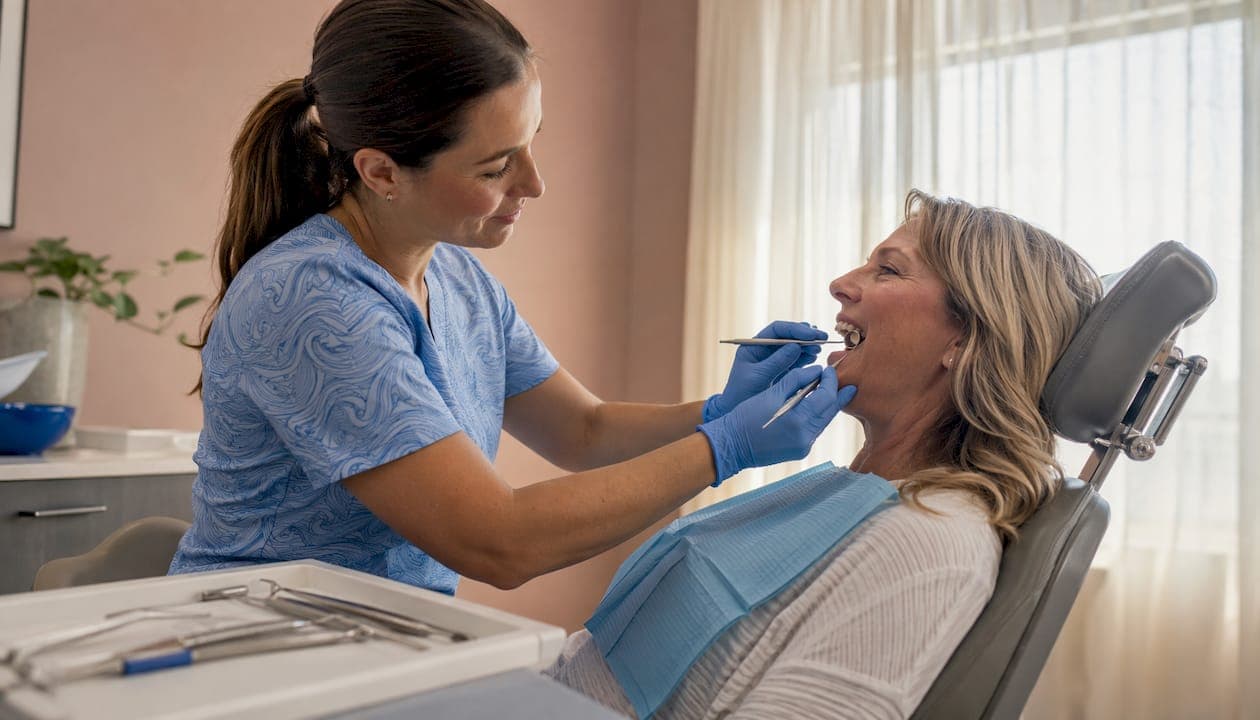
Preventive dentistry delivers fewer cavities, reduced gum disease, earlier detection of oral cancer and systemic conditions, fewer dental emergencies, and measurable long-term cost savings. The CDC, the American Dental Association (ADA), and the National Association of Dental Plans (NADP) all point to the same conclusion: consistent preventive care is the single most cost-effective investment in your oral health.
TL;DR: Regular exams, cleanings, and daily home habits prevent most serious dental problems before they start.
Quick benefits:
- Fewer cavities and fillings
- Lower risk of gum disease and tooth loss
- Early detection of oral cancer and systemic disease signs
- Fewer painful, expensive dental emergencies
- Long-term cost savings with high returns for every $1 spent
- Preserved chewing function, speech, and smile confidence
Table of Contents
- What preventive dentistry actually covers
- The preventive dentistry benefits list, explained benefit by benefit
- What preventive services look like in practice
- Who benefits from preventive dentistry, at every age
- How often to visit and what happens during a preventive appointment
- Cost, insurance coverage, and the economics of prevention
- At-home habits that make professional care work harder
- When to see a dentist sooner than scheduled
- The evidence behind preventive dentistry's value
- Key Takeaways
- Why prevention is the right clinical priority
- Preventive care at Starboarddental in Kennebunk
- Sources and further reading
What preventive dentistry actually covers
Preventive dentistry is the combination of professional services and daily home habits that stop oral disease before it starts. On the clinical side, that means routine exams, professional cleanings, dental X-rays, topical fluoride treatments, sealants, oral cancer screenings, and hygiene counseling. At home, it means brushing, flossing, and diet choices that reduce disease risk between appointments.
The key distinction: professional care and home care are partners, not substitutes. A hygienist can remove calculus that brushing cannot, but no amount of professional treatment compensates for skipping daily brushing and flossing. The most common patient mistake is assuming a twice-yearly cleaning makes poor home habits harmless.
The preventive dentistry benefits list, explained benefit by benefit
Fewer cavities
Fluoride treatments and sealants physically block the conditions that cause decay. Sealants, thin coatings applied to the chewing surfaces of back teeth, reduce cavities in permanent molars by 80% for two years after placement and continue protecting against 50% of cavities for up to four years. Children benefit most, but cavity-prone adults are strong candidates too.
Lower gum disease risk
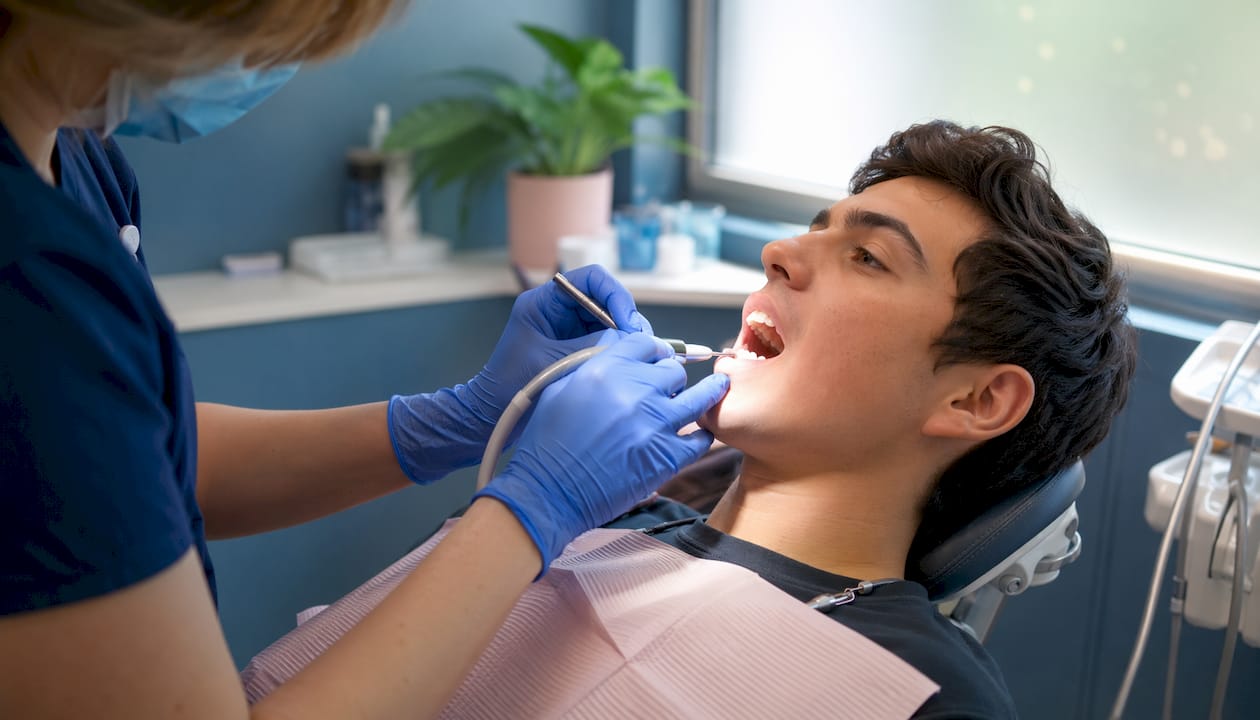
Professional scaling removes mineralized tartar that no toothbrush reaches. Left in place, that tartar triggers the inflammation cycle behind gingivitis and, eventually, periodontitis. Patients who skip cleanings often discover hidden periodontal disease only after bone loss has already begun. Catching it early, through routine periodontal screenings, keeps treatment simple and non-surgical.
Early detection of oral cancer and systemic disease
A routine exam is more than a cavity check. Dentists screen for oral cancer at every visit, and oral exams can reveal early signs of systemic conditions including diabetes and heart disease, prompting timely medical referrals. Oral cancer caught early has dramatically better outcomes than cancer found at a late stage. For patients with diabetes, the oral-systemic link runs both ways: poor gum health worsens blood sugar control, and high blood sugar accelerates gum disease.
Fewer dental emergencies
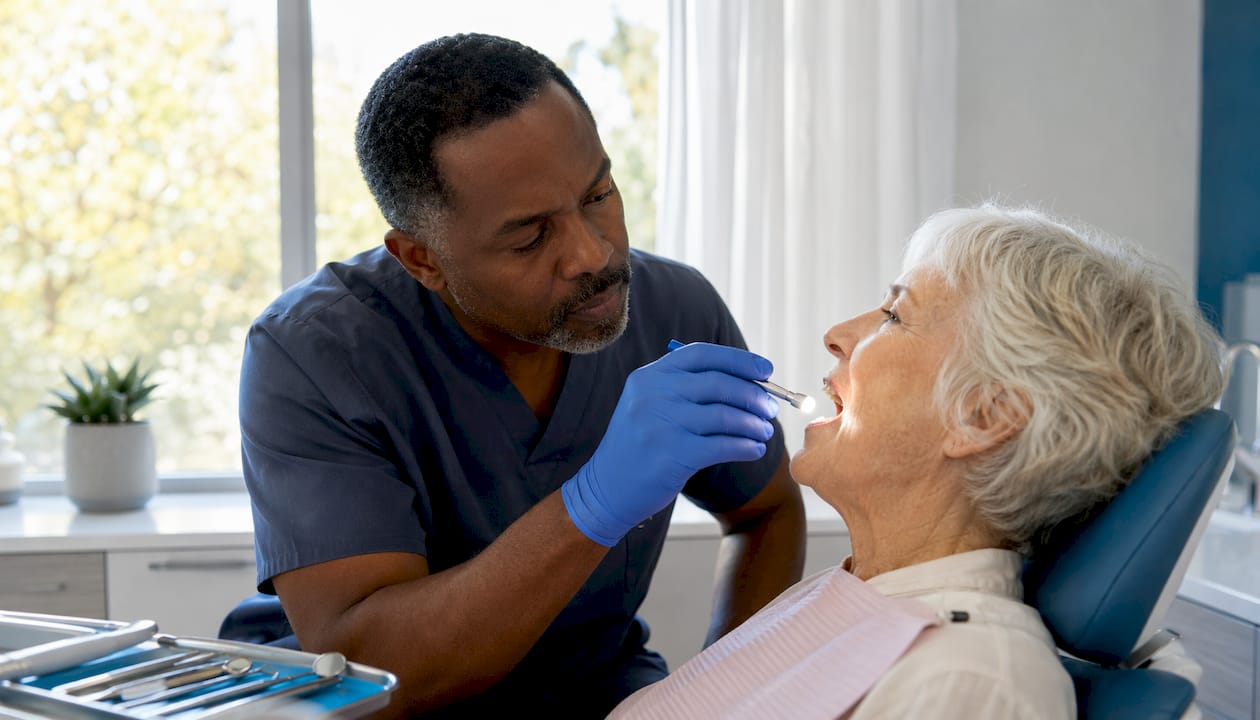
Most dental emergencies, cracked teeth, abscesses, lost fillings, are the end result of problems that were detectable months or years earlier. Catching a small cavity before it reaches the nerve avoids a root canal. Spotting a hairline crack before it fractures avoids an extraction. The U.S. sees more than 2 million ER visits for dental problems every year, at nearly $1,000 per Medicaid visit. Most of those visits are for conditions that preventive care could have interrupted.
Long-term cost savings
Every $1 spent on individual preventive care yields $8–$50 saved in future restorative or emergency treatment costs, according to CDC data. Community water fluoridation returns about $20 for every $1 invested in communities of 1,000 or more. Untreated oral disease costs the U.S. over $45 billion in lost productivity annually. Those numbers make the case plainly: skipping a $0 (insurance-covered) cleaning to avoid a $200 crown is the wrong math.
Stat: Preventive dental care yields an individual ROI of $8–$50 saved per $1 spent, according to CDC data.
Pro Tip: Ask your dentist to flag any "watch areas" at each visit and photograph them. Tracking small changes over time is how small problems stay small.
Preserved function and appearance
Teeth lost to decay or gum disease affect chewing efficiency, speech clarity, and facial structure. Preventive care keeps natural teeth in place longer, which matters more than most patients realize until a tooth is gone. Cosmetic outcomes are also easier to maintain when the underlying teeth and gums are healthy.
What preventive services look like in practice
Routine preventive visits typically include a combination of the following:
- Comprehensive exam: Full evaluation of teeth, gums, bite, jaw joints, and soft tissues; typically every 6–12 months.
- Professional cleaning (prophylaxis): Scaling to remove tartar, polishing to remove surface stain; most patients every 6 months, higher-risk patients more often.
- Dental X-rays: Detect decay, bone loss, and abnormalities invisible to the naked eye; frequency depends on risk level.
- Fluoride treatment: Topical application that strengthens enamel; most beneficial for children, though adults at high cavity risk benefit too. Some insurance plans limit fluoride coverage by age.
- Dental sealants: Quick, painless coatings on molar chewing surfaces; primarily for children and cavity-prone adults. Age limits on coverage vary by plan.
- Oral cancer screening: Visual and tactile exam of all soft tissues; recommended at every visit for adults.
- Mouthguards: Custom-fitted guards for sports or bruxism (teeth grinding); protect against fractures and wear.
- Hygiene counseling: Personalized brushing, flossing, and diet guidance based on your specific risk profile.
Who benefits from preventive dentistry, at every age
Preventive care looks different depending on where you are in life.
Children (birth–12): The ADA recommends a child's first dental visit by their first birthday. Early visits establish healthy habits, allow fluoride and sealant application, and catch developmental issues early. Pediatric preventive care also gives parents practical guidance on diet and bottle habits that directly affect decay risk.
Teenagers: Orthodontic treatment, sports participation, and dietary choices (sports drinks, frequent snacking) all raise cavity and injury risk. Mouthguards and sealants on newly erupted second molars are particularly valuable at this stage.
Adults: Gum disease risk increases with age, stress, and medication use. Adults benefit from consistent cleanings, oral cancer screenings, and monitoring of existing restorations. Preventive visits also catch early signs of bruxism before significant wear occurs.
Seniors: Dry mouth from medications, receding gums, and root exposure make older adults more cavity-prone. More frequent cleanings (three to four per year) are sometimes appropriate. The National Institute on Aging emphasizes that good oral health remains achievable and important throughout life.
People with chronic conditions: Patients with diabetes, heart disease, or who are pregnant face elevated oral health risks. Pregnant patients, for example, are more susceptible to pregnancy gingivitis. Patients with diabetes should know that gum disease and blood sugar control directly affect each other, making preventive dental visits part of managing the condition, not separate from it.
How often to visit and what happens during a preventive appointment
The standard recommendation is two visits per year for most patients. Higher-risk patients (active gum disease, high cavity rate, dry mouth, smoking history) often benefit from three or four visits annually. Your dentist sets the frequency based on your actual risk, not a one-size rule.
A typical preventive appointment runs roughly 60–90 minutes and follows this sequence:
- Check-in and health history update — medications, new diagnoses, and any symptoms since your last visit.
- Exam — teeth, gums, bite, jaw, and soft tissue screening including oral cancer check.
- X-rays — taken as clinically indicated, not necessarily at every visit.
- Professional cleaning — scaling to remove calculus, followed by polishing.
- Fluoride or sealant application — if indicated by age, risk, or insurance coverage.
- Counseling — brief, personalized hygiene and diet recommendations.
- Treatment planning — any concerns flagged for follow-up, with priority and timing discussed.
Pro Tip: Before your appointment, write down any symptoms (sensitivity, bleeding, pain) and bring a current medication list. Dentists adjust their approach based on both, and patients who come prepared get more from the visit.
Cost, insurance coverage, and the economics of prevention
Most U.S. dental plans classify exams, cleanings, and routine X-rays as preventive services and cover them at 100% within plan frequency limits, commonly two visits per 12 months. Fluoride and sealant coverage is often age-limited; confirm your plan's rules before assuming a service is covered.
The broader benefit structure divides dental procedures into preventive, basic, and major categories. Preventive services carry the highest coverage; basic and major work (fillings, crowns, root canals) typically involves copays and counts toward your annual maximum. Using your preventive benefits in full preserves that maximum for unavoidable restorative work.
| Metric | Figure | Source |
|---|---|---|
| Individual preventive ROI | $8–$50 saved per $1 spent | CDC |
| Community fluoridation ROI | $20 return per $1 (communities 1,000+) | CDC |
| Annual U.S. productivity loss | Over $45 billion from untreated oral disease | CDC |
| Annual U.S. dental ER visits | More than 2 million | CDC |
| Average Medicaid ER dental cost | ~$1,000 per visit | CDC |
| Typical preventive coverage | 100% within frequency limits | NADP |
Insurance tips:
- Verify your plan's frequency limits (some allow two visits per calendar year, others per rolling 12 months).
- Confirm fluoride and sealant age rules for children on family plans.
- Check your annual maximum and use preventive benefits before the plan year resets.
- Use in-network providers to avoid balance billing on covered services.
- Consider payment plan options if out-of-pocket costs are a barrier to starting care.
Stat: The U.S. loses over $45 billion in productivity annually from untreated oral disease — more than the cost of covering preventive care for every American adult.
At-home habits that make professional care work harder
Professional visits set the foundation; daily habits determine whether that foundation holds. The most impactful at-home preventive steps include:
- Brush twice daily with fluoride toothpaste — two minutes each time, angled toward the gumline.
- Floss once daily — reduces gingivitis risk by removing plaque from surfaces no brush reaches.
- Clean your tongue — reduces bacterial load and bad breath.
- Limit sugary and acidic drinks — sipping throughout the day prolongs acid exposure on enamel.
- Chew sugar-free gum after meals — stimulates saliva, which neutralizes acid and remineralizes enamel.
- Avoid tobacco — smoking and smokeless tobacco are directly linked to gum disease, tooth loss, and oral cancer.
- Stay hydrated — adequate saliva flow is one of the mouth's primary natural defenses.
A simple memory aid: brush, floss, and rinse before bed without exception. Nighttime is when saliva flow drops and bacteria are most active. Missing that routine consistently is one of the fastest routes to decay.
Pro Tip: Stack your flossing habit onto something you already do every night, like charging your phone. Habit pairing is more reliable than willpower.
When to see a dentist sooner than scheduled
Preventive visits catch problems early, but some symptoms need attention before your next scheduled appointment. Pain, swelling, or bleeding that appears suddenly should not wait weeks.
See a dentist promptly if you notice:
- Persistent tooth pain or sensitivity that does not resolve within a day or two
- Facial or gum swelling
- Uncontrolled bleeding from the gums
- A tooth that feels suddenly loose
- A sore or white/red patch in the mouth that does not heal within two weeks
- Numbness or tingling in the lips, tongue, or jaw
- Difficulty swallowing or chewing that is new
If swelling is accompanied by fever, difficulty breathing, or difficulty swallowing, seek emergency medical care immediately. These signs can indicate a spreading infection that becomes life-threatening without rapid treatment. For guidance on managing gum-related symptoms between appointments, Starboarddental has patient resources available.
The evidence behind preventive dentistry's value
The case for prevention is not theoretical. CDC data shows that community water fluoridation saves $6.5 billion in dental treatment costs annually across the U.S. Providing sealants to the nearly 7 million children from low-income households who need them could save up to $300 million in averted treatment costs. A PMC study of Medicaid-enrolled adults found that having at least one preventive dental visit in the prior year was associated with fewer non-preventive visits and lower total dental expenditures.
Key sources that back the claims in this article:
- CDC Oral Health Data and Research — ROI figures, ER visit counts, productivity loss, systemic disease links
- CDC NCCDPHP — sealant effectiveness data, community fluoridation economics
- NADP — insurance coverage norms and benefit structure
- ADA — professional cleaning standards and clinical guidance
- Delta Dental — preventive service definitions
- Cigna — pediatric preventive care and age-limit guidance
- Humana — at-home prevention recommendations
- NIH/NIA — senior oral health guidance
- NIDDK — diabetes and gum disease connection
- PMC (Medicaid study) — preventive visit ROI in low-income adult populations
Key Takeaways
Preventive dentistry's strongest argument is economic: the CDC puts individual ROI at $8–$50 saved per $1 spent, making routine care one of the highest-return health investments available.
| Point | Details |
|---|---|
| Prevention pays | Every $1 in preventive care saves $8–$50 in future restorative costs, per CDC data. |
| Coverage is often free | Most U.S. dental plans cover preventive visits at 100%, up to two per year. |
| All ages benefit | From a child's first birthday visit to senior cleanings, prevention adapts to every life stage. |
| Home care is non-negotiable | Daily brushing and flossing between visits determines whether professional care holds. |
| Starboarddental offers preventive care for all ages | Book a new patient appointment or explore general dentistry services in Kennebunk. |
Why prevention is the right clinical priority
The conventional wisdom says prevention is "better than cure." That is true, but it undersells the real point. Prevention is not just cheaper than treatment. It is categorically different in what it preserves. A filled tooth is not the same as a healthy tooth. A crown is not the same as an intact one. Once enamel is gone, it does not grow back. Once bone is lost to periodontitis, recovery is partial at best.
Patients who treat preventive visits as optional, something to do when they have time or when something hurts, consistently end up in more complex, more expensive, and more uncomfortable treatment. The patients who get the most from dentistry are the ones who show up before anything hurts. That is not a coincidence.
The goal of preventive care is not to avoid the dentist. It is to make every visit uneventful.
Preventive care at Starboarddental in Kennebunk
Starboarddental provides comprehensive preventive dental services for patients of all ages in Kennebunk, and accepts most major dental plans. Preventive visits at the practice include thorough exams, professional cleanings, oral cancer screenings, fluoride and sealant services where appropriate, and personalized hygiene guidance. Same-day appointments are available for patients who need to be seen quickly, and the clinic's comfort-focused environment, ceiling-mounted TVs, personalized comfort items, and a genuinely warm team, makes it easier for anxious patients to follow through on care they have been putting off.

New patients can review insurance and booking details on the new patients page and schedule directly online. If you have not had a cleaning or exam in the past six months, that is the right place to start.
Sources and further reading
- CDC Oral Health Data and Research — ROI figures, ER visit data, productivity loss, systemic disease links
- CDC Preventing Oral Diseases in Communities — community fluoridation and sealant program evidence
- CDC NCCDPHP Oral Disease Interventions — sealant effectiveness and cost-savings data
- NADP — Understanding Dental Benefits — insurance coverage categories and frequency norms
- ADA — American Dental Association — professional cleaning standards, clinical guidance
- Delta Dental — Preventive Dental Care — standard preventive service definitions
- Cigna — What Is Preventive Dentistry — pediatric services and age-limit guidance
- Humana — Preventive Dental Care — at-home prevention recommendations
- NIH/NIA — Teeth and Mouth Care — senior oral health guidance
- NIDDK — Diabetes and Gum Disease — oral-systemic connection for diabetic patients
- PMC — Preventive Dental Visits and Medicaid Expenditures — evidence on preventive care ROI in low-income adult populations
This article provides general oral health information and is not a substitute for professional dental advice. Confirm coverage details and clinical recommendations with your dentist and insurance provider for your specific situation.