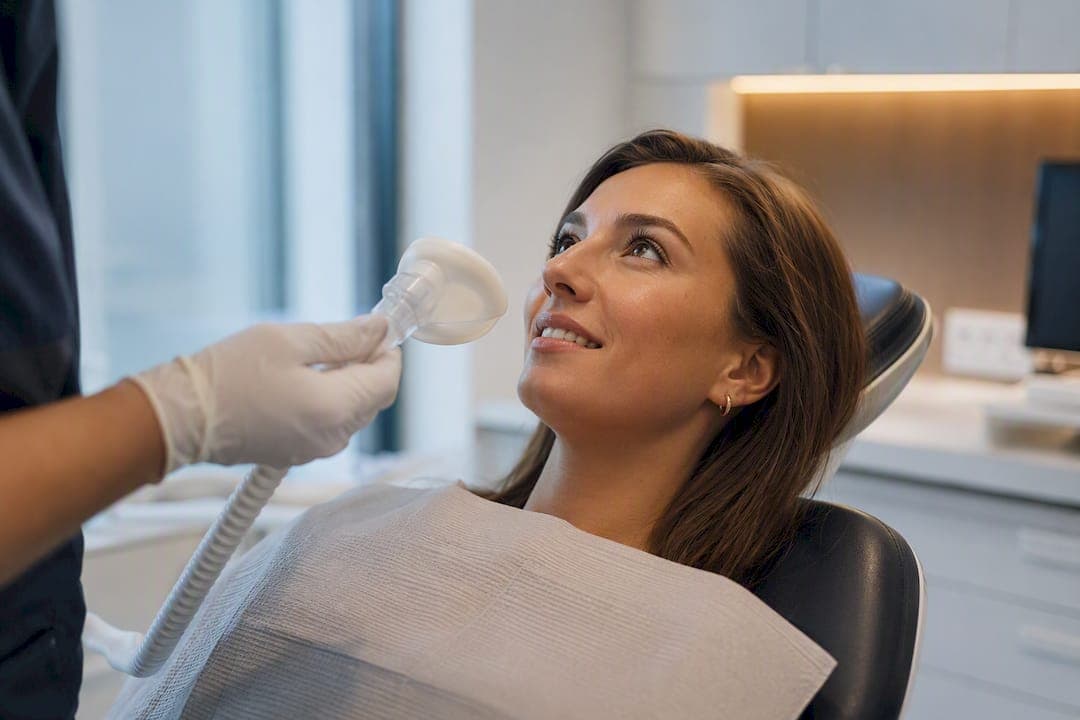
Four main sedation options cover nearly every dental scenario: nitrous oxide, oral conscious sedation, IV sedation, and deep sedation or general anesthesia. What matters more than which one you pick is the sedation level, ranging from minimal to general, since that level (not the method used to deliver it) determines how closely you're monitored and what training your provider needs. Your dentist or an anesthesia specialist should walk through your medical history and the procedure length before recommending one.
TL;DR:
- The safe use of sedation in dentistry depends on understanding the sedation level, which varies from minimal to general, rather than simply the method of administration.
- Oral sedation has a slow onset and longer recovery, requiring a driver, while IV sedation can be titrated in real time with a shorter recovery period and also requires a driver.
- Nitrous oxide works rapidly, allows patients to drive afterward, and is ideal for short procedures or mild anxiety, but deeper sedation levels still require advanced monitoring.
- Patients with sleep apnea, severe obesity, or certain health conditions should avoid benzodiazepine sedation and disclose all health information before planning sedation.
- Most importantly, the level of sedation and the provider’s training are more critical for safety than choosing one specific sedation method.
Table of Contents
- The Four Common Sedation Dentistry Types Explained
- Why Sedation Level Matters More Than the Method
- Who Shouldn't Get Certain Sedation Methods
- What to Expect Before, During, and After Sedation
- How Starboard Dental Approaches Sedation and Comfort
- Where to Verify Sedation Safety Claims
- What Actually Matters When You're Choosing
- Ready to Talk Through Your Sedation Options?
- Sources
- FAQ
The Four Common Sedation Dentistry Types Explained
Each method sits on a different point of the onset, control, and recovery spectrum, and that spectrum matters more than most patients realize when they're deciding what to ask for.
Nitrous oxide (laughing gas) works fastest of all four. You breathe it through a mask, feel the effects within minutes, and it clears from your system almost as soon as the mask comes off. It's the standard pick for shorter procedures and mild anxiety, and rapid onset and quick recovery mean many patients drive themselves home afterward, something none of the other three options allow.
Oral conscious sedation uses pills, usually a benzodiazepine like midazolam, triazolam, or diazepam, taken before your appointment. The tradeoff for convenience is control: these drugs take 30 to 60 minutes to take effect, and once swallowed, the dose can't be adjusted mid-procedure the way an IV can. Recovery runs longer too, often with partial amnesia for the visit itself, which is why you'll need someone to drive you home no matter how alert you feel.
IV sedation delivers the drug directly into the bloodstream, so it acts fast and, critically, it can be titrated up or down during the procedure based on how you're responding. That flexibility makes it a common choice for longer or more complex work, or for patients who want minimal awareness of what's happening. It ranges from moderate to deep depending on dosing, and it comes with closer monitoring than oral pills.
Deep sedation and general anesthesia put you at or near unconsciousness. These are reserved for extensive oral surgery, patients with severe phobia that other methods can't manage, or certain special-needs cases, and they require advanced airway monitoring, often with a dental anesthesiologist present.
A few practical distinctions worth keeping straight:
- Nitrous oxide: minutes to onset, minutes to recovery, driving home is often possible
- Oral sedation: 30 to 60 minutes to onset, no mid-procedure adjustment, driver required
- IV sedation: rapid onset, adjustable in real time, driver required
- Deep sedation/general anesthesia: near or total unconsciousness, advanced monitoring required
One systematic review covering 10,003 patients across 21 studies found that midazolam is the sedative most frequently used for moderate dental sedation, ahead of nitrous oxide and propofol, though the same review notes more comparative research is still needed. Worth remembering too: none of these methods replace local anesthesia for pain control. Sedation calms anxiety and limits movement; the numbing shot still does the job of blocking pain.
Why Sedation Level Matters More Than the Method
The American Dental Association splits sedation into four levels, and understanding them tells you far more about your safety than knowing whether you're getting gas, a pill, or an IV line.
- Minimal sedation: You're relaxed but fully awake and can respond normally to conversation. Nitrous oxide at typical doses lands here.
- Moderate sedation: You're drowsy, might slur words, but still respond to verbal cues or light touch. Many oral and IV protocols fall in this band.
- Deep sedation: You're on the edge of consciousness and may not respond to anything short of a painful stimulus.
- General anesthesia: You're fully unconscious with no response to stimulation at all.
Here's the detail patients rarely hear explained: the ADA states that the level of sedation is independent of the route of administration. An oral pill can theoretically push someone into deep sedation just as an IV can be dosed to stay moderate. That's part of why IV sedation is easier to control safely. It can be titrated in real time, while an oral dose, once swallowed, runs its course regardless of how you respond. As sedation depth increases, so do the credentialing requirements. Deeper sedation levels call for providers trained in Basic Life Support and often Advanced Cardiac Life Support, plus state-specific permits and airway rescue equipment on hand.
Who Shouldn't Get Certain Sedation Methods
Screening matters as much as the drug choice itself, and a good pre-visit conversation should cover more than "any allergies?"
Benzodiazepine-based sedation carries clear contraindications. Pregnancy and known drug allergies are considered absolute contraindications, meaning these patients shouldn't receive that class of sedative at all. Other conditions don't rule sedation out but raise the bar for pre-assessment:
- Obstructive sleep apnea or heavy CPAP use, since airway collapse risk rises under sedation
- COPD or other chronic respiratory conditions
- Severe obesity, which complicates both airway management and drug dosing
- Multiple current medications that could interact with sedatives
Patients managing sleep apnea in particular need a frank conversation before any sedation decision, and it's worth reviewing treatment options for sleep apnea if you haven't already been evaluated for it.
There's also a simpler safety principle that gets overlooked: using a single sedative agent is generally safer than combining several, because multiple drugs interacting make your response harder to predict and harder to reverse if something goes wrong.
Pro Tip: Ask your provider directly whether your sedation plan uses one agent or several. A simpler regimen isn't a lesser one. It's often the safer choice for routine outpatient procedures.
What to Expect Before, During, and After Sedation
Good sedation care is as much about preparation as it is about the drug itself.
- Before your visit: Give your dentist a full medication list, follow any fasting instructions exactly (usually required for IV or deep sedation), arrange a ride home in advance, and mention sleep apnea or CPAP use even if it seems unrelated.
- During the procedure: Expect monitoring equipment tracking your heart rate, blood pressure, and oxygen levels for anything beyond minimal sedation, with staff trained to adjust your sedation depth if needed.
- After the procedure: Plan for grogginess that can last several hours, skip driving for the rest of the day, and expect mild nausea or lingering drowsiness as normal, temporary side effects. Contact your provider if you notice trouble breathing, unusual confusion, or symptoms that worsen instead of fading.
How Starboard Dental Approaches Sedation and Comfort
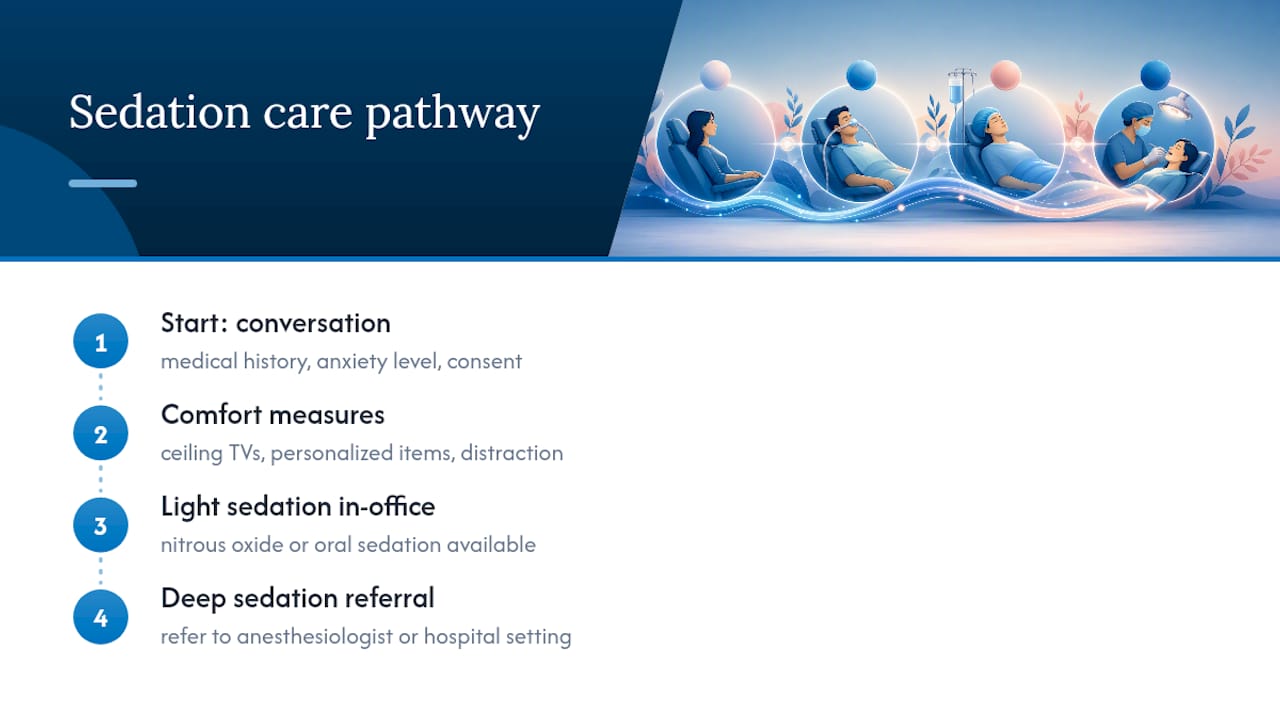
Not every anxious patient needs medication at all. Simple comfort measures often lower the sedation depth a patient actually needs, which is part of why Starboard Dental built its Kennebunk office around ceiling-mounted TVs and personalized comfort items during procedures. Distraction genuinely changes how much sedation someone requires.
For most routine restorative and general dentistry work, lighter options like nitrous oxide or oral sedation are commonly managed directly by dental practices. When a case calls for deep sedation or general anesthesia, that's when referral to a dental anesthesiologist or hospital setting makes sense. Every plan starts with a real conversation. Your medical history, your anxiety level, and clear consent and recovery instructions before you ever sit in the chair.
Where to Verify Sedation Safety Claims
Anything you read about sedation, including this article, is worth checking against primary clinical sources rather than taking on faith.
- The ADA guidelines for sedation and general anesthesia define the official sedation levels and set training standards providers must meet.
- StatPearls' clinical reference on dental sedation lays out contraindications and airway risk factors in clinical detail.
- The systematic review of sedative drug use in dentistry analyzes real outcome data across thousands of patients rather than relying on anecdote.
What Actually Matters When You're Choosing
Most sedation content online ranks methods by how "strong" they sound, gas as mild, pills as moderate, IV as serious, general anesthesia as last resort. That framing misses the point the ADA itself makes: level of sedation, not the delivery method, is what should drive your decision. A poorly dosed oral pill can land you deeper than you intended; a carefully titrated IV drip can keep you lighter than most people assume.
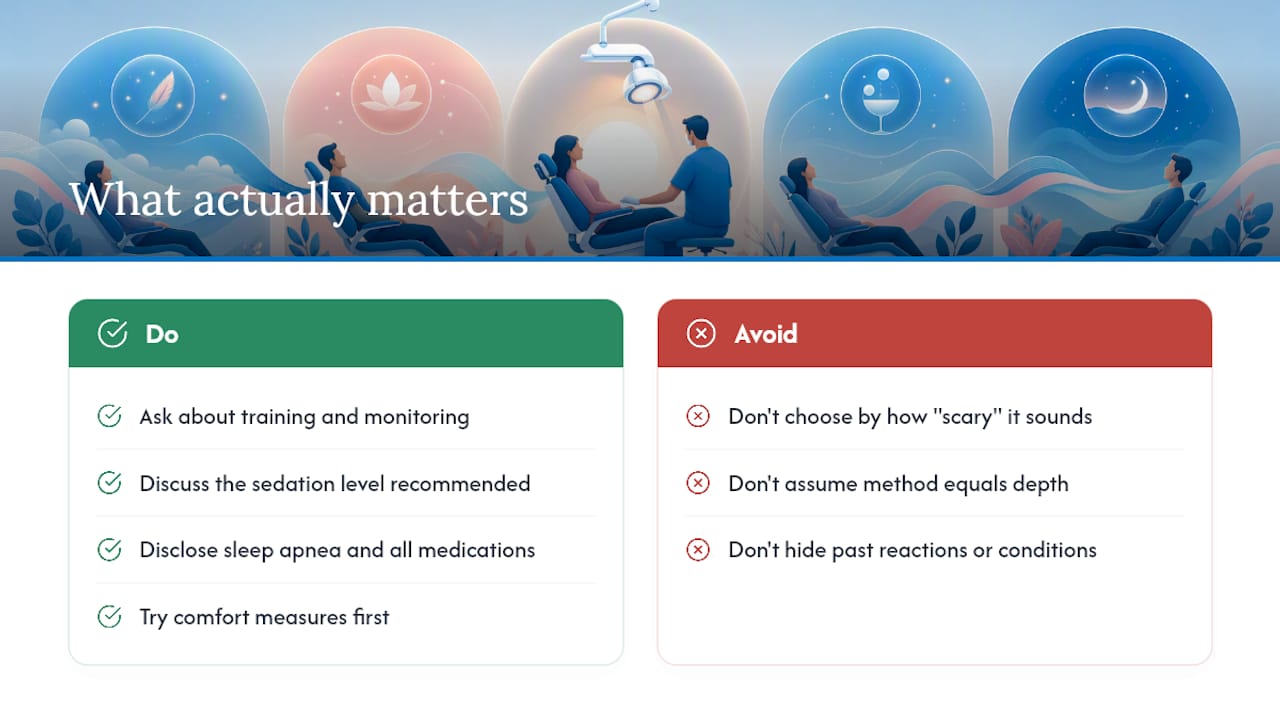
The question worth asking isn't "which method sounds least scary?" It's "what training and monitoring does my provider have for the level of sedation they're recommending?" That single question filters out more risk than picking gas over pills ever will.
If there's one habit worth adopting, it's disclosing everything, sleep apnea, every medication, every past reaction, before the conversation about method even starts. Comfort measures like distraction and a calm environment do real work too, sometimes enough to lower how much sedation you need in the first place.
— Alex
Ready to Talk Through Your Sedation Options?
If reading through all four sedation types left you more confident about which conversation to have, that's the point. Starboard Dental's Kennebunk practice builds sedation planning into a real medical history review, not a generic checkbox, so patients with sleep apnea, anxiety, or complex health histories get a plan suited to them rather than a one-size approach.

Same-day appointments mean you don't have to sit with dental anxiety for weeks before getting real answers about what sedation option fits your procedure. Whether you need a routine cleaning with a little nitrous to take the edge off or a longer restorative visit that calls for IV sedation, the team reviews your health conditions and treatment needs before recommending anything. Explore general dentistry services at Starboard Dental, or start as a new patient and bring your questions about sedation straight to your first visit.
This article is general information, not a substitute for advice from a qualified doctor. Consult a qualified healthcare professional about your own circumstances before acting on anything here.
Sources
- ADA guidelines for the use of sedation and general anesthesia by dentists
- Sedation, Analgesia, and General Anesthesia in Dentistry (StatPearls, 2023)
- Systematic review on sedative drugs used in dentistry (PMC5005095)
FAQ
What Is the Best Type of Sedation for Dental Work?
There's no single best option. It depends on your anxiety level, procedure length, and health history. Mild anxiety and short visits usually call for nitrous oxide, while longer or more complex procedures often point toward IV sedation.
What Are the Three Types of Sedation?
Clinically, sedation is usually grouped by administration route into inhaled (nitrous oxide), oral, and IV sedation, with general anesthesia as a separate, more intensive category. The ADA further classifies these by depth into minimal, moderate, deep, and general anesthesia.
What Is the Most Commonly Used Sedative in Dentistry?
Midazolam is the most frequently used sedative for moderate sedation in dental procedures, according to a large systematic review, with nitrous oxide close behind for lighter cases.
What Is the Safest Form of Sedation?
Nitrous oxide carries the lowest risk profile because of its fast onset and quick clearance from the body. That said, safety depends heavily on your provider's monitoring and training at whatever level is used, and single-agent sedation is generally safer than combining multiple drugs regardless of method.
Can I Drive Myself Home After Sedation?
Only nitrous oxide typically allows you to drive yourself home afterward, since it clears quickly. Oral sedation and IV sedation both require a driver, given the longer recovery window and lingering drowsiness.