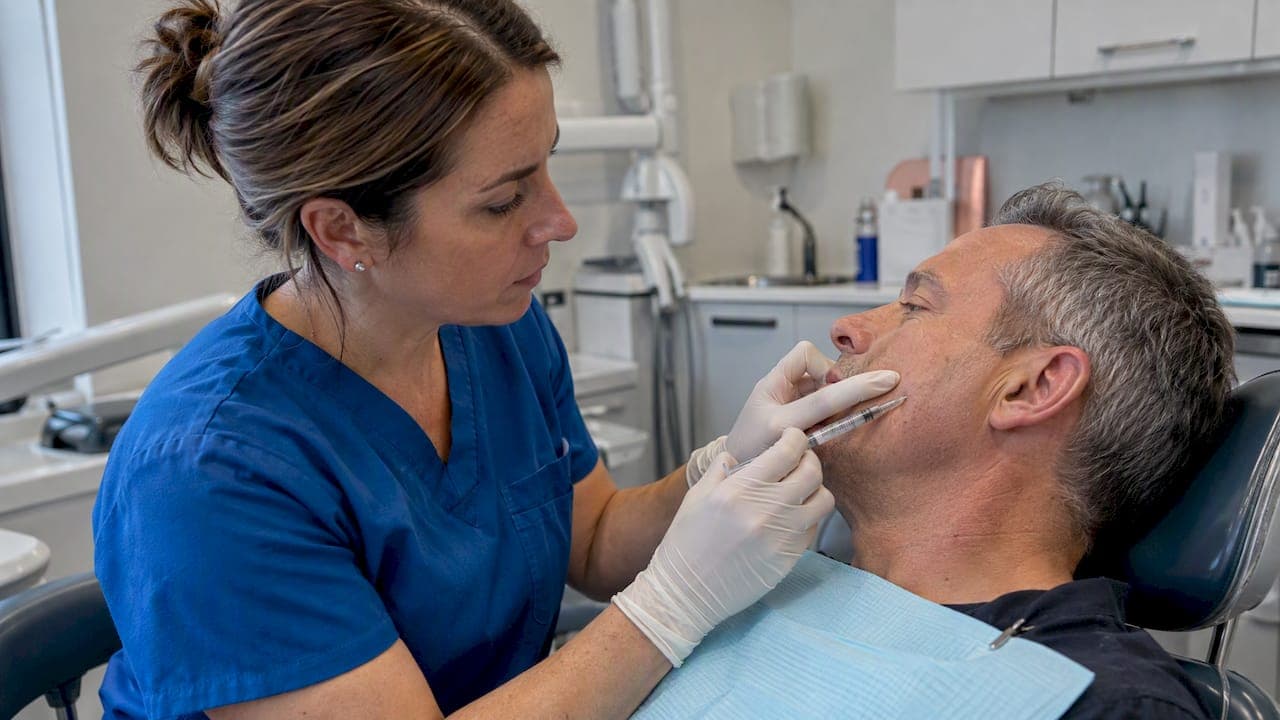
Most people who get Botox for TMJ experience only short-lived local reactions like bruising, swelling, or soreness near the injection site. Temporary muscle weakness affecting chewing or smiling can also occur but typically resolves on its own. Rare but serious risks, including the toxin spreading beyond the treatment area and causing swallowing or breathing problems, are flagged in the FDA's boxed warning. The timeline and emergency warning signs are covered below.
TL;DR:
- A 2024 review found pain relief lasting one to six months, but jaw mobility did not consistently improve beyond placebo or conservative care.
- Bruising, soreness, swelling, and chewing weakness usually fade; softer foods can ease the adjustment, and injection sites should not be massaged unless advised.
- Seek emergency care for trouble swallowing or breathing, slurred speech, drooping eyelids, or generalized weakness, symptoms that can emerge hours to weeks after injection.
- Choose a licensed clinician experienced with TMJ who uses a product approved by the FDA in a medical setting, and disclose medications and health conditions.
- People who are pregnant, breastfeeding, or planning pregnancy should discuss treatment with a clinician before scheduling an injection because safety evidence remains limited.
Table of Contents
- How Botox Helps TMJ and Why That Matters for Side Effects
- Common, Expected Side Effects and How to Manage Them at Home
- Serious and Rare Risks: Boxed Warnings, Red Flags, and Public Health Alerts
- Recovery Timeline and Realistic Expectations After TMJ Botox
- Evidence and Agency Guidance: What Studies and Alerts Say About Safety and Effectiveness
- How to Reduce Risk: Choosing a Safe Injector and What to Ask Before You Book
- Does Botox Interact With Other Medications or Conditions Relevant to Dental Patients
- Specific Considerations for TMJ Patients Undergoing Botox
- Practice Perspective: Balancing Benefit and Safety
- If You Want an In-Clinic Consultation: TMJ Botox at Starboard Dental
- FAQ
- Sources
How Botox Helps TMJ and Why That Matters for Side Effects
Botox works for TMJ by relaxing overactive jaw muscles, mainly the masseter and temporalis, and sometimes the pterygoid muscles, which cuts down on the clenching and muscle hyperactivity that drive jaw pain. Because the toxin acts directly on muscle tissue, where it's injected and how much is used both shape which side effects show up afterward, as explained by expert insights on overbite treatment with aligners.
A few basics about the typical course of treatment:
- Effects usually begin after injection.
- Pain relief tends to build after treatment.
- Benefits generally wear off over time, which is why some patients may need repeat sessions.
This muscle-specific action explains why side effects cluster around the jaw and lower face rather than showing up elsewhere in the body.
Common, Expected Side Effects and How to Manage Them at Home
Most reactions to TMJ Botox are mild and localized. Knowing what's normal helps you avoid unnecessary worry and spot anything that actually needs attention.
- Injection-site reactions: pain, redness, swelling, or bruising at the injection points, which usually fade over time.
- Minor systemic symptoms: some patients report headache, flu-like aches, fatigue, or dry mouth after treatment.
- Temporary functional changes: mild weakness when chewing tougher foods, slight facial asymmetry, or a smile that feels less natural while the toxin is most active.
These effects are connected to the muscle relaxation itself rather than to anything going wrong with the treatment, and they almost always fade as the Botox settles into a steadier, lower-level effect.
For self-care, ask your provider whether applying ice to the treated area may help with swelling, and avoid massaging or pressing on the injection sites unless your provider advises otherwise. Over-the-counter pain relievers like acetaminophen handle most discomfort. If chewing feels weak, stick to softer foods for a few days rather than forcing your jaw through steak or crusty bread.
Pro Tip: Ask your provider whether you should avoid vigorous exercise or alcohol after treatment.
Contact your clinic if swelling or pain worsens, or if weakness interferes with eating or speaking. Seek immediate emergency care for trouble swallowing or breathing.
Serious and Rare Risks: Boxed Warnings, Red Flags, and Public Health Alerts
Botulinum toxin products carry an FDA boxed warning, the agency's strongest safety label, because the toxin can occasionally spread beyond the injection site. According to the prescribing information, this distant spread can cause symptoms resembling botulism, including difficulty swallowing, breathing problems, and generalized muscle weakness. Postmarketing reports tied to this spread have included dysphagia, aspiration, respiratory compromise, and in rare cases involving other conditions, death.
Symptoms of toxin spread have been reported hours to weeks after injection, including swallowing difficulty, speech changes, and breathing problems.
Separately, the CDC Health Alert Network issued a 2024 advisory describing clusters of harmful reactions linked to counterfeit or mishandled botulinum toxin products and injections given by unlicensed providers. A related CDC investigation tracked reported adverse cases tied to these clusters, including cases involving people injected in non-medical settings like homes or spas.
Red flags that call for emergency care: trouble swallowing or breathing, drooping eyelids spreading beyond the treated area, slurred speech, or generalized weakness. Any of these warrants a trip to the emergency room or a call to 911, and the reaction should also be reported to the FDA or your local health department.
Recovery Timeline and Realistic Expectations After TMJ Botox
Recovery from TMJ Botox follows a fairly predictable pattern, though individual timing varies.
- Early recovery: bruising, redness, and soreness may be noticeable and then fade.
- As treatment takes effect: muscle relaxation builds, and pain relief may improve.
- Over time: comfort may stabilize, and treatment effects eventually wear off.
Bruising, swelling, or muscle weakness, if they occur, may take time to settle as the toxin's effect stabilizes. Because the benefit is temporary, some people managing chronic TMJ pain may discuss repeat treatments with their provider.
Contact your provider if weakness in chewing or facial movement persists, or if pain relief never materializes. Seek immediate emergency care for trouble swallowing or breathing. Ask your clinic when to schedule a follow-up to assess how well treatment worked and discuss any further care. Normal daily activities are generally fine right away, though it's smart to avoid dental work or facial massage in the treated area for a few days.
Evidence and Agency Guidance: What Studies and Alerts Say About Safety and Effectiveness
A 2024 systematic review and meta-analysis of randomized trials found that Botox reduces TMJ-related pain at one to six months, and pooled adverse-event rates did not differ significantly from placebo across the studies reviewed. The same analysis noted that while pain often improves, jaw mobility doesn't consistently improve more than it does with placebo or conservative therapies, so it's worth setting realistic goals about what the treatment will and won't fix.
On the safety side, FDA prescribing information lays out the boxed warning for distant toxin spread and lists dysphagia and respiratory compromise among the serious reactions reported after approval. The CDC's Health Alert Network guidance reinforces this by urging clinicians to consider botulinum toxin exposure when patients show up with unexplained localized paralysis, and it specifically recommends sourcing only FDA-approved products from licensed, trained providers.
Pregnancy and breastfeeding data remain limited. A cumulative safety analysis of onabotulinumtoxinA exposure found the rate of major birth defects among live births in one tracked series was comparable to general background rates, but the evidence base is still incomplete. Anyone pregnant, breastfeeding, or planning pregnancy should discuss this directly with their clinician before treatment.
How to Reduce Risk: Choosing a Safe Injector and What to Ask Before You Book
Where and by whom you get injected matters as much as the treatment itself. Look for a licensed clinician with specific experience treating TMJ, and confirm injections happen in a medical setting rather than a spa or someone's home.
- Ask which product they use and confirm it's FDA-approved rather than an unverified or imported version.
- Ask about the planned dose, target muscles, and injection technique for your specific jaw anatomy.
- Ask what their plan is if you experience a reaction, including after-hours contact information.
Red flags include prices that seem too low to be real, providers who dodge questions about product or dosage, and anyone offering treatment outside an actual health care setting. Our TMJ and TMD care includes individualized consultations.
Pro Tip: A licensed provider should be able to tell you the exact product name and lot number they're using, no hesitation required.
Does Botox Interact With Other Medications or Conditions Relevant to Dental Patients
Botox can interact with certain medications and health conditions that matter for dental patients specifically. Aminoglycoside antibiotics and other drugs that interfere with neuromuscular transmission can amplify the toxin's muscle-relaxing effect, increasing the chance of unwanted weakness. If you're taking muscle relaxants, blood thinners, or medications for neuromuscular conditions like myasthenia gravis or Lambert-Eaton syndrome, it's worth flagging these before treatment, since underlying neuromuscular disorders can make someone more sensitive to the toxin's effects.
For dental patients specifically, Botox injected into jaw muscles can temporarily affect bite force and jaw opening, which matters if you have upcoming dental procedures that require a wide-open mouth or significant jaw pressure, like certain extractions or extensive restorative work. It's reasonable to mention any planned Botox treatment when scheduling other dental care, and vice versa, so your care team can sequence appointments sensibly.
Blood thinners, including common ones like aspirin or warfarin, don't rule out treatment but do raise the chance of bruising at injection sites, so your provider should know your full medication list beforehand. Anyone with a history of swallowing difficulties or respiratory conditions should discuss this openly, since these conditions can make the rare toxin-spread symptoms harder to distinguish from existing issues. None of these interactions are reasons to avoid treatment outright, but they're exactly the kind of detail a thorough intake conversation should cover before the first injection.

Specific Considerations for TMJ Patients Undergoing Botox
TMJ patients have a few considerations that differ from people getting Botox purely for cosmetic reasons. Because TMJ treatment targets functional muscles used constantly for chewing, speaking, and swallowing, even mild temporary weakness can feel more noticeable in daily life than it would in a muscle used mainly for facial expression.
Jaw function during the weeks after treatment deserves some attention. Softer foods for the first several days reduce strain while the muscles adjust, and some patients notice a temporary change in bite feel or chewing endurance that improves as the treatment settles into its full effect. This isn't rehabilitation in the physical-therapy sense, but giving your jaw a lighter workload short term tends to make the adjustment period smoother.
Dosing for TMJ also tends to be individualized more than standardized, since the degree of muscle hyperactivity varies a lot between patients with clenching, grinding, or myofascial pain. A provider experienced in TMJ-specific Botox will typically map injection points based on where muscle tension is most pronounced for you rather than applying a uniform pattern. For patients also using a night guard or working through TMJ pain treatment with self-care strategies, Botox is often one part of a broader plan rather than a standalone fix, which lines up with the research showing pain relief without necessarily restoring full mechanical jaw function.
Practice Perspective: Balancing Benefit and Safety
In our experience, the patients who do best with TMJ Botox are the ones who go in with a clear picture of what to expect. We take time to review medical history, ask about swallowing or respiratory issues, and talk through pregnancy plans before any injection happens. Documenting that conversation and following up afterward matters just as much as the injection itself.
— Alex
If You Want an In-Clinic Consultation: TMJ Botox at Starboard Dental
We offer TMJ and TMD care, including Botox injections performed in a clinical setting rather than a spa or non-medical office.

A consultation can cover your medical history, a discussion of risks, and a treatment plan tailored to your jaw muscles. If you're curious about cost locally, we also break down typical out-of-pocket pricing for TMJ Botox. Reach out through our main site to schedule a visit and get your questions answered before anything else happens.
This article is general information, not a substitute for advice from a qualified doctor. Consult a qualified healthcare professional about your own circumstances before acting on anything here.
FAQ
Do jaw muscles go back to normal after Botox wears off?
Muscle function may return toward its baseline as the toxin's effect fades, but the timing varies. Ask your clinician what to expect and whether further treatment is appropriate.
Does Botox actually stop TMJ pain?
Botox reduces TMJ-related pain for many patients, according to a 2024 meta-analysis of randomized trials, though it doesn't always improve jaw mobility beyond what placebo or conservative therapy achieves. It's best thought of as a pain-reduction tool rather than a cure for the underlying joint condition.
Is Botox safe to use during pregnancy?
Safety data during pregnancy remain limited, though a cumulative safety analysis found birth defect rates after exposure comparable to general background rates in the cases reviewed. Because evidence is still incomplete, anyone pregnant or planning pregnancy should discuss this directly with their clinician rather than relying on general reassurance.
What happens if an injection hits a nerve or spreads to nearby muscles?
If the toxin spreads beyond the intended muscle, it can cause symptoms like drooping eyelids, swallowing difficulty, or in rare cases breathing problems, which is why the FDA includes a boxed warning on these products. Anyone experiencing swallowing or breathing trouble after treatment should seek emergency care right away.
Sources
- The effectiveness of botulinum toxin for temporomandibular disorders: A systematic review and meta-analysis
- HIGHLIGHTS OF PRESCRIBING INFORMATION
- Health Alert Network (HAN) - 00507 | Adverse Effects Linked to Counterfeit or Mishandled Botulinum Toxin Injections
- Pubmed