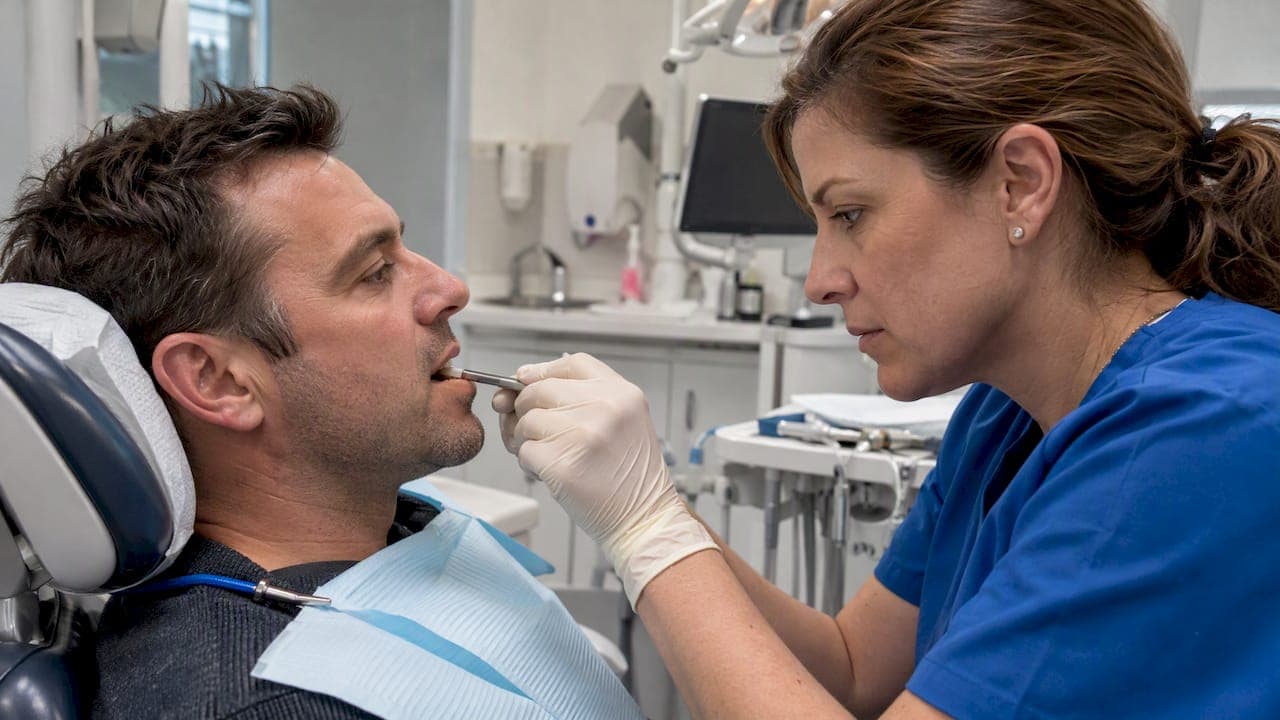
If your tooth hurts when you bite, the most likely culprits are a cracked tooth, a deep cavity, or a high or failing filling. Seek care right away if you notice facial swelling, fever, or trouble breathing or swallowing. For short-term relief, an NSAID like ibuprofen is a reasonable option, but never place aspirin directly on your gum.
TL;DR:
- Pain that spikes when releasing a bite often suggests a crack, while lingering hot or cold sensitivity can indicate pulp involvement.
- A normal X ray does not rule out a crack; dentists also use cusp by cusp bite tests, symptom history, and magnification.
- Cracks above the gumline may be treated with bonding or a crown, but those extending below it have a poorer outlook and may require extraction.
- For acute pain, the ADA recommends ibuprofen 400 mg or naproxen sodium 440 mg, sometimes with acetaminophen; pain beyond one to two days needs evaluation.
- Facial or neck swelling, fever, or breathing or swallowing trouble requires emergency care; drainage, a loose tooth, or uncontrolled pain needs care that day.
Table of Contents
- Common Causes of Pain When You Bite Down
- How Dentists Figure Out What's Actually Wrong
- Matching Your Diagnosis to the Right Treatment
- When to Treat It as a Dental Emergency
- How a Same-Day Dental Visit Handles Bite Pain
- Caring for Your Tooth After Treatment
- Telling Bite Pain Apart From Other Types of Tooth Pain
- Why Early Evaluation Matters More Than You'd Think
- A Quick Note From Our Team
- FAQ
- Sources
Common Causes of Pain When You Bite Down
Pain that shows up specifically when you clamp down on food points to a handful of likely problems, and the pattern of the pain often hints at which one you're dealing with.
A cracked or fractured tooth is one of the most common explanations. The pain tends to be sharp and brief, often triggered more by releasing the bite than by the pressure itself. This happens because the crack flexes open under pressure and irritates the pulp tissue inside the tooth. Cracks like this frequently will not show up on a standard X-ray, which is part of why cracked-tooth cases get missed on a first visit. Cracked teeth are a common cause of tooth loss, following decay and gum disease, trailing only decay and gum disease.
A few other causes show up just as often:
- A cavity reaching the pulp causes pressure pain when chewing and sometimes lingering sensitivity to hot or cold.
- A high or failing filling or crown creates a localized bite pain limited to that one restored tooth.
- An abscess or infection produces a throbbing ache that worsens with chewing and may come with swelling, drainage, or fever.
- Periodontal disease or an exposed root causes discomfort when the root surface or supporting ligament gets stressed by pressure.
- Bruxism or clenching wears enamel down and stresses teeth repeatedly, which can eventually lead to fracture or sharp sensitivity.
- Sinus referral sends pain into the upper back teeth when the sinuses above them are inflamed, mimicking a dental problem that isn't actually there.
Chewing pain functions almost like a stress test for the tooth, and the American Association of Endodontists notes that clinicians correlate that symptom with specific exam findings to sort out whether the root cause is structural, pulpal, or periodontal. That's why the next step after noticing the pain is usually a focused exam rather than guesswork.
How Dentists Figure Out What's Actually Wrong
Diagnosing bite pain starts with a conversation before any instrument touches your mouth. Your dentist will ask exactly when the pain hits (on biting down, on releasing, with hot or cold), whether you remember biting something hard or suffering any trauma, and how long the discomfort lasts.
From there, the exam typically follows a sequence:
- Bite testing on individual cusps with controlled pressure, watching closely for pain on release, which is a classic sign of a cracked tooth.
- Percussion and palpation, tapping the tooth and surrounding area to localize tenderness.
- Periodontal probing and mobility checks to rule out gum-related causes or a loose tooth.
- Pulp vitality testing using cold or electric stimulation to see whether the nerve is still responding normally.
- Transillumination, dye staining, or magnification to catch hairline cracks that resist discovery.
- Radiographs, and in trickier cases, a small-field CBCT scan, when standard imaging doesn't explain the symptoms.
Clinicians specifically watch a patient's face during bite tests rather than just asking "does that hurt," since a controlled test aimed at one cusp at a time, paired with a wince or sharp reaction, tends to pinpoint the exact tooth and cusp involved. Imaging has real limits here. A fracture line can be invisible on a two-dimensional X-ray even when it's clearly causing your pain, which is why the history and bite test often carry more diagnostic weight than the film.
Pro Tip: Before your appointment, jot down exactly which foods trigger the pain and whether it hurts more on the bite or the release, since that detail alone can point your dentist toward a cracked tooth versus a cavity.
Matching Your Diagnosis to the Right Treatment
Treatment depends heavily on what the exam finds, and the earlier the diagnosis, the more conservative the fix tends to be.
- Cracked tooth: Options range from reducing the bite force on that tooth and adhesive bonding to full crown coverage, with root canal therapy added if the pulp is involved. Prognosis depends largely on how far the crack extends: cracks confined above the gumline generally respond well to a crown, while cracks that run below it carry a poorer prognosis and sometimes require extraction.
- Decay reaching the pulp: Removing the decay and restoring the tooth with a filling or crown is often enough; if the pulp is irreversibly inflamed, root canal treatment follows.
- Failing or high restorations: Often resolved simply by adjusting the bite or replacing the restoration outright. Our cracked filling guide walks through timing for this kind of repair.
- Abscess or infection: Treatment usually involves drainage, antibiotics when indicated, and either root canal therapy or extraction depending on whether the tooth can be saved.
- Periodontal causes: Scaling and root planing or broader periodontal therapy addresses pain coming from the gum and supporting structures rather than the tooth itself.
Before any of that definitive work happens, pain control matters. The ADA recommends nonopioid medications such as ibuprofen (400 mg) or naproxen sodium (440 mg) for acute dental pain, sometimes paired with acetaminophen, and advises against placing aspirin directly against the gum tissue. The same source notes that pain lasting more than one to two days, or any sign of infection, calls for prompt professional evaluation rather than continued self-treatment. Our guide to nighttime toothache relief covers this kind of short-term management in more detail.
Generally, a referral to a root canal specialist or discussion of extraction becomes more likely once vitality testing shows the pulp has died or the crack extends well below the gumline.
When to Treat It as a Dental Emergency
Some bite pain can wait a day or two for a regular appointment. Other symptoms mean you should act immediately.
- Go to an emergency room or urgent care now if you have facial or neck swelling, fever, or any difficulty breathing or swallowing, since these can signal a spreading infection that needs urgent medical attention.
- Call for same-day dental care if pain isn't controlled by the OTC medications described above, if you notice drainage or a bad taste, or if the tooth feels loose.
- Seek prompt evaluation if the pain started right after trauma or biting something unusually hard, even if swelling hasn't appeared yet.
At an emergency dental visit, expect the team to stabilize the tooth, drain an abscess if one is present, place a temporary restoration, and get your pain under control before scheduling definitive treatment.
How a Same-Day Dental Visit Handles Bite Pain
A same-day diagnostic visit usually follows the same sequence described above, just compressed into one appointment. We rely on bite testing, percussion, and digital scanning to pinpoint the affected tooth quickly, which lets us start temporary care the same day a patient calls rather than waiting on a separate diagnostic visit.
What that typically looks like in practice:
- A focused exam combining bite tests, percussion, and digital scans to locate the problem tooth and cusp.
- Comfort measures aimed at easing the anxiety that often comes with sudden tooth pain.
- Temporary measures such as an occlusal adjustment or temporary resin to manage pain immediately when a same-day fix is appropriate.
- Scheduling of definitive treatment, whether that's a crown, root canal, or restoration replacement, once the diagnostic picture is clear, with referral to a specialist when the case calls for it.
That same-day structure matters most for cracked-tooth cases, where delaying diagnosis lets a hairline fracture propagate further into the tooth.
Caring for Your Tooth After Treatment
Whatever treatment your tooth needs, the days and weeks afterward matter almost as much as the procedure itself. A newly placed filling or crown needs time to settle into your bite, and mild sensitivity to pressure or temperature for a week or two afterward is common and typically fades on its own.
Avoid chewing on the treated side with very hard or sticky foods until your dentist confirms the restoration has fully set. If you received a root canal, the tooth is often more brittle afterward, which is a major reason crown coverage gets recommended for back teeth that take heavy chewing force.
Keep your scheduled follow-up appointment even if the pain has resolved, since some complications, like a restoration that's slightly high or a root canal that needs reevaluation, don't always announce themselves with obvious symptoms right away. Good home care matters too: keep brushing and flossing around the treated tooth, and if clenching or grinding contributed to your original problem, wearing a night guard can prevent the same damage from recurring on this tooth or spreading to others. Watch for any return of throbbing pain, swelling, or a bad taste near the treated site, since that combination can indicate the original infection wasn't fully resolved.
Telling Bite Pain Apart From Other Types of Tooth Pain
Not every toothache is the same, and the pattern of your pain narrows down the cause faster than the simple fact that "it hurts."
Pain triggered specifically by biting or chewing pressure, especially if it's sharper on release than on the bite itself, points toward a structural problem like a crack or a loose restoration. Constant throbbing that doesn't depend on chewing, especially paired with swelling or a bad taste, suggests an abscess or infection instead. Sensitivity that flares with hot or cold but fades quickly points more toward exposed dentin or a cavity that hasn't yet reached the pulp, while lingering sensitivity to temperature after the stimulus is removed often signals the pulp is already involved.

Pain in the upper back teeth that comes with nasal congestion, a feeling of facial pressure, or symptoms that match a cold deserves a second look, since the sinuses sitting just above those tooth roots can refer pain downward and mimic a dental problem that isn't actually there. Gum-related pain, by contrast, tends to track with brushing, flossing, or direct pressure on the gum tissue rather than chewing force, and often comes with visible redness or bleeding. If you're dealing with general irritation in the soft tissue around a tooth rather than the tooth itself, our partners at Selfwise cover gentle, nonprescription ways to soothe that discomfort while you wait for your appointment.
Why Early Evaluation Matters More Than You'd Think
Bite-triggered tooth pain almost never gets better on its own, and waiting usually means the eventual fix gets more involved. A hairline crack that could have been stabilized with bonding or a crown early on can deepen with repeated chewing pressure, eventually reaching the pulp and turning a simple restoration into a root canal, or turning a salvageable tooth into one that needs extraction.
The same logic applies to decay and failing restorations. A cavity caught before it reaches the pulp usually needs nothing more than a filling, while the same cavity left untreated for months can mean a root canal or crown instead. An abscess left unaddressed can also spread beyond the tooth itself into surrounding tissue, which is part of why facial swelling combined with fever is treated as a medical emergency rather than something to wait out.
Getting evaluated promptly doesn't just protect the tooth in question. Chronic biting pain often changes how you chew, shifting extra force onto other teeth and setting up problems there too. An exam within a day or two of noticing persistent bite pain gives your dentist the best chance to treat the actual cause with the least invasive option available, rather than catching up to a problem that's already spread.
A Quick Note From Our Team
Most bite-triggered tooth pain is treatable when caught early. Track exactly when it hurts, use an NSAID for short-term relief, and get same-day care if swelling, fever, or uncontrolled pain shows up.
— Alex
This article is general information, not a substitute for advice from a qualified doctor. Consult a qualified healthcare professional about your own circumstances before acting on anything here.
FAQ
Why do my teeth hurt when I bite down all of a sudden?
Sudden bite pain usually points to a cracked tooth, a cavity that has reached the pulp, or a restoration that has shifted or failed. It can also follow recent trauma, like biting something unexpectedly hard. A same-day exam with bite testing and imaging is the fastest way to identify which of these applies to you.
Which teeth usually get cavities first?
Molars and premolars toward the back of the mouth tend to develop cavities more often, since their grooved chewing surfaces trap food and plaque more easily than flatter front teeth. Regular brushing, flossing, and routine exams catch decay in these areas before it reaches the pulp and starts causing bite pain.
What does a severe tooth infection feel like?
A tooth abscess typically causes constant, throbbing pain that worsens when chewing or when the tooth is tapped, often alongside facial swelling, fever, or a foul taste from drainage. If swelling spreads to your face or neck or you have trouble breathing or swallowing, that combination is a medical emergency that needs immediate attention.
What does gingivitis feel like?
Gingivitis typically causes gums that look red or swollen and bleed easily during brushing or flossing, usually without significant pain. Left untreated, it can progress to more advanced gum disease that causes root exposure and bite-related discomfort, which is why early periodontal care matters.
Sources
- Cracked teeth and cracked tooth syndrome (PMC article)
- Tooth abscess - Mayo Clinic
- ADA guidance on oral analgesics for acute dental pain
- American Association of Endodontists — tooth pain resource