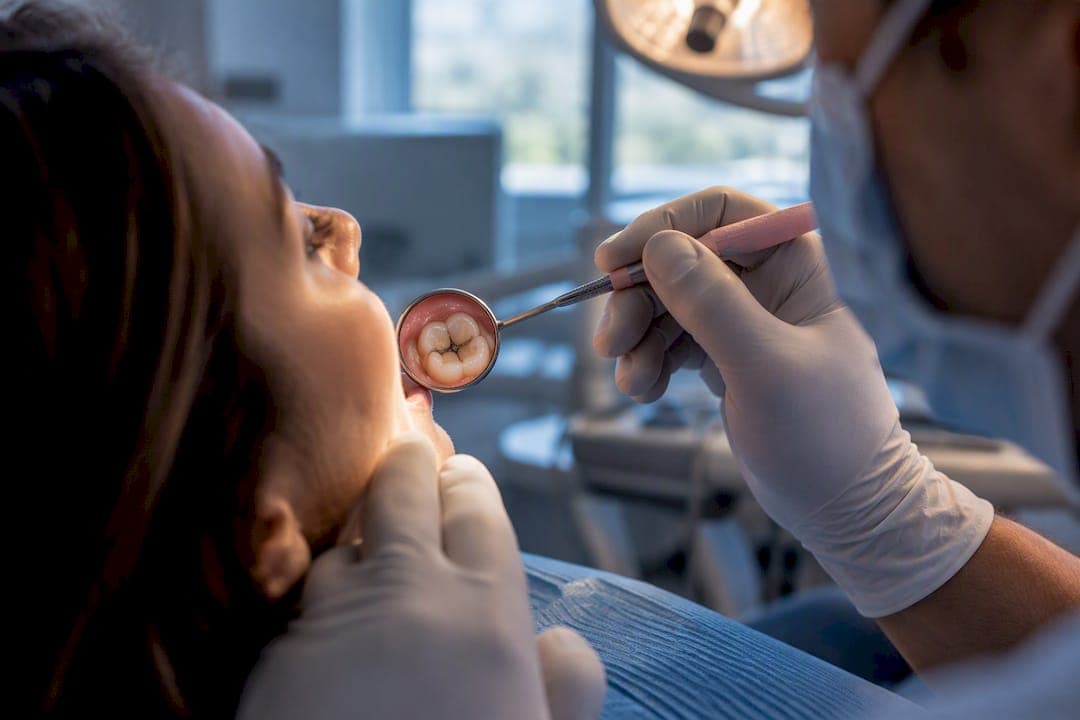
A cracked filling with sharp pain, swelling, or a fever means an emergency dental visit today. If it's just rough or mildly sensitive, most cracks can still be repaired if you get seen within a few days. Either way, stop chewing on that tooth immediately and call your dentist.
TL;DR:
- Most cracked fillings can be repaired if addressed within a few days, but severe symptoms like swelling, fever, or exposed nerve require immediate care.
- The causes of cracking include biting hard foods, grinding or clenching at night, aging of the filling material, and large restorations that weaken the tooth.
- Symptoms such as sharp pain when biting, sensitivity to hot or cold, and rough edges indicate the crack has reached deeper layers, necessitating urgent evaluation.
- Timely intervention helps preserve natural tooth structure, with most repairs involving patching or crowns unless the crack extends to the pulp or below the gumline.
- Preventive measures include avoiding hard foods, using a night guard for grinding, and seeking routine dental checkups for early crack detection.
Table of Contents
- What Causes a Cracked Filling?
- What Are the Symptoms of a Cracked Filling?
- How Long Can You Wait to Fix a Cracked Filling?
- What Should You Do Before Seeing the Dentist?
- Repair, Crown, Root Canal, or Extraction: What Actually Happens Next?
- How Can You Prevent Fillings From Cracking Again?
- How Starboard Dental Evaluates a Cracked Filling
- Why Early Evaluation Favors Conservative Care
- Get Your Cracked Filling Checked at Starboard Dental
- Sources
- FAQ
What Causes a Cracked Filling?
Fillings crack for mechanical reasons, not bad luck. Biting into ice, hard candy, or unpopped popcorn kernels puts sudden force on a restoration that was never designed for that kind of impact. Grinding or clenching your teeth at night, known clinically as bruxism, applies repeated stress that most people don't even notice happening.
Age matters too. Every filling undergoes thousands of expansion and contraction cycles from hot and cold foods, and eventually the material fatigues, especially in older or larger restorations that leave less natural tooth structure for support.
- Trauma from hard foods, ice chewing, or an accidental blow to the jaw
- Chronic grinding or clenching, often happening during sleep
- Material fatigue in fillings placed many years ago
- Large fillings that replaced significant tooth structure, leaving weaker margins
Composite resin and amalgam behave differently under stress. Amalgam is strong under compression but can fracture at thin edges, while composite bonds directly to the tooth but tends to wear faster at the margins over time, a distinction worth discussing with your dentist when deciding on types of dental fillings.
What Are the Symptoms of a Cracked Filling?
The clearest sign is pain when you bite down, especially a sharp jolt that fades quickly after you release pressure. Short, stabbing sensitivity to hot or cold drinks is another common early symptom, along with a rough or jagged edge you can feel with your tongue.
- Pain specifically triggered by biting or chewing
- Brief, sharp sensitivity to hot, cold, or sweet foods
- A rough, sharp, or loose-feeling filling edge
- Food consistently trapping in the same spot, or a visible dark line near the filling
Not every crack means the same level of trouble. A fracture confined to enamel usually just feels rough and is often treated as a cosmetic fix rather than an emergency. But once a crack reaches into dentin, the layer beneath enamel, sharp sensitivity becomes far more noticeable and professional care becomes urgent. Taking a photo of the area and gently testing your bite on that tooth, without applying full force, can help you describe the problem accurately when you call the office.
How Long Can You Wait to Fix a Cracked Filling?
Timing depends entirely on your symptoms, not on how the filling looks. Here's how to triage it yourself:
- Same-day emergency: severe or throbbing pain, facial swelling, fever, or a visibly exposed nerve area. These signs point to infection risk and need care immediately.
- Within 24 to 72 hours: noticeable sensitivity or discomfort that comes and goes but isn't severe. A broken filling that's uncomfortable but tolerable still needs prompt attention rather than a "wait and see" approach.
- Routine scheduling: no pain at all, just a rough edge or a filling that feels loose. Book an appointment soon and avoid chewing on that side in the meantime.
Waiting too long carries real risk. A crack lets bacteria seep into the tooth, and that can inflame the pulp, the nerve and blood vessel tissue at the tooth's core. Once that inflammation turns irreversible, root canal therapy or extraction becomes the only remaining option. Catching the problem early is what keeps your options conservative.
What Should You Do Before Seeing the Dentist?
A few simple steps can protect the tooth and reduce discomfort while you wait for your appointment.
- Rinse with warm salt water several times a day to reduce bacteria and soothe irritation
- Take acetaminophen or ibuprofen according to package directions for pain control
- Cover sharp or jagged edges with dental wax or sugar-free gum so you don't cut your tongue or cheek
- Chew on the opposite side of your mouth entirely
- Save any piece of the filling that comes loose and bring it with you
Pro Tip: If a piece of the filling falls out completely, don't try to glue it back in yourself with household adhesives. Bring it to your appointment instead; your dentist may be able to reuse it as a reference for shade and shape. If you notice facial swelling or a fever alongside the pain, that combination suggests infection and usually calls for antibiotics plus urgent same-day care, not a routine visit. For more on what to do when a piece breaks off entirely, see this guide on what to do right now.
Repair, Crown, Root Canal, or Extraction: What Actually Happens Next?
Most cracked fillings don't require dramatic intervention. When the defect is localized and the surrounding tooth structure is still sound, dentists commonly patch or replace just the damaged portion rather than starting over.
About 4 out of 5 dentists surveyed by the ADA's ACE Panel said they repair a defective restoration instead of fully replacing it, as long as the remaining tooth structure supports it.
Beyond simple repair, treatment depends on how deep the crack runs:
- Repair: appropriate for small, localized defects with solid tooth structure underneath
- Crown or onlay: recommended when the crack threatens to spread under chewing force, since full coverage splints the tooth and distributes pressure more evenly
- Root canal therapy: necessary once the crack reaches the pulp and causes lingering pain or infection
- Extraction: considered only when the crack extends below the gumline or splits the tooth root, leaving nothing structurally sound to restore
Diagnosis typically combines a visual exam, a bite test, and X-rays, and sometimes magnification or transillumination to spot cracks that don't show up clearly on a standard image. Many visits include a same-day temporary restoration while lab work for a permanent crown is completed, and recovery from a straightforward repair is usually just mild sensitivity for a day or two.
How Can You Prevent Fillings From Cracking Again?
Avoiding hard foods like ice, hard candy, and popcorn kernels removes one of the biggest risk factors outright. If you grind your teeth, a custom night guard absorbs that pressure instead of your fillings taking the hit.
- Skip ice chewing and other habits that put sudden force on restorations
- Wear a night guard if you grind or clench
- Keep up with routine dental checkups so small cracks get caught early
- Ask about material options, since filling lifespan varies by material and location in the mouth
Watch for early warning signs between visits: a filling that feels slightly different to your tongue, new sensitivity that wasn't there before, or a small chip you can see in the mirror. Those are cues to call before the problem grows, not after.
How Starboard Dental Evaluates a Cracked Filling
At Starboard Dental, a suspected crack starts with a visual exam and bite testing, followed by magnification and digital X-rays to confirm depth and location. Digital scanners provide a precise picture of the damage, and CBCT imaging is available when a crack's extent isn't clear from standard X-rays alone.
- Conservative repair is the first option whenever tooth structure allows it
- Same-day urgent appointments are available for painful or swollen cases
- Ceiling-mounted TVs and personalized comfort items help ease anxiety during treatment
- Findings and next steps are explained clearly, whether that means restorative dentistry or a simple patch
Why Early Evaluation Favors Conservative Care
Catching a crack early keeps your options open. Repair preserves natural tooth structure and usually avoids the escalation toward a crown or root canal that comes with delayed care. Full coverage or endodontic treatment only becomes necessary once structure or pulp is already compromised.
— Alex
Get Your Cracked Filling Checked at Starboard Dental
Starboard Dental treats cracked fillings the way conservative dentistry is supposed to work: assess first, repair when possible, and reserve crowns or root canals for when they're actually needed. Same-day appointments mean you're not stuck waiting through a painful weekend wondering whether that sharp twinge is getting worse.

If you're dealing with a rough edge, biting pain, or a piece that's already broken off, call the office and describe your symptoms so the team can triage the right appointment slot for you. Bring your insurance information and a list of any current medications so your visit moves quickly from exam to treatment plan. Whether the fix turns out to be a straightforward filling repair or something more involved like a crown through restorative dentistry, same-day evaluation at Starboard Dental's general dentistry page is the fastest way to find out where you stand and get it fixed before it turns into a bigger problem.
Sources
- ACE Panel report finds 4 out of 5 respondents repair defective restorations | American Dental Association
- Cracked tooth syndrome — NCBI Bookshelf
- Fractured tooth (cracked tooth) - Cleveland Clinic
- Dental caries and fillings prevalence data — CDC Data Brief
FAQ
How Serious Is a Cracked Filling?
It depends entirely on your symptoms. Severe pain, swelling, or fever signal a dental emergency, while a painless rough edge is usually safe to schedule within a few days, according to Cleveland Clinic guidance on fractured teeth.
How Do Dentists Fix a Cracked Filling?
Dentists often repair the localized defect directly rather than replacing the entire filling, provided the surrounding tooth structure is sound. When the crack is deeper or affects the pulp, treatment shifts to a crown, root canal therapy, or in rare cases extraction, following the diagnostic and treatment spectrum described in the NCBI review of cracked tooth syndrome.
How Common Is It for a Filling to Crack?
Fairly common, given how many adults have fillings in the first place. CDC data shows a high percentage of adults have had cavities filled, and every one of those restorations carries some long-term risk of cracking as it ages.
What Does a Cracked Filling Look Like?
A cracked filling often shows as a visible line, a chipped edge, or a spot where the filling material looks uneven compared to the rest of the tooth. You may also feel a rough texture with your tongue even before you can see anything in the mirror, and Starboard Dental's exams use magnification to confirm what a visual check alone might miss.