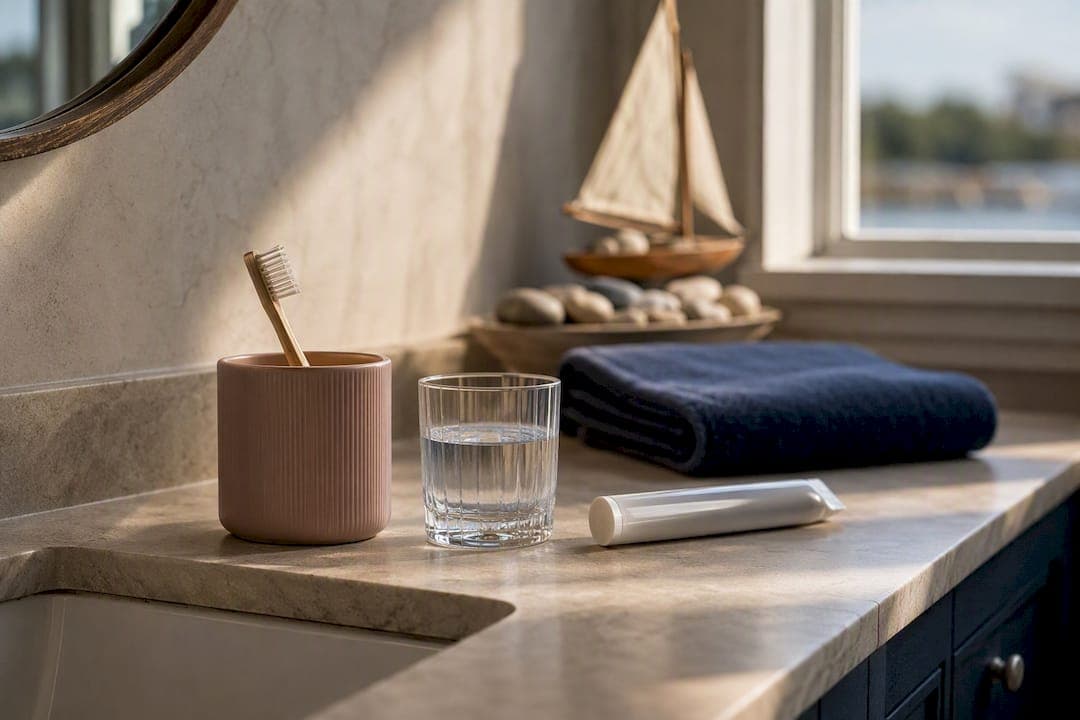
Keeping veneers in good shape comes down to one habit stack: brush gently twice a day with a soft-bristled brush and non-abrasive fluoride toothpaste, floss daily around the margins, skip anything abrasive or hard on your teeth, and see your dentist every six months. Do that consistently and porcelain veneers can last 10 to 15 years or longer, while composite veneers typically run 5 to 10 years before they need attention. Individual results vary based on bite force, grinding habits, and how well you stick to the routine.
Start with this today:
- Switch to a soft-bristled brush and non-abrasive fluoride toothpaste if you haven't already.
- Floss once daily, working gently around the veneer edges.
- Stop using your teeth to open packages, crack nuts, or bite fingernails.
- Ask your dentist about a nightguard if you wake up with jaw soreness or notice flattened edges on your teeth.
Key Takeaways
Veneer longevity depends less on the material itself and more on consistent gentle brushing, daily flossing, nightguard use if you grind, and biannual professional checkups.
| Point | Details |
|---|---|
| Use the right tools | Soft-bristled brush and non-abrasive fluoride toothpaste protect the veneer surface daily. |
| Know your material | Porcelain resists stains and lasts 10 to 15+ years; composite is repairable but lasts roughly 5 to 10 years. |
| Protect against force | A custom nightguard or athletic mouthguard prevents cracks from grinding or impact. |
| Watch for red flags | Looseness, exposed dentin, or gum bleeding near a veneer need prompt attention, not a wait-and-see approach. |
| Get clinic support | Starboard Dental combines digital scanning and same-day repairs to catch veneer issues early. |
Table of Contents
- Veneer Maintenance Basics: Your Daily Cleaning Routine
- Habits and Foods That Damage Veneers
- Porcelain vs. Composite Veneers: What Changes in Care
- Mouthguards and Protecting Veneers From Impact
- When to See Your Dentist for Veneer Repairs and Checkups
- How Starboard Dental Supports Long-Term Veneer Care
- Why "Set It and Forget It" Veneer Advice Falls Short
- Ready for a Veneer Checkup or Repair?
- Frequently Asked Questions About Veneer Maintenance
- Sources
Veneer Maintenance Basics: Your Daily Cleaning Routine
Veneers don't need a special product line. They need consistent, gentle care and a few smart swaps.
Start with the brush. A soft-bristled toothbrush, held at a slight angle, cleans effectively without wearing down the bonding surface or the porcelain edge. Use short, gentle strokes or small circles rather than aggressive back-and-forth scrubbing, and give it a full two minutes, morning and night.
Toothpaste matters more than most people realize. Stick with a non-abrasive fluoride paste. Skip whitening toothpaste and anything marketed as a "polishing" or "scrub" formula. The Cleveland Clinic specifically warns against whitening products because the abrasive particles that lift stains from natural enamel can dull the polished surface of a veneer over time.
- Brush for two minutes with a soft brush and fluoride, non-abrasive paste.
- Floss once daily, sliding the floss gently against the veneer rather than snapping it down onto the gum line, where it can chip the margin.
- If your veneers sit close together, use a floss threader or a soft interdental brush instead of forcing regular floss through.
- Finish with an alcohol-free, fluoride mouth rinse. Alcohol-based rinses can dry out gum tissue around veneer margins and irritate the seal over time.
Pro Tip: Keep a second soft-bristled brush in your bag or desk drawer. Veneer surfaces do best with consistent gentle contact, and having a backup brush means you're never tempted to use a rough hotel-bathroom toothbrush after a trip.
Habits and Foods That Damage Veneers
Most veneer damage isn't dramatic. It's cumulative, the result of small habits repeated for years.
- Don't use your teeth as tools. Opening bags, cracking nuts, or biting off tags puts concentrated force exactly where veneers are most vulnerable, at the edge.
- Cut hard foods into smaller pieces before eating, and avoid chewing ice, hard candy, or unpopped popcorn kernels outright.
- Coffee, red wine, tea, and dark berries stain the cement line around veneers even though the porcelain itself resists discoloration. Rinse with water after dark drinks or use a straw when practical.
- Tobacco use accelerates staining at the margins and slows gum healing, which matters because healthy gum tissue is what keeps a veneer's edge protected. Cutting back helps both your veneers and the tissue supporting them.
- Avoid at-home whitening kits and DIY hacks like baking soda scrubs or charcoal powder. These do essentially nothing for veneers since porcelain doesn't respond to bleaching agents, and the abrasive versions can scratch the surface, which makes future staining worse, not better.
Porcelain vs. Composite Veneers: What Changes in Care
Material changes what you can expect, and it changes how a dentist handles repairs.
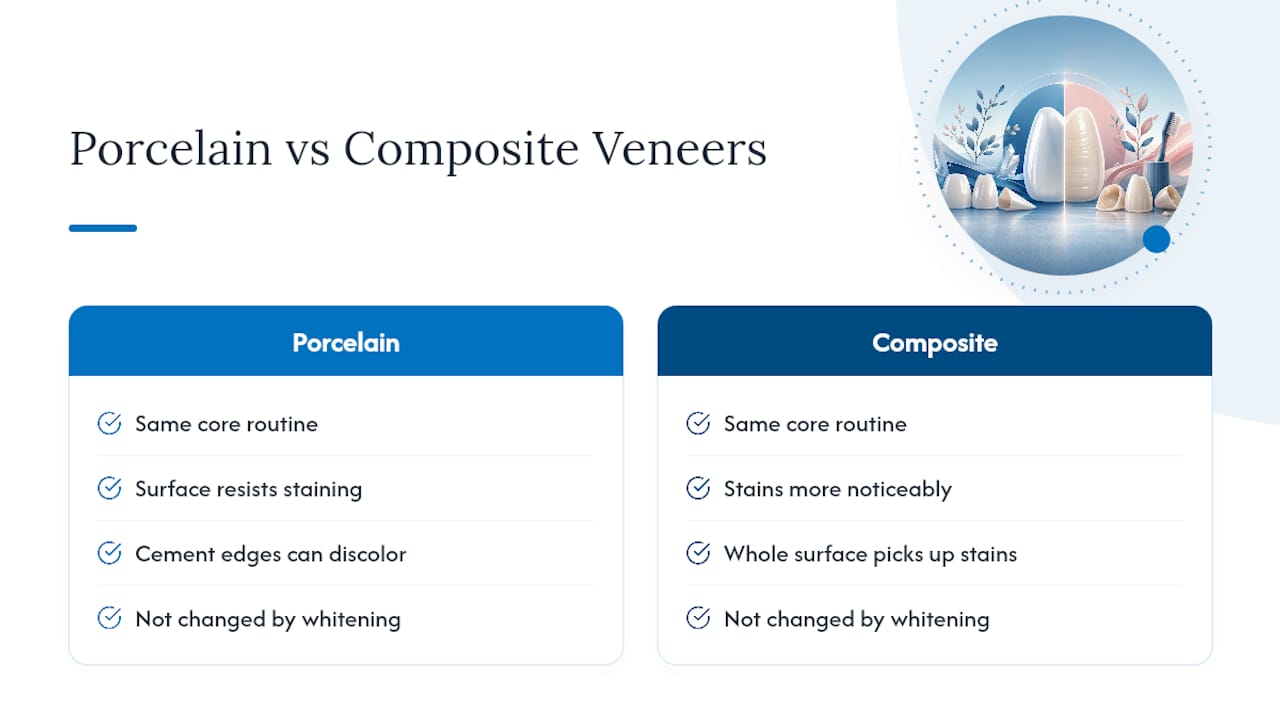
Porcelain veneers resist staining well because the surface is dense and glass-like. They also tend to outlast composite, often running 10 to 15 years or more with good care. The tradeoff shows up if something goes wrong: porcelain doesn't patch easily. A chip or crack usually means full replacement of that veneer rather than a quick in-office fix.
Composite veneers are the opposite story. They stain more easily than porcelain and generally last a shorter stretch, roughly 5 to 10 years, but they're far more forgiving to repair. A dentist can often polish out minor scratches or add composite material directly to fix a small chip, no lab work required.
- Ultra-thin, no-prep veneers follow the same general care rules as standard porcelain but may show wear at the edges sooner if bite force is uneven, since less of the natural tooth was reshaped to support them.
- Clinical evidence on veneer longevity shows real variability tied to material choice, how the teeth were prepared, and patient habits, which is exactly why your dentist should factor in your bite and lifestyle before recommending one material over the other.
Mouthguards and Protecting Veneers From Impact
Grinding and clenching are the two biggest mechanical threats to veneers, and most people don't realize they're doing either one until a dentist points out the wear pattern.
- If you wake up with a sore jaw, headaches, or notice your dentist mentioning flattened tooth edges, ask about a custom nightguard. A custom-fitted appliance distributes bite force evenly across your arch, something a boil-and-bite guard from the drugstore can't match.
- Play contact sports, or even non-contact sports with fall risk like cycling or skateboarding? A custom athletic mouthguard protects veneers from a direct blow far better than a generic one-size-fits-all guard, which often fits loosely and can even trap force against a single tooth.
- Manage the behavioral side too. Daytime clenching often tracks with stress, so noticing when you're doing it, at your desk, in traffic, is often the first step toward breaking the habit.
Pro Tip: If you already own an over-the-counter nightguard, bring it to your next checkup. Your dentist can tell you quickly whether it's actually protecting your veneers or just cushioning the wrong spots.
When to See Your Dentist for Veneer Repairs and Checkups
Stick to a professional cleaning and exam every six months. At that visit, your dentist checks the veneer margins for gaps, inspects gum health around the edges, and confirms the bite still fits correctly, all things that are hard to self-assess at home.
Repair options scale with the problem:
- Minor surface dullness or light staining at the margin often just needs a professional polish.
- A veneer that's come slightly loose may be re-bonded rather than replaced.
- Composite veneers with small chips can usually be repaired chairside with added material.
- Porcelain veneers with a crack or larger chip typically need full replacement.
Don't wait for your next scheduled visit if you notice looseness, a chip that exposes the darker tooth underneath, ongoing sensitivity, or gum tissue that's red, swollen, or bleeding near a veneer. Those are signs the seal or underlying tooth structure needs attention sooner rather than later.
How Starboard Dental Supports Long-Term Veneer Care
We built our veneer maintenance visits around catching small problems before they become replacement-level problems. Digital scanners let us check margin fit with more precision than the naked eye alone, which matters most in the years after placement when small shifts can go unnoticed.
A typical maintenance visit at Starboard Dental includes:
- A margin and bite check using digital scanning, so we can spot gaps or wear patterns early.
- Professional cleaning suited to veneer surfaces, avoiding anything abrasive.
- Custom nightguard fitting for patients showing signs of grinding.
- Same-day minor repairs when the damage allows for it, so you're not waiting weeks for a fix.
Same-day appointments mean a chipped veneer doesn't have to sit unresolved for a month while you wait for an opening.
Why "Set It and Forget It" Veneer Advice Falls Short
Most veneer care advice treats maintenance like a one-time checklist: brush, floss, done. That undersells how much individual habits shape outcomes. Two patients with identical porcelain veneers can land on opposite ends of that 10-to-15-year range depending on whether one of them grinds their teeth at night and skips the nightguard.
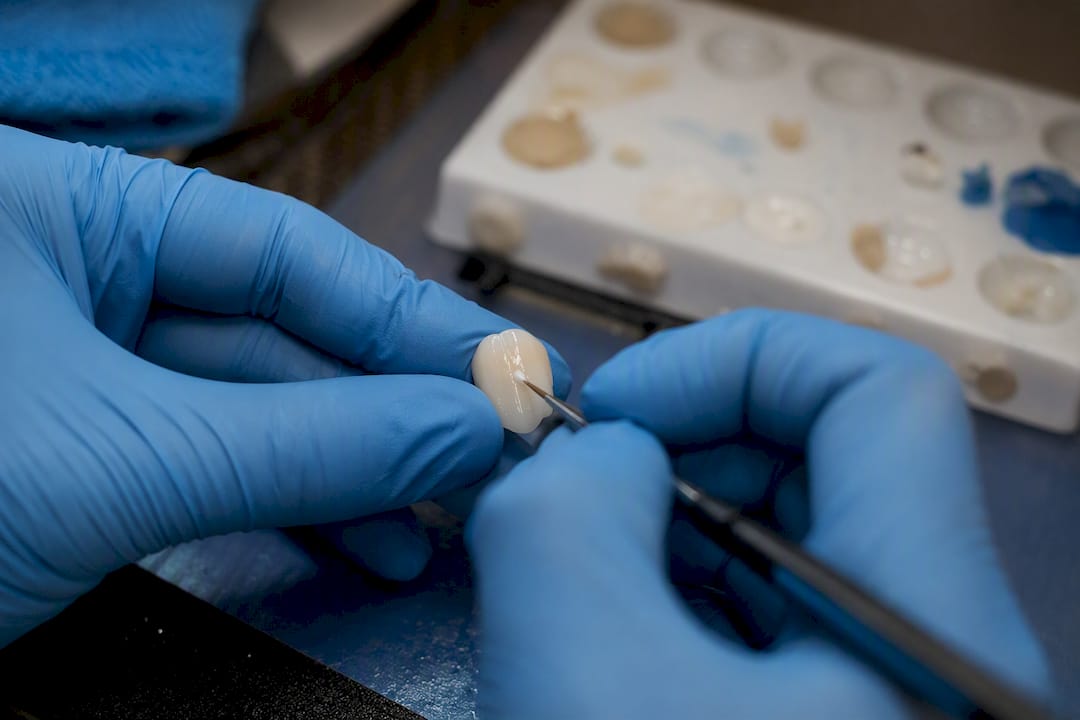
The conventional wisdom also glosses over the material distinction. Porcelain and composite aren't interchangeable in how they fail, and knowing which one you have changes what "damage" even looks like. A composite chip is a Tuesday afternoon fix. A porcelain crack is a lab case.
If I had to pick the single highest-leverage habit, it wouldn't be brushing technique. It would be showing up for the six-month checkup even when nothing feels wrong. Margin gaps and early gum inflammation rarely hurt until they've already progressed, and that's exactly the window where a quick polish or re-bond beats a full replacement.
Ready for a Veneer Checkup or Repair?
If you're managing existing veneers or weighing whether they're right for you, Starboard Dental gives you a direct path to both cosmetic guidance and the routine care that keeps veneers performing for years. Our digital scanners catch margin issues early, and same-day appointments mean a chipped composite veneer or a loose margin gets handled fast instead of sitting on a waiting list.

Whether you need your first veneer consultation or a maintenance visit for veneers you already have, our cosmetic dentistry team can walk you through what your specific material needs. If it's simply time for your six-month exam, book a checkup and cleaning and we'll check your margins, gum health, and bite fit while we're at it. Reach out to schedule an appointment and get a clear read on where your veneers currently stand.
Frequently Asked Questions About Veneer Maintenance
Do veneers need special maintenance compared to natural teeth? Not drastically. The core routine, brushing, flossing, and regular checkups, stays the same. The difference is emphasis: veneers respond poorly to abrasive products and hard mechanical force, so gentle technique matters more.
Do veneers stain over time? The porcelain surface itself resists staining well, but the cement line at the edges can pick up discoloration from coffee, wine, or tobacco. Composite veneers stain more noticeably than porcelain across their whole surface.
What happens after 10 years with veneers? Around this mark, many patients start seeing wear at the margins, especially with composite. Your dentist will check whether a polish and re-bond will extend the veneer's life or whether it's time for replacement.
Why might a dentist discourage veneers for some patients? Active grinding, significant decay, or thin enamel can make a patient a poor candidate until those issues are addressed first. A dentist evaluating your case will weigh these factors before recommending veneers over alternatives like bonding or crowns.
Can I whiten my veneers if they look dull? No. Whitening treatments don't change the shade of porcelain or composite. If your veneers look dull, that's usually surface buildup or margin staining, both of which a professional cleaning addresses better than any whitening product.
This article is general information, not a substitute for advice from a qualified doctor. Consult a qualified healthcare professional about your own circumstances before acting on anything here.
Sources
- Veneers: What Are Dental Veneers? Cost, Procedure & Advantages — Cleveland Clinic
- How Long Do Veneers Last? Porcelain and Composite Veneers — Healthline