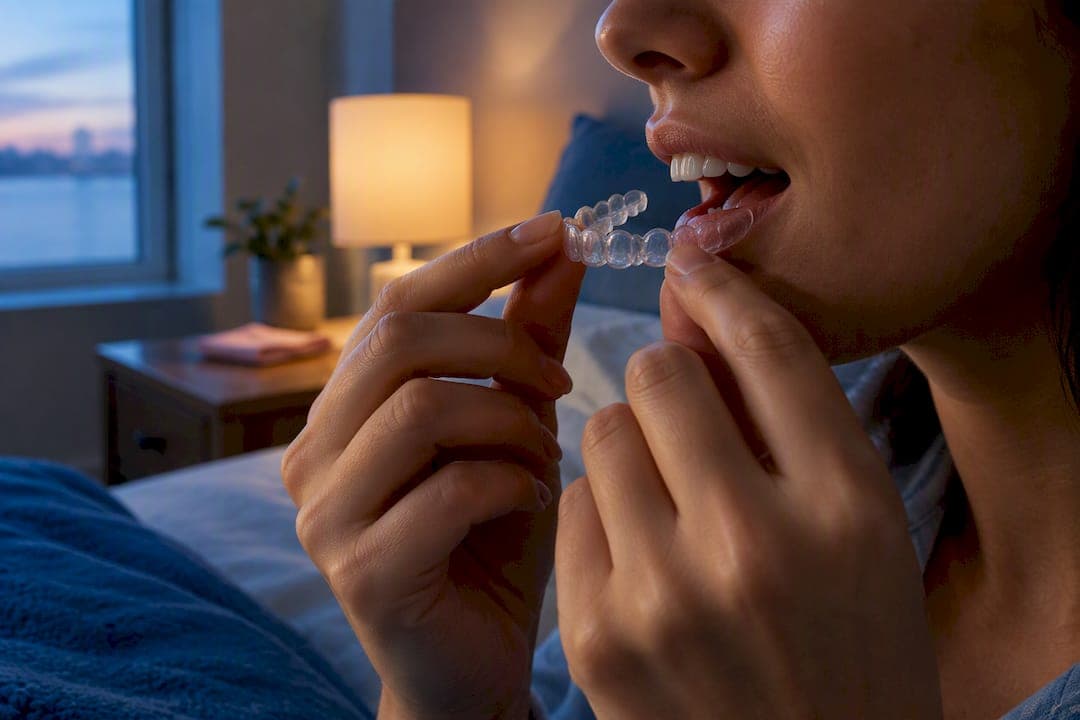
Aligner soreness is usually mild to moderate, peaks around 24 to 48 hours after you switch trays, and fades within about a week. The first thing to try is re-seating the tray with a chewie and taking an over-the-counter pain reliever if needed, following ADA guidance on dosing. Sharp or prolonged pain is a different story and calls for a quick check-in with your provider.
TL;DR:
- Most aligner discomfort peaks within 24 to 48 hours after switching trays and typically resolves within a week with simple home remedies.
- Sharp pain, persistent swelling, or a tray that fails to seat are signs to seek immediate dental evaluation and adjustment.
- Over-the-counter acetaminophen is generally preferred over NSAIDs during active treatment to avoid interfering with tooth movement.
- Re-seating the tray with a chew or applying wax to sharp edges can often alleviate minor soreness without professional intervention.
- Regular follow-up visits and prompt attention to severe or ongoing pain can prevent small issues from delaying treatment progress.
Table of Contents
- What to expect: pain timeline and typical sensations after a new tray
- Common causes of aligner pain (what the sensation usually means)
- Immediate, practical relief steps you can try at home
- Medication and evidence: acetaminophen vs NSAIDs and what clinicians recommend
- Warning signs: when aligner pain needs dental or urgent care
- Clinician perspective: Starboard Dental's practical tips and office approach
- Quick start checklist: 4 steps to follow now
- Why a little soreness usually means treatment is working
- How Starboard Dental can help with aligner discomfort
- Sources
- FAQ
What to expect: pain timeline and typical sensations after a new tray
Most people feel nothing right when a new tray goes in. Soreness usually shows up several hours later, once the tray starts applying steady pressure to shift teeth into position. That pressure builds and typically peaks around 24 to 48 hours in, then eases noticeably by day 3. By day 7, most patients report the discomfort has dropped to minimal or is gone entirely, according to a meta-analysis of clear aligner pain patterns.
The sensations themselves are fairly predictable: a dull ache, general tenderness, mild pressure, and soreness when biting down on firmer foods. It rarely feels sharp or stabbing. Some people also notice a few days of heightened sensitivity to hot or cold, which settles on its own.
Because each new tray moves teeth a small increment further, expect this cycle to repeat with every tray change throughout treatment. It's not a sign anything is wrong. It's the mechanism doing its job, and the pattern usually gets more familiar and easier to tolerate as you move through your series.
Common causes of aligner pain (what the sensation usually means)
Most aligner discomfort traces back to one simple cause: the tray is doing exactly what it's designed to do, applying gentle, sustained pressure to move teeth. Attachments, the small tooth-colored bumps bonded to certain teeth to help the aligner grip and rotate them, often concentrate that pressure and can feel more noticeable than plain tray areas. You can read more about how these forces work in our breakdown of how clear aligners move teeth.
Not all pain is planned pressure, though. A tray that isn't seated fully, has become warped, or has a rough edge from manufacturing can create sharp, localized discomfort rather than the dull, even ache of normal movement. Soft-tissue irritation is another common culprit: aligner edges or attachment sites rubbing against cheeks, lips, or gums.

Outside the aligner itself, clenching or grinding at night and underlying jaw tension (TMD) can add to or mimic aligner soreness, so it's worth considering whether stress or bite habits are part of the picture.
Immediate, practical relief steps you can try at home
Most soreness responds well to a few simple measures, and it's worth working through them in order before assuming something's wrong.
- Re-seat the tray. Bite down on a chewie for 5 to 10 minutes to help the aligner fit fully against your teeth, which often resolves pressure points caused by a tray that hasn't fully snapped into place.
- Apply orthodontic wax to any sharp or rough edge that's rubbing against your cheek or gum. A small pea-sized piece pressed over the spot creates a smooth barrier until you can get the tray checked.
- Use a cold compress on the outside of your cheek for jaw-level soreness, or try warm salt-water rinses if the irritation is inside your mouth, along gum tissue.
- Switch to softer foods for the first day or two after a new tray, such as yogurt, scrambled eggs, soup, or pasta, giving your teeth a break from the added pressure of chewing tougher foods.
- Try a topical oral anesthetic gel on sore spots for short-term numbing, particularly useful before meals.
These steps come directly from AAO guidance on handling minor orthodontic issues at home, and they cover the vast majority of routine soreness without needing a dental visit.
Medication and evidence: acetaminophen vs NSAIDs and what clinicians recommend
The American Dental Association recommends over-the-counter, non-opioid analgesics as first-line treatment for orthodontic soreness, with dosing based on the product label and your own health history.
- Acetaminophen is often the preferred choice when tooth movement is a concern, since frequent NSAID use can theoretically interfere with the cellular activity that drives tooth movement.
- NSAIDs like ibuprofen work well for inflammation but should be used with more caution during active aligner treatment; ask your provider if you're unsure.
- Opioids are never appropriate for routine aligner soreness. Pain severe enough to make you consider one is a sign to call your dentist, not to self-medicate further.
A clinical study on acetaminophen and clear aligner pain found it reduced discomfort effectively, with the biggest benefit seen in patients who also scored higher on anxiety measures. That points to something useful: managing stress around treatment, not just the physical sensation, can meaningfully change how much pain you notice.
If you find yourself needing pain relief for more than a week straight, that's no longer routine soreness and deserves a conversation with your provider rather than a bigger dose.
Warning signs: when aligner pain needs dental or urgent care
Most aligner discomfort is manageable at home, but a few signs mean it's time to stop troubleshooting and call your provider.
- Sharp, localized pain that doesn't improve after re-seating the tray or taking an analgesic.
- Severe gum swelling, persistent bleeding, or signs of infection such as fever or visible pus.
- A tray that won't seat at all, or one that's visibly cracked, warped, or deformed.
- Pain lasting longer than about a week after a new tray, or a tooth that suddenly feels loose.
The American Association of Orthodontists identifies these exact signs as reasons to seek professional evaluation rather than waiting it out, since they can point to a tracking problem or a tray that needs adjustment. If you're weighing supervised care against a mail-order option, our comparison of dentist-supervised and mail-order aligners covers why having a provider to call matters here.
Clinician perspective: Starboard Dental's practical tips and office approach
A few small habits make a real difference in how much soreness you feel. Switching trays at night, right before bed, lets the peak discomfort happen while you're asleep instead of during your day. Many patients also chew too briefly or unevenly on chewies, focusing pressure on one spot instead of moving along the whole arch.
Pro Tip: Bite down on a chewie along each tooth for a few seconds rather than clamping in just one spot, so the tray seats evenly across your whole bite.

When a sharp edge or a tray that won't seat is the issue, same-day appointments can resolve it quickly with a smoothing adjustment or a replacement tray. For patients who feel anxious about visits in general, our tips for easing dental anxiety in the chair offer a few more comfort strategies worth trying.
Quick start checklist: 4 steps to follow now
If pain has just started, work through these in order:
- Re-seat the tray with a chewie for 5 to 10 minutes.
- Apply a cold compress and eat softer foods for a day or two.
- Take acetaminophen per label instructions if you need additional relief, since it's generally preferred over frequent NSAID use during active movement.
- Cover any sharp edge with orthodontic wax, and call your provider if swelling, bleeding, or pain past a week shows up.
Why a little soreness usually means treatment is working
Soreness after a new tray is uncomfortable, but it's rarely a sign anything has gone wrong. In most cases, it means the tray is applying exactly the pressure it's meant to. What I'd tell any patient: don't wait out sharp or worsening pain hoping it will pass. A quick call to your provider costs you nothing and can catch a tracking issue early. This approach leans on same-day support for exactly this reason, so small problems don't turn into bigger delays in your treatment.
— Alex
How Starboard Dental can help with aligner discomfort
Getting your aligners checked doesn't have to mean waiting weeks for an appointment. Starboard Dental offers clear aligner services alongside same-day or prompt visits for patients dealing with tray issues or unexpected soreness, so a rough edge or a tray that won't seat gets handled quickly instead of lingering.

Common in-office fixes are quick:
- Smoothing a rough or sharp tray edge.
- Replacing a warped or cracked tray.
- Providing wax or chewies on the spot for immediate relief.
When you call, it helps to have your tray number and a description of where the discomfort is located. If you're dealing with aligner soreness that isn't easing up, reach out to schedule a visit and get it looked at directly.
Sources
- PLOS ONE: (meta-analysis) clear aligner pain characteristics
- American Dental Association: guidance on adult/adolescent pain management
- PMC: Effect of acetaminophen on relieving orthodontic pain with clear aligner based on GAD-7
- BDJ Open / Nature: meta-analysis comparing clear aligners and fixed appliances (2026)
This article is general information, not a substitute for advice from a qualified doctor. Consult a qualified healthcare professional about your own circumstances before acting on anything here.
FAQ
Do clear aligners hurt more than braces?
Clear aligners tend to cause less early pain than fixed braces, according to a meta-analysis comparing the two. Both cause soreness tied to tooth movement, but aligner discomfort is typically milder and shorter-lived per tray change.
How long does aligner pain typically last?
Soreness usually peaks within 24 to 48 hours of a new tray and fades substantially by day 3, becoming minimal by around day 7. Pain lasting notably longer than a week is worth mentioning to your provider.
Is acetaminophen or ibuprofen better for aligner pain?
Acetaminophen is often preferred since frequent NSAID use may interfere with tooth movement, and a clinical study found it effective for aligner-related pain. Always follow product label dosing and check with your dentist if you're unsure.
When should I stop trying home remedies and call my dentist?
Contact your provider for sharp pain that doesn't respond to re-seating or analgesics, severe swelling, bleeding, or a tray that won't seat properly, as outlined in AAO emergency guidance. Pain lasting more than a week after a tray change is also a reason to get checked.
Can anxiety make aligner pain feel worse?
Yes, higher anxiety levels are linked to higher reported pain scores in aligner patients, and research on acetaminophen and anxiety found the medication worked especially well for this group. Managing stress around treatment, alongside standard pain relief, can reduce how much discomfort you notice.