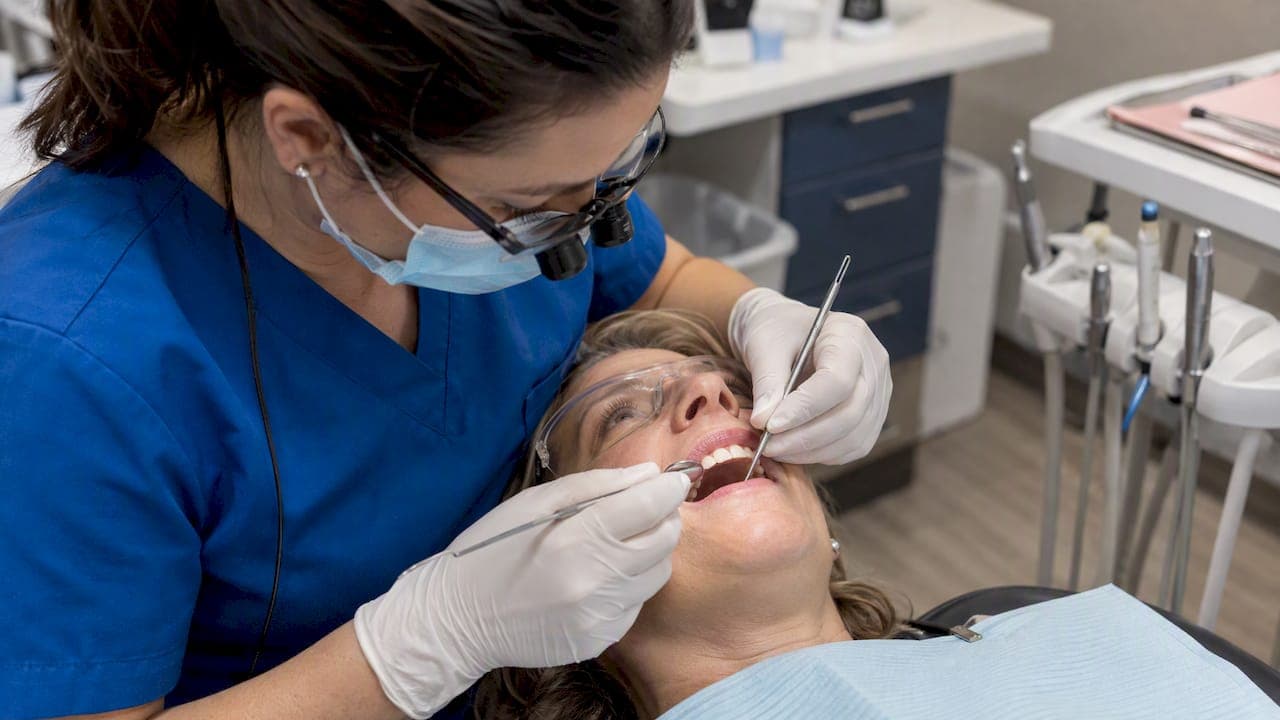
Eat only soft foods until the numbness fades, brush gently, rinse with warm salt water or whatever your dentist prescribed, and take over-the-counter pain relief only as the label directs. Skip smoking and alcohol, and call us if you notice red flags. MouthHealthy from the ADA and Colgate back this approach, and our team at Starboard Dental follows it with our own patients.
TL;DR:
- Sensitivity can last up to a week, while full gum healing may take four to six weeks; mild bleeding and temporary looseness can occur early.
- Wait about 24 hours before flossing, use a soft brush with light pressure, and follow prescribed rinses or antibiotics exactly as directed.
- Wait until numbness fades before eating, then choose soft foods and avoid crunchy, spicy, acidic, or very hot items for 24 to 72 hours.
- Call your dentist for worsening severe pain, fever, growing swelling, discharge, or bleeding that remains heavy or continues beyond 24 hours.
Table of Contents
- What does recovery look like after a deep cleaning?
- What should you do in the first 72 hours?
- How should you brush and floss while your gums heal?
- How can you manage pain and sensitivity at home?
- What should you eat and avoid while your gums heal?
- Which habits should you pause for a few days?
- When should you call your dentist?
- Why do follow-up visits matter after a deep cleaning?
- How do we support you after treatment?
- Need follow-up or a gum health check?
- FAQ
- Sources
What does recovery look like after a deep cleaning?
Healing happens in stages, and knowing them helps you tell normal from not normal.
- First 24–48 hours: Your gums feel tender and swollen, and your teeth react to hot, cold and air. Mild bleeding when you brush is common.
- First week: Discomfort usually fades after a day or two, and sensitivity can last up to a week.
- Weeks 2 to 6: Your gums tighten around the teeth and look pinker and firmer. The same ADA guidance says full gum healing can take up to 4–6 weeks.
Your teeth may also feel a little loose. Removing tartar takes away material that was holding them in place, and Colgate explains this is often normal while the gums reattach and steady the teeth.
What should you do in the first 72 hours?
Start with what to do right now. Here is the order we suggest:
- Wait until the numbness is gone before eating or drinking anything hot, so you do not bite your cheek, lip or tongue without feeling it.
- Rinse gently with warm salt water and spit it out.
- If you were given an antimicrobial rinse, use it exactly as directed. These rinses and antibiotics may be prescribed after a deep cleaning.
- If you were prescribed antibiotics, finish the whole course even when your mouth feels better.
- Take an over-the-counter pain reliever only as the label or your dentist says.
Pro Tip: For bleeding, contact your dentist for advice. If bleeding is heavy or does not stop, seek urgent medical care.
How should you brush and floss while your gums heal?
Gentle care keeps bacteria down without irritating tissue that is still repairing itself.
- Use a soft-bristled toothbrush with light pressure, angled toward the gumline, in short strokes.
- Wait about 24 hours before flossing again, as Colgate advises. Then slide the floss gently up and down each tooth surface instead of snapping it into the gums. Our guide to flossing technique walks through it step by step.
- Use prescribed rinses or gels on the schedule you were given, and do not add extra.
- Hold off on power brushes and water flossers until your sensitivity has settled. Ask us if you are unsure.
How can you manage pain and sensitivity at home?
Most people need little more than basic over-the-counter relief for a day or two. Ibuprofen and acetaminophen work differently, so follow the dose on the package or the instructions from your dentist or pharmacist. If one alone is not enough, ask your provider whether alternating them is right for you rather than guessing.
- Desensitizing toothpaste can ease sore root surfaces over time when used consistently.
- Prescription pain medicine or antibiotics are sometimes used after a deep cleaning, and they work best when you follow the prescriber's directions exactly.
- Our tips for people with sensitive teeth cover more everyday strategies.
Pro Tip: Dab a pea-sized bit of desensitizing paste directly on a sore spot at bedtime and spit without rinsing, so it stays on the surface longer.
What should you eat and avoid while your gums heal?
Once the numbness is gone, eat food that is soft, mild and not too hot.
- Good choices: yogurt, mashed potatoes, scrambled eggs, smoothies eaten with a spoon, and warm (not hot) soups.
- Skip for 24 to 72 hours: crunchy chips, sticky candy, spicy dishes, acidic items like citrus or tomato sauce, and very hot drinks.
- Alcohol: avoid it while you are on antibiotics and during early healing, because it can irritate tissue.
- Water: sip cool water through the day. Staying hydrated keeps your mouth moist and helps healing along.
Caregivers helping an older relative through recovery may find these oral care steps for seniors useful for meals and daily routines.
Which habits should you pause for a few days?
Avoid smoking while your gums are healing. Smoke slows gum healing and raises infection risk, so a longer break is even better. Skip alcohol while on antibiotics and during the early healing window. Take it easy on heavy workouts if exertion makes your gums bleed or throb.

When should you call your dentist?
Some symptoms go beyond normal healing. Contact us or your dental office promptly if you notice any of these:
- Bleeding that is heavy or does not stop after 24 hours or steady pressure.
- Severe or worsening pain that over-the-counter medicine does not relieve.
- Fever, or swelling that grows instead of shrinking.
- Numbness that concerns you. Contact your dentist promptly.
- A bad taste or discharge from the gums, which can signal infection.
Do not wait it out. Quick calls are easy to handle, and keeping your follow-up appointments is part of successful periodontal care.
Why do follow-up visits matter after a deep cleaning?
A deep cleaning treats the problem, and maintenance visits keep it from coming back. For people with active gum disease, recall visits may be scheduled regularly, though your schedule depends on your own situation. Our post on periodontal maintenance explains why. At these visits we measure the depth of the pockets around your teeth, check how well your gums have healed and clean areas that home care cannot reach. If healing is incomplete, we may reassess or plan more treatment. Your daily brushing and flossing carry the results between visits.

How do we support you after treatment?
We want recovery to feel manageable. Our chairs have ceiling-mounted TVs and personalized comfort items, and we offer appointments so you do not have to wait with a worry. If something feels off in your mouth, call us. We would rather answer a quick question than have you worry at home. Think of us as a partner through the whole healing process, not just the day of your cleaning.
— Alex
Need follow-up or a gum health check?
If you have more questions or are due for a follow-up, we are here to help.

- We offer scaling and root planing, periodontal therapy and ongoing follow-up care.
- You can book a visit when something does not feel right.
- Routine exams and cleanings keep your gums on track after treatment.
Learn more about periodontal therapy and scaling and root planing, see our scaling and root planing page, or call us to schedule your next visit.
This article is general information, not a substitute for advice from a qualified doctor. Consult a qualified healthcare professional about your own circumstances before acting on anything here.
FAQ
What should you not do after a deep cleaning?
Avoid smoking, alcohol, very hot, spicy or crunchy foods, and aggressive brushing or flossing in the first days. Do not eat until the numbness is gone, and do not skip prescribed medicine.
What should I do to care for my teeth after a deep cleaning?
Brush gently with a soft brush, rinse with warm salt water, and wait about 24 hours before flossing again. Use any prescribed rinse as directed and keep your follow-up appointments.
What should I expect after a deep cleaning?
Expect tender, slightly swollen gums and sensitive teeth. Discomfort usually lasts a day or two, and teeth may feel a bit loose at first, which is often normal as gums settle.
How long does it take to heal after a deep dental cleaning?
Sensitivity can last up to a week, and gums can take up to 4–6 weeks to heal fully, according to MouthHealthy. Your own timeline depends on how much treatment you needed.