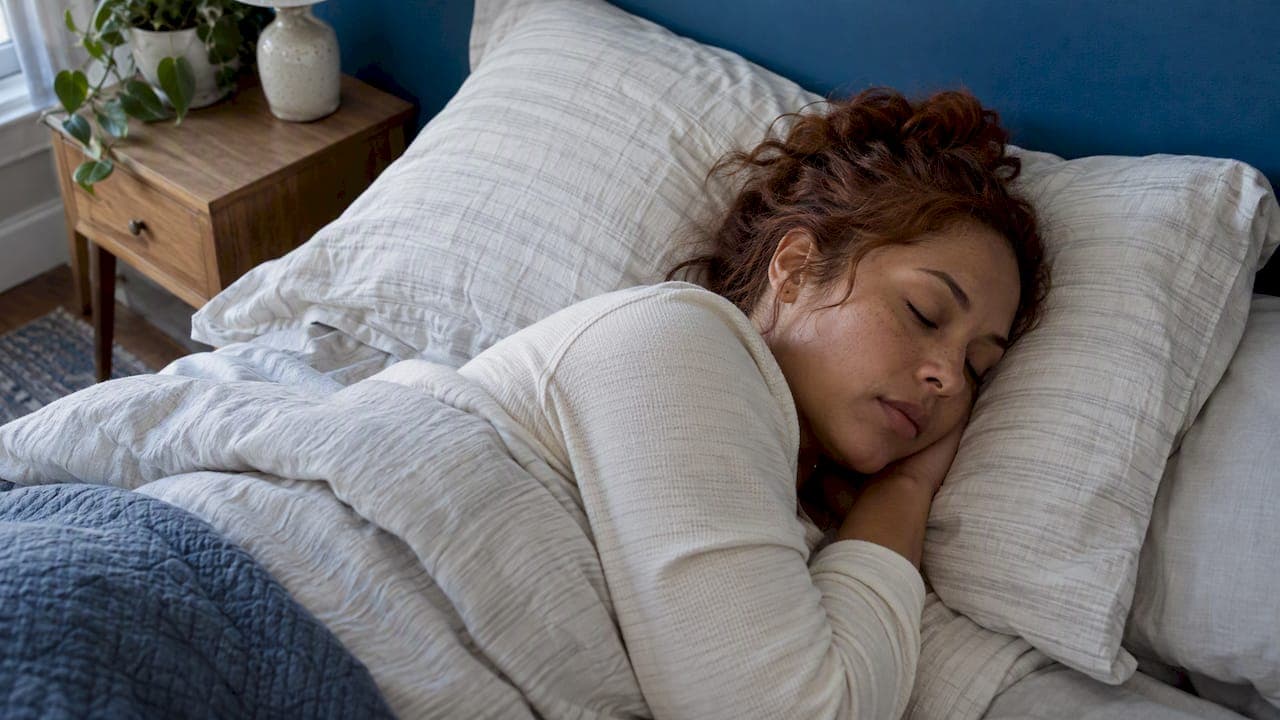
Snoring and nighttime teeth grinding (bruxism) often show up in the same person, and sometimes in the same night. Research does not show that one causes the other. It does show that both can point to disrupted sleep, and that a dentist who looks at your teeth, jaw and airway together can help you sort out which problem you have and what to do about it.
If your partner hears you snore and you wake with a sore jaw or a headache, this guide explains what the overlap means, which warning signs deserve a medical evaluation, and which treatments exist.
TL;DR
- Many people who snore also grind their teeth at night, but studies have not proven that one causes the other.
- Snoring alone does not mean sleep apnea. Witnessed breathing pauses, gasping, heavy daytime sleepiness and morning headaches are the signs that call for evaluation.
- Worn teeth, jaw soreness and morning headaches are the usual clues to bruxism, and a dentist can spot them in an exam.
- A night guard protects teeth but may not stop grinding. A dental oral appliance is one option for snoring or sleep apnea, and a sleep study is how sleep apnea is confirmed.
- We see patients from Kennebunk, York, Saco and nearby towns for both problems, and same-day appointments are available.
Table of Contents
- Why snoring and teeth grinding show up together
- Is your snoring just snoring, or sleep apnea?
- What bruxism does to your teeth, jaw and sleep
- When to get evaluated
- Treatment options for grinding, snoring or both
- What a visit with us looks like
- Get help for snoring and grinding in Kennebunk
- Our perspective
- FAQ
- Sources
Why snoring and teeth grinding show up together
The numbers are striking. One 2023 review found that sleep bruxism and sleep apnea-hypopnea syndrome occur together in 21.0% to 41.3% of cases. A 2025 clinical review puts the overlap between sleep bruxism and obstructive sleep apnea at about 30% to 50% of adults, while noting that the literature does not support a proven association or causal link between them.
So what explains the overlap? Researchers have offered a few ideas:
- A protective reflex. Some scientists suggest grinding may be a secondary reaction, the body's attempt to help reopen an airway that has been blocked during sleep.
- Shared risk factors. Obesity and alcohol use, for example, can contribute to both conditions.
- Sleep arousals. A study of sleep-related breathing disorders describes micro-arousals as the main trigger for jaw-muscle activity at night. Wait: that page is a separate study of simple snoring, and it found that in snorers without sleep apnea, bruxism episodes rose along with the maximum snore intensity.
The honest summary: research has not established whether the two are directly connected or simply occur side by side. What matters for you is practical. If you have one, it is worth checking for the other.
How common is each one?
Sleep-related bruxism, the tooth grinding and jaw clenching that happens during sleep, is reported in 8% to 12% of adults. It is mostly seen in people aged 19 to 45, according to a 2023 review. Obstructive sleep apnea, with its brief, repeated pauses in breathing, is seen in about 50% of older individuals. Snoring is more common still, and most of it is harmless.
Is your snoring just snoring, or sleep apnea?
This is the question that matters most, and a mirror or a mouth guard cannot answer it. The American Heart Association explains that snoring alone does not diagnose obstructive sleep apnea. Many people snore without having it, and sleep apnea can occasionally occur without snoring. The American Medical Association notes that about half of people who snore loudly have OSA, and the other half do not.
Signs that snoring may be more than noise
Mayo Clinic lists these as signs that snoring may indicate obstructive sleep apnea:
- Pauses in breathing that someone else witnesses
- Excessive daytime sleepiness
- Difficulty concentrating
- Morning headaches
- A sore throat when you wake
- Restless sleep
- Gasping or choking at night
- High blood pressure
The full list is on Mayo Clinic's snoring page. One pattern stands out: loud snoring, then silence or an apparent pause in breathing, then a snort, gasp or choking sound. That is the classic picture of possible OSA.
Untreated OSA involves repeated airway blockage during sleep. Mayo Clinic's overview of obstructive sleep apnea connects it with daytime sleepiness, morning dry mouth or sore throat, headaches, trouble focusing, mood changes and high blood pressure.
When snoring is not apnea
Snoring has many ordinary causes: mouth and sinus anatomy, alcohol, allergies, a cold, weight, chronic nasal congestion, sleep deprivation, or sleeping on your back, all listed by Mayo Clinic. If that sounds like you, our article on snoring without sleep apnea covers causes and what can help.
What bruxism does to your teeth, jaw and sleep
Many people do not know they grind. A partner may hear it, or you may notice the effects. Sleep bruxism can cause significant tooth wear, tooth migration, occlusal trauma, jaw muscle pain, headaches and temporomandibular disorders, as the 2023 review describes.
Clinical assessment usually starts with what you report and what the dentist sees. A 2025 clinical management review lists these inputs:
- Grinding sounds reported by you or a partner
- Awareness of clenching
- Jaw pain or headache
- Visible tooth damage
In a dental exam, we look for flattened or chipped edges, wear facets, sensitive teeth, and tender jaw muscles. We also ask about your sleep, because the pattern of symptoms helps decide whether a sleep evaluation belongs in the plan.
The gold standard is more involved. Definite sleep bruxism requires a self-survey, a clinical exam and a polysomnographic recording, and more than four rhythmic masticatory muscle activity episodes per hour counts as high activity, according to the same 2023 review. Most people never need that level of testing just to start protecting their teeth.
If you want to know what dentists check before recommending a guard, read about the four bruxism causes dentists always check. And if your jaw is the main complaint, TMJ symptoms can help you read what the pain means.
When to get evaluated
Do not wait for a crown to crack. Get evaluated if your snoring comes with any of these, per Mayo Clinic:
- Breathing pauses someone has witnessed
- Heavy daytime sleepiness
- Morning headaches
- Gasping or choking at night
- Snoring loud enough to disrupt your partner's sleep
Johns Hopkins Medicine adds two clear rules: have a healthcare provider evaluate snoring that causes daytime sleepiness or clouds your thinking, and if your partner hears you stop breathing during the night, call your provider.
For teeth grinding alone, see a dentist when you notice worn or sensitive teeth, jaw soreness on waking, clicking or locking, or frequent headaches.
How sleep apnea is confirmed
A sleep study is how sleep apnea is told apart from simple snoring. The AMA reports that home studies track breathing and oxygen levels but can miss mild or moderate OSA, so an in-center study may be needed after a negative home result if suspicion remains. When both bruxism and OSA are suspected, the 2025 review notes that home sleep testing may be indicated, using jaw-muscle EMG together with cardiorespiratory measures.
A dentist does not diagnose sleep apnea on their own. We can recognize the signs, point you to the right medical evaluation, and then work with your physician on the dental side of treatment.
Treatment options for grinding, snoring or both
The right plan depends on what is actually going on. Here is how the main options line up.
| Problem | Common options | What to know |
|---|---|---|
| Teeth grinding only | Night guard or splint, stress reduction, jaw-relaxation exercises, better sleep habits | A guard protects teeth but may not stop the grinding |
| Simple snoring | Oral appliance, sleep position changes, treating congestion, limiting alcohol | Oral appliance therapy is first-line for primary snoring |
| Sleep apnea with grinding | CPAP, sometimes with a splint or mandibular advancement device; other options | Needs a medical diagnosis and coordinated care |
Stopping grinding at night
Mayo Clinic's guidance on bruxism treatment suggests several habits that help:
- Reduce stress with relaxation techniques
- Avoid caffeinated drinks after dinner and alcohol in the evening
- Do not smoke
- Practice good sleep habits
A dentist may recommend a splint or mouth guard to separate the teeth and prevent damage, though these may not stop bruxism itself. Jaw-relaxation exercises or behavior changes may also help, and treating a sleep-related disorder such as sleep apnea may improve sleep bruxism.
That last point is why we ask about snoring when you come in for grinding. For jaw pain that comes with it, our guides on TMJ pain treatment that starts with self-care and jaw clicking show what you can try at home and when to watch for locking.
Treating snoring and sleep apnea
For people with both sleep-related bruxism and OSA, the 2025 review says treatment may include CPAP alone or with an occlusal splint or mandibular advancement device. Other options include a device that discourages sleeping on your back, myofunctional therapy, medication or surgery, and each has limitations and risks.
The American Academy of Dental Sleep Medicine states that oral appliance therapy is first-line for primary snoring and may be first-line for OSA. It is recommended for patients who cannot tolerate PAP, have not had success with it, or prefer an oral appliance. The same standards call for dentists and medical providers to work together on a properly sequenced treatment plan.
To see how these devices work, read about how dental oral appliances treat snoring and what adults should know about the mandibular advancement device.

What a visit with us looks like
We built our practice for people who feel uneasy in a dental chair. Ceiling-mounted TVs give you something to watch during procedures, and we offer personalized comfort items. We use digital scanners for precise results, which means a more comfortable experience than traditional impressions for many patients.
For a snoring and grinding concern, a visit typically covers:
- Your story. When you snore, whether anyone has seen breathing pauses, how you feel in the morning, and what your jaw does.
- An exam. Teeth, gums, jaw joints and muscles, looking for wear, cracks and tenderness.
- A plan. Protecting your teeth, whether a medical sleep evaluation makes sense, and whether an oral appliance could be a fit.
- Coordination. If a sleep study or physician visit is the right next step, we say so plainly.
Get help for snoring and grinding in Kennebunk
We care for patients of all ages, with general, restorative, cosmetic and specialty dentistry in one practice. For this topic, that includes sleep apnea and snoring care, TMD care, and night guards. If grinding has already damaged a tooth, we also offer restorative work such as fillings and crowns. Same-day and walk-in appointments are available.

You can see everything we offer on our services page, or learn how we handle teeth grinding in Kennebunk. Prices are not published online, so call us for details on costs and insurance for your situation.
Our perspective
When someone tells us they grind their teeth, we do not stop at the teeth. We ask how they sleep, whether anyone has heard them snore, and whether they wake up tired. The research is honest that snoring and bruxism do not have a proven cause-and-effect link, and we think that honesty is useful: it tells us to look at the whole picture instead of treating one symptom.
We believe a dental visit is one of the best places to start. Dentists see your teeth, jaw and airway up close, and we see you every six months or so. Wear patterns, scalloped tongue edges and sore jaw muscles often show up in an ordinary exam, long before a patient connects them to sleep.
A night guard is a smart, practical way to protect teeth, and we make them. An oral appliance can be a comfortable alternative to a CPAP machine for the right patient, and we work alongside your physician when sleep apnea is on the table. Our goal is a plan you can actually stick with, delivered in an office where you feel relaxed.
Alex
FAQ
Does snoring cause teeth grinding?
Not as far as the evidence shows. A 2025 review found the two often occur together but does not support a proven causal link. One study of snorers without sleep apnea did find that bruxism episodes rose with snore intensity, so the two may share a sleep-related trigger.
What is snoring a red flag for?
Snoring can be a sign of obstructive sleep apnea, especially with witnessed breathing pauses, gasping, morning headaches or heavy daytime sleepiness. Not all snorers have OSA, so only a sleep evaluation can tell. See your healthcare provider if these signs are present.
How can I prevent grinding my teeth in my sleep?
Reduce stress, skip caffeine after dinner, limit evening alcohol, avoid smoking and keep steady sleep habits. A dentist can fit a night guard to protect your teeth, though it may not stop the grinding. If sleep apnea is part of the picture, treating it may improve sleep bruxism.
How can I tell if it is snoring or sleep apnea?
Loud snoring followed by silence and then a gasp or snort is the pattern most associated with possible sleep apnea. Daytime sleepiness and morning headaches add to the concern. A sleep study is what separates simple snoring from sleep apnea, according to the AMA.
Sources
- Sleep Apnea-Hypopnea Syndrome and Sleep Bruxism (2023 review)
- Understanding the clinical management of co-occurring sleep bruxism and sleep apnea
- The Relationship between Simple Snoring and Sleep Bruxism
- Sleep Apnea and Teeth Grinding (Bruxism), Sleep Foundation
- Snoring and Obstructive Sleep Apnea: What's the Difference?, American Heart Association
- What doctors want patients to know about snoring, American Medical Association
- Snoring: Symptoms and causes, Mayo Clinic
- Obstructive sleep apnea: Symptoms and causes, Mayo Clinic
- Teeth grinding (bruxism): Diagnosis and treatment, Mayo Clinic
- Snoring, Johns Hopkins Medicine
- Special Article, Journal of Dental Sleep Medicine, AADSM