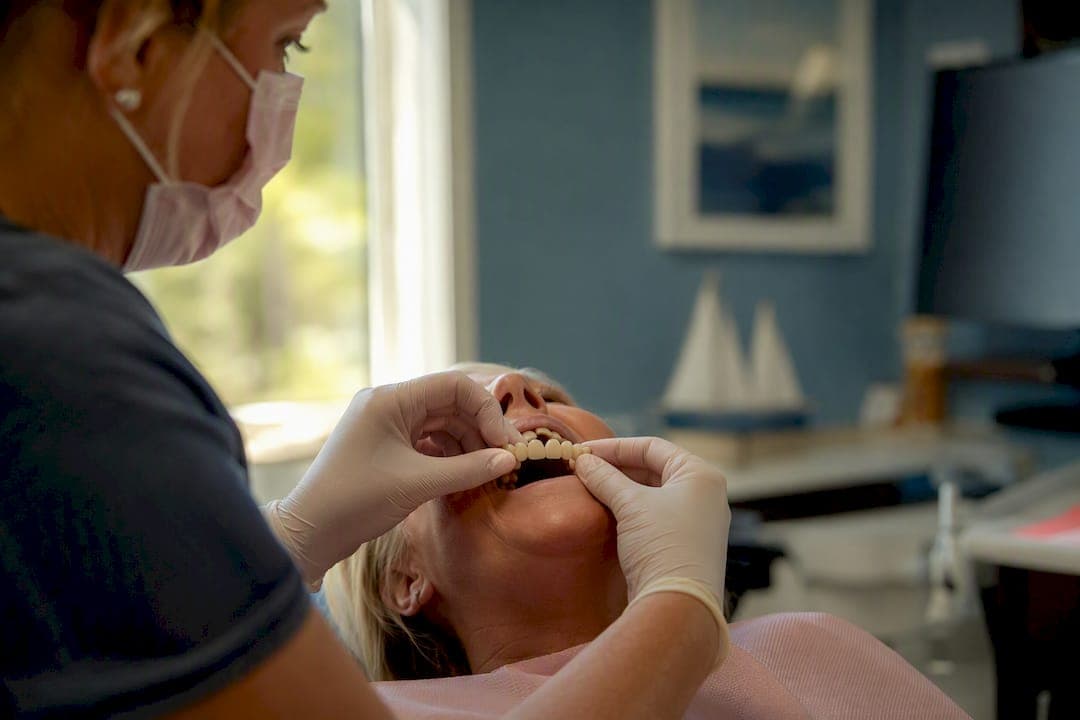
A three-unit dental bridge typically costs $2,500 to $6,000 without insurance, depending on the materials and where you live. With dental insurance that covers major restorative work at about half, expect your out-of-pocket share to be roughly half the bridge cost, assuming you haven't already used up your annual maximum. That last part trips up more patients than the sticker price ever does.
Materials, the number of missing teeth, and any prep work your abutment teeth need (think root canals or buildups) all swing the final number. So does your zip code.
By the numbers: A dental bridge typically lasts 5 to 15 years, with hygiene and regular checkups pushing you toward the higher end.
Before you sign anything:
- Ask for a written, itemized treatment plan, not a verbal quote.
- Confirm whether the estimate includes X-rays, extractions, or buildups.
- Get a predetermination from your insurer before treatment starts.
Key Takeaways
Getting an accurate dental bridge cost requires an itemized written estimate, a clear read on your insurance's annual maximum, and a realistic view of long-term replacement costs.
| Point | Details |
|---|---|
| Know your baseline range | A three-unit bridge typically runs $2,500 to $6,000 without insurance, varying by material. |
| Watch the annual maximum | Insurance pays the lesser of your coverage percentage or your remaining annual maximum, not both combined. |
| Budget for prerequisites | X-rays, extractions, root canals, and buildups often add $150 to $1,500 beyond the base quote. |
| Plan for the long haul | Bridges typically last 5 to 15 years; factor replacement cycles into your total cost comparison. |
| Get it in writing | Starboard Dental provides digital scans and itemized treatment plans so your estimate reflects your actual case, not a national average. |
Table of Contents
- How Much Does a Dental Bridge Cost by Type?
- How Does Insurance Actually Change What You Pay?
- What Hidden Costs Show Up Before the Bridge Itself?
- How Long Does a Bridge Last, and What Does That Mean for Long-Term Cost?
- What Should You Ask For at Your Consultation?
- What Are Your Options for Paying Less Out-of-Pocket?
- How Starboard Dental Helps You Get an Accurate Number
- Frequently Asked Questions
- Sources
How Much Does a Dental Bridge Cost by Type?
The type of bridge you need matters more to your final bill than almost anything else. Here's how the four main options typically break down for a standard three-unit case.
- Traditional porcelain-fused-to-metal (PFM): $2,500 to $4,500. This is the workhorse option, strong and reasonably priced, though the metal substructure can occasionally show as a dark line near the gum.
- All-ceramic or zirconia: $3,000 to $6,000. You're paying a premium, usually a few hundred to over a thousand dollars more than PFM, for a more natural, translucent look and no metal shadow.
- Maryland (resin-bonded) bridge: $1,500 to $2,500. This is the budget and conservative option, but it only works well for front teeth where biting force is lower.
- Implant-supported bridge: $5,000 to $10,000 or more for multi-unit cases. Higher upfront, but it preserves jawbone and skips the need to grind down neighboring teeth.
These ranges reflect three-unit pricing, meaning one bridge spanning a single gap with two supporting teeth. If you need to replace more than one tooth, add roughly $800 to $1,500 for each additional pontic (the floating replacement tooth in the middle), since more units mean more lab time and material.
The choice usually comes down to where the gap sits and what your dentist finds on the abutment teeth. A Maryland bridge makes sense for a healthy front tooth where you want a minimally invasive fix without touching much natural enamel. Implant-supported bridges get recommended when you're missing several teeth in a row, or when your dentist wants to stop bone loss in the jaw, a real long-term concern with traditional bridges. If a patient asks us which bridge type fits their situation, the honest answer is: it depends on what's holding up the bridge on either side, and that's something an exam settles, not a price list.
How Does Insurance Actually Change What You Pay?
Most dental plans classify bridges as "major restorative" work, which typically gets covered at 40% to 80%, depending on your specific plan. That sounds generous until you run the math against your annual maximum, which is where most people get blindsided.
Here's the calculation that actually matters:
- Find your plan's coverage percentage for major restorative work (check your benefits summary, not just the marketing brochure).
- Multiply that percentage by your bridge's total cost to get insurance's theoretical contribution.
- Compare that number against your remaining annual maximum. Insurance pays whichever figure is lower.
If your plan has a $1,500 annual maximum and covers major restorative work at 50%, a $4,000 bridge does not net you $2,000 from insurance. The plan pays out only up to its $1,500 cap, leaving you responsible for $2,500 out-of-pocket, not $2,000.
That gap between the percentage and the actual dollars paid is one of the most common billing surprises patients hit. Add in waiting periods (some plans make you wait 6 to 12 months before covering major work at all) and network status, since out-of-network dentists often mean lower reimbursement, and you can see why a phone call before treatment saves real money. Ask your insurer for a predetermination in writing, and confirm whether lab fees or diagnostic X-rays fall under the same coverage bucket as the bridge itself. Our dental insurance guide walks through how to read a benefits summary if this is your first time deciphering one.
What Hidden Costs Show Up Before the Bridge Itself?
The quoted bridge price rarely covers everything you'll actually need. Prerequisite work gets discovered during the clinical exam, often after you've already mentally budgeted for a single number.
Common add-ons and typical ranges:
- Diagnostic X-rays: usually $25 to $250 depending on how many images are needed.
- Tooth extraction (if an abutment tooth needs removal first): $150 to $450 per tooth.
- Root canal on an abutment tooth: $700 to $1,500, depending on which tooth.
- Core buildup (rebuilding a damaged tooth before it can support a crown): $150 to $400 per tooth.
These costs exist because the condition of your abutment teeth, the teeth anchoring the bridge on either side, often determines whether extra procedures are needed at all. A dentist can't always know this until they've taken images and examined the teeth in person.
Pro Tip: Ask your dentist directly, "Which items are included in the bridge fee, and which are billed separately?" Get the answer in writing before you commit to a treatment date.
How Long Does a Bridge Last, and What Does That Mean for Long-Term Cost?
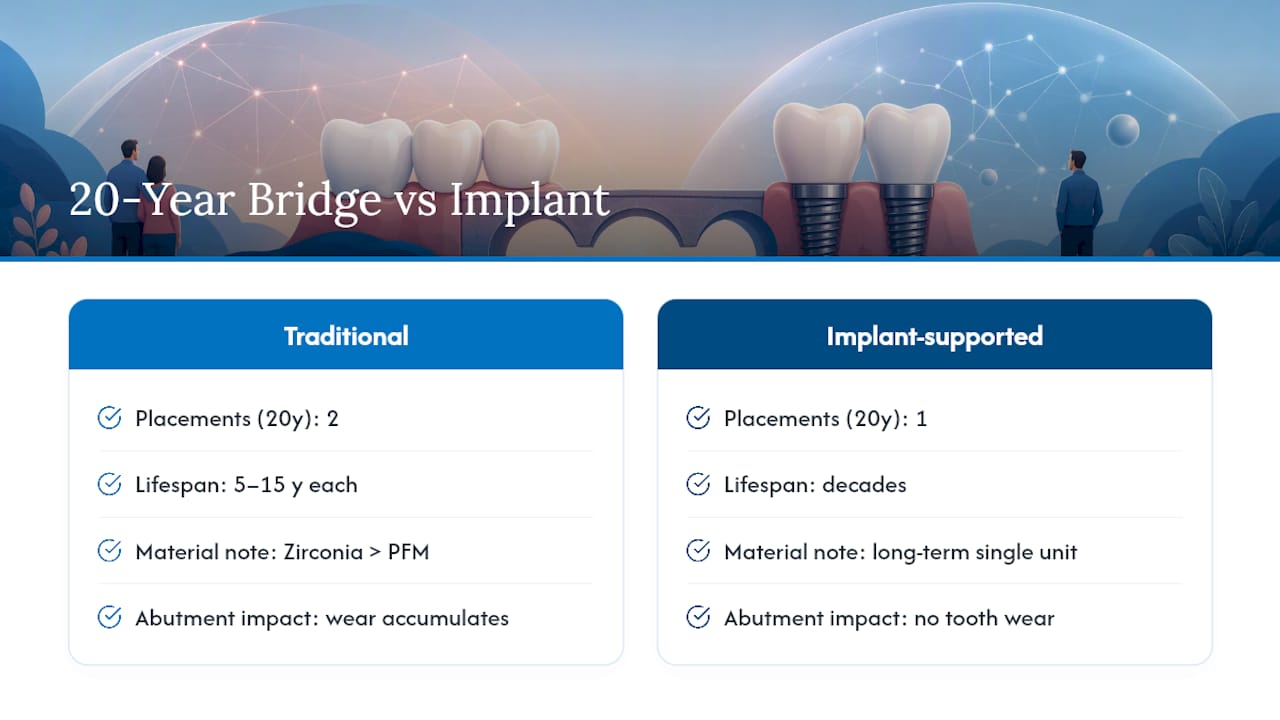
A well-maintained bridge typically lasts 5 to 15 years, with oral hygiene, regular exams, and material choice all affecting where you land in that range. Zirconia bridges tend to hold up longer than PFM in high-wear areas, though both depend heavily on how well you care for the supporting teeth underneath.
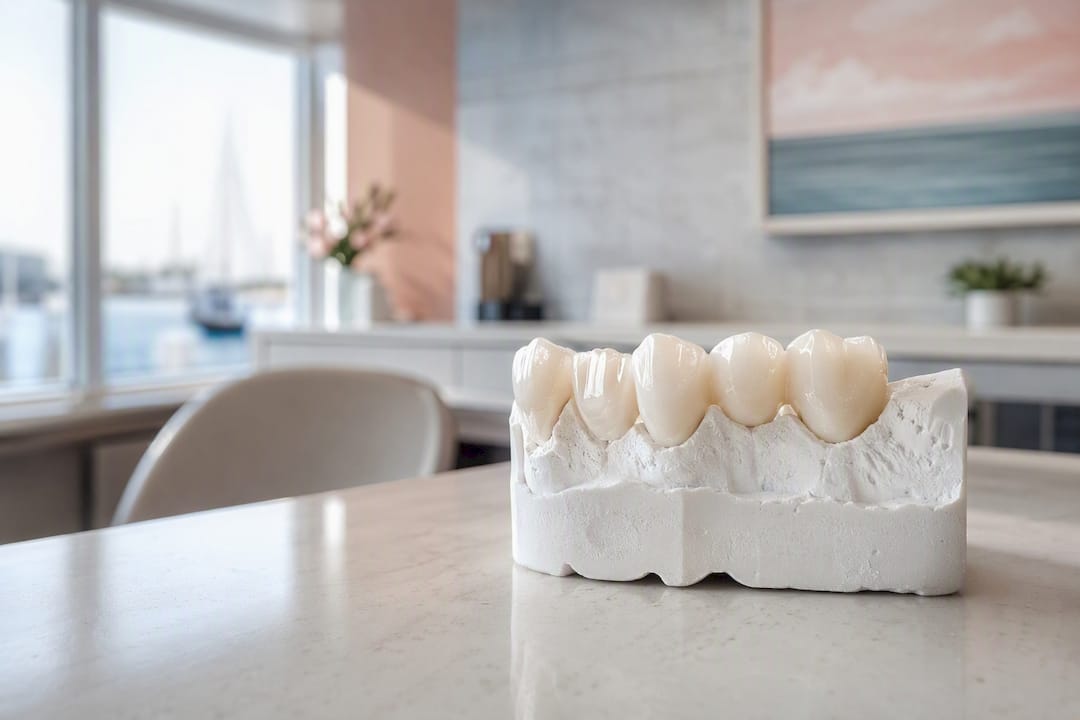
Run the 20-year math and the comparison gets interesting. Two traditional bridges over 20 years (say, one replacement around year 10) can cost more in total than a single implant-supported bridge placed once, especially once you factor in the abutment tooth wear that repeated bridgework causes. That's not a universal rule, but it's worth discussing at your consultation if you're weighing bridge vs. implant for a decades-long horizon.
Routine maintenance is cheap by comparison: regular cleanings, a floss threader or water flosser for under the pontic, and periodic exams to catch problems before they become expensive ones. Our crown lifespan guide covers similar wear patterns if you're comparing restoration types.
What Should You Ask For at Your Consultation?
A reliable cost estimate depends on getting the right documents upfront, not guessing after treatment starts. Request these four things before you agree to anything:
- An itemized treatment plan listing every procedure code separately, not a single lump sum.
- A written predetermination from your insurance carrier confirming coverage percentages and remaining annual maximum.
- Full disclosure of lab fees, including whether the lab is in-house, local, or outsourced.
- A timeline showing the number of visits and expected weeks between appointments.
Comparing two estimates only works if you're comparing apples to apples: same materials, same lab quality tier, same number of visits. A quote that looks $800 cheaper might be using a lower-grade lab or skipping a step the other dentist included.
Pro Tip: Ask whether the lab is in-house, local, or outsourced. Outsourced labs overseas can lower cost but often add a week or two to your timeline, and quality can vary more than patients expect.
What Are Your Options for Paying Less Out-of-Pocket?
You have more flexibility here than most people realize. Match the option to your timeline and financial situation.
- FSA or HSA funds: Pre-tax dollars you've already set aside, effectively a built-in discount equal to your tax rate.
- In-office financing or dental credit plans: Spreads cost over months, useful when you need treatment now but want to avoid a lump-sum hit. See how payment plans work in practice.
- Phased treatment: Splitting prerequisite work and the bridge itself across two calendar years to reset your annual maximum.
- Dental school clinics: Often 35% to 65% cheaper than private practice, though expect more visits and longer appointment times since students work under supervision.
- Community health centers: Sliding-scale clinics are searchable through HRSA's health center finder if cost is a significant barrier.
Weigh total lifetime cost, not just the sticker price. A cheaper option that requires more follow-up visits or a shorter-lived material isn't always the better deal once you zoom out.
How Starboard Dental Helps You Get an Accurate Number
At Starboard Dental, every bridge consultation starts with digital scanners instead of messy impressions, giving you a precise model of your bite before any price gets discussed. Same-day appointments mean you're not waiting weeks just to get a straight answer about cost.
What you'll walk away with:
- A digital scan of your teeth and bite.
- An itemized treatment plan showing every procedure separately.
- A financing conversation, including payment plan options, before treatment begins.
Ready to see what your bridge would actually cost? Our dental bridges page outlines the process, or you can explore our broader restorative dentistry services to see how bridges fit alongside other options.
Budgeting for a Bridge Comes Down to Shared Decisions
The number that matters most isn't the average you find online, it's the itemized estimate specific to your mouth, your insurance, and your abutment teeth. I'd rather see a patient ask five uncomfortable questions upfront than get a bill that doesn't match expectations three weeks later. Treat the consultation as a conversation, not a formality: your dentist should be walking through options with you, not just handing you a number.
Frequently Asked Questions
How much does a dental bridge cost without insurance? A standard three-unit bridge typically runs $2,500 to $6,000 without insurance, depending on the material you choose and your geographic location. Implant-supported bridges cost more, often $5,000 to $10,000 or higher for multi-unit cases.
Is a dental bridge cheaper than an implant? Upfront, yes. A traditional bridge usually costs less than a single-tooth implant. Over a 20-year span, though, a bridge that needs replacing once or twice can approach or exceed the lifetime cost of an implant, which typically lasts longer with proper care.
Does dental insurance cover bridges? Ask for a predetermination before treatment to know your real out-of-pocket number.
What's the difference between a flipper tooth and a bridge? A flipper is a removable, temporary partial denture, cheaper and faster to make, but not a permanent fix. A bridge is fixed in place and built to last years, making it a more durable option for replacing one to four missing teeth in a row.
How long do dental bridges last? Most bridges last 5 to 15 years, with lifespan depending on your oral hygiene, the material used, and how well the abutment teeth hold up over time. Regular exams and cleanings help push toward the higher end of that range.
Are dental school clinics a good way to save money on a bridge? Expect more appointments and longer treatment timelines in exchange for the lower price.
This article is general information, not a substitute for advice from a qualified doctor. Consult a qualified healthcare professional about your own circumstances before acting on anything here.
Sources
- Dental Bridges | Cleveland Clinic
- How Much Does a Dental Bridge Cost? | Delta Dental
- Dental Bridge Cost in 2026: 3-Unit and Multi-Tooth Pricing — ToothCostGuide