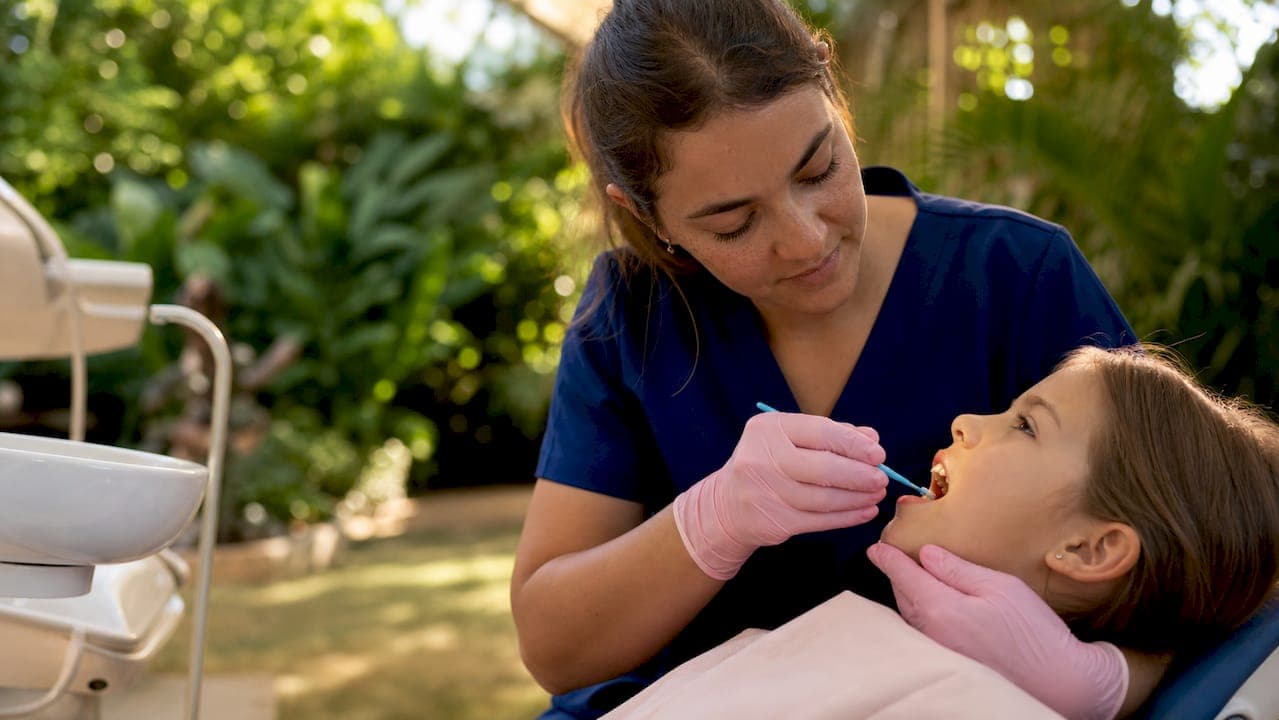
Dental sealants are a quick, painless preventive treatment that significantly cuts cavities on children's back teeth, and pediatric dentists recommend them for most kids as soon as permanent molars come in. The coating can prevent up to 80% of cavities for two years and keeps working for years after that. Bring it up at your child's next checkup.
TL;DR:
- Sealants prevent up to 80% of cavities in the first two years and can protect for several years if checked regularly.
- Applying sealants soon after molars erupt maximizes their effectiveness and reduces the risk of decay developing underneath.
- Resin-based sealants bond tighter but require a completely dry field, while glass ionomer sealants tolerate moisture and release fluoride.
- The placement process takes only a few minutes, involves no drilling, and generally requires no anesthesia or special home care beyond normal hygiene.
- Most well-maintained sealants last between two to four years and can be repaired rather than fully replaced if worn or chipped.
Table of Contents
- How Dental Sealants Protect Your Child's Molars
- When Should Kids Get Sealants?
- What Happens During the Sealant Appointment
- Are Sealants Safe? Materials and Common Concerns
- Cost, Insurance, and School Sealant Programs
- How Long Do Sealants Last?
- A Practical Look at Sealants From Our Chair
- Protecting Your Child's Smile at Starboard Dental
- Sources
How Dental Sealants Protect Your Child's Molars
A sealant is a thin plastic coating painted onto the chewing surfaces of molars and premolars, the teeth doing most of the grinding work at the back of the mouth. Those surfaces aren't flat. They're carved with tiny pits and grooves, called fissures, left over from how the tooth formed. A toothbrush bristle is often too wide to reach the bottom of those grooves, so food particles and bacteria settle in and stay put.
That's exactly where most childhood cavities start. Sealants fill in the grooves and create a smooth, sealed surface that food and bacteria can't colonize. Think of it less like a shield sitting on top of the tooth and more like grout filling the cracks in tile. Nothing gets underneath because there's no gap left to get under.
The numbers back this up in a real way. Children between ages 6 and 11 who don't have sealants are nearly three times more likely to develop cavities in their molars than kids who do. Sealants aren't a replacement for fluoride. They work alongside it: fluoride strengthens the smooth surfaces of teeth, while sealants specifically guard the pitted chewing surfaces fluoride can't fully protect on its own, according to NIDCR guidance.
Pro Tip: If your child's dentist mentions "deep grooves" during a routine exam, that's dental shorthand for a tooth that's a strong sealant candidate, even if no cavity has formed yet.
What sealants do well:
- Block bacteria and food debris from settling into pits and fissures
- Prevent up to 80% of cavities in the first two years, with continued protection for up to four years
- Complement (not replace) fluoride toothpaste and treatments
- Preserve healthy tooth structure instead of removing it, unlike a filling
When Should Kids Get Sealants?
Timing matters more than most parents realize, because a sealant only works if it's placed before decay starts, not after. The window to act is narrow and predictable.
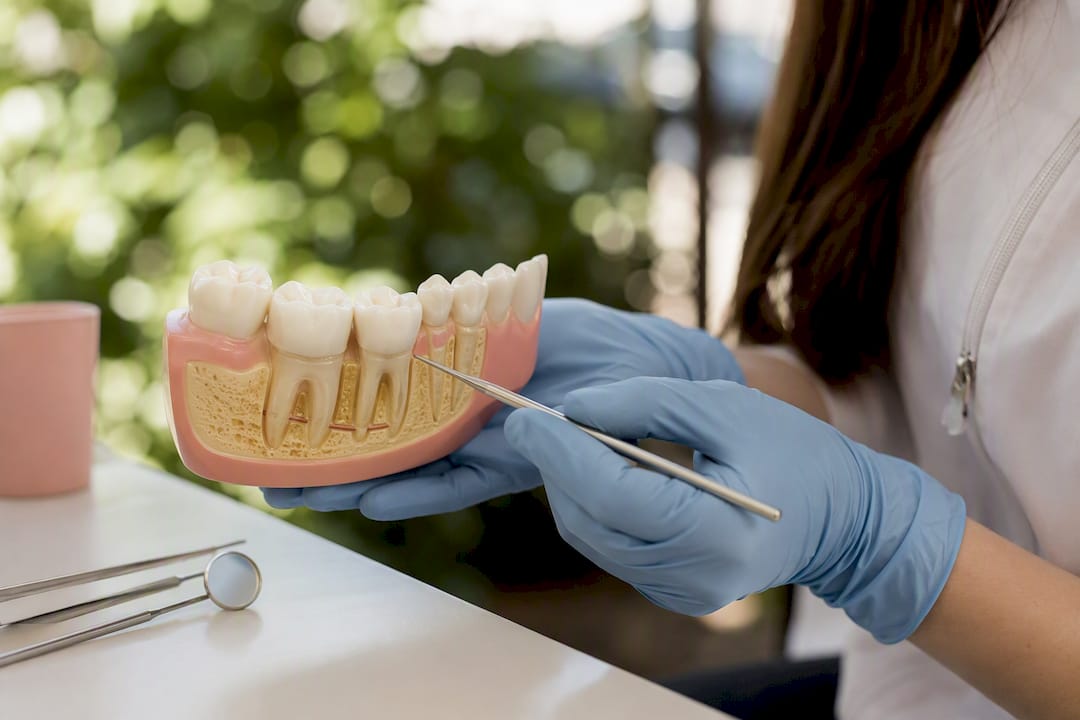
The first permanent molars typically erupt around early school age, with second molars following several years later. NIDCR recommends sealing those teeth soon after they erupt, while the surface is still healthy and easiest to seal. Waiting even a year or two increases the odds that a cavity beats the sealant to the tooth.
Some kids qualify earlier. If your child has deep grooves in their baby molars, a history of cavities, trouble brushing thoroughly, or limited access to regular dental care, a dentist may recommend sealing primary molars too. Risk, not just age, drives the decision.
Questions worth asking at your child's next visit:
- Have the first or second permanent molars fully or partially erupted?
- Does my child's grinding pattern or brushing habit put them at higher risk?
- Would a primary molar benefit from sealing given our family's cavity history?
- Is a filling already needed, or is this still a sealant situation?
Kids who grind their teeth at night don't need sealants for that reason specifically. Grinding wears down enamel differently than decay does, and a night guard is the more relevant fix there. But grinding combined with deep pits is still worth flagging to your dentist.
What Happens During the Sealant Appointment
Most parents brace for something invasive. It isn't. There's no drilling, and most kids don't need any anesthesia at all.
- Exam. The dentist checks that the molar is clean, dry, and free of active decay.
- Clean. The tooth surface gets a quick polish to clear away plaque.
- Isolate and dry. Cotton rolls or a small rubber shield keep saliva off the tooth while the dentist works.
- Condition. A mild etching gel roughens the enamel slightly so the sealant bonds tightly. It's rinsed off after a few seconds.
- Paint. The liquid sealant gets brushed directly into the grooves.
- Cure and check. A curing light hardens the sealant in seconds, and the dentist checks the bite feels normal.
The whole process takes just a few minutes per tooth, and kids can eat and drink normally right after. Partially erupted second molars, common around age 12, can complicate the moisture control step, since gum tissue partly covering the tooth makes it harder to keep the area dry. In those cases, dentists sometimes wait for more eruption or switch materials.
Pro Tip: Ask whether the appointment includes a short reassessment at your child's next visit. Checking retention early catches a sealant that didn't fully bond before it matters.
School-based sealant programs follow the same clinical steps but happen in a mobile setup, often with a hygienist rather than a dentist leading the visit. The technique doesn't change. The location does.
Are Sealants Safe? Materials and Common Concerns
Two materials dominate sealant practice, and the choice between them comes down to how dry the tooth can stay during placement. Resin-based sealants bond more tightly and hold up longer, but they need a genuinely dry field to set correctly. Glass ionomer sealants tolerate moisture better and release fluoride over time, which makes them the practical pick for a partially erupted molar or a child who has trouble sitting still, even though they don't retain as long as resin in the long run.
Clinical backing here isn't thin. Systematic reviews behind ADA and AAPD guidelines support pit-and-fissure sealants both for preventing new decay and for arresting very early, noncavitated lesions before they progress. That second point surprises a lot of parents: a sealant can sometimes stop a lesion that hasn't fully become a cavity yet, sealing it off from the bacteria feeding it.
The most common safety question is about BPA. Some sealant resins contain trace bisphenol A, and the exposure from a single sealant application is measured in a tiny fraction of what a child encounters from food packaging or other everyday sources in a single day. Most practices also wipe the freshly cured surface to remove any unbonded residue, which reduces that exposure further.
Where sealants have real limits:
- They don't work on a tooth that already has a cavitated lesion, meaning visible decay through the enamel
- They need periodic checking, since a chipped or worn sealant can silently stop protecting the tooth
- True allergic reactions to sealant materials are rare, but mention any known dental material sensitivities before treatment
Sealants are a prevention tool, not a substitute for restorative treatment once decay has already taken hold.
Cost, Insurance, and School Sealant Programs
Most dental insurance plans, along with Medicaid and CHIP, classify sealants as a preventive service, which usually means low or no out-of-pocket cost. That coverage isn't universal, so it's worth a quick call to your plan before the appointment rather than assuming.
School-based sealant programs exist specifically to close the gap for kids who don't have regular access to a dentist's chair. The CDC funds and evaluates these programs because they've proven both effective and cost-saving at a population level, often run through a school nurse's office or a visiting mobile dental team. If your child's school offers one, a signed consent form is usually all that's needed to enroll.
A few ways to find affordable coverage:
- Ask your dental plan directly whether sealants fall under preventive or basic care
- Check InsureKidsNow.gov or your state Medicaid dental benefit if your child qualifies
- Look into whether your child's school runs or partners with a sealant program
- Community health centers and dental schools often offer sealants on a sliding fee scale
The financial logic is straightforward once you compare it to the alternative. A sealant costs a fraction of what a filling runs, and a filling costs a fraction of what a crown or root canal runs. Prevention is the cheapest tier on that ladder, every time. For general prevention habits that stretch your dental budget further, see our tips for preventing cavities between checkups.
How Long Do Sealants Last?
Sealants don't last forever, but they last longer than most parents expect. Protection peaks in the first two to four years, and a well-placed resin sealant checked regularly can hold up for several years beyond that.
Your dentist checks sealant integrity at routine cleanings, feeling for chips or wear with a dental explorer and looking for any dulling that suggests the material has thinned. If a sealant has partially worn away, it gets touched up rather than fully redone. If decay somehow develops underneath, the dentist removes the affected area and treats it like any other cavity, which is a rare outcome when sealants are monitored on schedule.
Home care doesn't change with a sealant in place. Regular brushing with fluoride toothpaste, flossing, and biting into hard candy or ice cubes with normal caution all support how long the sealant holds.
- Peak protection: two to four years, with many sealants lasting longer
- Checked at every routine cleaning, not just when a problem is suspected
- Repaired in place rather than replaced outright when partially worn
- No special home care required beyond your child's normal routine
Pro Tip: If your child mentions a "rough spot" or "bump" on a back tooth, that's often a sealant edge lifting slightly. Worth a look at the next visit, not an emergency call.
A Practical Look at Sealants From Our Chair
Parents ask the same handful of questions in almost every sealant consult, and honestly, they're the right questions. Has the molar erupted enough? Which material fits this specific tooth? What does insurance actually cover? When do we check back in? Answering those four clearly does more for a child's comfort than any amount of reassurance about the procedure itself.
What tends to get underestimated is how much technique affects outcome. A sealant placed on a tooth that wasn't kept dry enough, or rushed through the etching step, won't hold as long as one placed carefully. That's part of why digital scanning and careful moisture control matter as much as the material choice itself. A nervous kid squirming in the chair is a bigger threat to sealant longevity than the sealant material ever is.
If your child is due for an exam, ask directly whether their molars are sealant candidates right now, not at some vague future visit.
— Alex
Protecting Your Child's Smile at Starboard Dental
Starboard Dental treats sealants the way they should be treated: as a five-minute, no-drama part of a regular checkup, not a separate appointment to dread. Kids sit under ceiling-mounted TVs during the procedure, which keeps most of them still enough that the dry-field step actually works the first time, meaning fewer redos and better long-term retention.

That matters more than it sounds like it should. A sealant done right the first time protects a molar for years; a rushed one can chip within months. Our team uses digital scanners to spot the pits and fissures most at risk before they become a problem, and we walk you through material choice, timing, and what your insurance likely covers before anything gets painted on. If your child has a first or second molar that just came in, or you're not sure whether they're a candidate yet, explore the conditions we treat and schedule a checkup in Kennebunk to get a straight answer at your child's next visit.
Sources
- Dental Sealants | Washington State Department of Health
- Dental Sealants | NIDCR
- About Dental Sealants | CDC
- Pit and fissure sealants — NCBI Bookshelf