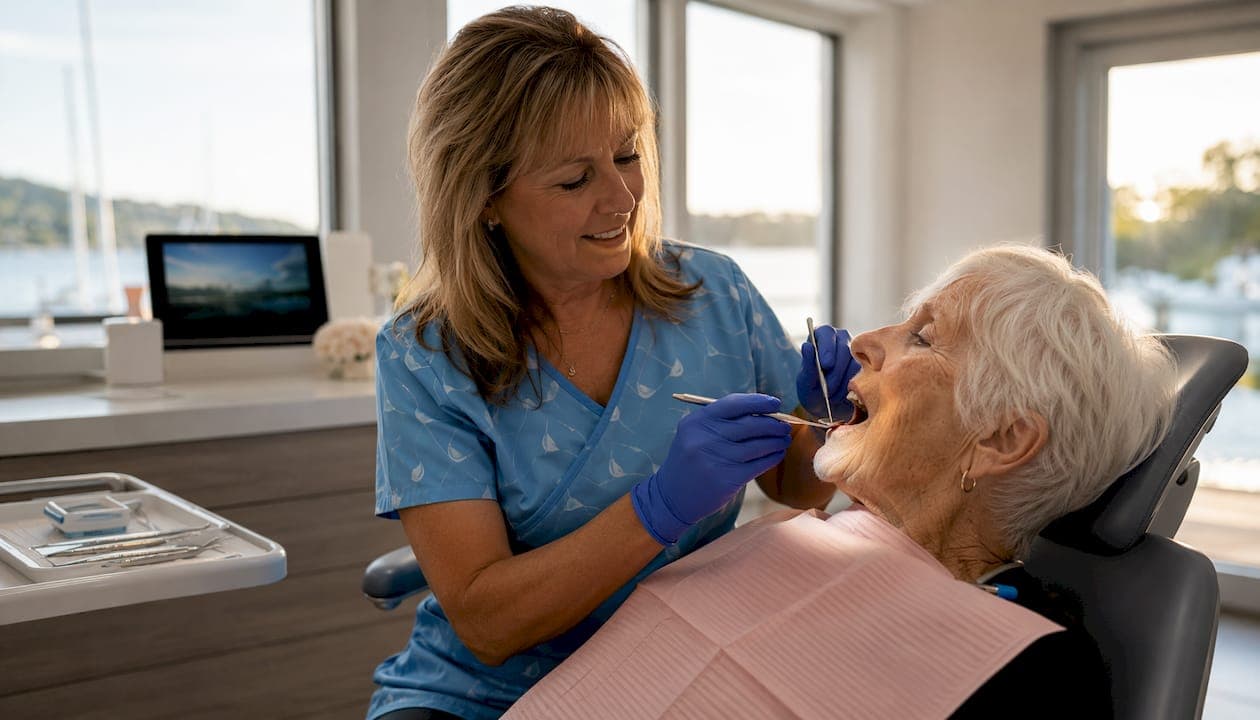
Preventive dentistry is the combination of daily oral hygiene habits and professional dental care designed to stop tooth decay, gum disease, and other oral problems before they start. The single most important thing you can do right now is to brush twice daily with fluoride toothpaste and schedule a preventive exam with your dentist. The American Dental Association and CDC both recognize prevention as the foundation of lifelong oral health, and practices like Starboarddental in Kennebunk, ME, build every patient visit around exactly that goal.
Here is what preventive dental care actually covers:
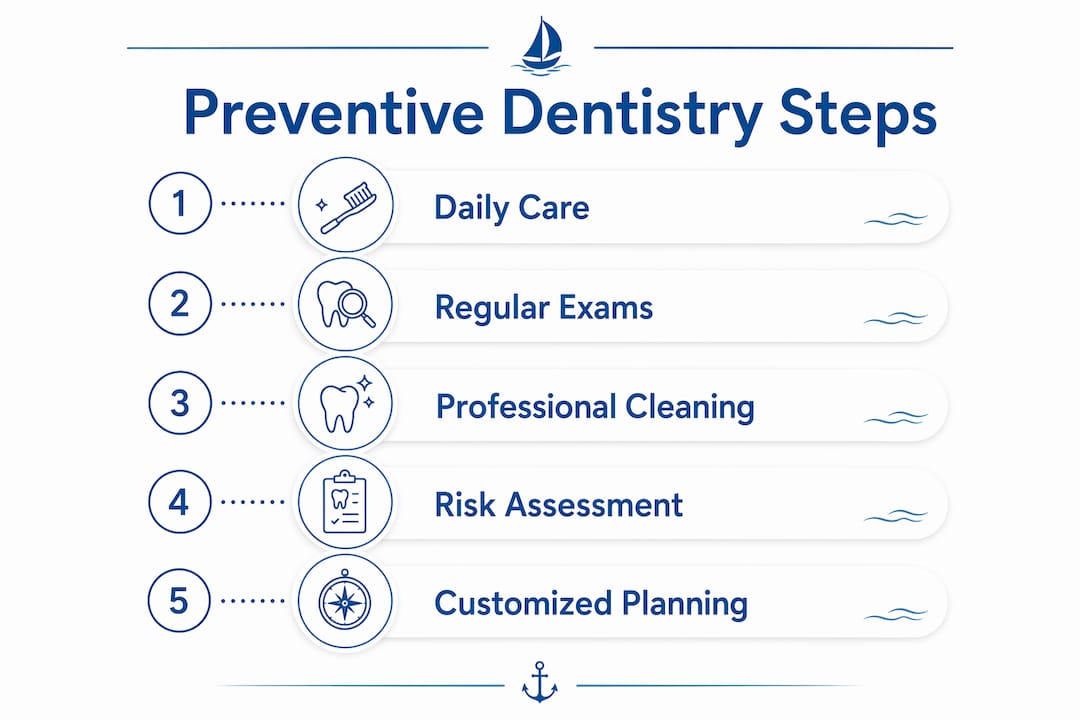
- Daily home care: brushing, flossing, and diet choices you make every day
- In-office services: professional cleanings, exams, fluoride treatments, sealants, X-rays, and oral cancer screening
- Personalized planning: risk-based scheduling and counseling from your dental team
Prevention is not a single appointment. It is a two-part system: what your dental team does at the office and what you do at home every day.
Table of Contents
- Why preventive dentistry matters more than most people realize
- Who benefits from preventive dental care?
- Common preventive services your dental team provides
- How to practice preventive dentistry at home every day
- How often should you visit the dentist?
- What preventive services typically cost and how insurance covers them
- When prevention is not enough: signs you need more than a cleaning
- What U.S. guidelines say about the evidence for prevention
- Key Takeaways
- Prevention is personal, not just procedural
- Start your preventive plan at Starboarddental
- Useful sources and further reading
Why preventive dentistry matters more than most people realize
The obvious benefit is fewer cavities. But the case for prevention goes well past that.
Catching problems early keeps treatment simple and affordable. A small cavity caught at a routine exam is a filling. Left alone for another year, it can become a root canal or an extraction. The cost difference is significant, and so is the discomfort. Dental professionals are often the first to detect signs of systemic disease that appear in the mouth, including early indicators of diabetes, nutritional deficiencies, and oral cancer. Your mouth is not separate from the rest of your body, and a thorough dental exam reflects that.
The CDC notes that providing dental sealants to the nearly 7 million children from low-income households who need them could save up to $300 million in dental treatment costs.
For adults, the math is similar. Preventive visits reduce the likelihood of needing more invasive procedures later, which means less time in the chair, less money spent, and less anxiety about what comes next.
Pro Tip: If you have been putting off a dental visit because you are worried about what they might find, that is exactly the wrong reason to wait. Problems caught early are almost always easier and less expensive to treat.
Who benefits from preventive dental care?
Everyone, but the specific services and visit frequency vary by age and risk profile.
Children benefit most from early prevention. The CDC reports that fluoride varnish can prevent one-third of cavities in primary (baby) teeth, and dental sealants applied to back teeth prevent 80% of cavities. Preventive care should start as soon as the first tooth appears. For parents wanting a deeper look at pediatric prevention, Starboarddental's children's dental care guide covers fluoride, sealants, and dietary guidance in detail.
Adults need routine exams and cleanings, plus behavioral counseling when risk factors are present. Tobacco use, frequent sugar consumption, dry mouth from medications, and a history of cavities all raise your risk and may shorten the interval between visits.
Older adults face additional challenges: gum recession, dry mouth from multiple medications, and higher rates of root surface decay. People managing chronic conditions like diabetes or undergoing immunosuppressive therapy need closer monitoring because these conditions directly affect oral health.
Special risk groups include athletes (custom mouthguards reduce dental injuries), people with eating disorders, and anyone whose medication reduces saliva flow. Saliva is a natural defense against decay, so anything that reduces it raises risk.
Common preventive services your dental team provides
A preventive dental appointment is more than a cleaning. Here is what a full preventive visit typically includes:
- Comprehensive oral exam: visual inspection of teeth, gums, and soft tissues; periodontal pocket measurements to screen for gum disease; review of medical history and medications
- Professional cleaning (prophylaxis): removal of plaque and tartar (calculus) that brushing cannot reach, followed by polishing
- Routine X-rays: bitewing and periapical radiographs to detect decay between teeth, bone loss, and other issues not visible to the naked eye; frequency is based on your individual risk
- Topical fluoride: varnish or gel applied to strengthen enamel; fluoride varnish is associated with decreased risk of new dental caries in children and some older-adult populations
- Dental sealants: thin protective coatings applied to the chewing surfaces of back teeth, most commonly in children and teenagers
- Oral cancer screening: examination of the lips, tongue, floor of the mouth, cheeks, and throat for unusual tissue changes
- Oral hygiene counseling: personalized brushing and flossing instruction, dietary advice, and guidance on products suited to your specific needs
Services are tailored by age and risk. A child's visit looks different from a senior's, and a patient with active gum disease needs different monitoring than someone with a clean bill of oral health. For a step-by-step walk-through of what to expect, Starboarddental's dental checkup guide breaks it down clearly.
Pro Tip: Ask your dentist to explain each finding during your exam. Understanding what "3mm pocket depth" or "interproximal decay" means gives you a clearer picture of your own risk and makes it easier to follow through on recommendations at home.
How to practice preventive dentistry at home every day
Your dental team can only do so much in the office. What you do the other 364 days of the year matters just as much.
-
Brush twice daily with fluoride toothpaste. Use a soft-bristled brush held at a 45-degree angle to the gum line. Brush gently in small circular motions for two full minutes. Hard bristles and aggressive scrubbing damage gum tissue and enamel over time.
-
Floss or use an interdental cleaner once a day. String floss reaches the contact point between teeth; interdental brushes work better for wider gaps or around dental work; floss picks are a convenient backup when you are traveling. The tool matters less than the consistency.
-
Limit sugar and acid exposure. Frequency matters more than total amount. Sipping a sugary drink over two hours is harder on your teeth than drinking it in ten minutes. Rinse with water after acidic foods or drinks and wait 30 minutes before brushing.
-
Choose tooth-friendly foods. Dairy products, leafy greens, nuts, and crunchy vegetables like carrots and celery support enamel and stimulate saliva. Sticky, sugary snacks are the worst offenders because they cling to tooth surfaces.
-
Avoid tobacco in all forms. Smoking and smokeless tobacco dramatically raise the risk of gum disease, tooth loss, and oral cancer. Quitting is one of the highest-impact changes you can make for your oral health.
-
Moderate alcohol consumption. Heavy alcohol use dries out the mouth and raises oral cancer risk. It also often accompanies tobacco use, compounding both risks.
-
Consider a prescription fluoride toothpaste if your dentist recommends it. Standard over-the-counter fluoride toothpaste works well for most people, but patients with high caries risk or dry mouth may benefit from a higher-concentration prescription version.
For a deeper checklist of between-visit habits, Starboarddental's guide on preventing cavities between checkups covers 12 specific tips.
Pro Tip: Set your toothbrush next to something you already do every morning and night, like your phone charger or your skincare routine. Habit stacking is one of the most reliable ways to make brushing consistent.

How often should you visit the dentist?
The standard recommendation is every six months, but that is a starting point, not a universal rule.
Dentists use risk assessment to set your personal interval. A patient with no history of cavities, healthy gums, and good home care might do fine with an annual visit. Someone with active periodontal disease, high caries risk, or uncontrolled diabetes may need to come in every three to four months.
Factors that typically shorten your interval include:
- Active gum disease or a history of periodontal treatment
- High caries risk (frequent new cavities, dry mouth, high sugar intake)
- Tobacco use
- Certain medications that reduce saliva or affect gum tissue
- Immunosuppression or poorly controlled diabetes
- Pregnancy (hormonal changes increase gum inflammation risk)
Your dentist uses periodontal probing measurements, caries risk assessment tools, and your medical history together to decide what schedule makes sense for you. That individualized approach is why the preventive care framework relies on clinical judgment rather than a single fixed rule.
What preventive services typically cost and how insurance covers them
Most U.S. dental insurance plans treat preventive care generously compared to restorative work, but the details vary.
| Service | Typical Insurance Coverage | Common Limits |
|---|---|---|
| Routine exam | 100% (in-network) | 1–2 per year |
| Professional cleaning | 100% (in-network) | 2 per year |
| Bitewing X-rays | 100% or near 100% | Every 1–2 years |
| Fluoride treatment | Often covered for children; adult coverage varies | Age limits common (often under 18) |
| Dental sealants | Often covered for children | Age limits; usually molars only |
| Oral cancer screening | Varies; often included in exam | Bundled with exam fee |
Many dental plans cover preventive exams and cleanings at or near 100%, but limit cleanings to two per year and place age or frequency restrictions on fluoride and sealant coverage. Restorative services like fillings, root canals, and extractions are billed under a different benefit tier and are not considered preventive.
A common pitfall: assuming all preventive services are free or unlimited. Verify your plan's frequency limits, confirm your dentist is in-network, and ask the dental office for a coverage estimate before any service you are unsure about. Some plans also count preventive services toward your annual maximum, which affects how much coverage remains for restorative work later in the year.
When prevention is not enough: signs you need more than a cleaning
Prevention reduces risk substantially, but it does not eliminate it entirely. Some problems need restorative or specialist care.
Watch for these signals and contact your dentist promptly:
- Persistent tooth pain or sensitivity that does not resolve within a few days
- Visible holes, dark spots, or chipping on tooth surfaces
- Bleeding gums that do not improve after a week of consistent flossing
- Swelling in the gums, jaw, or face
- Loose teeth in an adult (not a child losing baby teeth)
- Sores or patches in the mouth that do not heal within two weeks
- Jaw pain, clicking, or difficulty opening your mouth
When these signs appear, the next step depends on the problem. A cavity becomes a filling. Advanced gum disease may require scaling and root planing with a periodontist. An infected tooth may need a root canal or extraction. An unusual soft-tissue lesion warrants a biopsy. Understanding the difference between preventive and restorative care helps you know what to expect at each stage. Starboarddental's overview of common dental procedures explains what restorative treatment involves for patients who are new to it.
What U.S. guidelines say about the evidence for prevention
The evidence base for preventive dentistry is strong in some areas and still developing in others.
| Intervention | Evidence Strength | Key Source |
|---|---|---|
| Fluoride varnish (children) | Strong | CDC, USPSTF |
| Dental sealants (children at risk) | Strong | CDC |
| Community water fluoridation | Strong | CDC |
| Fluoride varnish (adults) | Moderate | USPSTF |
| Primary-care oral screening (adults) | Limited | USPSTF |
| Behavioral counseling in primary care | Limited | USPSTF |
The USPSTF reviewed preventive oral health interventions for adults and found evidence gaps for primary-care-based screening and counseling. Their conclusion reinforces something important: dental professionals remain the primary source for individualized preventive plans. A primary care physician can flag oral health concerns, but the clinical work happens in the dental office.
The CDC reports that dental sealants applied to back teeth prevent 80% of cavities, and fluoride varnish can prevent one-third of cavities in primary teeth — two of the most cost-effective preventive interventions available.
For adults, the evidence supports fluoride varnish in certain populations, and the USPSTF notes that trials show it is associated with decreased risk of new dental caries. Many preventive actions, though, depend on long-term behavior change and individualized clinical judgment, which is why a personalized plan from your dentist carries more weight than any single guideline.
Pro Tip: When your dentist recommends a preventive service, ask which guideline or evidence base supports it. A good clinician will explain the reasoning, and that conversation helps you make an informed decision about your own care.
Key Takeaways
Preventive dentistry works because it combines consistent daily habits with professional clinical care to stop oral disease before it requires costly, invasive treatment.
| Point | Details |
|---|---|
| Definition | Preventive dentistry is daily home care plus professional dental services aimed at stopping decay and gum disease before they start. |
| Start early, stay consistent | Preventive care begins with the first tooth and continues across every life stage; children benefit especially from fluoride and sealants. |
| Visit frequency is personalized | Most patients start on a 6-month schedule, but risk factors like gum disease or tobacco use can shorten that to every 3–4 months. |
| Insurance usually covers the basics | Most plans cover exams and cleanings at or near 100% twice per year; verify age and frequency limits for fluoride and sealants. |
| Starboarddental | Starboarddental in Kennebunk offers preventive exams, cleanings, fluoride, and risk-based planning with same-day appointments available. |
Prevention is personal, not just procedural
Most articles about preventive dentistry read like a checklist: brush, floss, see your dentist twice a year. That advice is correct, but it misses the part that actually changes outcomes.
Prevention works when it is built around a specific person's risk profile, not a generic protocol. A 35-year-old with dry mouth from antidepressants needs a different plan than a healthy 10-year-old. A patient who grinds their teeth at night needs a different conversation than someone whose only risk factor is a sweet tooth. The clinical exam, the periodontal measurements, the medical history review — those are not formalities. They are the inputs that make a prevention plan real.
What I see most often is patients who skip visits because they feel fine, then arrive with a problem that could have been caught two years earlier. The absence of pain is not the same as the absence of disease. Gum disease, in particular, is painless until it is advanced. That gap between "feels fine" and "actually fine" is exactly what regular preventive care is designed to close. Consistent dental care is one of the few health habits where the return on time invested is almost always positive, and the oral-systemic connection makes it relevant well beyond your teeth.
Start your preventive plan at Starboarddental
Starboarddental in Kennebunk, ME, makes it straightforward to get a preventive plan in place. Same-day appointments mean you do not have to wait weeks to get started, and the practice is designed for patients who feel anxious about dental visits: ceiling-mounted TVs, personalized comfort options, and a team that takes the time to explain what they are doing and why.

A first preventive visit at Starboarddental includes a thorough exam, professional cleaning, and a risk assessment that shapes your personal prevention schedule. Fluoride varnish and sealant applications are available where clinically appropriate. The goal is not just a clean bill of health for today but a realistic plan you can actually follow.
Book your checkup and cleaning or explore Starboarddental's full general dentistry services to see what a preventive visit covers. New patients can find scheduling information and forms at starboarddental.com/new-patients.
This article is general health information, not professional dental advice. Confirm current guidelines and recommendations with a licensed dental professional for your specific situation.
Useful sources and further reading
The claims and recommendations in this article draw on guideline-level and consumer-facing sources from major U.S. dental and public health authorities.
- CDC: Oral Health Tips for Children — fluoride varnish, sealant effectiveness, and pediatric prevention guidance
- CDC: Preventing Oral Diseases and Conditions in Communities — community-level prevention strategies and cost data
- USPSTF: Oral Health in Adults — Screening and Preventive Interventions — evidence review and guideline recommendations for adult oral health
- Cigna Healthcare: What Is Preventive Dentistry? — service definitions and insurance coverage patterns
- Delta Dental: What Is Preventive Dental Care? — distinction between preventive and restorative services
- Encyclopedia.com: Preventive Dentistry — clinical overview of preventive dentistry scope and oral-systemic connections
- Cleveland Clinic: Oral Hygiene — brushing technique guidance and home care recommendations