Aftercare for jaw Botox is simple. For the first few hours, stay upright and keep your hands off the injected muscles. For about a day, skip hard workouts and tough, chewy food. Then go back to normal life while the treatment slowly starts to work. Most of the work after your visit is patience and paying attention to how your jaw feels.
Below is the full picture: hour by hour, then week by week. It also covers the questions people most often ask, including what not to do after jaw Botox, when you can eat and exercise, and which symptoms mean you should call your provider.
TL;DR
- Stay upright for three to four hours, and do not rub, press or massage the injected areas. Hospital guidance in the UK also advises against this.
- Skip strenuous exercise for 24 hours. Some providers extend that to 48 hours, along with heat (saunas, hot tubs) and alcohol.
- You can eat right away, but choose soft foods for the first day and avoid hard or chewy ones.
- Initial relief can show up in 48 to 72 hours. Full effect can take up to 14 days, and results typically last around three months.
- Call your provider promptly for severe swelling, trouble swallowing, drooping eyelids or brows, or double vision.
Table of Contents
- The first four hours: what matters most
- What not to do after jaw Botox
- Eating, drinking and chewing
- Exercise, work and daily life
- What to expect: the timeline
- Normal reactions versus warning signs
- How to tell whether it is working
- Does Botox fix TMJ on its own?
- Our perspective
- When to see us
- A practical aftercare checklist
- Frequently asked questions
- Sources
The first four hours: what matters most
The first few hours carry the most specific rules. They are also the easiest to follow once you know them.
Stay upright. The Royal Free London NHS patient leaflet on neurotoxin for TMJ dysfunction says not to lie flat for three to four hours after treatment. Plan your appointment so you are not heading straight to bed or a long nap. Sitting at a desk, driving home and cooking dinner are all fine.
Hands off. The same leaflet tells patients not to touch, rub or massage the injected areas. The jaw muscles you are treating, mainly the masseters at the angle of the jaw and sometimes the temples, are tempting to poke when they feel tender. Resist it. The point of avoiding pressure is to keep the product where your provider placed it.
Be gentle with the face. Resting your cheek on your hand, wearing a tight chin strap or helmet, or lying face down on a couch all put pressure on the treated area. Skip those on day one.
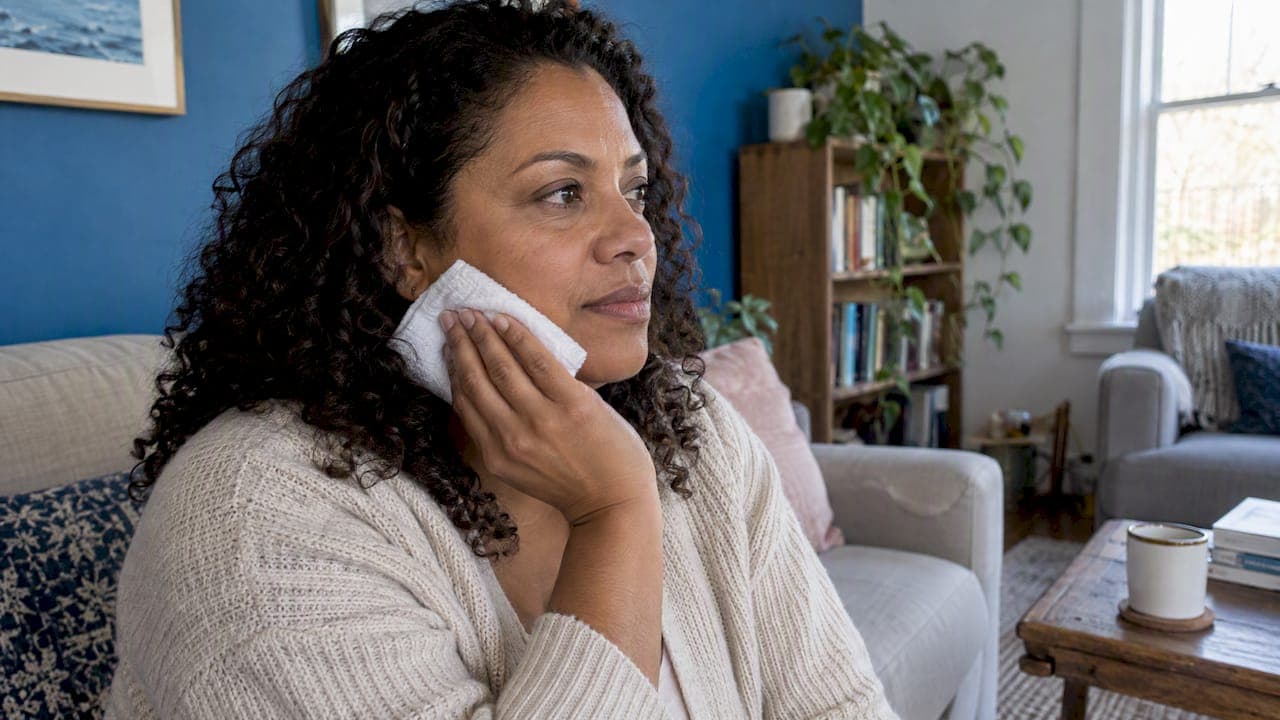
Expect small marks. Tiny bumps at the injection sites, mild redness or a pinpoint bruise are common and fade quickly. If your provider suggests it, a cool compress can ease soreness or swelling. Bedfordshire Hospitals NHS Trust lists a cool compress for pain and swelling in its patient leaflet. Use a clean cloth, not ice directly on skin, and do not press hard.

What not to do after jaw Botox
This is the list most readers come for. Here it is in one place, with the reasoning.
| Avoid | For how long | Why |
|---|---|---|
| Lying flat or napping | 3 to 4 hours | Keeps the product from shifting before it settles |
| Rubbing, pressing or massaging the area | At least 24 hours (some providers say longer) | Pressure may move the product toward muscles you did not intend to treat |
| Strenuous exercise | 24 hours | Higher blood flow and straining can aggravate swelling and bruising |
| Hard or chewy foods | First 24 hours | Treated muscles are still adjusting, and tender jaws do not need extra work |
| Saunas, hot tubs, very hot showers | Up to 48 hours | Intense heat can increase redness and swelling |
| Alcohol | Up to 48 hours | Can increase bruising at injection sites |
Two UK hospital leaflets show how providers differ. The Royal Free asks for 24 hours without strenuous activity. Bedfordshire Hospitals NHS Trust uses a 48-hour window that also covers heat and alcohol. Neither is wrong. They are slightly different levels of caution. If your provider gave you written instructions, follow those first, and if you were told something different, ask why. A dentist who knows your jaw, your bite and your medical history can fit the advice to you.
One more caution that people often miss: do not start an aggressive jaw-stretching routine, chew gum constantly or test the strength of your bite to see if the Botox "took." The muscle has not changed yet, and straining a sore jaw sets you back.
Eating, drinking and chewing
You do not need to fast. Eating the same day is fine. The advice is about how hard you work the jaw.
The Royal Free leaflet advises avoiding hard or chewy foods that place extra strain on the jaw for the first 24 hours. Bedfordshire says much the same. In practice that means:
- Good first-day choices: eggs, soup, yogurt, pasta, soft fish, rice, mashed vegetables, smoothies you drink without a straw if that feels better on your cheeks.
- Better to skip: steak, bagels, jerky, raw carrots, caramel, nuts, crusty bread, gum.
If your jaw hurts when you chew, it is probably your TMJ condition, not a sign something went wrong. Still, treat it gently. Our own guidance on self-care first for jaw pain applies here too: soft diet when sore, no wide yawning or big bites, and heat or cold depending on what calms the muscle.
About alcohol: the research on timing is mostly institutional guidance rather than hard data, so the standard advice is simply to wait 24 to 48 hours. That is also a good rule if you take blood thinners or have bruised easily. Tell your provider about any medication before treatment, not after.
Exercise, work and daily life
You can go back to work the same day. Aftercare is generally minimal, and the Royal Free leaflet says most people return to normal activities within one or two days. The one real restriction is workouts.
Day one: walk, stretch lightly, do desk work. No heavy lifting, hot yoga, running intervals or inverted positions.
Day two: if you had no swelling or bruising and your provider said 24 hours, you can ease back in. If your provider said 48 hours, wait.
After that: resume your routine. If you wear a night guard, ask your dentist when to restart it. Many providers want you to keep wearing it, since Botox does not fix the cause of clenching. Our article on bruxism causes dentists check explains why the guard and the injections often work as a pair.
For makeup, facial treatments and sunscreen: the jaw area is lower on the face than cosmetic Botox sites, but the same caution about not pressing or massaging applies. Wash your face gently, skip deep-tissue facials and avoid any device that squeezes or vibrates over the masseters until your provider clears it. Some dental offices recommend waiting up to ten days before a facial. Ask which timeline your office uses.
What to expect: the timeline
Botox does not work instantly. This is the thing patients most often misread. If your jaw still aches the next morning, nothing has failed.
- Hours 0 to 24: you may feel nothing different, plus mild tenderness at the injection sites.
- Days 2 to 3: the Royal Free leaflet says initial effects may appear 48 to 72 hours after the procedure.
- Up to day 14: full effect can take up to 14 days, a figure Bedfordshire also gives.
- Weeks to months: a 2015 peer-reviewed review reports that maximum pain relief may take several weeks and that typical efficacy lasts about 12 weeks, with large differences between patients.
That last point matters. Some people get four months of relief, others get less. The review's authors stress that response, dose and duration vary, so follow-up should guide any further treatment. Our deeper article on how long TMJ Botox relief lasts and the evidence covers this in more detail.
Why the same day feels no better
Botox blocks the signal that tells a muscle to contract. It takes time for that effect to build up in the muscle, and it takes more time for a tired, overworked muscle to calm down. Soreness from clenching can also continue for a few days while the muscle adjusts. That is normal.
Normal reactions versus warning signs
Most people have a quiet recovery. Some reactions are common and harmless. A few need a call.
Normal and usually fine
- Mild tenderness or a dull ache at injection spots
- Small bumps that flatten within hours
- A tiny bruise
- A feeling that chewing takes more effort, especially with tough food
Difficulty chewing is the one to understand. The 2015 PMC review identifies it as the most common adverse effect, generally from dose-dependent local muscle weakness. If your bite feels weaker than expected but you can eat soft foods comfortably, mention it at your follow-up. Our guide to common TMJ Botox side effects and red flags goes through what to expect.
Call your provider
The Royal Free leaflet says to contact your healthcare provider immediately for unexpected side effects such as severe swelling or difficulty swallowing. The 2015 review also notes that masseter injections can cause facial asymmetry if toxin reaches the zygomaticus major, and that diffusion to nearby areas can cause eyelid or brow drooping or double vision. So call for:
- Severe or spreading swelling
- Trouble swallowing or speaking
- Drooping eyelid or brow
- Double or blurred vision
- An uneven smile that is clearly worse than a mild asymmetry
- Trouble breathing, which needs emergency care: call 911
Do not wait to see if these pass. Reach the office that treated you, and use urgent care or the emergency room if you cannot reach them and symptoms are severe.
How to tell whether it is working
You will judge this better with a baseline. Before treatment, note how often your jaw aches, how wide you can open, whether you wake with headaches, and how well you chew. The American Academy of Facial Esthetics advises documenting baseline function and then reassessing pain, chewing strength, facial balance and any unwanted weakness, rather than repeating injections on a fixed schedule.
A simple log helps for the first month:
- Rate jaw pain from 0 to 10 each morning and evening.
- Note headaches and any clenching you catch yourself doing.
- Note which foods feel harder or easier.
- Photograph your face straight on at day 14 if you worry about symmetry.
Bring it to the follow-up. It helps your dentist decide whether the dose was right.
Does Botox fix TMJ on its own?
Not by itself, and it is honest to say so. A 2024 umbrella review of systematic reviews found moderate evidence that botulinum toxin A can reduce myogenous TMD pain compared with placebo, but not that it beats standard treatments for pain or jaw movement. The same review found a higher risk of adverse events involving muscle and bone tissue than with other treatments and recommended caution.
Bedfordshire describes the treatment as symptomatic relief, and recommends a review several months afterward to assess jaw health and ongoing management. That is how we think about it too: Botox can quiet an overworked muscle while you deal with the cause, whether that is clenching, stress, a bite problem or a joint issue. If you are comparing it with other options, our overview of TMJ treatment options for Kennebunk patients and our piece on Botox and jaw clenching lay out how the pieces fit.
Our perspective
We see jaw pain as a pattern, not a single symptom. Someone shows up with a sore masseter, morning headaches and worn teeth, and the question is rarely only "Should I get Botox?" It is "What is driving this?" So we look at your bite, your teeth, your sleep and your habits, and we use digital scanners for precise records so we can see what changes over time.
Aftercare is where patients often feel alone. The appointment ends, the instructions are a quick list, and then you are at home wondering whether the tightness is normal. We would rather you call. A short phone check costs us nothing and spares you a week of worry.
We also think the best TMJ care is layered. Botox may take the edge off, a night guard protects teeth, and some patients need help with sleep-related issues such as snoring or sleep apnea, which can overlap with clenching. We treat anxious patients often, so we keep comfort in mind: ceiling-mounted TVs, comfort items and an unhurried pace. Come in, ask the awkward questions and expect straight answers.
— Alex
When to see us
If you are dealing with jaw pain, clicking, locking, clenching or morning headaches, a short evaluation is the right first step. We provide TMD care, night guards and Botox for TMD, along with general and restorative dentistry, in Kennebunk. Same-day appointments are available, so you do not have to sit with pain for weeks. Start with our TMJ disorders page, or look at the cost of TMJ Botox in Kennebunk before you book. If you are not sure your symptoms are TMJ-related, our guide to recognizing TMJ symptoms is a good place to begin.
A practical aftercare checklist
Before you leave the office
- Ask for written aftercare instructions.
- Ask when to restart your night guard and any workouts.
- Ask who to call, and what number to use after hours.
- Schedule a follow-up, usually a few weeks out, and a longer review for several months later.
The first day
- Stay upright for three to four hours.
- Do not touch, rub or massage the areas.
- Eat soft foods; skip hard and chewy ones.
- Skip strenuous exercise, saunas and alcohol.
- Use a cool compress if sore.
The first two weeks
- Keep your symptom log.
- Do not judge results before day 14.
- Keep wearing a night guard if you were told to.
- Call about the warning signs above.
After the first month
- Review results at follow-up.
- Discuss whether and when to repeat, based on how you function, not a calendar.
- Keep up with the causes: stress, clenching habits, sleep and bite.
Frequently asked questions
How long should I stay upright after jaw Botox?
Stay upright for three to four hours, according to the Royal Free London NHS leaflet. That means no lying flat or napping. You can sit, stand and walk normally.
Can I eat right after TMJ Botox?
Yes, you can eat the same day. For the first 24 hours, choose soft foods and avoid hard or chewy ones that strain the jaw. If chewing is uncomfortable, stay with soups, eggs, yogurt and similar foods.
When can I exercise after Botox in the jaw?
Wait at least 24 hours before strenuous exercise. Some providers ask for 48 hours and also advise against heat and alcohol in that time. Light walking is fine on day one.
How long until jaw Botox helps my TMJ pain?
Some people notice early effects in 48 to 72 hours, and full effects can take up to 14 days. Relief typically lasts about three months, though it varies a lot between patients.
Is a sore jaw after Botox normal?
Mild tenderness and a bit of chewing weakness are common. Severe swelling, trouble swallowing, drooping eyelids or brows, or double vision are not, and you should contact your provider right away.
Sources
- Neurotoxin for treatment of temporomandibular joint dysfunction, Royal Free London NHS
- Botox for treatment of temporomandibular disorders, Bedfordshire Hospitals NHS Trust
- Temporomandibular Myofacial Pain Treated with Botulinum Toxin, PMC (2015)
- Botulinum Toxin-A for the Treatment of Myogenous TMD, PMC (2024)
- Botox for TMJ: Benefits, Risks & What to Expect, AAFE