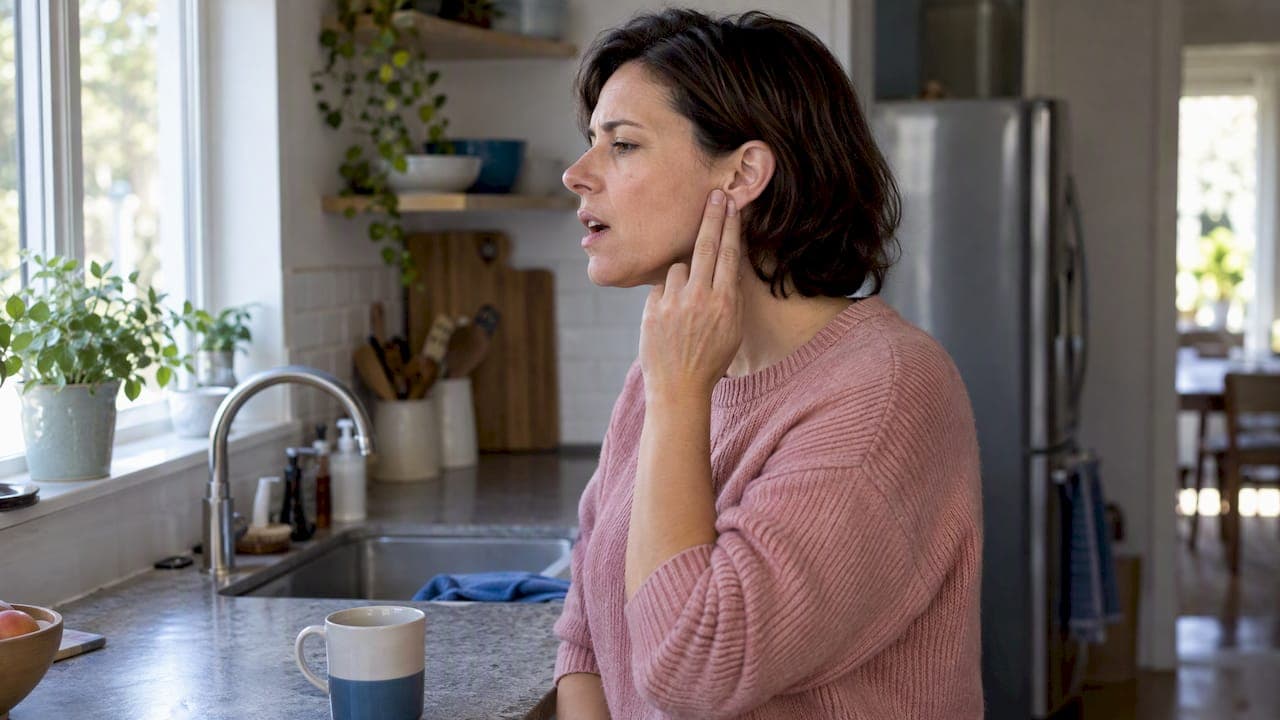
Yes, a jaw joint problem can make your ear hurt, and it happens often. The temporomandibular joint (TMJ) sits directly in front of your ear canal, so when the joint or the chewing muscles around it are irritated, the pain can feel like it is coming from inside the ear. The ear itself is usually fine. The first step is to make sure of that, and the second is to treat the jaw gently and in the right order.
This guide explains how to tell jaw-related ear pain from an ear infection, what you can try at home, when to get checked, and what a dentist can and cannot do about it.
TL;DR
- The TMJ sits right in front of the ear canal, so jaw joint or muscle trouble can show up as ear aching, fullness, ringing or pressure.
- A clue: pain that gets worse when you chew, clench, talk or yawn, and an ear exam that looks normal.
- Get the ear checked first by a doctor, especially with fever, drainage, hearing loss, or if you are over 50, smoke or have diabetes.
- Start with reversible care: soft foods, heat or cold, gentle jaw exercises, short-term over-the-counter pain relievers, and habit changes.
- Be wary of any plan that permanently changes your bite as a first step.
Table of Contents
- Why a jaw problem feels like an ear problem
- How to tell TMJ ear pain from an ear infection
- Rule out the ear first
- Symptoms that point to the jaw
- What causes the jaw to flare up
- What helps TMJ ear pain: start simple and reversible
- What to be careful about
- Our perspective: ear pain is a jaw story more often than patients expect
- Get your jaw and ear pain looked at in Kennebunk
- FAQ
- Sources
Why a jaw problem feels like an ear problem
The TMJ is the sliding hinge that connects your lower jaw to your skull, one on each side. The National Institute of Dental and Craniofacial Research (NIDCR) describes temporomandibular disorders (TMDs) as a group of more than 30 conditions that cause pain and dysfunction in the jaw joint and the muscles that control jaw movement.
Because the joint is only a fraction of an inch from the ear canal, your brain has a hard time telling where the pain begins. Doctors call this referred pain. NIDCR lists aching in or around the ear, a feeling of fullness or pressure, buzzing or ringing, and even hearing changes among the ear-related signs of TMD.
Some of this is shared wiring. The trigeminal nerve supplies feeling to the face, teeth and jaw, and it also controls small muscles linked to the ear, as the StatPearls review of otalgia explains. Pain signals from one area can be felt in another.

It is also common. NIDCR reports that TMDs affect about 15% of adults and 7% of adolescents, making them the most common orofacial pain condition in the United States. If your ear hurts and nothing is wrong with it, your jaw is a reasonable suspect.
How to tell TMJ ear pain from an ear infection
The two can feel alike, but they usually behave differently. Use this as a rough guide, not a diagnosis.
| Clue | More typical of TMJ-related ear pain | More typical of an ear problem |
|---|---|---|
| What makes it worse | Chewing, clenching, talking, yawning | Lying down, pressure changes, pulling on the ear |
| Jaw symptoms | Tenderness, clicking, tight or tired jaw, limited opening | Usually none |
| Other signs | Headaches, sore facial muscles, ringing | Fever, drainage, a recent cold, muffled hearing |
| Ear exam | Often looks normal | Often shows redness, fluid or swelling |
| Timing | Worse in the morning after night clenching, or after stress | Often follows a cold, swimming or a flight |
The last row of evidence matters most. A review of how ear pain is diagnosed notes that when the ear is the source, the exam is usually abnormal, and when it is not, the exam is usually normal. That normal exam is the signal to look elsewhere, and the jaw is one of the most common places.
A clinical review of referred ear pain makes the same point and adds that secondary otalgia, pain that comes from outside the ear, accounts for a large share of ear pain visits.
A simple at-home check
Press gently with your fingertips just in front of your ear while you open and close your mouth. Then press on the muscle at your temple and the thick muscle at the angle of your cheek. If pressing reproduces the ear ache, or one of these spots feels sore, that supports a jaw source. It does not prove it. Treat it as something to tell your clinician, not as a substitute for an exam.
Rule out the ear first
This is the step people skip, and it is the one that matters most for safety. Ear pain can come from infections of the middle or outer ear, and less often from more serious problems. The same diagnostic review warns that ear pain with a normal ear exam should prompt a search for other sources, and that causes such as tumors or temporal arteritis are more of a concern in people over 50, smokers and people with diabetes.
See a physician, urgent care clinician or ENT (ear, nose and throat doctor) promptly if you have any of these:
- Fever, drainage from the ear, or swelling behind the ear
- Sudden or worsening hearing loss
- Dizziness or facial weakness
- A sore in the mouth or throat that does not heal, a lump in the neck, or trouble swallowing
- Jaw pain with headache, scalp tenderness or vision changes, especially if you are over 50
- Ear pain that is constant, severe or getting worse without any jaw link
You can also ask your dentist to look. At a Starboard Dental exam we check the teeth, gums, bite and jaw joints, and our general dentistry visits include oral cancer screenings. Dental pain, such as an infected tooth in the back of the jaw, can also refer pain to the ear, so a dental exam and X-rays are a sensible part of sorting this out. A dentist does not replace a physician for the ear itself, and we will tell you when we think you need one.
Symptoms that point to the jaw
Ear pain rarely arrives alone when the TMJ is the cause. According to Mayo Clinic, TMJ disorders can bring pain or tenderness in the jaw, aching in and around the ear, difficulty chewing, and clicking or grating when you open your mouth. Look for:
- Soreness on one or both sides of the face, often worse in the morning
- A jaw that feels tired, tight or stuck
- Difficulty opening wide, or the jaw catching or locking
- Headaches around the temples
- A feeling of fullness or ringing in the ear with no infection
- Worn, flat or chipped teeth, a sign of grinding
Our own guide to recognizing TMJ symptoms goes deeper on what different patterns of jaw pain can mean.
What about clicking?
Clicking alone is not a disease. NIDCR notes that joint noises without pain or limited movement are common and generally need no treatment. If yours clicks but does not hurt or lock, see our note on jaw clicking without pain for what to watch for.
What causes the jaw to flare up
There is rarely a single cause. The usual contributors are:
- Clenching and grinding (bruxism), often during sleep and often unnoticed. Stress, anxiety and poor sleep can feed it. Dentists look for several underlying drivers before recommending a guard, which we cover in bruxism causes dentists check.
- Daytime habits such as gum chewing, nail biting, resting your chin on your hand, or holding the phone against your shoulder.
- Injury to the jaw, or arthritis in the joint.
- Muscle strain from long dental visits, big bites of food or prolonged yawning.
- Disc displacement inside the joint, which can cause catching or locking.
A NIDCR-supported view of TMD care also stresses that stress and anxiety can worsen teeth grinding. That is why approaches such as cognitive behavioral therapy and biofeedback sometimes help people who clench without realizing it.
What helps TMJ ear pain: start simple and reversible
The consistent message from NIDCR is that most TMJ pain is best handled with the least invasive care first. Its treatment summary lists the simplest options to try first: soft foods, heat or cold on the face, jaw stretching and strengthening exercises, short-term over-the-counter NSAIDs, and self-management. The agency's booklet "Less Is Often Best" makes the case for conservative, reversible care.
A practical routine for the first few weeks:
- Rest the joint. Choose soft foods such as eggs, yogurt, soup, pasta and smoothies. Skip gum, hard bread, tough meat and anything that makes you open very wide.
- Use heat or cold. Many people find a cold pack helps with a fresh flare and moist heat eases tight muscles. Our partner-neutral guide to ice or heat for TMJ explains how to choose and why a wrap that stays in place around the jaw is easier than holding a pack.
- Stretch gently. Slow, pain-free opening and closing, guided by your dentist or a physical therapist, is better than forcing it.
- Keep your teeth apart. Lips together, teeth slightly apart, tongue resting on the roof of the mouth. Set reminders until it becomes automatic.
- Take over-the-counter pain relief only as the label directs. NSAIDs such as ibuprofen are for short-term use, and they are not right for everyone. Check with your doctor or pharmacist if you have stomach, kidney or heart conditions or take blood thinners.
- Work on stress and sleep. Both feed clenching.
We lay out a fuller plan in TMJ pain treatment that starts with self-care and in our overview of TMJ treatment options. In general, many people notice improvement over weeks rather than days, so give the routine time, but do not wait indefinitely if the pain is severe or getting worse.
When simple steps are not enough
If a few weeks of self-care do not help, NIDCR describes intermediate options, such as physical therapy with manual techniques, prescription medicines, and custom-fitted night guards for people who grind at night. A night guard does not cure TMJ, but it can protect teeth and take load off the muscles. We make night guards for patients who need them, and we explain our approach to teeth grinding separately.
Some patients with clenching-driven muscle pain also ask about Botox. We have written about the evidence and safety of Botox for TMJ, the common side effects and red flags, and whether it can stop clenching for good. It is not a first step, and it is not right for everyone.
What to be careful about
Because there is no certified specialty for TMJ disorders, quality of care varies. Be cautious about any plan that begins with permanent changes. NIDCR's guidance, summarized in its patient booklet, is that aggressive or irreversible treatments, such as surgery or altering the bite, should be a last resort. Grinding down teeth, orthodontics, or crown and bridge work aimed at "fixing" a TMJ have not been shown to help and can cause lasting harm.
A few questions to ask any provider:
- What do you think is causing this, and what else did you rule out?
- Is the first step reversible?
- How will we know in a few weeks whether it is working?
- Would you support a second opinion before anything that changes my bite permanently?
A good answer is calm, specific and conservative.
Our perspective: ear pain is a jaw story more often than patients expect
Many of our patients arrive convinced they have an ear problem. They have often already tried drops or a course of antibiotics, and the ear still aches. When we examine the jaw, the story changes: tender chewing muscles, worn teeth, a jaw that deviates a little on opening, and a pattern of clenching under stress.
We approach it in a deliberate order. We listen first, because the timeline tells us a lot. We check the teeth, gums, bite and joints, and we use digital scanning and X-rays when they help us see more precisely. If anything suggests the ear itself or something more serious is involved, we send you to a physician or ENT before we say another word about your jaw. Then we start with the gentlest options: habits, home care, and a night guard only when it fits.
We will not push irreversible work at a jaw problem. Dental anxiety is real, and jaw pain makes people tense even more, so we have built the office to help you relax, with ceiling-mounted TVs and personalized comfort items. When your pain is flaring, we also try to see you quickly, and we offer same-day appointments.
— Alex
Get your jaw and ear pain looked at in Kennebunk
If your ear hurts, your ears have been checked and look healthy, and you have jaw soreness, clenching or clicking, we can help you sort out the cause. Our team provides TMD care and a full exam for patients of all ages, and if a guard or other support is appropriate we can explain your options and your insurance questions before you commit to anything. You can also see the other conditions we treat, or contact Starboard Dental to book a visit.
FAQ
Can TMJ cause ear pain without any jaw pain?
Yes, it can. Some people notice the ear symptoms first, such as aching, fullness or ringing, and only realize the jaw is involved once they notice tenderness or clicking. Because ear pain can also come from infections and other conditions, have your ear examined first, and then ask about your jaw.
How long does TMJ ear pain last?
It varies. Many flare-ups ease with rest, soft foods, heat or cold and habit changes over a few weeks, and NIDCR notes that simple, reversible care comes first. Pain that lasts longer, keeps returning or comes with locking deserves an exam, and nobody can promise a timeline without seeing you.
What could be causing pain in the front of my ear and jaw?
The most common jaw-related causes are TMJ disorders and tight chewing muscles from clenching. Dental problems, ear infections and other conditions can feel similar. A doctor can check the ear and a dentist can check the teeth and joints, so you do not have to guess.
Should I see a dentist or a doctor for TMJ ear pain?
Start with whoever can examine your ear soonest, especially if you have fever, drainage or hearing loss. If the ear looks normal and your jaw is sore, a dentist who treats TMD is a sensible next stop. Over 50, a smoker or have diabetes? Make sure a physician has ruled out other causes.
Can TMJ ear symptoms become permanent?
For most people, jaw pain is manageable, and early conservative care is the usual path. Long-lasting or worsening symptoms should be evaluated rather than endured. Avoid irreversible treatments as a first move.
Sources
- TMD, National Institute of Dental and Craniofacial Research
- Summary of Treatment for Temporomandibular Disorders, NIDCR
- Diagnosis of ear pain, PubMed
- Referred otalgia: common causes and evidence-based strategies, PMC
- Otalgia, StatPearls, NCBI Bookshelf
- TMJ disorders: symptoms and causes, Mayo Clinic