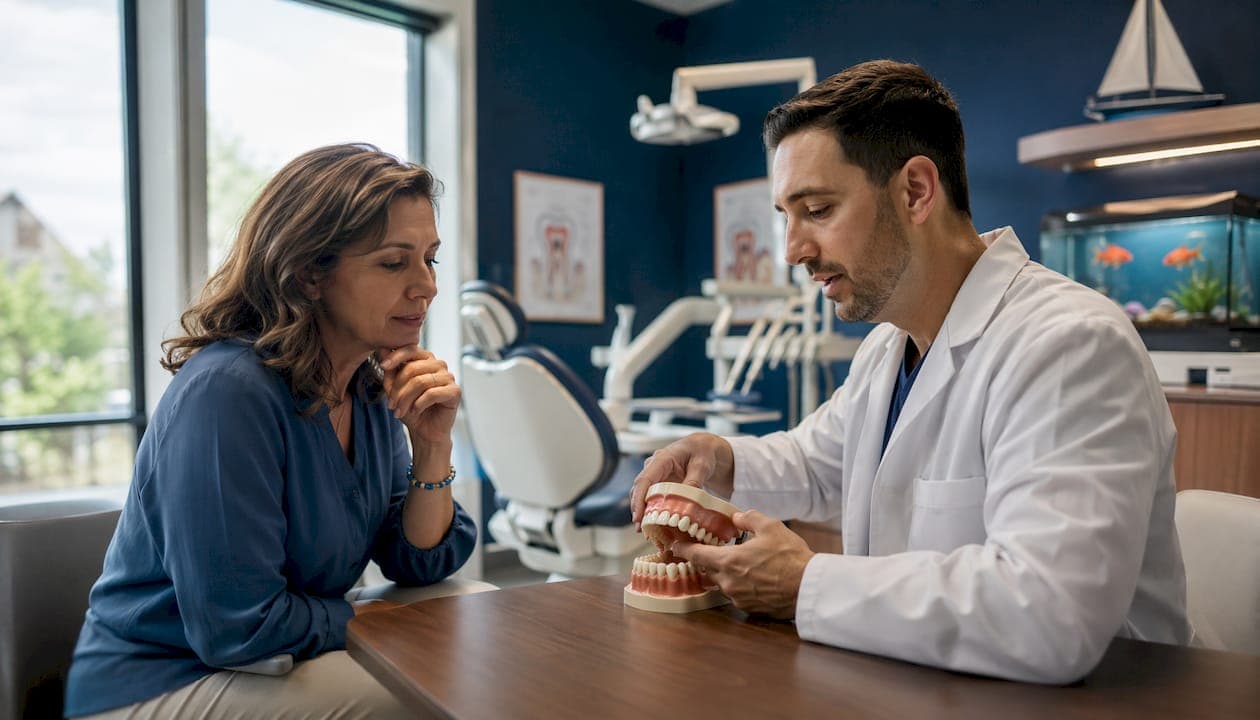
What are the main types of general dentistry services?
General dentistry organizes its care into four core categories: diagnostic, preventive, restorative, and cosmetic. Together, these dental service categories cover the full range of what a general dentist handles, from spotting a cavity before it becomes a root canal to brightening a smile before a big event.
Here is a quick orientation to each category:
- Diagnostic services: exams, X-rays, oral cancer screenings, periodontal assessments
- Preventive services: cleanings, sealants, fluoride treatments, scaling and root planing
- Restorative services: fillings, crowns, bridges, implants, dentures, root canals
- Cosmetic services: teeth whitening, veneers, bonding, contouring
Most patients will encounter all four at some point. The sections below break each one down in practical terms.
1. How diagnostic services work in general dentistry
Diagnosis is where every dental visit starts. Before any treatment happens, your dentist needs a clear picture of what is actually going on in your mouth, and that requires more than a quick look.
Common diagnostic procedures include:
- Comprehensive oral exams: visual inspection of teeth, gums, bite, and soft tissues
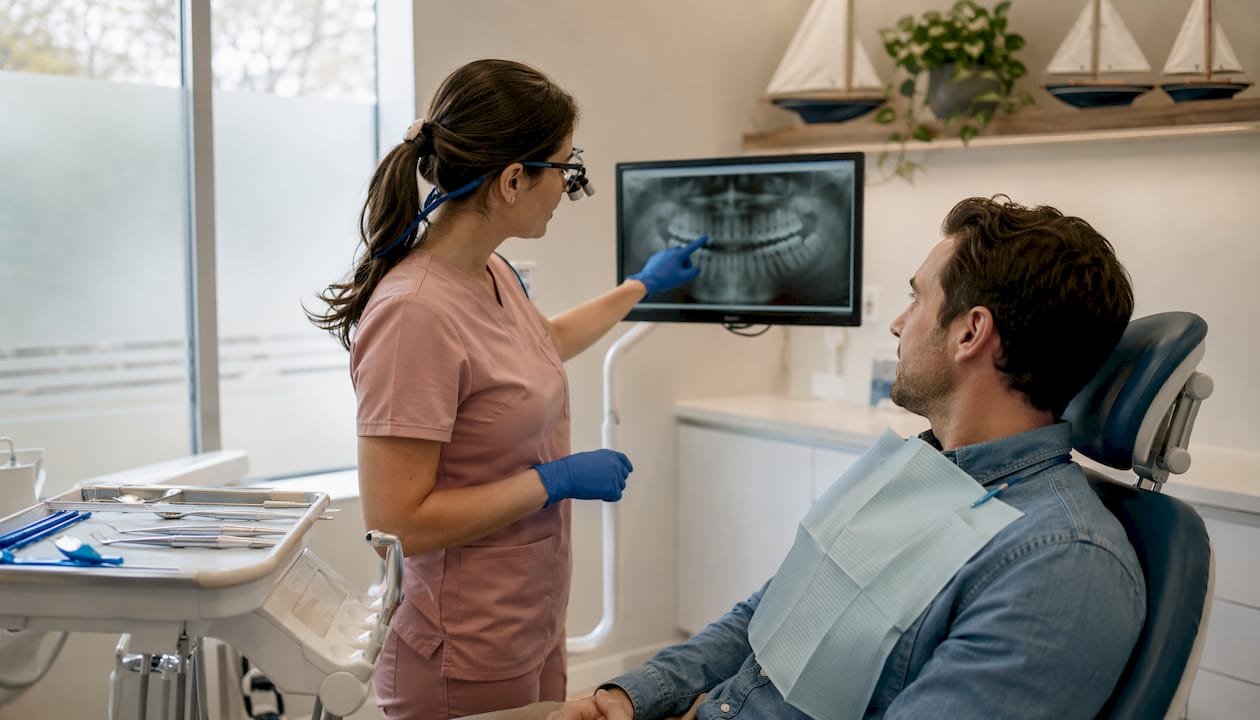
- Digital X-rays: reveal decay between teeth, bone loss, and problems below the gum line
- Periodontal probing: measures pocket depth around each tooth to assess gum health
- Oral cancer screening: visual and tactile check of the lips, tongue, cheeks, and throat
- Dental explorer and mirror exam: detects surface irregularities and early decay
Early detection through exams and digital imaging helps identify decay under existing fillings or developing gum disease before more invasive treatment becomes necessary. The American Dental Association recommends visiting a general dentist at least twice a year for check-ups and cleanings. Skipping those visits does not make problems disappear. It just makes them more expensive to fix.
Pro Tip: Ask your dentist to walk you through your X-rays. Seeing where a problem is forming makes it far easier to understand why a treatment is being recommended.
2. Preventive services to maintain oral health
Preventive care is the category most people associate with a routine dental visit, and for good reason. Its goal is to stop disease before it starts. A dental checkup typically includes several of these services in a single appointment.
Standard preventive treatments include:
- Professional cleanings (prophylaxis): remove plaque and tartar that brushing misses
- Dental sealants: thin protective coatings applied to back teeth to block decay
- Fluoride treatments: strengthen enamel and reduce cavity risk, especially in children
- Scaling and root planing: a deep cleaning treatment that removes buildup below the gum line to manage early periodontal disease
- Patient education: personalized guidance on brushing technique, flossing, and diet
Preventive dental care includes cleanings, sealants, fluoride treatments, and patient education to reduce plaque and tartar buildup and prevent decay. Scaling and root planing goes a step further than a standard cleaning by addressing the root surfaces beneath the gum line, where bacteria accumulate in patients with periodontal disease.
Pro Tip: Preventive visits pay off financially. Treating a cavity costs far more than the cleaning that might have prevented it. Staying consistent with twice-yearly appointments is one of the most cost-effective decisions you can make for your health.

3. Restorative services to repair and replace teeth
When a tooth is damaged, decayed, or missing, restorative dentistry steps in. The goal is not just appearance. It is function, structure, and long-term oral health.
Common restorative dentistry options include:
- Fillings: the most common restorative procedure, used to repair cavities by removing decay and sealing the tooth
- Crowns: caps that cover a damaged or weakened tooth to restore its shape and strength
- Bridges: fixed replacements for one or more missing teeth, anchored to adjacent teeth
- Root canals: remove infected pulp from inside a tooth to save it from extraction
- Dental implants: titanium posts placed in the jawbone that support a crown, bridge, or denture
- Dentures: removable replacements for multiple or all missing teeth
Crowns and bridges prevent the shifting of teeth and help maintain jaw structure, which matters well beyond aesthetics. A missing tooth left untreated causes neighboring teeth to drift, which can alter your bite and lead to jaw pain over time. Dental fillings are often the first restorative treatment patients encounter, and catching decay early keeps the procedure simple.
4. Cosmetic dentistry services for aesthetic improvement
Cosmetic dentistry focuses on how your smile looks. While some procedures overlap with restorative care, the primary driver here is appearance rather than structural repair.
Typical cosmetic dentistry services include:
- Teeth whitening: bleaching treatments that lighten stains from food, drinks, and aging
- Porcelain veneers: thin shells bonded to the front of teeth to change shape, color, or size
- Dental bonding: tooth-colored resin applied to repair chips, gaps, or discoloration
- Dental contouring: reshaping enamel to smooth rough edges or correct minor irregularities
Cosmetic procedures like whitening, veneers, bonding, and contouring are all performed within general dentistry settings. Bonding, for example, can serve both a cosmetic and a minor restorative purpose when it covers a chipped tooth. Patients interested in teeth whitening options will find that in-office treatments typically deliver faster and more controlled results than over-the-counter products. For a broader look at cosmetic options, Towne Dental's cosmetic page offers a useful patient-friendly overview.
5. What industry standards say about general dentistry
General dentists serve as the primary oral healthcare providers for patients of all ages. They handle the full spectrum of common dental procedures and refer complex cases to specialists such as endodontists, periodontists, or oral surgeons when needed.
Tooth decay is the most common chronic disease in the U.S. across all ages, affecting 44.2% of the population, making preventive and restorative dentistry not optional but foundational.
Key standards and insights from the field:
- The ADA recommends twice-yearly visits for most patients, though some may need more frequent care
- Early detection through regular exams reduces the need for complex, costly procedures later
- General dentists coordinate care across life stages, from a child's first visit to senior denture fittings
- Patient education during visits, covering diet, hygiene habits, and risk factors, is considered a core service, not an add-on
- Practices like Starboarddental use digital scanning technology to improve diagnostic accuracy and reduce patient discomfort
6. Emergency dental services
Dental emergencies do not follow a schedule. A cracked tooth from biting something hard, a knocked-out tooth from a fall, or a sudden abscess can happen to anyone. General dentists handle most of these situations directly.
Common dental emergencies include severe toothaches, broken or fractured teeth, lost fillings or crowns, soft tissue injuries, and dental abscesses. The priority in any emergency is to control pain, prevent infection, and save the tooth when possible. Practices that offer same-day appointments, like Starboarddental, make a real difference here because delays in treating an abscess or a cracked tooth can turn a manageable problem into a much larger one.
7. Children's general dentistry services
Children need dental care from the moment their first tooth appears. The American Dental Association recommends a child's first dental visit by age one or within six months of that first tooth coming in.
General dentists who see children typically provide:
- Infant and toddler exams: early assessment of tooth development and bite alignment
- Sealants: applied to newly erupted molars to prevent decay in hard-to-reach grooves
- Fluoride varnish: applied at each visit to strengthen developing enamel
- Space maintainers: hold space open after early tooth loss to guide permanent teeth
- Habit counseling: guidance on thumb-sucking, pacifier use, and diet
Children's dental care best practices emphasize building positive associations with the dentist early. A child who has calm, routine visits is far more likely to maintain those habits as an adult. General dentists trained in pediatric care create an environment where kids feel comfortable, which shapes their relationship with oral health for life.
Ready to experience complete dental care in Kennebunk?

Starboarddental offers the full range of general dentistry services in Kennebunk, from routine cleanings and digital diagnostic exams to restorative and cosmetic treatments. Same-day appointments are available, and the practice is designed to put patients at ease from the moment they walk in.
Key Takeaways
General dentistry covers four core categories, and staying current with all of them, diagnostic, preventive, restorative, and cosmetic, is the most reliable path to lifelong oral health.
| Point | Details |
|---|---|
| Four core categories | Diagnostic, preventive, restorative, and cosmetic services cover most general dentistry needs. |
| Twice-yearly visits | The ADA recommends at least two dental visits per year for check-ups and cleanings. |
| Tooth decay prevalence | Tooth decay affects 44.2% of the U.S. population, making preventive care a priority at every age. |
| Restorative care preserves structure | Crowns and bridges prevent tooth shifting and protect jaw alignment, not just appearance. |
| Children start early | The ADA recommends a child's first dental visit by age one to establish healthy habits early. |