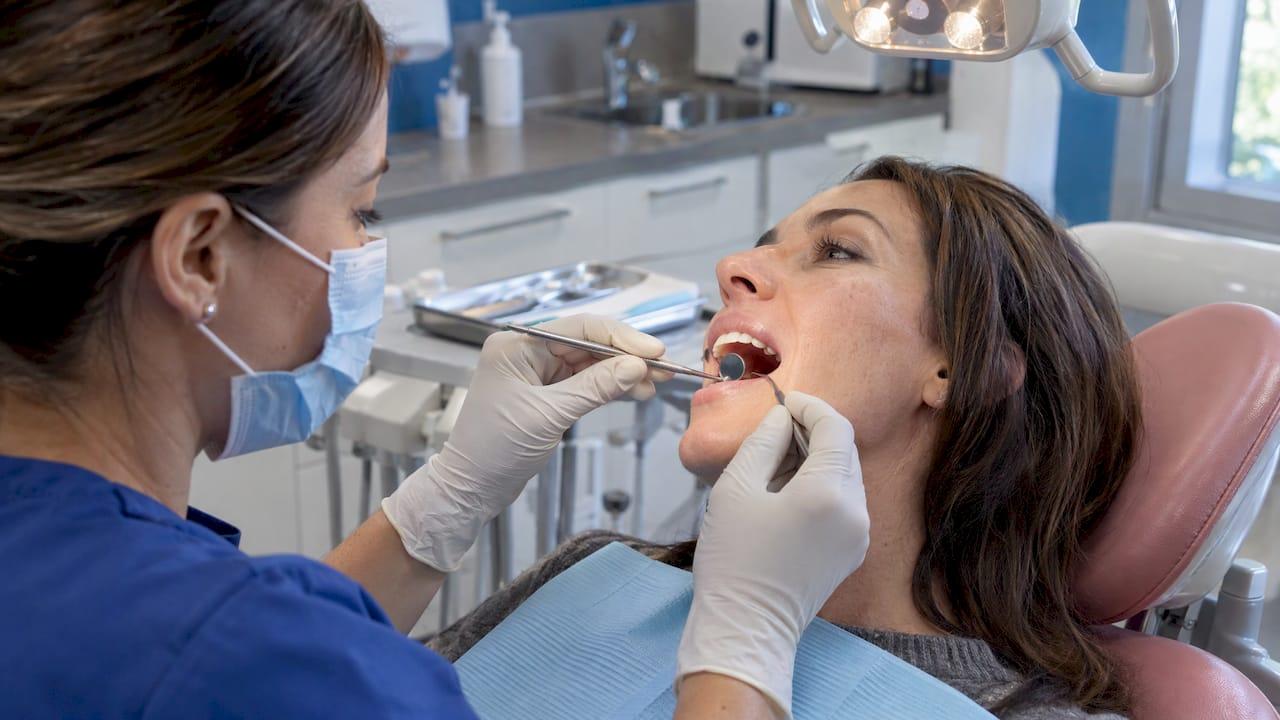
Sensitivity right where the tooth meets the gum usually means the root surface or the dentin under the enamel has become exposed. Gums that have pulled back, a worn notch near the gumline, acid, hard brushing or clenching are the usual suspects. Mild cases often calm down with a gentler routine and the right toothpaste. Pain that lingers, or that comes with bleeding, swelling or a loose feeling, needs a dental exam.
This guide explains what is going on at the gumline, how to tell sensitive teeth from sensitive gums, what you can try at home, and what a dentist can do when home care is not enough.
TL;DR
- Gumline sensitivity most often comes from receding gums exposing the tooth root, which lacks the protective enamel the crown has.
- Worn notches near the gumline (sometimes called abfraction lesions) can also expose dentin. Their cause is usually a mix of brushing habits, acid and bite forces.
- A soft brush, gentle brushing at the gumline and a desensitizing toothpaste used for several weeks can ease mild sensitivity.
- See a dentist if sensitivity lingers, is sharp or severe, or comes with bleeding, swelling, a visible notch or teeth that look longer.
- Treatment depends on the cause: it can range from fluoride varnish to bonding, deep cleaning or gum grafting.
Table of Contents
- What gumline sensitivity feels like, and why it happens
- The most common causes near the gumline
- Abfraction lesions: what they are and what they are not
- Sensitive teeth or sensitive gums?
- What you can do at home
- When to see a dentist
- What a dentist can do for gumline sensitivity
- Our perspective on gumline sensitivity
- Get your gumline checked in Kennebunk
- FAQ
- Sources
What gumline sensitivity feels like, and why it happens
Most people describe it as a quick, sharp zing at the base of a tooth when something cold, hot, sweet or acidic touches it. Brushing or flossing along the gumline can set it off too. Sometimes a fingernail or a toothbrush bristle catches a small ledge at the edge of the gum, and you can feel the difference with your tongue.
The crown of a tooth is covered by enamel. The root is not. Along the root, the protective layer is thin, and the softer dentin underneath contains tiny channels called tubules that lead toward the nerve. According to a peer-reviewed review of dentin hypersensitivity, exposed dentin alone does not always hurt. Pain develops when the plugs or surface layers that normally seal those tubules are lost, so that hot, cold, sweet or touch stimuli can move fluid inside them and trigger the nerve.
That explains something that confuses many patients: two people can have the same amount of exposed root, and only one of them feels it. It also explains why sensitivity can come and go. Saliva can partly re-seal the surface, and acid or aggressive brushing can strip it again.

The most common causes near the gumline
Gum recession
Recession is a loss of gum tissue at the edge of the tooth that exposes the root. The Merck Manual notes that it can cause sensitivity to cold, to sweet foods or to touch. Cleveland Clinic lists these contributors:
- aggressive brushing
- plaque or tartar buildup
- periodontal (gum) disease
- trauma to the gums
- teeth that sit out of position
- tobacco use
- lip or tongue piercings
- naturally thin gum tissue, which can run in families
Recession tends to creep. You may not notice the gum edge moving, only that a tooth looks a little longer or that cold water suddenly bothers it. If you want a deeper look at options, our guide to gum recession treatment walks through what actually helps.
Brushing too hard or too sideways
Scrubbing back and forth with a firm brush is one of the most common habits we see wear down the gumline. The 2022 Journal of Prosthodontics review on noncarious cervical lesions describes excessive horizontal brushing and acidic foods or drinks as habits involved in these lesions. The fix is rarely more effort. It is a softer brush, lighter pressure and a better angle.

Gum disease
When plaque and tartar stay along the gumline, the gums become inflamed and can pull away from the teeth. That can leave roots exposed and tender. The gums may look red or swollen and bleed easily, which separates this cause from simple wear. If you notice bleeding when you floss, read our piece on reversing bleeding gums, because early gum inflammation responds well to prompt care.
Acid from food, drinks and reflux
Frequent soda, citrus, sports drinks or wine, and stomach acid reaching the mouth, can soften the surface at the neck of the tooth. Brushing right after an acid hit can then wear that softened area faster. Our article on the role of diet in tooth decay covers how snacking and sipping patterns affect your teeth.
Clenching and grinding
Bite forces may play a part in notches near the gumline, and that brings us to abfraction.
Abfraction lesions: what they are and what they are not
An abfraction lesion is a V-shaped or wedge-shaped notch at the gumline of a tooth, with no decay in it. The name comes from a theory that bending forces from biting or grinding flex the tooth and cause microscopic breakdown near the gum. A tooth that has such a notch can certainly be sensitive, because the notch exposes dentin.
The theory itself is debated. The dentin hypersensitivity review says cervical lesions are usually multifactorial, with abrasion, erosion, attrition and sometimes bite loading all contributing, and clinical evidence does not establish abfraction as an independent cause. The 2022 prosthodontics review reaches a similar conclusion: occlusal loading may contribute in some cases, but mechanical stress alone has not been shown to cause these lesions.
What this means for you in practice:
- A notch at the gumline is rarely about one thing. Brushing technique, acid and clenching often work together.
- Your dentist will look at all three, not only your bite.
- The goal is to stop the notch from deepening and to calm the sensitivity.
Colgate's U.S. oral-health guidance says a dentist may consider a night mouthguard when grinding is a factor, and orthodontic treatment when bite alignment contributes. It also says composite fillings can cover a notch that is hard to clean, decayed, extends below the gum or exposes the pulp.
If you wake with a tight jaw or sore facial muscles, the link between grinding and jaw strain is worth understanding. This overview of teeth grinding and jaw pain explains what can help and who to see.
Sensitive teeth or sensitive gums?
The two overlap, and a single mouth can have both. This quick comparison helps you describe the problem to your dentist.
| Sensitive tooth at the gumline | Sensitive or irritated gums | |
|---|---|---|
| Typical feeling | Short, sharp zing to cold, heat, sweets or touch | Soreness, tenderness or a raw feeling |
| What you may see | Longer-looking tooth, a notch, a yellowish root surface | Red, puffy gums that bleed when brushing or flossing |
| Common causes | Recession, worn notch, acid, grinding | Plaque and tartar, gum disease, hard brushing or flossing |
| First step | Gentle brushing, desensitizing toothpaste, dental exam | Better plaque control and a professional cleaning and gum check |
The NIDCR describes gum disease as showing up with red, swollen or tender gums that bleed easily, and sometimes gums pulling away from teeth so they look longer. That last sign is the bridge between the two columns, which is why a visible change in gum height is worth having checked.
What you can do at home
Home care can ease mild gumline sensitivity. It will not regrow gum tissue. The Merck Manual advises that a soft-bristled brush, a desensitizing or gentle toothpaste and gentle brushing at a 45-degree angle to the gumline can limit worsening, but they do not reverse recession.
- Switch to a soft brush and light pressure. Hold it like a pen. Let the bristles do the work.
- Angle the bristles toward the gumline. Small, gentle strokes at about 45 degrees clean the edge without scrubbing it away.
- Use a desensitizing toothpaste daily. Cleveland Clinic reports these may contain potassium nitrate, stannous fluoride, arginine or strontium chloride, and that consistent use can take several weeks to work. Spread a thin layer on the sensitive spot at night, and do not rinse it away aggressively.
- Floss gently. NewYork-Presbyterian recommends gentle flossing, along with fluoride toothpaste or mouthwash for mild gum problems.
- Ease off known triggers. The same source suggests limiting very hot, cold or sweet items while the area settles. Wait 30 minutes or so after acidic drinks before brushing.
- Skip tobacco. It is on the list of recession contributors, and NewYork-Presbyterian advises avoiding it.
A 2020 evidence overview describes at-home products such as toothpastes, mouthwashes and chewing gums as part of managing dentin sensitivity. For a step-by-step plan, see our roadmap for sensitive teeth and our tips for people with sensitive teeth. If you are curious about enamel-supporting habits, our guide to remineralizing teeth is a good next read.
If you are considering whitening, know that some products can aggravate exposed areas. We cover how to do it more comfortably in whitening sensitive teeth without the pain.
When to see a dentist
Book an exam when any of the following applies:
- Sensitivity does not improve after a few weeks of gentle care and desensitizing toothpaste.
- It is sharp, severe or wakes you up. NewYork-Presbyterian says mild sensitivity may come from receded gums or worn teeth, while moderate to severe sensitivity may point to a cracked tooth, cavity or lost filling.
- You can see roots, a notch, or teeth that look longer than they used to.
- Your gums bleed, swell or feel sore, or a tooth feels loose.
- Brushing, flossing or cleanings hurt along the gumline.
Cleveland Clinic advises a dental evaluation when these signs appear, and says untreated recession can contribute to bone loss, tooth mobility or tooth loss. Catching it early gives you more choices and simpler ones.
What a dentist can do for gumline sensitivity
A dentist starts by finding the cause, because the right fix depends on it. Expect a look at your gums, your bite, any wear or notches, old fillings, X-rays when needed and a conversation about brushing and diet. Cleveland Clinic notes that treatment may include desensitizing toothpaste or fluoride varnish, scaling and root planing, bonding, orthodontics or gum grafting, depending on the cause.
The 2020 evidence overview lists in-office options including gels, varnishes, resin sealers, glass ionomers, adhesives and lasers. It also says restorations or periodontal surgery should be kept for suitable cases, such as hard-tissue defects or gum recession, rather than used for every sensitivity complaint. In other words, care usually starts conservatively and steps up only if needed.
Here is how that maps to treatments we offer at Starboard Dental:
| Likely cause | What may help | Our related service |
|---|---|---|
| Early exposure, mild zing | Fluoride varnish, desensitizing toothpaste, brushing coaching | General dentistry exams and cleanings |
| Gum disease along the roots | Deep cleaning below the gumline | Periodontal therapy and scaling and root planing |
| A notch that is sensitive, hard to clean or progressing | Composite bonding to cover the exposed area | Dental bonding |
| Grinding or clenching | A custom night guard, bite evaluation | Night guards and fillings |
| Teeth out of position adding stress | Clear aligners | Clear aligners |
| Larger structural damage | Crowns when a tooth needs more support | Dental crowns |
The 2022 prosthodontics review says cervical lesions are generally managed conservatively, with restoration considered when there is progression, sensitivity, poor esthetics, food collection or quality-of-life effects. Bonding fits that description well: it can seal exposed dentin and smooth a notch so food and plaque do not collect there.
Throughout, the cause matters more than the symptom. A desensitizing treatment on a tooth with a cavity, or a filling on a tooth whose real problem is gum disease, only delays the right fix.
Our perspective on gumline sensitivity
Patients often tell us they have lived with a zing at the gumline for months, sure it is just part of getting older. It does not have to be. In our experience, the best results come from treating the cause and not only the sensation.
That is why an exam comes first for us. We look at the gums, the roots, the bite and the habits together, and our digital scanners help us capture precise detail of how your teeth fit and where wear is happening. From there we can suggest the gentlest option that fits: coaching on technique, a desensitizing routine, bonding to protect an exposed notch, deep cleaning when gum disease is involved, or a night guard when grinding is wearing teeth down.
We also know that many people put off a visit because dentists make them nervous. We built our office to be warm and welcoming, with ceiling-mounted TVs and personalized comfort items, because a relaxed patient is a patient who gets care early, when it is simplest. And because we offer same-day appointments, a sudden gumline problem does not need to wait weeks.
If a tooth is bothering you, come in and let us find out why.
Alex
Get your gumline checked in Kennebunk
At Starboard Dental we care for patients of all ages, from routine checkups to restorative, cosmetic and periodontal treatment, and we handle specialty concerns such as TMD and night guards. If your gumline is sensitive, an exam with our team is the clearest way to learn whether you need a simple routine change or treatment.

To schedule, visit Starboard Dental or look through our general dentistry services. Same-day appointments are available, and if you feel uneasy about visiting, our tips on easing dental anxiety in the chair can help. You can also see the conditions we treat.
FAQ
Why are my teeth sensitive at the gumline?
Most often the gum has receded and exposed the root, which has no enamel covering. Worn notches, acid erosion, hard brushing and gum disease can do the same. A dentist can tell which one applies to you.
Can receding gums grow back?
No. Gentle brushing and desensitizing products can limit further recession and ease symptoms, but they do not reverse it, according to the Merck Manual. If recession is advancing or causing problems, ask a dentist about options such as bonding or a gum graft referral.
How long does desensitizing toothpaste take to work?
Cleveland Clinic says consistent use may take several weeks to work. Use it twice daily and keep the soft brush and gentle technique going. If nothing changes after a few weeks, book an exam.
Are abfraction lesions caused by grinding?
Grinding may contribute, but the research points to several causes working together, including brushing habits and acid. A dentist can check your bite and wear patterns and suggest a night guard if grinding is part of the picture.
Is gumline sensitivity an emergency?
Mild, brief sensitivity is not usually urgent, but it deserves an exam. Severe pain, swelling, a loose tooth or sensitivity that wakes you at night should be seen promptly, since it may signal a crack, cavity or lost filling.
Sources
- Dentin hypersensitivity: pain mechanisms and aetiology of exposed cervical dentin
- Pathogenesis, diagnosis and management of dentin hypersensitivity
- Noncarious cervical lesions: Morphology and progression, Journal of Prosthodontics
- Gum Recession, Merck Manual
- Gum Recession: Causes, Prevention, Surgery and Treatment, Cleveland Clinic
- Toothache and Gum Problems, NewYork-Presbyterian
- Abfraction Lesion: Causes and Treatment, Colgate
- Periodontal (Gum) Disease, NIDCR
- Teeth Grinding and Jaw Pain: What Helps and Who to See